Tucson Retirees Can Live Comfortably on Around $350,000 in Savings. In Scottsdale, That Number Barely Covers the House
We may earn money or products from the companies mentioned in this post. This means if you click on the link and purchase the item, I will receive a small commission at no extra cost to you ... you're just helping re-supply our family's travel fund.
Phoenix and Scottsdale get most of the national attention as Arizona retirement destinations, but a large and consistent share of retirees who actually compare the two end up in Tucson instead, and the reasons are less about weather, both cities share the same desert climate, and more about the math of stretching retirement savings across a multi-decade retirement.
The Actual Numbers Behind the Preference
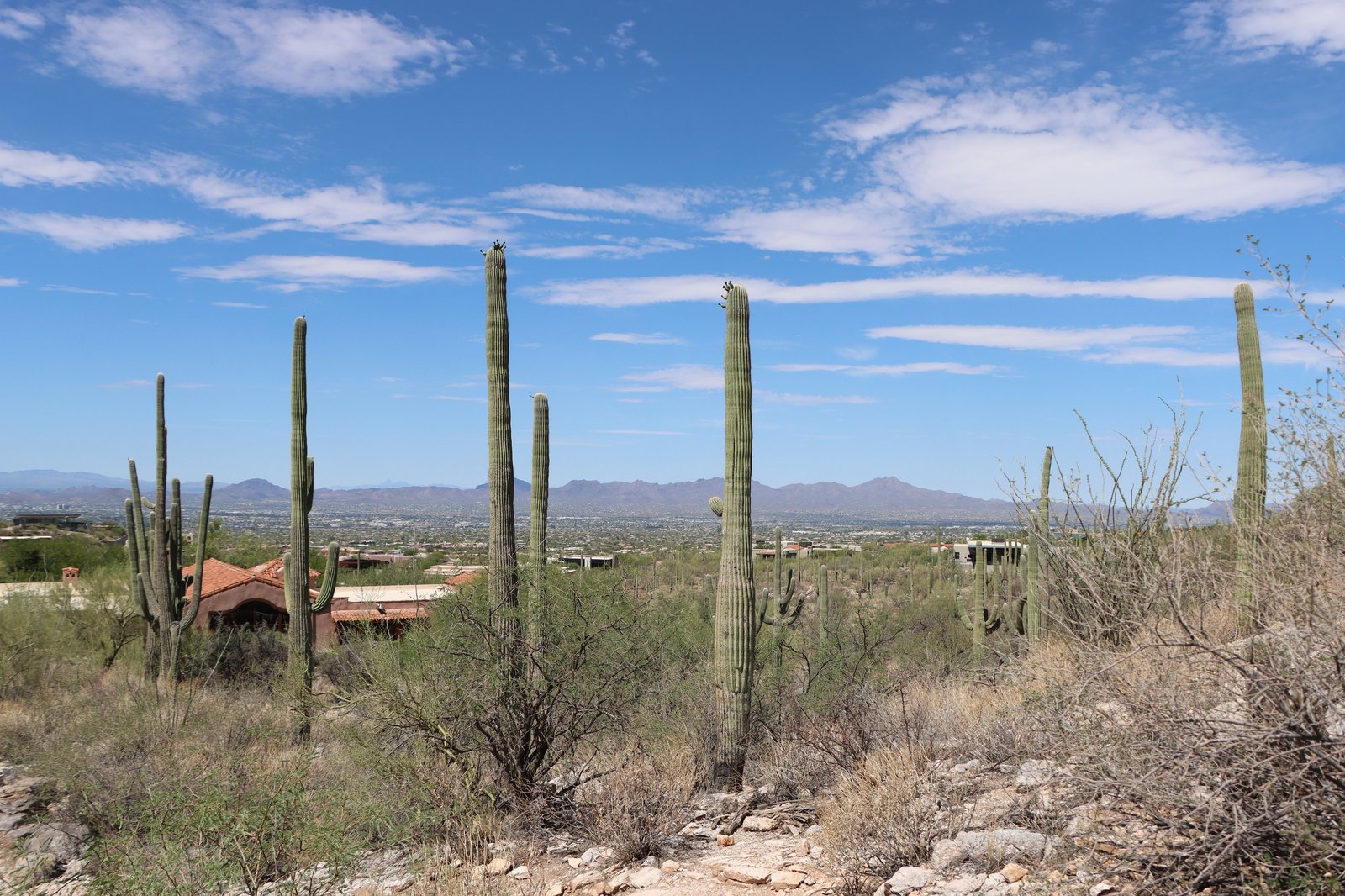
For a retired couple in Tucson with a paid-off, modest home and two average Social Security checks, financial planners estimate a working target of roughly $350,000 in invested assets, using a 3.5% to 4% annual withdrawal rate that can flex during down markets, according to a [retirement planning breakdown](https://www.mexc.com/news/1200073). Total monthly costs for a retired couple in a paid-off Tucson home run around $3,262, based on a cost-of-living index of 93, several points below the national average, according to [RetireCityIQ’s Tucson retirement profile](https://retirecityiq.com/retire/cities/tucson-az). Scottsdale, by contrast, carries a substantially higher home price baseline, meaning the same nominal savings target buys meaningfully less house and less cushion.
Arizona’s broader tax environment helps every retiree in the state regardless of city, no tax on Social Security income and comparatively low property taxes, but Tucson’s lower cost of living stacks an additional discount on top of that statewide advantage, according to a general cost breakdown from [MyRelocationSavings](https://www.myrelocationsavings.com/blog/cost-of-living-in-arizona-2026), which puts average monthly costs for a single person across Arizona around $2,700 and $5,500 for a family of four, with Tucson consistently landing below the state average and Scottsdale well above it.
What Tucson Trades Away for the Discount
Tucson’s lower cost comes with real tradeoffs that comparison guides are generally upfront about: Scottsdale offers a more polished, resort-dense environment with more upscale shopping, golf courses, and dining, while Tucson leans more into a university-town, high-desert character shaped heavily by the presence of the University of Arizona, according to a [Tucson-versus-Scottsdale retirement comparison](https://www.tucson-moves.com/blog/retiring-in-tucson-vs-scottsdale-9-key-differences). For retirees prioritizing an active resort lifestyle and don’t mind paying for it, Scottsdale remains the more popular choice; for those optimizing purely for stretching a fixed nest egg across retirement, Tucson wins on the numbers consistently.
Why Retirees Who Choose Tucson Tend to Stay
- University of Arizona’s continuing education and healthcare infrastructure give Tucson a stronger academic-medical anchor relative to its cost than many comparably priced retirement towns
- Saguaro National Park and the surrounding Sonoran Desert give Tucson genuine, low-cost outdoor recreation access without Scottsdale’s golf-course-driven price premium
- A larger, more established Mexican-American cultural and culinary presence gives Tucson a food scene, recognized by UNESCO as a City of Gastronomy, distinct from Scottsdale’s more conventional upscale dining
The Healthcare Factor That Rarely Makes the Comparison Lists
Retirement decisions eventually come down to healthcare access as much as monthly budgets, and Tucson holds a genuine advantage here that comparison articles focused purely on cost of living tend to undersell. The University of Arizona’s academic medical center and a concentration of specialist practices give Tucson a level of healthcare infrastructure that’s disproportionate to its population size, an advantage that matters increasingly as retirees age into their seventies and eighties and healthcare access becomes the dominant consideration in whether to stay put or relocate again.
Scottsdale’s healthcare access is also strong, given its proximity to the greater Phoenix metro’s hospital systems, but retirees who’ve compared both cities directly often cite Tucson’s combination of quality care and lower overall cost as the deciding factor once they run the actual math on decades of retirement rather than just the first few years.
Tucson’s housing stock also skews older and more modest than Scottsdale’s newer luxury developments, which cuts both ways for retirees: lower purchase prices and property taxes on one hand, but potentially higher maintenance and renovation costs on aging homes on the other. Retirees who’ve made the comparison directly generally describe the tradeoff as manageable, since the upfront savings on a Tucson home purchase typically outweigh the modestly higher maintenance costs over a normal retirement timeline.
Tucson’s cost advantage extends to everyday recreation as well: golf and outdoor club memberships, dining, and entertainment all run meaningfully cheaper than Scottsdale’s resort-adjacent pricing, a gap that compounds over a retirement lasting two or three decades into a genuinely significant difference in total lifetime spending, even before accounting for the difference in housing costs that usually gets the most attention in retirement city comparisons.
Tucson’s active-adult community market has also matured significantly, with several master-planned retirement communities now offering amenities comparable to Scottsdale’s, at prices that remain meaningfully lower, closing what used to be a bigger lifestyle gap between the two cities and making the financial case for Tucson even stronger for retirees who specifically want an amenity-rich community environment rather than a standalone home.
Utility costs diverge meaningfully between the two cities as well, Tucson Electric Power’s rates and the city’s water utility pricing structure both run below the Phoenix metro average, a gap that widens further during the peak summer cooling season when air conditioning costs dominate desert Southwest utility bills for months at a stretch. Over a full year, that utility gap alone can amount to hundreds of dollars in savings for a retired household running central air continuously through a long, hot Arizona summer.
Financial advisors who specialize in relocation planning for retirees increasingly recommend running the full cost comparison, housing, utilities, healthcare, taxes, and everyday living expenses together rather than any single category in isolation, since Scottsdale and Tucson can each look more or less competitive depending on which individual cost line a prospective retiree focuses on first, and the full picture consistently favors Tucson for anyone prioritizing long-term financial runway over resort-style polish.
That full-picture approach is exactly what keeps drawing new retirees to Tucson year after year, even without Scottsdale’s name recognition.
The Tucson-versus-Scottsdale retirement decision ultimately isn’t about which city is objectively better, it’s a clean tradeoff between resort polish and financial runway, and the retirees who end up staying in Tucson for decades overwhelmingly describe choosing the latter deliberately rather than settling for it as a lesser option.