Travel Photography Ruins Some Trips and Improves Others. The Difference Is More Specific Than Just Putting the Phone Down.
We may earn money or products from the companies mentioned in this post. This means if you click on the link and purchase the item, I will receive a small commission at no extra cost to you ... you're just helping re-supply our family's travel fund.
The standard advice about travel photography is to put the phone down and be present. That’s true as far as it goes, but it misses the more useful distinction: photography doesn’t uniformly ruin or improve a trip, it depends entirely on whether the photographing is happening for the memory or for the audience. Those two motivations produce almost opposite psychological experiences, even though they look identical from the outside, someone holding up a phone at a viewpoint.
Two Different Activities Wearing the Same Gesture
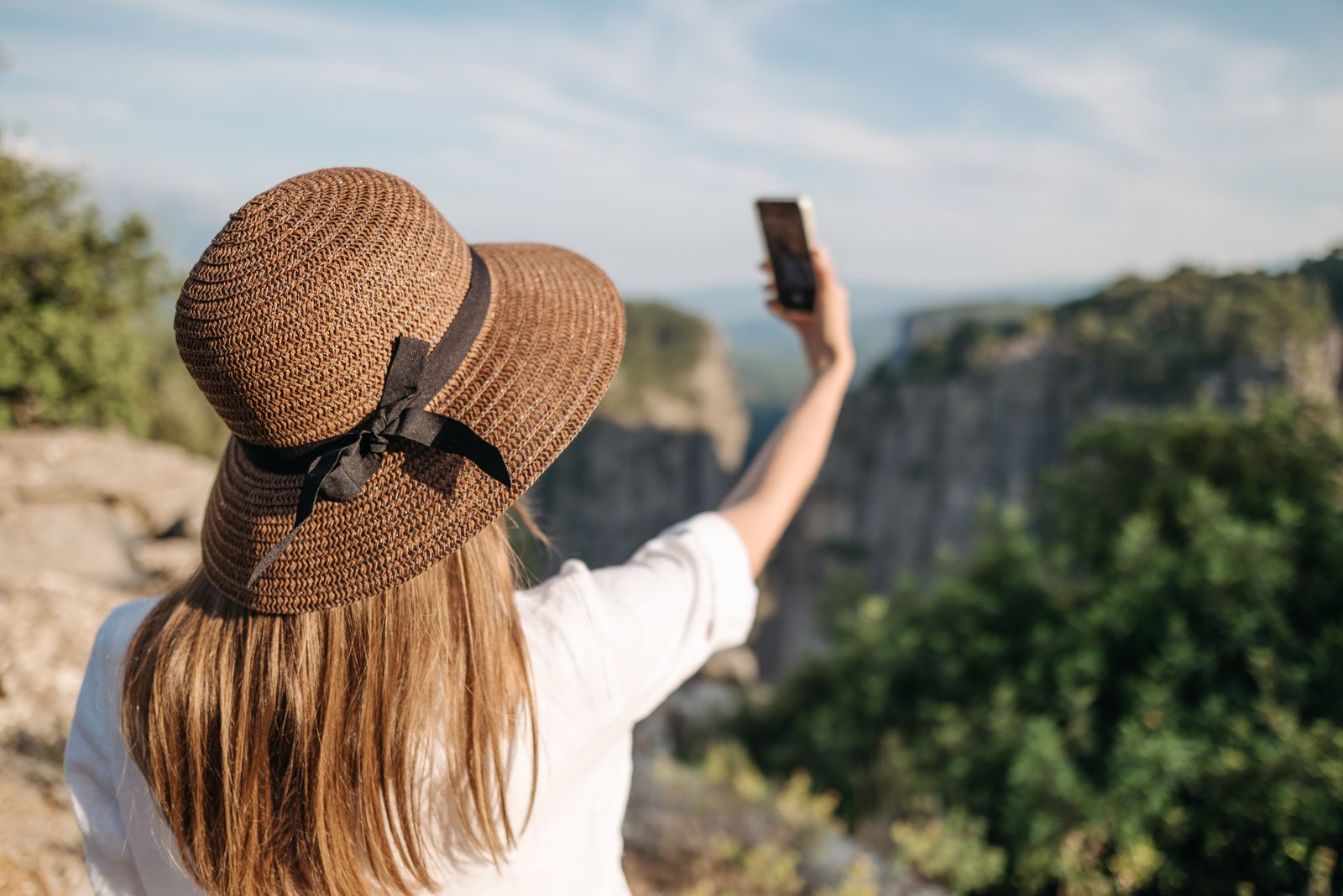
Psychologists who study memory and attention have found that the act of photographing an experience for personal reference, to remember it later, doesn’t meaningfully damage the experience itself and can actually improve recall, because the act of composing a shot forces a moment of attention on the subject. But photographing primarily to produce content for others, with the mental loop running toward captions, angles, and anticipated reactions rather than toward the scene itself, pulls attention away from direct experience and toward an imagined audience that isn’t even present. The camera is the same. The cognitive task behind it is entirely different.
This explains why some of the most photographed people on any given trip, the ones producing content for social platforms, often report the least satisfaction with the destination afterward, while a family taking a single photo per stop to remember the day reports the opposite. It’s not the number of photos that predicts the damage. It’s whether the photographer’s mental frame during the moment was “I want to remember this” or “how will this perform.”
The Repetition Problem
A second factor compounds the first: content-oriented photography usually requires multiple takes, different angles, and re-staged moments, which means the traveler experiences the same five seconds of a sunset a dozen times over instead of once. That repetition can flatten novelty and turn a spontaneous moment into a production, which is a meaningfully different experience than watching the sunset happen once and photographing it as it does.
What Actually Helps
- Deciding in advance roughly how many photos a moment is worth, then putting the phone away once that’s done
- Taking the photo after spending at least thirty seconds actually looking at the thing unmediated
- Separating documentation trips from experience trips mentally, rather than trying to do both at every single stop
There’s a related finding in the research that complicates the simple advice to just take fewer photos: the specific act of curating and reviewing travel photos after a trip, not during it, measurably boosts reported satisfaction and memory retention regardless of how many photos were taken in the moment. This suggests the real damage isn’t in the taking, it’s in the compulsive checking, editing, and posting that happens in real time, pulling attention into a phone screen and away from the physical environment repeatedly throughout a single experience rather than once, quickly, and then away.
Professional travel photographers themselves often describe a workaround that casual travelers rarely adopt: doing the real, present-focused experience of a place first, a hike, a meal, a walk through a neighborhood, without a camera at all, then returning deliberately to specific spots later, sometimes the next day, purely to shoot. That separation, splitting the trip into an experiencing phase and a documenting phase rather than doing both simultaneously at every stop, shows up again and again in interviews with people who photograph professionally for a living and have thought hardest about protecting their own relationship with the places they visit for work.
The rise of AI-assisted photo editing and increasingly capable phone cameras has also steadily changed the psychology at play, since travelers now know a mediocre in-the-moment shot can be substantially improved later, which for some people reduces the pressure to get the perfect shot live and allows more actual presence in the moment, while for others it simply lowers the bar for how many photos get taken in the first place, multiplying the very behavior that erodes presence. Which effect dominates seems to depend entirely on the individual traveler’s existing relationship with their phone, which is really the whole point: there’s no universal photography rule that works for everyone, only a set of trade-offs each traveler is making, consciously or not, every time they lift the camera.
Group travel introduces its own version of this dynamic, since photographing for a group chat or shared album carries a slightly different psychological weight than photographing purely for public social media, generally producing less of the anxiety-inducing performance pressure while still preserving the memory-boosting benefits of active composition, suggesting the healthiest version of trip photography for many travelers sits specifically in that middle zone, documenting for a small, known, low-stakes audience rather than either a public feed or no audience at all.
Drone photography introduces its own distinct set of tradeoffs worth a brief mention, since the physical act of piloting a drone pulls attention even further from direct sensory experience than handheld photography does, often for a shot the photographer won’t even see clearly until reviewing footage later, making it arguably the photography mode most likely to trade presence for a deferred, screen-mediated payoff.
Print photography, largely abandoned by casual travelers in the smartphone era, retains a small but genuine following precisely because of the constraints it imposes: a finite roll of film forces the kind of deliberate, limited-shot decision-making that digital abundance eliminated, and photographers who’ve made the switch back describe a rediscovered attentiveness to composition and moment-selection that mirrors, almost exactly, the psychological benefits researchers associate with lower-volume, intention-driven photography more broadly.
None of this means content creation is inherently bad for the creator; plenty of travel photographers and influencers report genuine enjoyment because the content creation is itself the primary activity they set out to do, not a distraction from some other, purer version of the trip. The problem arises specifically when someone intends to have a personal experience and the audience-oriented photography instinct hijacks it without their noticing. The fix isn’t zero photography. It’s noticing which mental mode you’re in before you lift the phone.