What Travel in Your 20s Versus Your 40s Actually Feels Like — The Shift Isn’t What Anyone Warns You About
We may earn money or products from the companies mentioned in this post. This means if you click on the link and purchase the item, I will receive a small commission at no extra cost to you ... you're just helping re-supply our family's travel fund.
This article contains affiliate links. If you book through our links, we may earn a commission at no extra cost to you.
The conventional wisdom about travel and age goes something like this: in your 20s you travel on the cheap, you sleep in hostels, you’re flexible, you’re spontaneous, and you’ll eat anything. In your 40s you want comfort, you book better hotels, you do fewer things per day, and you have opinions about thread counts.
This is true as far as it goes, which isn’t very far. The surface changes — the hotel category, the number of museums you attempt to cram into a single afternoon — are real but minor. The deeper changes are harder to name and almost never discussed, possibly because they require a level of self-examination that doesn’t make for breezy travel content.
But they’re the changes that actually matter. The ones that explain why a trip that would have been perfect at 25 can leave you oddly hollow at 45, or why a place you dismissed as too slow and too quiet in your 20s becomes somewhere you think about for years afterward.
What You’re Actually Running Toward (or Away From) Changes
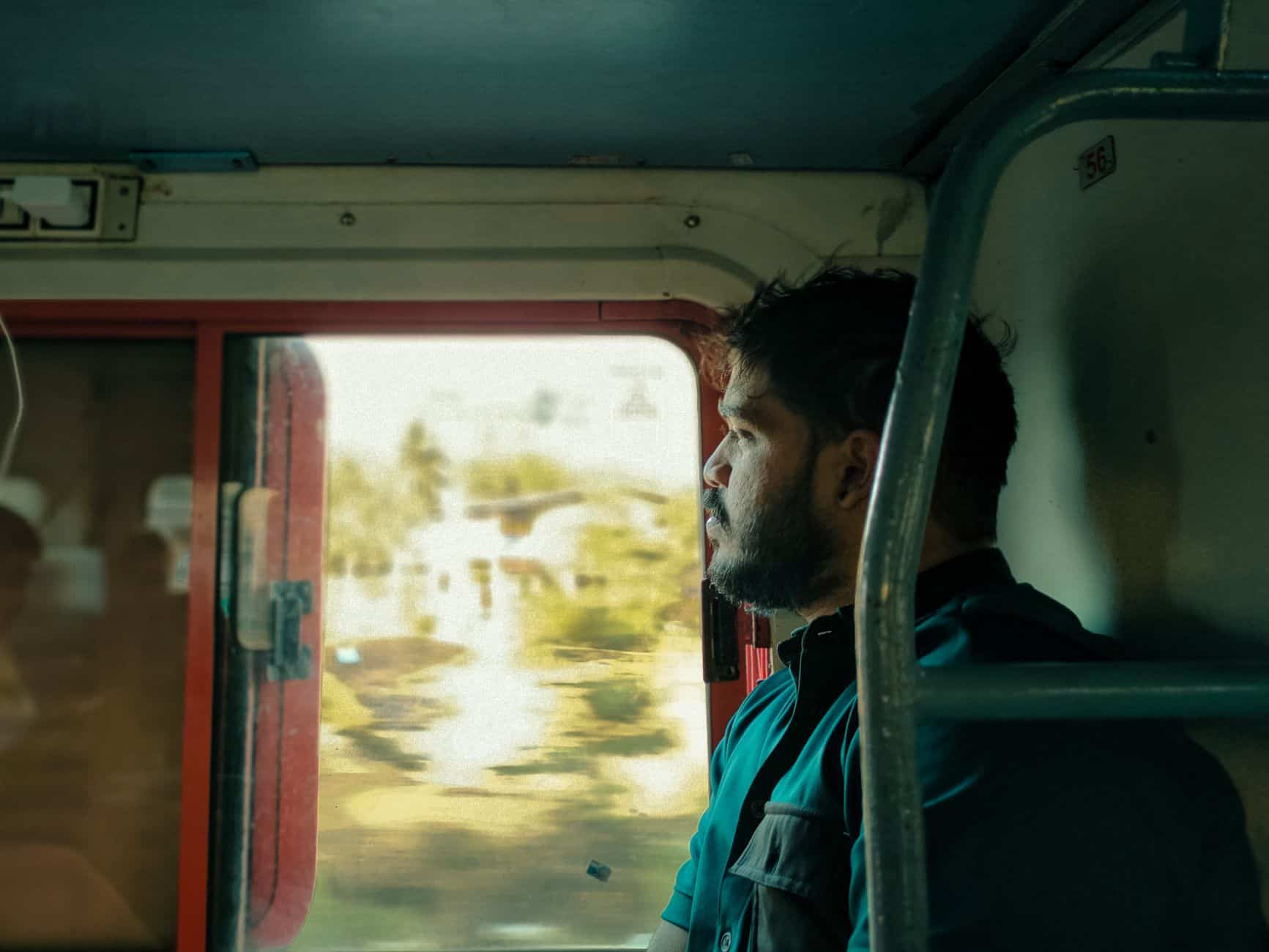
In your 20s, travel often functions as escape in a way that you don’t fully recognize because you’ve never had enough stillness to feel what you’d be escaping from. The restlessness that drives young travelers is real, but it’s often undifferentiated — a general hunger for experience, for novelty, for the version of yourself that exists outside your normal context.
There’s also, for many people in their 20s, a performance element to travel that operates below conscious awareness. The trip is partly about who you are when you travel, which is partly about who you can plausibly claim to be. The riskier the destination, the more interesting the story, the more the trip serves the identity project of early adulthood.
By your 40s, if you’ve traveled with any regularity, the performance layer has mostly dissolved. Not completely — anyone who tells you they’ve entirely escaped the desire to have a good travel story is probably lying — but substantially. What’s left underneath is more specific. You know more clearly what you actually want from a trip, which means you can also more clearly fail to get it.
People in their 40s often describe a shift from accumulation to depth. In their 20s, they wanted to see as many places as possible. In their 40s, they find themselves wanting to actually understand a single place — to stay long enough to have a regular coffee order somewhere, to recognize a face on the street, to feel something closer to belonging than tourism. The collect-them-all mentality fades. What replaces it is harder to package but more satisfying when you find it.
The Hostel to Hotel Migration Is About More Than Comfort

People often frame the shift away from hostels and toward private rooms as a comfort preference. And yes, the comfort element is real — a 43-year-old with a lower back situation has legitimate reasons to care about mattress quality that a 22-year-old does not.
But the more significant change is social. Hostels in your 20s function as social infrastructure. The common room is where you find your people, where trips bifurcate into unexpected directions, where the stories you’ll tell for years begin. The forced proximity that feels claustrophobic to older travelers feels generative to younger ones. You’re there to meet people. The hostel makes that easy.
By your 40s, most people have enough social connections that they’re not traveling to find new ones. They’re either traveling alone and wanting actual solitude, or they’re traveling with people they’ve carefully chosen, and strangers in a dormitory are noise rather than opportunity.
The hotel isn’t just about the better mattress. It’s about the right to close a door. For someone in their 20s who lives with roommates and has never had much private space, the hostel’s communal structure is unremarkable. For someone who’s spent twenty years building a life with defined space, privacy is what they’re protecting when they travel.
What Counts as a Good Day Completely Reverses

Here is a specific thing that happens to many travelers between their 20s and 40s: what constitutes a successful day abroad completely inverts.
At 24, a good travel day is dense. Five things. A museum, a market, a cathedral, a neighborhood walk, a dinner you had to book a week in advance. Exhaustion is proof of efficiency. The goal is to extract maximum experience from the time available, and rest feels like squandered opportunity.
At 44, a good travel day might be: one thing. A long breakfast at a place you found by walking. A slow afternoon in a neighborhood that wasn’t in any guidebook. A conversation with someone that went longer than expected. Dinner somewhere with outdoor seating where you stayed for two hours after the food was gone.
This isn’t about laziness. People in their 40s aren’t doing less because they have less energy — many of them have more stamina and fitness than they did in their 20s, when they were subsisting on cheap beer and stress. It’s about a genuine change in what travel is for. The slower day produces something the packed day doesn’t: actual presence. The memory is different. It’s specific. You remember the texture of the afternoon, not just the checklist of things you completed.
Younger travelers who can’t understand why their parents want to sit at a café for three hours are experiencing a preview of their own future. The sitting is the point.
The Relationship With Itineraries Goes Through Phases

In your 20s, there are two dominant travel personalities: the over-planner and the pure free-spirit, and they often end up traveling together and making each other miserable. The over-planner has a spreadsheet. The free-spirit has a vague direction and a willingness to follow it. Both are convinced the other one is doing it wrong.
By your 40s, most experienced travelers have evolved past both extremes. The pure spontaneity of early travel is partly a function of low stakes — if you waste a day, you have abundant future days to compensate. With more limited vacation time and more expensive trips, pure spontaneity feels like recklessness rather than freedom.
But the over-planned spreadsheet trip often disappoints for different reasons: it leaves no room for the unexpected discoveries that are, for many travelers, what they remember most warmly. The restaurant you found because you took a wrong turn. The museum you had never heard of that turned out to be extraordinary. The afternoon that went nowhere in particular and ended somewhere perfect.
The itinerary evolution most experienced travelers land on is something like: research heavily, plan lightly, and leave significant open space. Know your anchors — the two or three things you’d be genuinely disappointed to miss — and hold everything else loosely. This is not an innate skill. It takes years of over-planned trips and under-planned trips to locate the middle.
How You Process Difficult Experiences Shifts Fundamentally

Travel goes wrong. Flights get cancelled. Hotels are not as advertised. You get sick. You get lost in ways that stop being romantic and start being genuinely frightening. Your bag doesn’t arrive. The restaurant that was supposed to be the centerpiece of the trip is closed for private events.
In your 20s, difficulty is often processed as adventure in real time. The cancelled flight becomes a story. The bad hotel becomes something to complain about in a way that almost becomes enjoyment. There’s a resilience to young travelers that comes partly from inexperience — you don’t know enough about how things can go wrong to be preemptively anxious, so when they do go wrong, your baseline isn’t ruined expectations.
In your 40s, the processing is slower and more complex. You have more context for how the difficulty fits into a longer travel history, which can help: you know you’ve survived worse, and that the bad situation won’t last. But you also have more that the trip is supposed to be doing for you — more recovery needed, more expectations loaded into limited vacation time — which makes disruption more costly.
The most experienced travelers in their 40s and beyond have something younger travelers are still building: a practiced equanimity around travel failure. Not indifference — they’re still annoyed when things go wrong — but a genuine belief, earned through repetition, that the trip will recover and the difficulty will be part of what makes it real.
Who You Want to Travel With — and Why That Answer Changes

In your 20s, travel partners are often somewhat interchangeable, and that’s not a criticism. The adventure is mostly in the places and experiences; the person you’re with matters but shares top billing with the destination. You can travel well with someone you’ve known for three weeks or with a stranger you met at a hostel who turned out to be going the same direction.
By your 40s, the travel partner question has become significantly more loaded. You know enough about yourself to know that traveling with the wrong person — wrong in terms of pace, sleep schedule, spending level, itinerary philosophy, or simple personality chemistry under stress — produces a trip that ranges from tolerable to genuinely damaging.
Many people in their 40s narrow their travel companion list considerably. Some go solo more often, not because they prefer solitude in general but because solitude while traveling is a specific kind of freedom that they’ve come to value. Others have identified one or two people who match them well enough that travel deepens the relationship rather than testing it.
The question “who do I actually want to be with in a foreign city when everything goes wrong?” is clarifying in ways that the more comfortable version of the question is not.
What You’re Actually Looking For at the End

There’s a thing that happens to many travelers in their 40s that they struggle to explain to their younger selves: they stop caring about having seen things and start caring about having felt things.
The distinction sounds pretentious until you experience it. At 25, the value of a trip is partly verifiable. You went to Paris. You saw the Eiffel Tower. You have photographic evidence. The experience has a legible structure that can be communicated and compared.
At 45, the trips that stay with you are often harder to explain. A week in a Portuguese coastal town where nothing particularly notable happened but where you felt something you haven’t felt in years — a specific kind of ease, or clarity, or reconnection with some version of yourself that gets lost in normal life. The Instagram content is unremarkable. The experience is not.
This is why so many people in their 40s find travel that would have bored them at 24 to be exactly what they needed. The slow trip. The repeat destination. The place with nothing to do except be in it. The travel is less about collecting experience and more about accessing something that ordinary life, for all its genuine goods, consistently blocks.
You can’t explain this to a 24-year-old. They have to run the experiment themselves.