Timberline Lodge Was Built by WPA Workers and Dedicated in 1937. Here’s Why It’s Worth Seeing in Winter
We may earn money or products from the companies mentioned in this post. This means if you click on the link and purchase the item, I will receive a small commission at no extra cost to you ... you're just helping re-supply our family's travel fund.
Timberline Lodge sits at about 6,000 feet on the south slope of Mount Hood, Oregon’s tallest peak. It was built between 1936 and 1938 by workers hired through the Works Progress Administration, the New Deal program that put unemployed Americans to work during the Great Depression. President Franklin D. Roosevelt dedicated the lodge on September 28, 1937, and it opened to the public in early 1938. Timberline Lodge Mount Hood is now a National Historic Landmark and one of the most famous mountain lodges in the country.
Here is why it is worth seeing in winter. Snow buries the lodge up to its windows, which is exactly the setting its architects designed it for, with a steep roof and heavy timbers that look right against white drifts. Inside, the massive stone fireplace in the central lobby, the hand-carved furniture, wrought-iron gates, woven textiles, and painted murals made by WPA craftspeople feel warmest when it is cold outside. Skiing and snowshoeing start from the parking lot. And the lodge is only about 60 miles from Portland, close enough for a day trip.
Movie fans may also recognize the exterior. Timberline stood in for the Overlook Hotel in exterior shots for Stanley Kubrick’s 1980 film “The Shining,” though the interiors were filmed on sets in England.
Here’s Why It’s Worth Seeing in Winter
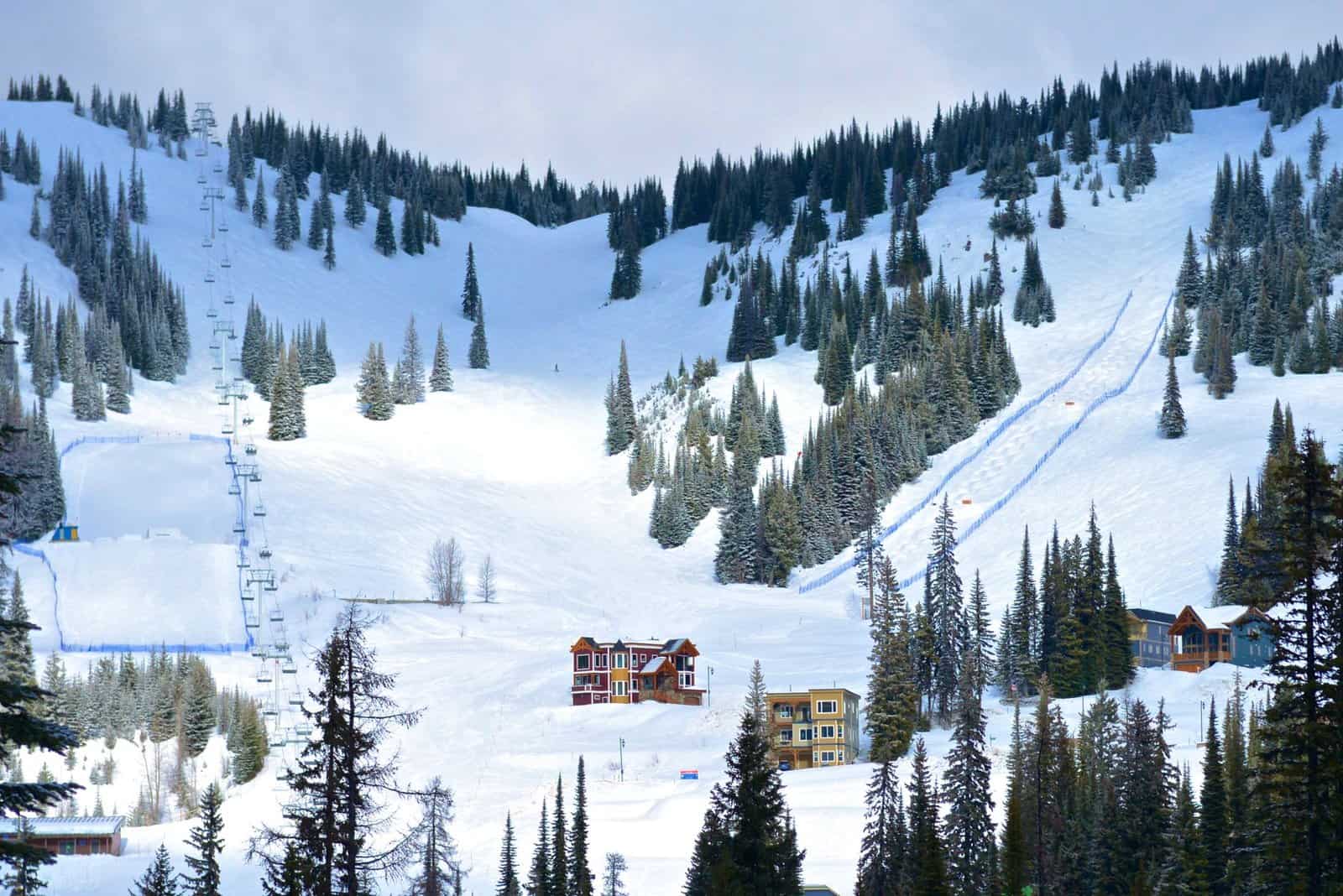
The lodge was designed to stand up to Mount Hood’s heavy snow, and it looks its best when surrounded by it. Winter drifts can reach the second floor, and snowbanks along the entrance tower over visitors. The steep, sweeping roof sheds snow, and the massive timbers and stone walls hold up to storms.
Inside, winter brings the lodge to life:
- The Head House, the hexagonal central lobby, has a giant stone chimney with fireplaces on multiple sides. On a snowy day, people gather around them with hot drinks.
- Furniture, carved newel posts, and railings were made by hand from local wood. Many pieces feature animal and nature themes.
- Wrought iron gates, door hardware, and light fixtures were forged by WPA blacksmiths, some from recycled railroad steel.
- Hooked rugs, curtains, and upholstery were woven and sewn by WPA workers, many of them women.
- Paintings and murals depict Oregon landscapes, wildlife, and workers.
When snow falls outside the tall windows, the craftsmanship feels especially warm and alive.
How the WPA Built Timberline Lodge
In the depths of the Great Depression, the federal government created the Works Progress Administration to employ millions of Americans on public projects. Timberline Lodge was one of its most ambitious. The U.S. Forest Service designed the lodge, and WPA crews built it starting in 1936, using local stone and timber.
Hundreds of workers, from carpenters and stonemasons to blacksmiths and weavers, contributed. Many had no previous experience in their trades and learned on the job. The result was a showcase of American craftsmanship, with nearly every detail made by hand.
President Roosevelt dedicated the lodge on September 28, 1937, in a speech from the building’s terrace. It opened to the public in February 1938.
Skiing at Timberline
Timberline is a ski resort as well as a lodge. Its lifts start just above the building, and it is known for one of the longest ski seasons in North America, thanks to the Palmer Snowfield higher on the mountain. In winter, the resort offers runs for beginners through experts, plus terrain parks.
The Magic Mile chairlift, first built in 1939, was one of the earliest chairlifts in the country. Today’s lift follows a similar route and takes skiers to views over the Cascades.
Lift tickets vary by date and demand. Non-skiers can still enjoy the lodge, snowshoe trails, and views.
Snowshoeing and Winter Walks
Snowshoe trails near the lodge offer views of Mount Hood’s summit and the Cascades to the south. On clear days, you can see Mount Jefferson and other peaks. Rentals are available in the area, and guided snowshoe walks are sometimes offered.
Stay on marked routes, check avalanche conditions, and be prepared for sudden weather changes. Whiteout conditions can occur quickly on Mount Hood.
Eating and Drinking at the Lodge
The lodge has several dining options, including the Cascade Dining Room, which serves Pacific Northwest cuisine, and the Ram’s Head Bar, a cozy spot with views. There are also casual cafes for skiers.
In winter, the fireplaces and hot drinks are part of the experience. Plan for crowds on weekends and holidays.
Staying Overnight
Timberline Lodge has guest rooms with WPA-era furnishings. Some rooms have fireplaces, and many have mountain views. Rooms book quickly for winter weekends and holidays.
Staying overnight lets you see the lodge in the quiet of evening and early morning, when snow glows in the light and day visitors have left.
Timberline Lodge Mount Hood Driving Directions
Timberline Lodge is about 60 miles east of Portland, roughly a 90-minute drive in good conditions. Take U.S. 26 east to Government Camp, then follow Timberline Road about six miles up the mountain.
Winter driving requires preparation. Carry chains or traction tires, and check road conditions on TripCheck, the Oregon Department of Transportation’s travel information site. Oregon requires Sno-Park permits for parking at many winter recreation areas from November through April, so check whether you need one for your stop.
What a Day Trip Costs
Visiting Timberline Lodge itself is free. You can walk in, sit by the fire, and tour the public spaces without paying anything. Costs come from parking permits, food, and activities. A Sno-Park permit, if required for your stop, is sold by the day or season. Lunch at the lodge’s cafes or bar runs about what you would pay at a sit-down restaurant in Portland, while the Cascade Dining Room costs more. Lift tickets for skiing are the biggest expense and vary widely by date, so buy online in advance for the best price. Overnight rooms in winter typically cost a few hundred dollars a night, with higher rates on holidays.
Tips for a Winter Visit
- Arrive early on weekends to find parking.
- Dress in layers, even if you are just touring the lodge.
- Bring chains and know how to use them.
- Check the lodge’s website for events and tours.
- Stop in Government Camp for food and supplies.
Mount Hood in Winter
Mount Hood rises to 11,249 feet, the highest point in Oregon, and dominates the view from Timberline. The Multnomah people knew it as Wy’east. It is a dormant stratovolcano with a dozen named glaciers and snowfields. From the lodge, the summit looks deceptively close, but climbing it is a serious mountaineering trip that requires skills and gear, and winter weather on the upper mountain is severe.
Winter storms bring heavy snow to the lodge, often measured in feet over a few days. Clear days after a storm offer some of the most spectacular views in the Cascades, with the summit glowing in the sun and Mount Jefferson visible to the south. Watch the forecast and aim for one of those clear days if you can.
Silcox Hut and Other WPA Touches
Above the lodge, Silcox Hut was built in 1939 as the upper terminal for the original Magic Mile chairlift. It has been restored and now operates as a small, rustic lodging and event space reached by snowcat in winter. The hut uses the same stone and timber style as the lodge.
Back inside Timberline, look for details that many visitors miss: carved animal figures on newel posts, the stone and iron fireplace screens, the woven upholstery in original patterns, and murals and paintings from WPA artists. The nonprofit Friends of Timberline works to preserve and restore these pieces, and the lodge has small exhibits explaining the WPA craft program.
Other Winter Spots Nearby
- Government Camp, about six miles down the mountain, has restaurants, shops, and Mt. Hood Skibowl, a ski area known for night skiing.
- Trillium Lake, south of Government Camp, is a popular snowshoe and cross-country ski destination, with views of Mount Hood across the frozen lake.
- Mt. Hood Meadows, on the mountain’s east side, is the largest ski area on Mount Hood.
- Summit Pass, near Government Camp, is a small ski area good for beginners.
The Shining Connection
Fans of “The Shining” often visit Timberline to see the exterior used in the film. The lodge acknowledges its film history, but the interiors in the movie were sets built in England. Some visitors ask about Room 217, the haunted room in Stephen King’s novel. The film changed it to a different room number at the lodge’s request, reportedly to avoid scaring guests away from the real Room 217.
The Bottom Line
Timberline Lodge is a monument to the WPA and to American craftsmanship, and winter is when it shines. See it under deep snow, warm up by the stone fireplace, and admire the details made by hand during the Great Depression.