Why La Crosse, Viroqua, and Prairie du Chien Matter to the Driftless Region—Each City Gives Visitors a Different Way In
We may earn money or products from the companies mentioned in this post. This means if you click on the link and purchase the item, I will receive a small commission at no extra cost to you ... you're just helping re-supply our family's travel fund.
Most of the Upper Midwest was flattened by glaciers. The Driftless Region was not. This corner of southwestern Wisconsin, plus slices of Minnesota, Iowa, and Illinois, escaped the last ice sheets, which is why it has steep ridges, deep coulees, cold trout streams, and a landscape that looks nothing like the farmland around it. Three small cities work as gateways to the Driftless Region, and each one gives you a different version of the place: La Crosse on the Mississippi, Viroqua in the hills, and Prairie du Chien at the river confluence.
If you have only a weekend, the right choice depends on what you want to do. Here is how the three compare, what each one is good for, and how to link them in one trip.
Why These Three Cities Matter to the Driftless Region
The Driftless is a rural place. It has few big cities, scattered villages, and winding two-lane roads. That makes the handful of real towns important, because they supply the essentials: lodging, restaurants, hospitals, outfitters, and information. They also set the character of a visit.
La Crosse, with about 52,000 residents, is the region’s largest city and its main transport hub. Viroqua, with roughly 4,500 residents, sits in the middle of the hills and has become known for organic farming and arts. Prairie du Chien, with around 5,500 to 6,000 residents, sits on the Mississippi just above the Wisconsin River’s mouth and carries some of the oldest history in the state. They are roughly 30 to 65 miles apart, so you can base yourself in one and reach the others in an hour or less.
La Crosse: The River and Bluff City
What it offers
La Crosse is the easiest way in. It sits on the Mississippi, with bluffs rising behind downtown, and it has the services of a small city: a regional airport with limited commercial service, a university (UW–La Crosse), a major health system, and a full range of hotels and restaurants. Most Driftless trips that start with a flight or a long drive from Chicago, Minneapolis, or Milwaukee run through La Crosse.
The signature view is Grandad Bluff, an overlook roughly 600 feet above the river that gives a sweeping look at the city, the river, and parts of three states. You can drive to the top or hike a trail. Riverside Park, at the confluence of the Mississippi, Black, and La Crosse rivers, is a pleasant place for a walk, and the city has a long tradition of boating and fishing. Downtown has a good mix of breweries, cafes, and live music. Oktoberfest USA, held each fall, is one of the region’s biggest events, so book lodging well ahead if you want to attend.
Who it fits
La Crosse works for travelers who want a city base with plenty of choices, and for people who plan to bike, hike, and paddle. Typical hotel rates range from about $100 to $180 a night outside festival weekends, and restaurant meals tend to be moderate in price. It is also the logical stop for those traveling with older relatives or children, because services are close at hand.
Viroqua: The Hills and the Farms
What it offers
Viroqua is the heart of the Driftless as a food and arts region. The town is small, but its historic downtown is packed with independent shops, bakeries, and restaurants, and the Viroqua Farmers Market, which runs in season, is a major draw. The area has one of the highest concentrations of organic farms in the country, and Organic Valley, a farmer-owned cooperative, is headquartered in nearby La Farge. That agricultural identity influences what you eat, from farm-to-table dinners to cheese, produce, and baked goods that come from a few miles away.
The Temple Theatre, a restored 1922 movie palace, hosts films, concerts, and community events and is a good place to see how small-town arts culture works. Outside town, the roads wind past ridgetop farms and Amish buggies, with pull-offs that give wide views. The Kickapoo Valley Reserve, a short drive north, offers hiking, horseback trails, and rock-shelter and sandstone-bluff scenery, as well as the Kickapoo River itself, which is popular for canoeing and tubing.
Who it fits
Viroqua suits travelers who want slow food, farm stays, and scenic drives. Lodging is limited, so consider a bed-and-breakfast or farm stay, and plan ahead on weekends. Prices vary, but $100 to $200 a night is typical. Expect small-town hours, with some restaurants closed on certain days, and check ahead.
Prairie du Chien: The History and the Confluence
What it offers
Prairie du Chien sits where the Wisconsin River meets the Mississippi, and for centuries that spot was a crossroads. It was a major fur-trading post, and the Villa Louis, a restored Victorian mansion on St. Feriole Island, tells the story of the Dousman family, who built wealth in the trade. The site hosts living-history events, including a popular fur-trade-era rendezvous. Nearby is Fort Crawford, with a museum covering the region’s frontier and medical history.
Across the river, Effigy Mounds National Monument in Iowa protects hundreds of ancient earthen mounds built by Native peoples, many in the shape of birds and bears. It is a short drive from town via the Marquette, Iowa bridge, and the trails offer river views. South of town, Wyalusing State Park sits on a bluff at the confluence of the two rivers and has campsites, trails, and one of the best overlooks in the state.
Who it fits
Prairie du Chien is the best choice for history lovers, campers, and anyone who wants river scenery without the crowds. Lodging tends to be modest and inexpensive, often under $150 a night, and the town has a handful of casual restaurants. It also sits on the Great River Road, a scenic route along the Mississippi that makes for relaxed driving.
What the Driftless Itself Looks Like
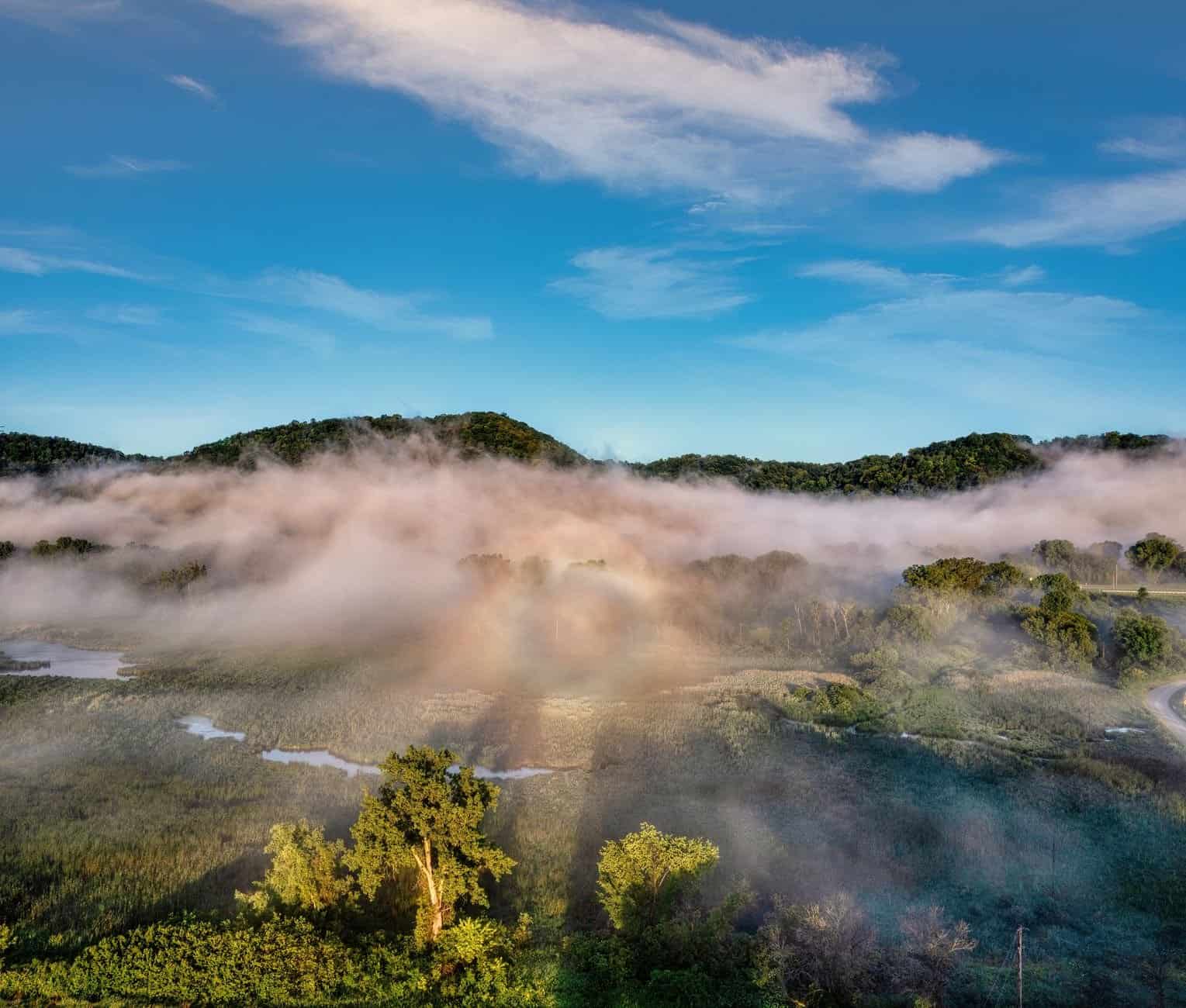
It helps to understand the land before you drive it. During the last ice age, glaciers pushed across most of the Midwest and left behind drift, a mix of sand, gravel, and clay that smoothed the surface. The Driftless area missed that deposit, so water has been carving the same ridges and valleys for a very long time. That is why the roads here climb and drop, why farmers plant on contour strips that follow the slopes, and why spring-fed streams run cold and clear enough for trout. Anglers come for brown and brook trout, and outfitters in towns like Westby and Coon Valley rent gear and give advice. If you fish, buy a Wisconsin license and check regulations for each stream.
Wildlife is part of the draw. Bald eagles winter along the Mississippi, especially near open water below the locks and dams, and birders can see warblers and herons in spring. Fall brings color across the ridges and the apple orchards open for picking. In winter, cross-country skiing and snowshoeing replace paddling, and the cold, quiet landscape feels completely different.
How They Compare
- Size and services: La Crosse is largest, with the most lodging, dining, and medical services. Viroqua and Prairie du Chien are small, so plan ahead.
- Scenery: La Crosse offers dramatic bluff views and a river city. Viroqua gives rolling ridges and farms. Prairie du Chien delivers river confluence views.
- Activities: La Crosse has the widest range of urban amenities and outdoor options. Viroqua leads in food, arts, and farm experiences. Prairie du Chien leads in history and Native heritage.
- Cost: All three are generally affordable, with La Crosse the highest during events.
- Crowds: Fall color and festivals can be busy everywhere, but weekdays and the shoulder seasons are quiet.
A Three-Day Loop
Day one, start in La Crosse. Drive up Grandad Bluff in the morning, walk Riverside Park, and have lunch downtown. Take an afternoon bike ride or paddle, then enjoy a brewery dinner.
Day two, drive about 35 minutes southeast to Viroqua through the hills. Visit the farmers market if it is running, stroll downtown, and have a long lunch. Spend the afternoon at the Kickapoo Valley Reserve and stay overnight in town.
Day three, head southwest toward Prairie du Chien, a drive of around an hour. Tour Villa Louis, walk St. Feriole Island, and hike at Wyalusing State Park for views of the confluence. If time permits, cross to Effigy Mounds in Iowa before heading home.
Where to Eat in Each Town
In La Crosse, look for a classic supper club or a brewery with a Friday fish fry, a Wisconsin tradition that usually runs $15 to $25. Viroqua’s cafes serve local eggs, breads, and cheese, and a farm dinner can be a highlight if you reserve ahead. In Prairie du Chien, expect riverside burgers, walleye sandwiches, and diner breakfasts. Across all three, cheese curds and a Wisconsin old-fashioned, a brandy cocktail, are the local order. Many small places take cash or have limited hours, so call before you drive far.
Practical Notes
- Weather: Summers are warm and humid, and winters are cold and snowy. Fall color usually peaks in early to mid October.
- Roads: Backroads can be narrow and winding. Watch for farm equipment and buggies.
- Cell service can be spotty in the valleys, so download maps in advance.
- Reservations: Smaller towns have limited lodging, and weekends in fall book quickly.
- Fees: State parks in Wisconsin require a vehicle admission sticker, and Effigy Mounds charges a small entrance fee.
- Check hours and event dates before you go, because small attractions often have seasonal schedules.
The Takeaway
The Driftless Region rewards travelers who slow down, and La Crosse, Viroqua, and Prairie du Chien give you three ways to do it. Choose La Crosse for convenience and river-city energy, Viroqua for food, arts, and farm country, and Prairie du Chien for history and river views. Combine them, and you see how a landscape that glaciers skipped shaped three distinct communities, each worth a stop on its own.