This Albuquerque Museum Has a Cannon Designed to Fire Nuclear Shells
We may earn money or products from the companies mentioned in this post. This means if you click on the link and purchase the item, I will receive a small commission at no extra cost to you ... you're just helping re-supply our family's travel fund.
Key Takeaways
- Find the cannon outdoors in Heritage Park.
- The museum also explores nuclear science and its civilian uses.
- The M65 fired one atomic round during a 1953 test.
- The Artifact Center requires a separate add-on ticket.
- Trinity Site opens to the public once a year.
Where to See the Atomic Cannon Albuquerque Museum Exhibit
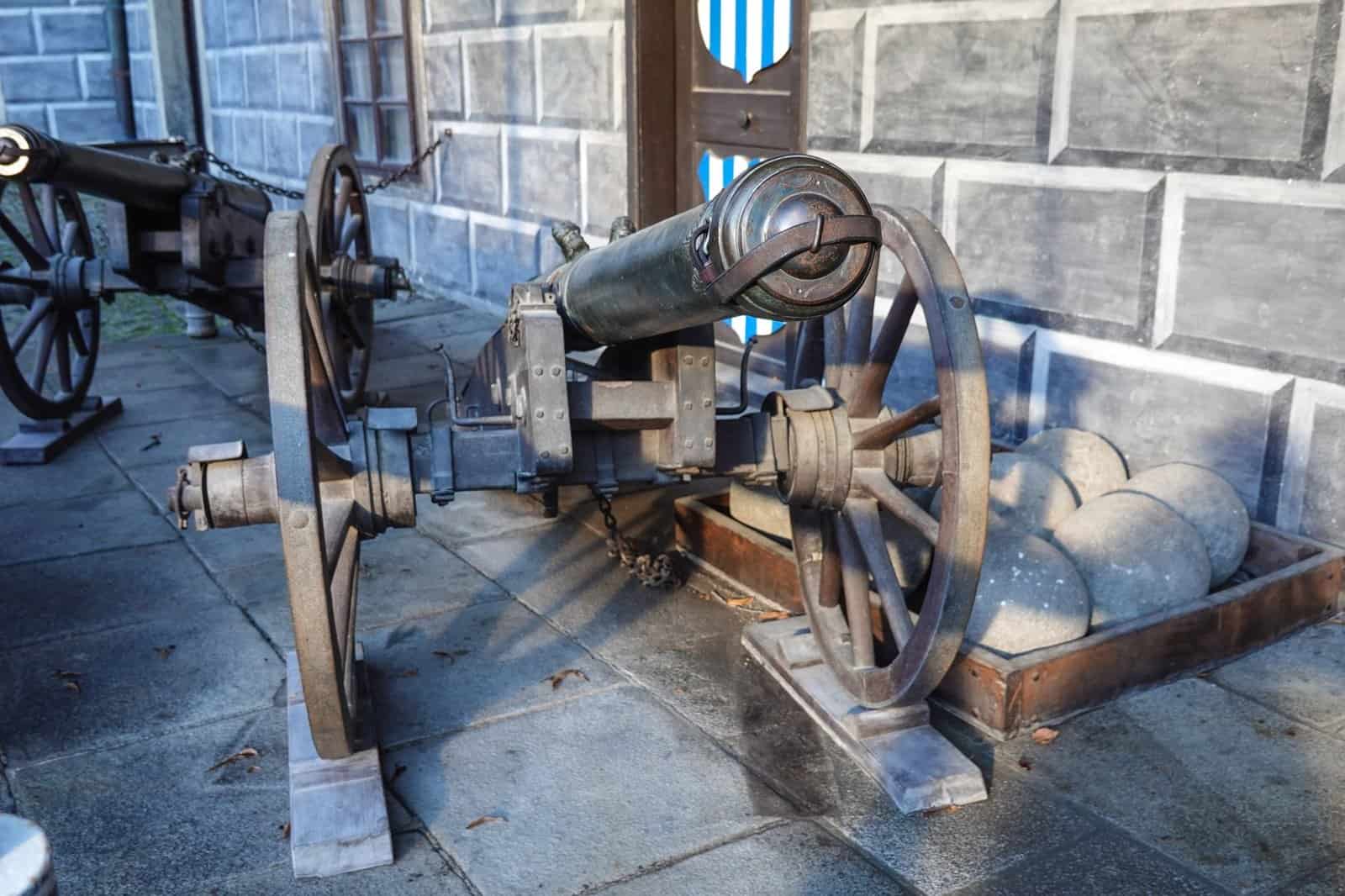
You’ll find the M65 in Heritage Park at 601 Eubank Blvd SE in Albuquerque. The nine-acre outdoor area is part of the National Museum of Nuclear Science & History visitor site. Plan for an outdoor walk between the museum’s indoor galleries and its large exhibits. The current museum site opened on April 4, 2009, with 30,000 square feet of indoor space. It is a Smithsonian Affiliate and an independent 501(c)(3) nonprofit. New Mexico resident prices require a valid photo ID with a resident address.Bring a valid photo ID with a New Mexico address to qualify for resident admission prices.
Find the cannon in Heritage Park
The cannon arrived from Sandia National Laboratories in 1968. Staff mounted it on its prime mover trucks in 2011, so you can see the gun with the vehicles built to move it. Visitors looking for the location of Atomic Annie can find it in Heritage Park, the outdoor exhibit area. The site includes aircraft and other large objects, so give yourself time to walk around. The cannon is outside, while galleries and visitor services are indoors.Hours, admission, and the Artifact Center
The museum is open daily from 8:00 am to 5:00 pm. It closes on New Year’s Day, Easter, Thanksgiving, and Christmas Day. General admission is $24 for adults ages 18–59, $22 for seniors ages 60 and older, and $22 for youth ages 6–17. Veterans and active military members, their spouse or partner, and minor dependents pay $12. Children 5 and under enter free. New Mexico resident admission prices use a valid photo ID with a resident address. Tickets for the atomic cannon exhibit at the Albuquerque museum are part of general museum admission. Tickets for the National Museum of Nuclear Science & History can change in price during high-demand periods. Check the museum website for the current price before you go. The self-guided Museum Artifact Center visit runs daily from 8:30 am to 4:30 pm. It costs an extra $10 for adults or $5 for youth ages 6–17; museum members enter free. Check the museum’s current ticket prices before your visit, especially during high-demand periods.What Was the M65 Atomic Cannon Designed to Do?
The M65 was built to fire nuclear or conventional shells, then move to another position on its truck-mounted transport system. A prime mover is a truck used to transport a large gun into firing position. The cannon had a designed range of 18 miles, but its only atomic test took place at seven miles. The U.S. Army called the 280mm gun “Atomic Annie.” It could fire a W-9 15 KT atomic projectile, as well as conventional shells. Front and rear Kenworth trucks carried it into position, then moved it again when needed.Its size, shells, and transport trucks
The gun and its trucks made an unusual sight. The front M249 and rear M250 trucks were both made by Kenworth Truck Company. The prime mover could reach a top speed of 30 mph.- Weight: 83.3 tons
- Length: 84 feet
- Bore: 280mm
- Crew: 5–7 people
The Grable test and the gun’s service years
The first and only atomic round fired from an M65 was the Grable shot on May 25, 1953. It took place during the Upshot-Knothole tests in Nevada. The warhead detonated 524 feet above the target area. Grable produced a 15-kiloton detonation at a range of seven miles. That test distance was well inside the gun’s designed 18-mile range. The test showed the weapon’s nuclear role, but it does not mean crews routinely fired atomic shells. The Army fielded the M65 from April 1955 through December 1962 in West Germany, South Korea, and Okinawa, Japan. It did not see combat use. By the mid-1960s, more mobile rockets had made the gun obsolete, and the Army withdrew it from service. Grable remains the only atomic round ever fired from an M65.What Else Can You See at the Museum?
The cannon is one part of a collection that puts nuclear science, weapons history, and peaceful applications in the same visitor experience. Inside, exhibits connect science to the Atomic Age through objects, replicas, and recreated spaces. There is more to see than military hardware. The museum’s displays also place the history of nuclear weapons within wider public life. The M65 is a historical artifact, not an artwork or a stand-alone art exhibit. Interpretive displays help explain the people, science, and events around it.Indoor exhibits on science and the Atomic Age
A granite-inlay periodic table measures 26 by 17 feet. Its scale makes a familiar science reference feel different from a classroom chart. You can study the elements across a large floor display. Full-scale replicas of Little Boy and Fat Man show the two atomic bombs used in 1945. The models help visitors understand their physical form, while the exhibits place them within the history of the Atomic Age. An artistic recreation of an Oppenheimer-era laboratory offers another kind of view. It uses original furniture, tools, hardware, and electronic instruments from the 1940s. The period objects give the room the feel of a working research space. For more context on how museums examine military stories, read about military myths challenged by museum exhibits. That history-based approach fits a museum where artifacts sit beside explanations of science and public life.Heritage Park’s aircraft and Artifact Center
Heritage Park extends the visit outdoors, with a B-29 and a B-52 among its aircraft. Their size gives you a sense of how much space large military exhibits need. The park also holds the M65 and other outdoor displays. The Museum Artifact Center has a separate add-on ticket. Its collection includes over 40 preserved, unclassified nuclear weapons, handling equipment, and deployment systems. The objects date from the Manhattan Project through the Cold War. The Artifact Center focuses on preserved objects and their roles in weapons systems. It gives the museum’s broader nuclear science history a closer look at the tools used to handle and deploy weapons. Set aside time for both the indoor galleries and the outdoor exhibits if you want to see the museum’s range.How New Mexico Connects to the Atomic Age
Trinity Site connects New Mexico’s history of nuclear research to the location of the first atomic bomb test. The site is not open to the public year-round. Access comes once a year, on the third Saturday in October, through Stallion Gate. The 2026 Trinity Site Open House was scheduled for Saturday, October 17, 2026. The site closed at 3:30 pm, and the entrance gate closed at 2 pm. A one-hour visit to the fenced ground-zero area results in a whole-body exposure of one-half to one millirem.A one-hour visit to the fenced ground-zero area results in a whole-body exposure of one-half to one millirem. That figure does not make radioactive material safe to touch.
Visiting the Trinity Site
Trinity Site opens to the public once each year for the Trinity Site Open House. Visitors enter through Stallion Gate, and the event has specific access rules. The 2026 open house has passed, so check the next event date before making travel plans.- There is no fee, and registration is not required.
- Visitors age 18 or older must show government-issued photo ID. Foreign nationals must show a valid passport.
- Do not pick up Trinitite, the radioactive glass found at the site.
The Manhattan Project’s New Mexico connection
Los Alamos served as the Manhattan Project’s bomb-design laboratory. J. Robert Oppenheimer, his wife Kitty, and their children Toni and Peter lived in a Los Alamos house from 1943 to 1945. Los Alamos National Laboratory began in 1943 to conduct scientific research for the project. The project also relied on uranium separation in Tennessee and plutonium production in Washington. Those tasks took place far from New Mexico, but they formed part of the same effort to build an atomic bomb.| Site | State | Manhattan Project role |
|---|---|---|
| Los Alamos | New Mexico | Bomb-design laboratory |
| Oak Ridge | Tennessee | Uranium-235 separation plants |
| Hanford | Washington | Plutonium-producing nuclear reactors |
Conclusion
The M65 is a striking entry point into a much larger story about nuclear science, military history, and New Mexico. You can understand the cannon better when you see it alongside exhibits about research, civilian uses, and life during the Atomic Age. The museum makes that wider science history part of the visit. Before you go, check the museum’s current ticket details and set aside time for the indoor galleries and Heritage Park. Trinity Site has its own access schedule, separate from Albuquerque attractions. Before planning a trip beyond Albuquerque, confirm the next public-access date for Trinity Site.FAQ
Is there an atomic bomb museum in Albuquerque?
Yes, the National Museum of Nuclear Science & History in Albuquerque explores nuclear history, weapons, and peaceful uses of nuclear technology. Its exhibits include historic artifacts, full-scale bomb replicas, and displays about science and the Atomic Age. The museum also has outdoor exhibits in Heritage Park, where visitors can see the M65 Atomic Cannon among other large objects.
What happened to the atomic cannon?
The U.S. Army withdrew the M65 from service by the mid-1960s as more mobile rockets made it obsolete. The Army had fielded the gun overseas, but it did not see combat use. One M65 now stands on display in Albuquerque, where its truck-based transport system helps visitors see how crews moved the large weapon.
Can you visit the atomic bomb site in New Mexico?
Yes, Trinity Site opens to the public once a year on the third Saturday in October through Stallion Gate. The annual Trinity Site Open House has specific entry times and rules, and the event does not run year-round. Check the current event details before traveling, since the gate closes before the site’s listed closing time.
Where in New Mexico did Oppenheimer live?
J. Robert Oppenheimer and his family lived in a house in Los Alamos from 1943 to 1945. His wife Kitty and their children Toni and Peter lived there with him during the Manhattan Project years. Los Alamos also served as the project’s bomb-design laboratory, linking the family’s home to the region’s research history.
Were any atomic bombs made in New Mexico?
Los Alamos, New Mexico, was the Manhattan Project’s bomb-design laboratory. The project built uranium-235 separation plants at Oak Ridge, Tennessee, and plutonium-producing nuclear reactors at Hanford, Washington. Those separate sites supplied key parts of the wider effort, while Los Alamos focused on bomb design and scientific research.
Are nukes stored in New Mexico?
The museum’s preserved, unclassified objects are historical displays, and their presence does not show whether active nuclear weapons are stored elsewhere in the state. Its collection includes weapons, handling equipment, and deployment systems from the Manhattan Project through the Cold War. Those artifacts help explain past programs, not current military storage arrangements.
Is the Trinity Site in New Mexico still radioactive?
Yes, Trinitite at Trinity Site is radioactive and must not be picked up. A one-hour visit to the fenced ground-zero area results in a whole-body exposure of one-half to one millirem. That visitor exposure figure does not mean the radioactive glass is safe to handle, so leave all material where it lies.
Why did Oppenheimer choose New Mexico?
Los Alamos offered a remote setting for a secure laboratory, and Oppenheimer already knew the area from earlier visits. The site became the Manhattan Project’s bomb-design laboratory in 1943. Its location supported concentrated research away from large cities, while other project sites handled uranium separation and plutonium production.