The Ozark National Forest Has 1.2 Million Acres. Most People Who Say They’ve ‘Done the Ozarks’ Have Seen About Ten of Them.
We may earn money or products from the companies mentioned in this post. This means if you click on the link and purchase the item, I will receive a small commission at no extra cost to you ... you're just helping re-supply our family's travel fund.
When people talk about visiting the Ozarks, they usually mean Branson, Missouri, or maybe Eureka Springs, Arkansas: theme restaurants, music theaters, a lake house rental with a hot tub. The actual Ozark National Forest, 1.2 million acres spread across northern Arkansas, is a different place almost entirely, and most of the people who claim to have experienced the Ozarks have never set foot inside its boundaries.
What the Forest Actually Contains
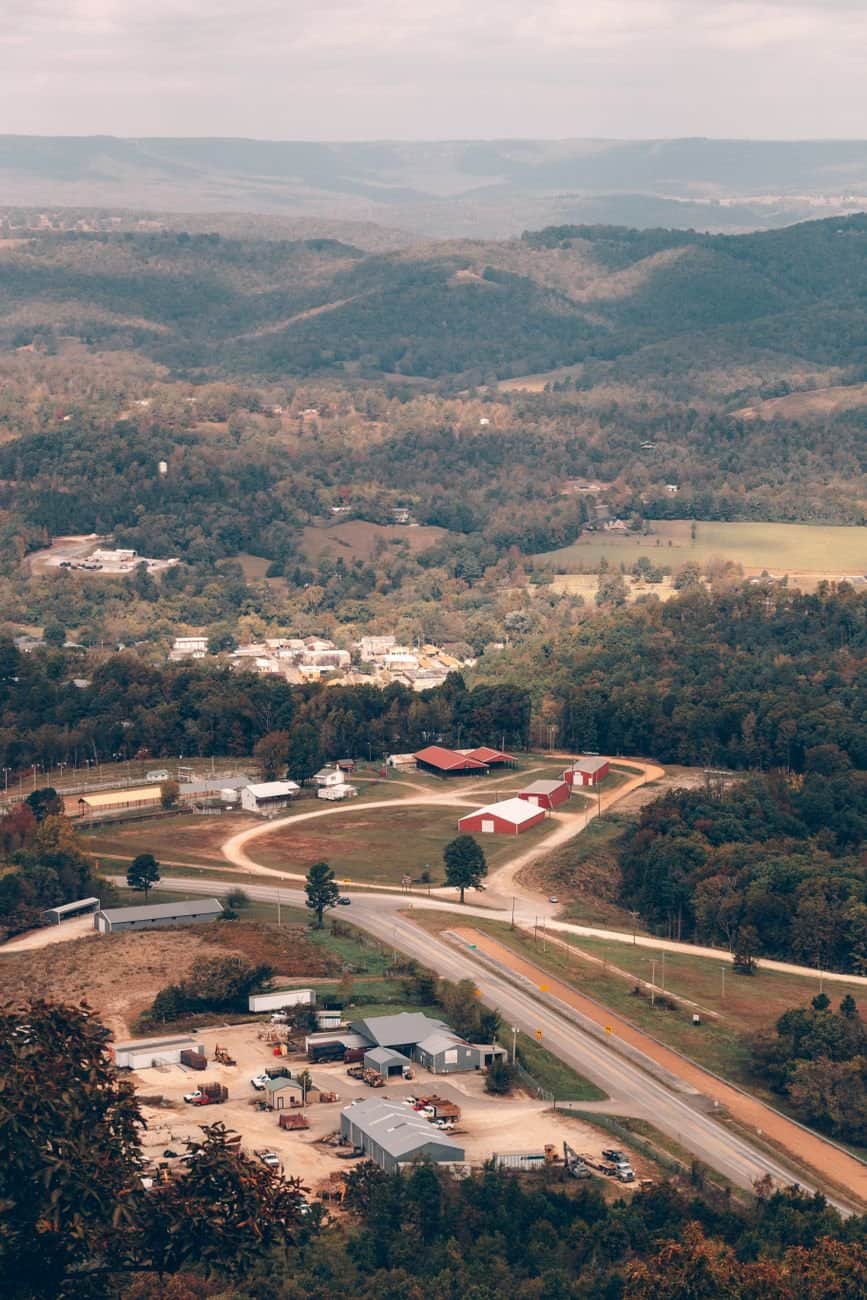
The forest, managed by the U.S. Forest Service and established in 1908, spans three geographically distinct districts across the Boston Mountains, the Upper Buffalo Wilderness, and the area around Mount Magazine, the highest point in Arkansas at 2,753 feet. Unlike the commercialized lake towns most tourists associate with the region, the national forest has almost no billboards, chain restaurants, or planned attractions. It has hiking trails, waterfalls that most Americans have never heard of, and small communities that function on logging, agriculture, and a slow trickle of outdoor recreation tourism rather than the entertainment-driven economy of Branson an hour to the north.
The Buffalo River Changes the Math Entirely
What’s Actually Worth Planning Around
- The Buffalo National River, America’s first designated national river, established in 1972
- Hawksbill Crag, one of the most photographed rock formations in Arkansas
- Mount Magazine State Park, with lodging built directly into the mountaintop
- Small towns like Jasper and Ponca that serve as trailheads rather than destinations
The Buffalo National River runs 135 miles through the middle of this region, protected from damming after a lengthy conservation fight in the 1960s that pitted local farmers against a growing environmental movement. Floating the Buffalo in summer, when water levels allow, costs relatively little compared to a Branson vacation: outfitters in Jasper and Ponca rent canoes and kayaks for $40 to $60 a day, and camping along the river runs $10 to $20 a night at Forest Service sites, a fraction of a lakefront rental an hour away.
Hawksbill Crag, a sandstone overhang in the Upper Buffalo Wilderness, has become one of the most photographed spots in the state thanks to Instagram, drawing hikers on a moderate 2.8-mile round trip who are often surprised by how undeveloped the trailhead itself remains, with no visitor center, no gift shop, and limited cell service for much of the drive in.
Why the Confusion Persists
Branson’s tourism marketing, built around country music theaters and Silver Dollar City since the 1960s, has been so effective nationally that it has essentially absorbed the word ‘Ozarks’ in the popular imagination, even though Branson itself sits at the edge of the region and represents a manufactured entertainment district rather than the actual geography and culture of the Ozark Plateau. Arkansas tourism officials have tried for years to redirect some of that attention toward the National Forest and the Buffalo River corridor, with mixed results, since the entertainment version of the Ozarks is simply easier to market and easier to visit without planning.
The forest’s remoteness is exactly what has kept it from following Branson’s trajectory. Cell service is patchy across most of the Boston Mountains, lodging options are limited to small family-run cabins and Forest Service campgrounds rather than resort hotels, and the nearest airport with significant commercial service, in Fayetteville or Little Rock, sits well over an hour away from most trailheads.
What that isolation preserves is a version of the Ozarks that looks almost nothing like the one on postcards sold in Branson gift shops: quiet ridgelines, clear rivers, and small communities where the economy still runs on timber and cattle rather than ticketed entertainment, a distinction that matters enormously to the people who actually live inside the forest’s boundaries year-round.
The Cost Comparison Nobody Advertises
A weekend in the actual Ozark National Forest, camping along the Buffalo River with a canoe rental and groceries from a small-town grocery store in Jasper or Marshall, can realistically cost under $150 total for two people. A comparable weekend in Branson, with theater tickets, a themed dinner show, and a chain hotel room near the Highway 76 strip, routinely runs $600 or more once everything is added up, a gap that says as much about what each place is actually selling as any description could.
Arkansas State Parks and the U.S. Forest Service jointly maintain the trail network and campgrounds throughout the region, and neither agency runs anything resembling the marketing budget that Branson’s theaters and Silver Dollar City deploy nationally. That funding asymmetry is precisely why so few people know the difference between the postcard Ozarks and the actual Ozark Plateau, even though the second one is larger, wilder, and in the view of many longtime visitors, considerably more interesting to actually spend a week inside.
What tends to happen, eventually, to travelers who make the trip to the actual national forest is a kind of quiet conversion. They arrive expecting a slightly wilder version of Branson and instead find a region with almost no infrastructure built around impressing visitors at all, which turns out to be exactly what draws people back year after year, often without ever posting about it, since there is comparatively little to perform for an audience once you’re standing at Hawksbill Crag at sunrise with nobody else around for miles.
Why the Distinction Matters to Locals
Arkansas State Parks officials have periodically discussed expanding marketing for the National Forest and Buffalo River corridor, but local residents in towns like Jasper and Ponca have historically pushed back against aggressive tourism promotion, wary of the traffic, short-term rental conversion, and price increases that transformed Branson decades earlier into something many Ozark Plateau locals view as a cautionary tale rather than a model to replicate.
That ambivalence, wanting the economic benefit of visitors without wanting to become the next overrun destination, has kept growth in the national forest corridor deliberately slower than market demand might otherwise support, a tension that shows up in zoning debates across nearly every small town along the Buffalo River’s watershed.