The Finger Lakes Just Got Named America’s Wine Region of the Year. Napa Investors Are Already Showing Up
We may earn money or products from the companies mentioned in this post. This means if you click on the link and purchase the item, I will receive a small commission at no extra cost to you ... you're just helping re-supply our family's travel fund.
Wine Enthusiast named the Finger Lakes its 2025 American Wine Region of the Year, a designation that would have seemed implausible a decade ago for a region best known, if it was known at all, for supermarket Rieslings and hybrid grapes that couldn’t compete with California. That’s changed fast. According to the New York Wine & Grape Foundation’s 2025-2026 annual report, the state’s wine and grape industry now generates more than $16.8 billion in direct economic impact, and outlets from JamesSuckling.com to Cristaldi & Co. have started describing the region’s wine scene as an outright “awakening.”
Why Napa’s Own Winemakers Are Moving East
The math is what’s driving the shift. Planting and bringing a vineyard to production in the Finger Lakes costs roughly $43,443 per acre, according to a Cornell University study — compared to $500,000 or more per acre in Napa, according to winemaker Nova Cadamatre, the first American woman to become a Master of Wine, cited in The Drinks Business. Climate change is compounding the pull: Napa faces increasing heat stress and wildfire risk, while the Finger Lakes’ cooler climate is producing riper, more consistent vintages than it could a generation ago, without losing the acidity that makes its wines distinct.
What’s Actually in the Ground Now
- Roughly 10,790 acres of vineyard across the region, producing about 55,000 tons of grapes annually
- Riesling remains the flagship white, with Cabernet Franc emerging as the signature red — up to 295 planted acres and climbing
- Vitis vinifera (the classic European wine species) now accounts for about 22% of total acreage, up sharply from a hybrid-dominated past
- 1.5 million visitors a year to more than 140 wineries, generating an estimated $3 billion in wine tourism impact (The Drinks Business)
The Region Spent Decades Underestimating Itself
For most of the 20th century, Finger Lakes wineries treated Riesling almost apologetically, according to winemakers quoted in trade coverage — happy to sell it but reluctant to lead with it, chasing validation instead through Pinot Noir and other varieties the region wasn’t suited to grow. That’s reversed. Wineries now put Riesling and Cabernet Franc front and center rather than treating them as a starting point before something more “serious.” Collectives like Cab Franc Forward have organized regional marketing specifically around proving the grape’s potential, and the strategy has worked: Cabernet Franc has become what multiple winery owners describe as the region’s flagship red.
What Changed in the Last Decade Specifically
Growing degree days — the measurement of accumulated warmth that determines how ripe grapes can get — rose from around 2,400 in 2000 to 2,700 by 2020, according to Cornell climate researchers. That shift, driven by a warming climate, has directly improved the reliability of red wine vintages in a region that historically struggled to ripen reds in more than a few years per decade. Vintners now point to 2016, 2020, and 2022 as strong red vintages, a frequency that would have been unheard of thirty years ago. Cornell’s Justine Vanden Heuvel, a viticulture researcher, put it plainly: the region simply didn’t used to get three hot years in a decade capable of properly ripening red grapes. Now it does.
Visiting Without the Napa Price Tag
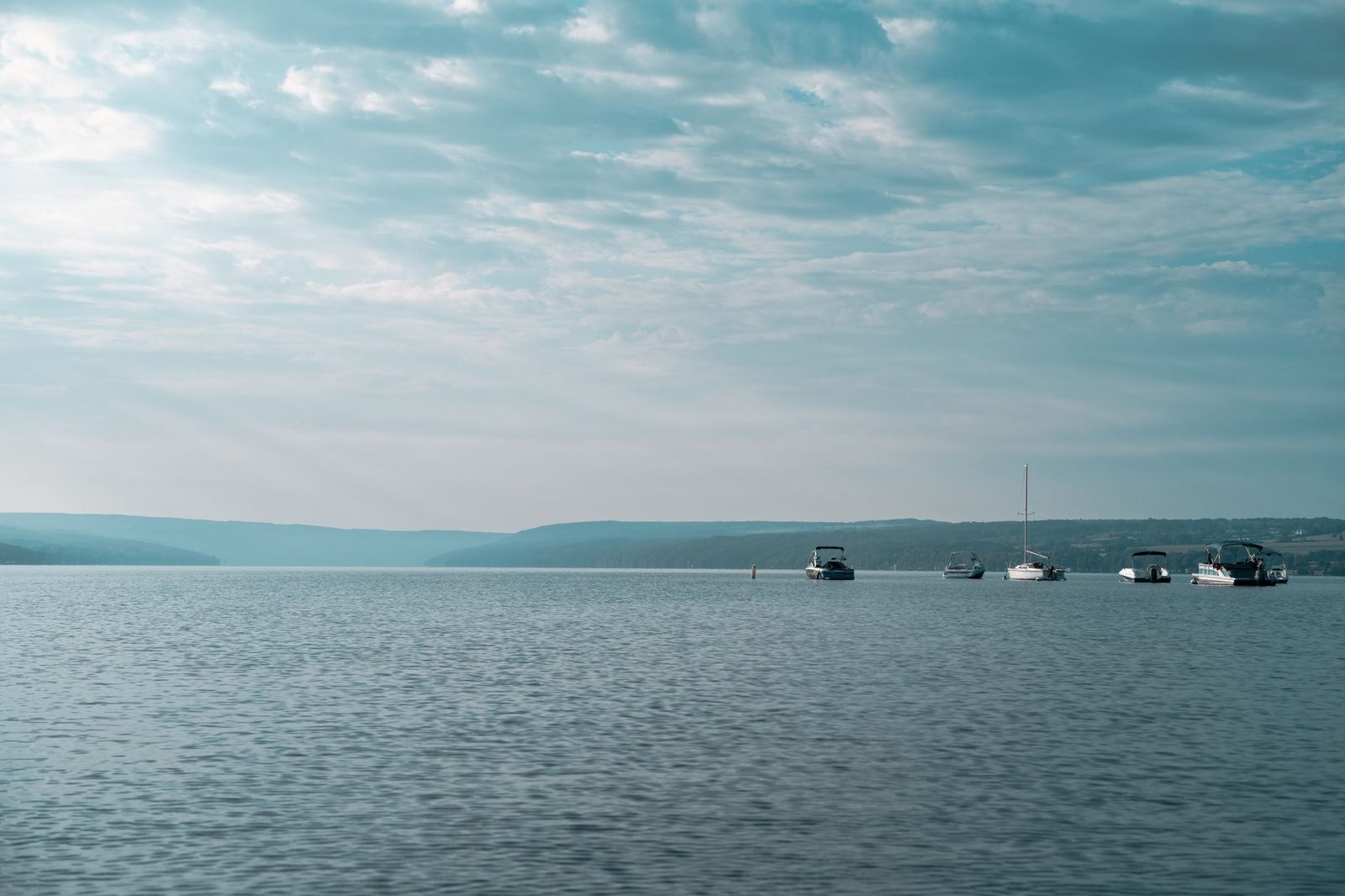
Most Finger Lakes wines still retail under $20 a bottle, even as quality has climbed toward what critics compare favorably to $40-60 West Coast bottles. Tasting rooms cluster most densely around Seneca, Cayuga, and Keuka Lakes, with towns like Geneva, Watkins Glen, and Hammondsport serving as reasonable home bases. The region rewards a slower visit — driving between wineries on two-lane roads that hug the lakeshores, rather than the tasting-room-hopping pace common in Napa. That’s less a limitation than the actual selling point: this is what wine country felt like before it became an industry built around the visit itself.
The Towns That Anchor a Visit
Geneva, at the northern tip of Seneca Lake, functions as one of the more walkable, restaurant-dense home bases for a Finger Lakes wine trip, with a historic downtown that avoided the wholesale demolition many upstate New York towns suffered during mid-century urban renewal. Watkins Glen, at the southern end of Seneca Lake, combines wine tourism with its namesake state park’s dramatic gorge trail and the Watkins Glen International racetrack, giving the town an unusual dual identity as both a wine destination and a motorsports pilgrimage site.
Hammondsport, on Keuka Lake, holds a claim to being the birthplace of American aviation manufacturing — Glenn Curtiss built early aircraft there — and today functions as a quieter, smaller-scale alternative to the busier Seneca Lake wine trail, with wineries like Dr. Konstantin Frank Vinifera Wine Cellars representing the literal origin point of the region’s modern vinifera movement, since Frank’s 1950s plantings there kicked off the shift away from hybrid-only viticulture that’s culminated in the region’s current recognition.
What to Actually Budget for a Weekend
Tasting fees at most Finger Lakes wineries run $10-20, typically waived with a bottle purchase, making a multi-winery day meaningfully cheaper than a comparable day in Napa or Sonoma, where tasting fees frequently run $40-75 per person before any purchase. A weekend trip covering lodging, several winery visits, and meals for two people typically runs in the $500-800 range depending on lodging choices — a fraction of what an equivalent Napa weekend would cost, which is precisely the value proposition drawing both visitors and investing winemakers east.
Hilton Head’s tension between preserved culture and continued development isn’t resolving anytime soon, and visitors who care about the distinction have more power than they might assume — choosing Gullah-owned businesses and heritage tours over generic resort activities sends a market signal that at least some of the island’s tourism economy has started to respond to.