Hilton Head Has 25 Golf Courses and a Gullah Community That Predates All of Them by 150 Years
We may earn money or products from the companies mentioned in this post. This means if you click on the link and purchase the item, I will receive a small commission at no extra cost to you ... you're just helping re-supply our family's travel fund.
Hilton Head Island draws more than 2.5 million visitors a year to its beaches, golf courses, and gated resort communities. Almost none of them arrive knowing that the island’s Gullah community — descendants of enslaved West Africans who developed a distinct language, cuisine, and culture in relative isolation on South Carolina’s sea islands — has a continuous presence on Hilton Head dating back to before the Civil War, and that this community’s land holdings have been shrinking for decades under pressure from the very development that built the island’s tourism economy.
What Got Built on Top of What Already Existed
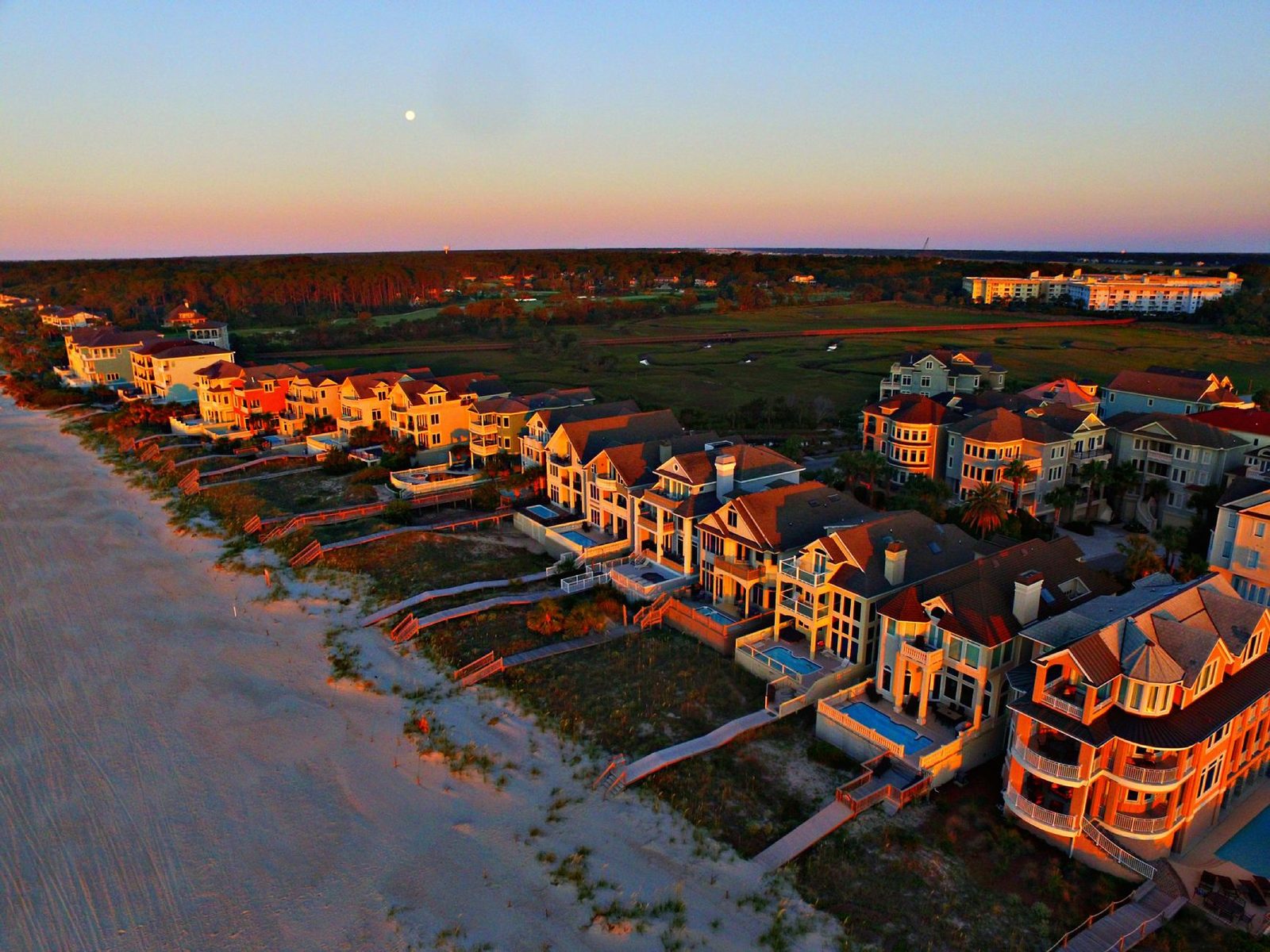
Hilton Head’s modern development began in earnest in the 1950s and 1960s, when developers began acquiring land from Gullah families — often through tax sale processes that Gullah descendants and researchers have described as exploitative, given that much of the land had been held communally as “heirs’ property” without clear individual titles that made it vulnerable to forced partition sales. The gated resort communities that now define the island’s image — Sea Pines, Palmetto Dunes, Shipyard — were built directly on land that Gullah families had farmed and lived on for a century after emancipation.
What’s Left of the Original Culture
- The Gullah Museum of Hilton Head Island preserves artifacts, oral histories, and cultural material from the island’s original Black communities
- Several historic Gullah neighborhoods, including areas near Squire Pope Road, remain occupied by descendant families despite decades of development pressure
- The Gullah Geechee Cultural Heritage Corridor, a National Park Service-affiliated designation, now spans coastal areas from North Carolina to Florida
- Land loss among Gullah heirs’ property owners has been a documented, decades-long pattern across the entire Lowcountry, not unique to Hilton Head
The Heirs’ Property Problem, Explained Simply
Much of the land Gullah families held after emancipation was passed down without formal wills, becoming “heirs’ property” owned collectively by all descendants rather than by any single title-holder. That arrangement worked fine for generations of subsistence farming, but it became a legal vulnerability once land values spiked with resort development: a single heir, sometimes one who had left the island decades earlier and held only a fractional interest, could force a partition sale of the entire property, often at a fraction of its market value to developers who specifically targeted these vulnerable titles. Legal aid organizations and Gullah advocacy groups have spent decades trying to reform these laws, with mixed success across different states.
What Visitors Can Actually Do to See This
The official Hilton Head tourism site now includes Gullah heritage tours as part of its promoted itineraries — a notable shift from decades in which the island’s marketing focused almost exclusively on golf and beach access. The Gullah Museum offers guided walking tours through remaining historic neighborhoods, and several Gullah-owned businesses on the island, including restaurants serving traditional dishes like red rice, shrimp and grits, and okra soup, operate specifically to keep the cultural connection visible rather than folded entirely into the resort economy that surrounds them.
The Tension That Isn’t Going Away
Development pressure on the island hasn’t stopped. Property values continue climbing, gated community expansions continue, and the demographic and economic gap between Hilton Head’s resort population and its remaining Gullah residents continues to widen. What makes Hilton Head different from other over-developed beach destinations isn’t that this tension exists — it’s that the culture being displaced predates the tourism industry by roughly a century and a half, and its disappearance would represent the loss of one of the only linguistically and culturally distinct Black American communities still rooted in its original geography.
How the Development Actually Happened, Step by Step
Charles Fraser’s development of Sea Pines Plantation beginning in 1957 is often credited as the model for the modern gated golf resort community, and it became the template copied across the rest of Hilton Head and, eventually, much of the coastal Southeast. Fraser’s approach emphasized environmental design sensibilities unusual for the era — preserving tree canopy, limiting building heights — which gave Sea Pines a reputation for tasteful development relative to some of what followed elsewhere on the island. That reputation for tasteful design coexisted with the underlying reality that the land being developed had been Gullah-held for generations before these acquisitions began.
By the 1970s and 1980s, golf course and resort development had become the dominant economic engine on the island, and land values rose accordingly — a dynamic that made the remaining Gullah-held heirs’ property simultaneously more valuable and more vulnerable to the partition sale mechanism described by researchers and advocacy groups tracking Lowcountry land loss. The Southern Poverty Law Center’s reporting on the broader Gullah Geechee land loss pattern frames Hilton Head as one of the more advanced examples of a trend playing out, to varying degrees, across the entire Sea Island region from North Carolina to Florida.
What Reform Efforts Have Actually Achieved
South Carolina and several other Southeastern states have passed versions of the Uniform Partition of Heirs Property Act since the mid-2010s, a reform designed specifically to give family co-owners of heirs’ property more protection against forced sales, including rights of first refusal and requirements for fairer market-value appraisals before any sale proceeds. Legal aid organizations describe this as a meaningful but incomplete fix — it slows the mechanism that drove decades of land loss without addressing the underlying economic pressure that makes selling attractive to individual heirs facing property tax bills on land that generates no income.
Whichever New Mexico city you choose first, go into it knowing you’ve chosen a version of the state, not the whole thing. The travelers who come back describing New Mexico most accurately are almost always the ones who eventually made it to both cities, and then kept going past either of them.