Tangier Island, Virginia Is Losing Land to the Chesapeake Bay Every Year. Its Watermen Population Has Dropped by Half Since 2000.
We may earn money or products from the companies mentioned in this post. This means if you click on the link and purchase the item, I will receive a small commission at no extra cost to you ... you're just helping re-supply our family's travel fund.
Tangier Island, a small crabbing community in the Chesapeake Bay roughly 12 miles from Virginia’s Eastern Shore mainland, has lost a substantial share of its landmass to erosion and rising sea levels over the past century, and its population of watermen, residents who make their living crabbing and fishing the bay’s waters, has declined by roughly half since 2000 as the island’s economic and environmental pressures have combined to push younger generations toward the mainland.
Scientists studying the island’s erosion rates have projected that Tangier could become uninhabitable within the coming decades absent significant intervention, a timeline that has made the island a frequently cited case study in discussions of American communities facing near-term climate displacement, even as many residents themselves resist that framing and continue pushing for seawall construction and other protective infrastructure investment.
Why Tangier Is Losing Land So Much Faster Than the Mainland
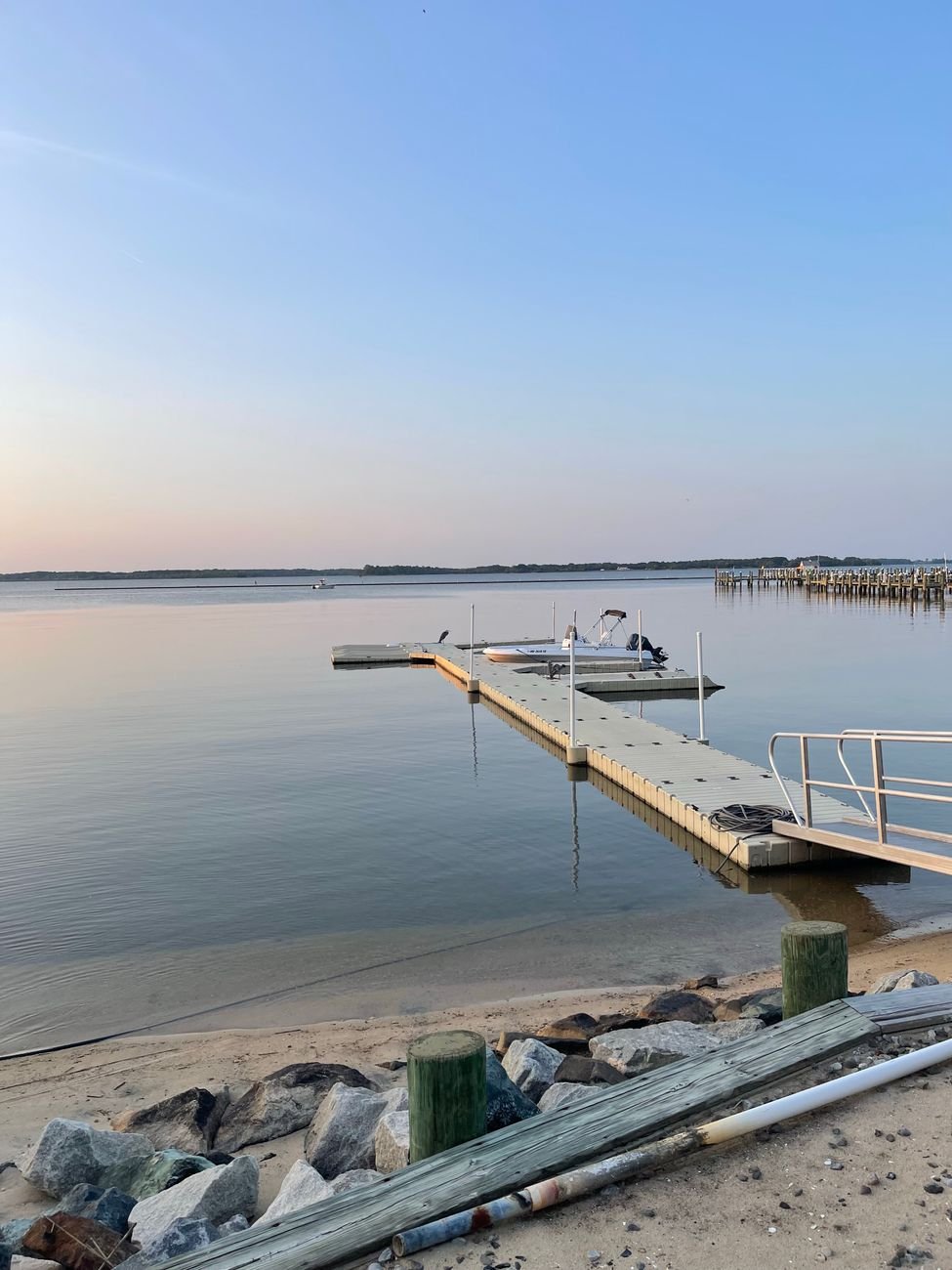
Tangier Island’s low elevation, soft marsh-adjacent soil composition, and direct exposure to open Chesapeake Bay wave action make it considerably more vulnerable to erosion than the more sheltered communities along Virginia’s Eastern Shore mainland, a vulnerability that has been documented and measured by U.S. Army Corps of Engineers studies tracking the island’s shrinking footprint over multiple decades.
The island has already lost several small satellite land masses that once supported additional structures and farmland, and current erosion models suggest the main inhabited portion of the island could face similar losses within a human generation if current trends continue without significant engineered intervention like the seawall projects the island has periodically received partial federal funding for.
What Life as a Tangier Waterman Actually Involves
Tangier’s economy has depended almost entirely on Chesapeake Bay blue crab harvesting for generations, with watermen working small boats out into the bay daily during crabbing season to check crab pots, a physically demanding and increasingly economically precarious livelihood as both crab populations and the island’s remaining workforce have declined simultaneously.
- Tangier’s population has fallen from several hundred residents decades ago to a few hundred today, with the working waterman population declining even faster than the overall population
- Blue crab harvests in the Chesapeake Bay have fluctuated significantly due to both environmental pressures and regulatory catch limits imposed to protect the species
- The island has no bridge connection to the mainland, requiring residents to travel by boat or a small airstrip for most transportation needs
- Younger generations have increasingly left the island for mainland job opportunities, accelerating population decline beyond what erosion alone would explain
The Political and Cultural Debate Over the Island’s Future
Tangier has become an unusual political flashpoint, drawing national media attention after the island’s mayor publicly discussed climate change skepticism in ways that contrasted with the scientific consensus about the erosion threats the island faces, a tension that has made Tangier a frequently cited example of the disconnect between local climate perception and broader scientific climate change discussion.
Federal and state funding for seawall construction has arrived in phases over the years, providing some protection for the island’s harbor and most developed areas, though residents and outside engineers disagree about whether current funding levels are sufficient to meaningfully extend the island’s habitable lifespan given the scale of the erosion problem documented in Army Corps studies.
What a Visit to Tangier Actually Involves
Tangier remains accessible to visitors via passenger ferry from several Eastern Shore and mainland Virginia and Maryland ports during the warmer months, offering a genuinely distinctive experience of a working watermen community with a unique regional dialect and culture that linguists have studied for its unusual retention of older English speech patterns isolated by the island’s geographic remoteness.
Visitors typically combine a walking or golf cart tour of the small island with a seafood meal featuring the island’s signature blue crab, though tourism operators and residents alike acknowledge that visitor numbers remain modest compared to more accessible Chesapeake Bay destinations, leaving the island’s economy still overwhelmingly dependent on crabbing rather than tourism despite its growing media profile.
What This Means Looking Ahead
The trends described here are likely to continue evolving over the coming years, and the specific dynamics at play, economic, demographic, or environmental, will keep shaping how Tangier Island’s erosion crisis develops going forward, making it worth continued attention from anyone with a genuine interest in the place or subject rather than a one-time curiosity.
For now, understanding the fuller context behind Tangier Island’s erosion crisis gives a more accurate picture than the surface-level version most casual observers encounter, and that accuracy matters increasingly as more people make real decisions, about where to live, where to visit, or how to spend their money, based on incomplete or outdated impressions.
What Locals Say Compared to What Visitors Assume
Longtime residents familiar with Tangier Island’s erosion crisis often describe a considerably more nuanced picture than outside visitors or casual observers typically assume, with the day-to-day reality involving tradeoffs and complications that don’t fit neatly into either an overly romanticized or overly dismissive narrative about the place.
That gap between local knowledge and outside perception shows up repeatedly across similar cases nationally, and it’s a useful reminder that Tangier Island’s erosion crisis rewards a closer, more careful look rather than the quick surface judgment that most passing visitors or online commentary tend to settle for.
The Practical Takeaway for Anyone Paying Attention
Anyone planning to engage more seriously with Tangier Island’s erosion crisis, whether as a visitor, a potential resident, or simply someone trying to understand the underlying dynamics accurately, benefits from looking past the most commonly repeated version of the story and toward the specific data and history that actually explain how things got this way.
That extra bit of research rarely takes long, and it consistently produces a more useful and more accurate understanding than relying on secondhand impressions, making it worth the modest additional effort for anyone whose decisions actually depend on getting Tangier Island’s erosion crisis right.