Sun Valley Opened With the World’s First Chairlifts in 1936. Here’s What That History Looks Like Today
We may earn money or products from the companies mentioned in this post. This means if you click on the link and purchase the item, I will receive a small commission at no extra cost to you ... you're just helping re-supply our family's travel fund.
Every chairlift at every ski resort traces its family tree back to central Idaho. In December 1936, Sun Valley Resort opened near the old mining town of Ketchum with the world’s first chairlifts, built by the Union Pacific Railroad on Proctor and Dollar mountains. Sun Valley chairlift history is still visible today, in the mountains where those lifts ran, the lodge built for the resort’s opening, and the museum exhibits that tell the story.
According to Smithsonian Magazine, the first Proctor Mountain lift carried skiers in chairs suspended about 20 feet off the ground for 3,540 feet, gaining 1,150 feet in elevation. Union Pacific engineer James Curran designed it after studying equipment used to load bananas onto ships, adapting the idea of a moving overhead cable to carry people instead of cargo.
The lifts were part of a much bigger plan. Here is how Sun Valley came to be, and what you can see of that history now.
How Sun Valley got the first chairlifts
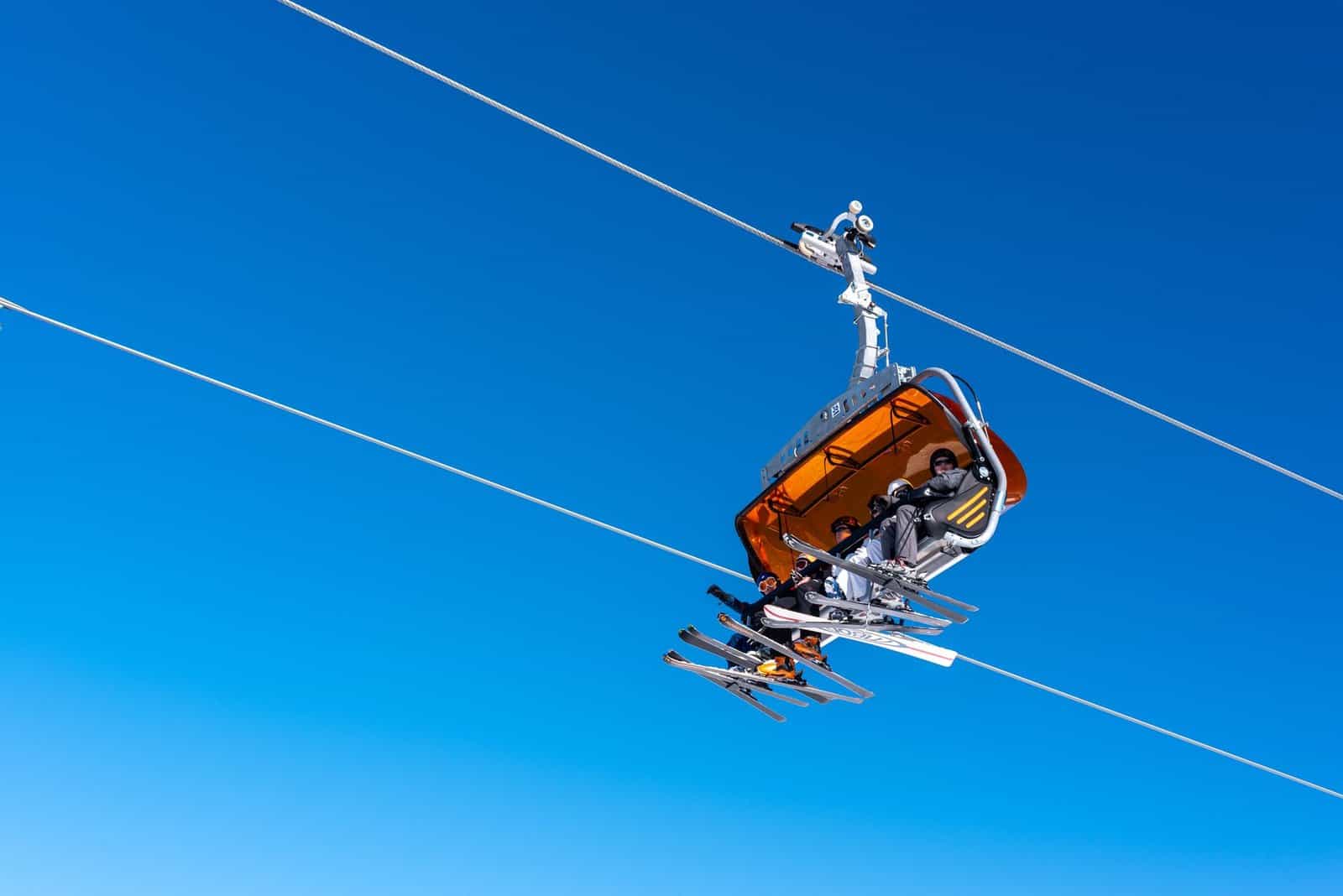
In the 1930s, Union Pacific chairman W. Averell Harriman wanted to boost passenger traffic on the railroad’s western lines. Alpine skiing had gained popularity after the 1932 Winter Olympics in Lake Placid, New York, and Harriman saw an opportunity: build a destination ski resort in the American West, reached by train.
According to the City of Sun Valley’s history, Harriman hired Austrian Count Felix Schaffgotsch to search the Rocky Mountains for the perfect site. In 1936, Schaffgotsch reached Ketchum, a small former mining town, and wrote to Harriman that it contained “more delightful features for a winter sports center than any other place I have seen in the United States, Switzerland or Austria.”
Construction moved fast. In about seven months and at a cost of $1.5 million, a four-story lodge was built on the former Brass Ranch, and ski runs were cut on nearby Dollar and Proctor mountains. The city notes that today’s main ski mountain, Bald Mountain, was not part of the original plan because it was beyond the ski technology of the 1930s.
Why chairlifts were invented here
Before chairlifts, skiers usually climbed uphill or used rope tows, J-bars, or other surface lifts that dragged them up the slope. Harriman wanted his wealthy guests to travel up the mountain in greater comfort and style, according to the city’s history. That push led Union Pacific’s engineering department to develop the chairlift.
Smithsonian Magazine reports that Curran, working in the railroad’s Omaha engineering offices, designed and tested prototypes before traveling to Ketchum to oversee construction. The early lifts had wooden towers and single chairs attached to an overhead cable. Because the chairs were fixed to the cable, the lift did not slow down for riders to get on or off, which made loading an adventure.
When the resort opened in December 1936, it introduced the world to a ski lift that would be copied around the globe.
What Sun Valley chairlift history looks like today
You can still trace the story on the ground in Sun Valley and Ketchum.
Proctor Mountain
Proctor Mountain, east of the Sun Valley Lodge, was home to the first chairlift. The Proctor lift was later removed and its parts were used on Bald Mountain, according to local historical accounts. Today, Proctor is mostly used for hiking and Nordic recreation. Some visitors hike up to see what remains of the original lift line and enjoy views of the valley. Check trail conditions and access rules before you go.
Dollar Mountain
Dollar Mountain, the other original ski hill, is still part of Sun Valley Resort. It is now known as a beginner-friendly area and terrain park, with gentle slopes and modern lifts. Skiing Dollar gives you a sense of the terrain the resort’s first guests experienced in 1936, though the lifts and grooming are very different now.
Bald Mountain
Bald Mountain, known locally as Baldy, became Sun Valley’s main ski mountain after chairlifts were built there for the winter of 1939 and 1940. As technology improved, Baldy’s lift network grew into today’s system of high-speed lifts serving long, steep runs. Riding a modern lift on Baldy, you are using the descendant of the single chairs that started on Proctor.
The Sun Valley Lodge
The Sun Valley Lodge, built for the resort’s 1936 opening, still stands at the heart of the resort. It has been renovated over the years, but its role as the center of Sun Valley life continues. The lodge’s hallways display photos of celebrities who visited over the decades, from Hollywood stars to sports figures.
Museum exhibits
The Sun Valley Museum of History in Ketchum, operated by the Community Library, tells the story of the region, including the resort’s founding, the early lifts, and the people who shaped the valley. Check current hours before visiting, as they can vary by season.
Hemingway and Sun Valley
Ernest Hemingway is one of Sun Valley’s most famous guests. He first came to Sun Valley in 1939, invited as part of the resort’s efforts to attract famous visitors. He worked on For Whom the Bell Tolls while staying at the Sun Valley Lodge, and he returned many times over the years.
Hemingway later bought a home in Ketchum, where he died in 1961. He is buried in the Ketchum Cemetery, and the Hemingway Memorial sits along Trail Creek, east of Sun Valley. Many visitors stop at both.
Visiting Sun Valley in winter
Sun Valley today is a full-scale ski resort, known for long groomed runs on Baldy, a strong Nordic skiing scene, and an old-school atmosphere. A winter visit can include:
- Downhill skiing on Bald Mountain: Long, consistent runs and a famous vertical drop.
- Beginner skiing on Dollar Mountain: Gentle terrain and terrain parks.
- Nordic skiing: Groomed cross-country trails around Sun Valley and in the surrounding valley.
- Ice skating: Sun Valley’s outdoor ice rink, near the lodge, has a long history of skating shows.
- Sleigh rides: Horse-drawn sleigh rides to a historic cabin for dinner have long been part of the Sun Valley experience.
Check current offerings and reservations, as activities and schedules can change.
Getting there
Sun Valley is in central Idaho, about 150 miles east of Boise. The closest airport is Friedman Memorial Airport in Hailey, about 12 miles south of Ketchum, with seasonal flights from several cities. Many visitors also fly into Boise and drive.
The original vision of arriving by train is no longer an option. Passenger trains stopped serving Ketchum decades ago, and the old rail line has been converted into a paved trail used for biking, walking, and Nordic skiing in winter.
Why Sun Valley’s history matters
Sun Valley was the first destination ski resort in the United States designed from the start to attract visitors from far away. It combined a luxury lodge, a mountain village, and the new technology of chairlifts, setting a model that resorts across North America followed.
The chairlift changed skiing worldwide. By making it easier to get up the mountain, it made skiing more accessible and more enjoyable for many people. Today’s high-speed detachable lifts and gondolas are direct descendants of those first single chairs on Proctor Mountain.
A sample day of Sun Valley history
Start with breakfast at the Sun Valley Lodge, then walk through its halls to see historic photos. Take a run or two on Dollar Mountain to get a feel for the original ski terrain. In the afternoon, visit the Sun Valley Museum of History in Ketchum. Drive out Trail Creek Road to the Hemingway Memorial, then stop by the Ketchum Cemetery. End the day watching skaters on the outdoor rink near the lodge.
How the first chairlift worked
The early Sun Valley lifts were simple by modern standards. A steel cable ran in a continuous loop between a bottom station and a top station, supported by towers along the way. Chairs, each holding a single rider, were clamped to the cable. Riders waited at the loading point, sat down as the chair swung by, and rode up with their skis dangling. There were no safety bars like those on many lifts today.
Because the chairs could not detach from the cable, the whole lift had to move slowly enough for riders to load and unload safely. Modern detachable lifts solve that problem by releasing chairs from the cable at the stations, letting them slow down for loading while the cable keeps moving fast. That innovation came decades later, but the basic idea of carrying seated skiers on a moving overhead cable is the one Union Pacific introduced at Sun Valley.
Sun Valley in other seasons
Summer brings hiking, mountain biking, and outdoor concerts, and the lodge and village stay busy. Fall offers golden aspens and quieter trails.
The bottom line
Sun Valley opened in December 1936 with the world’s first chairlifts, built by Union Pacific on Proctor and Dollar mountains to bring wealthy skiers up the slopes in comfort. Today, that history lives on in Dollar Mountain’s gentle runs, Bald Mountain’s modern lift system, the original Sun Valley Lodge, local museum exhibits, and the Hemingway sites around Ketchum. When you ride any chairlift anywhere, you are riding a piece of Idaho history.