The States Where You Can Still Buy a House for Under $200,000 (And What It’s Like to Live There)
We may earn money or products from the companies mentioned in this post. This means if you click on the link and purchase the item, I will receive a small commission at no extra cost to you ... you're just helping re-supply our family's travel fund.
The median home price in California is $820,000. In Massachusetts it’s $610,000. In New York State it’s $480,000.
And in West Virginia, the median home price is $147,000. In Mississippi it’s $158,000. In Iowa it’s $193,000.
The housing crisis is real and it is not evenly distributed. Some states largely escaped it — and with remote work making geography genuinely flexible for more Americans than ever before, these numbers are increasingly relevant to people who are asking a question they never thought they’d ask: should I just… move?
The Housing Crisis Has a Geography — and Some Places Escaped It
The states with median home prices under or around $200,000 as of 2026:
West Virginia
— Median: ~$147,000. Lowest median home price in the country.Mississippi
— Median: ~$158,000Arkansas
— Median: ~$175,000Louisiana
— Median: ~$178,000Oklahoma
— Median: ~$185,000Iowa
— Median: ~$193,000Kansas
— Median: ~$195,000Alabama
— Median: ~$198,000Indiana
— Median: ~$210,000 (just above, but individual markets well under $200k)Ohio
— Median: ~$215,000 (same caveat — many markets under $200k)
These are median prices — meaning half of all homes in these states sell below these numbers. In rural counties and smaller cities within these states, $150,000 buys a 3-bedroom house on a half-acre.
The Midwest States Where Your Dollar Goes Furthest

The Midwest corridor — Iowa, Kansas, Indiana, Ohio, Missouri, Nebraska — offers the best combination of affordability and quality of life infrastructure.
Iowa
— Des Moines is the most surprising city story in the Midwest. A legitimate food scene, a strong job market anchored by insurance, agriculture, and tech, good schools, and a median home price under $240,000 in the metro. Rural Iowa counties: $80,000–$120,000 for a move-in-ready farmhouse. The downside: Iowa winters are serious and the state’s cultural options are more limited than coastal metros.Kansas (Wichita)
— Wichita is a city of 400,000 that most Americans have never considered. Aerospace manufacturing (Boeing, Spirit AeroSystems, Textron), a revitalized downtown, and median home prices around $175,000. The Art Institute of Chicago has nothing on the Wichita Art Museum’s Wyeth collection.Indiana (Fort Wayne and Muncie)
— Fort Wayne has emerged as one of the Midwest’s most livable mid-size cities. A revitalized downtown, strong healthcare and manufacturing job base, and median home prices around $195,000. Three-bedroom houses in established neighborhoods: $150,000–$180,000.Ohio (Cleveland and Dayton)
— Cleveland’s West Side Market neighborhood and the arts district in Ohio City have produced a genuine food and arts scene in a city where a 3-bedroom Victorian house costs $120,000–$160,000. Dayton’s Oregon District is similar: one of the great neighborhood bar streets in the country surrounded by genuinely affordable housing.Missouri (Kansas City and St. Louis)
— Kansas City’s urban core neighborhoods — Westport, Brookside, Midtown — offer walkable urban living with home prices 60% below comparable Boston or Chicago neighborhoods. St. Louis has one of the most architecturally significant housing stocks of any American city, available at prices that seem impossible to anyone from a coastal market.
The Southern States With Surprising Affordability

Arkansas (Bentonville and Fayetteville)
— The Walmart effect has made Bentonville a surprisingly sophisticated small city. Crystal Bridges Museum of American Art is genuinely world-class (free admission, endowed by the Walton family). The Razorback Greenway is 36 miles of urban bike trail. Home prices in the metro: $220,000–$280,000 — higher than rural Arkansas but a fraction of a comparable mid-size coastal city.Oklahoma (Tulsa and Oklahoma City)
— Tulsa’s Gathering Place — a $465 million privately funded public park on the Arkansas River — has become one of the best urban parks in the country. The Brady Arts District has excellent restaurants and live music. Median home price in Tulsa: around $185,000.West Virginia (Charleston and Morgantown)
— West Virginia’s challenge is job availability — the economy has struggled for decades with the decline of coal. But Morgantown (home of WVU) has a young population, outdoor access to the New River Gorge National Park 90 minutes away, and home prices that are genuinely unbelievable to anyone from a coastal market. A 4-bedroom house in a good Morgantown neighborhood: $180,000–$220,000.Alabama (Huntsville)
— Huntsville is the fastest-growing city in Alabama and one of the most underrated mid-size cities in the South. NASA’s Marshall Space Flight Center, a massive defense and tech employment base, and a revitalized downtown. Median home price around $280,000 — higher than rural Alabama but still dramatically affordable relative to any coastal equivalent.
What You’re Gaining (That Coastal Residents Don’t Have)
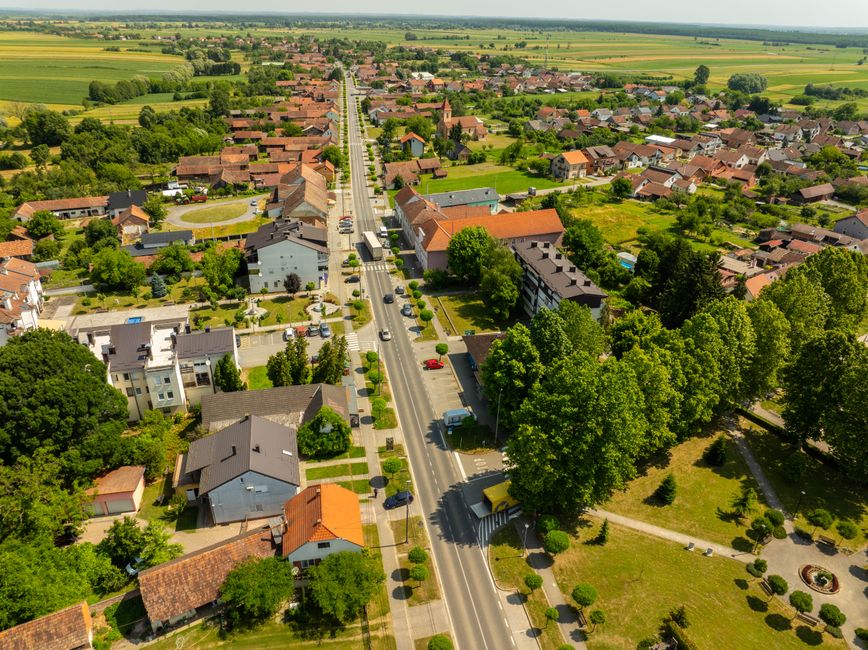
People who’ve made the move from coastal to affordable-state markets consistently report the same benefits.
Space
— A yard. An actual yard. A garage. A spare bedroom that isn’t a closet. The physical experience of having more space than you need is qualitatively different from what most coastal renters have ever experienced as adults.Ownership over renting
— Owning a home builds equity. A $150,000 home that appreciates 4% per year is worth more than $200,000 in a decade. This is wealth that renters in expensive markets cannot access.Lower total cost of living
— It’s not just housing. Groceries, restaurants, childcare, and services are all priced to local income levels, which are lower than coastal markets. The overall cost-of-living gap between Des Moines and San Francisco is larger than the housing gap alone.Community
— Smaller cities and towns have social infrastructure that dense coastal metros often don’t: neighbors who know each other, local institutions that persist across generations, and a pace of life that allows relationships to develop without constant scheduling.Outdoor access
— Many of these states have exceptional outdoor recreation within 30–60 minutes of any city: West Virginia’s New River Gorge, Arkansas’s Ozarks, Iowa’s river bluffs, Oklahoma’s Wichita Mountains. Outdoor recreation in affordable states is dramatically less crowded than equivalent national parks.
What You’re Trading (Honest Assessment)

Any piece that doesn’t address the tradeoffs is selling you something.
Job markets
— The remote work revolution has made this much less significant for knowledge workers, but not everyone can work remotely. Healthcare, education, and local government are stable employer bases in these states; finance, media, and tech remain concentrated on the coasts.Cultural and entertainment density
— A New York City resident has access to more cultural events in a month than a Wichita resident has in a year. This matters to some people more than others. If regular access to world-class theater, art, and music is central to your quality of life, smaller Midwest and Southern cities will feel limited.Climate
— Midwest winters are genuinely harsh. Southern summers are genuinely brutal. Neither is negotiable. Both are manageable with the right attitude and preparation, but neither should be underestimated.Political and social environment
— Many of the most affordable states are politically conservative. For LGBTQ+ individuals, people of color, or anyone whose identity is in tension with the dominant culture of a specific community, this is not a trivial consideration. Research the specific city, not just the state — Tulsa’s Brady District and Columbus’s Short North are significantly different social environments than the surrounding rural regions.Proximity to airports and major cities
— Living in Fayetteville, Arkansas is a different life proposition than living in rural Mississippi. City selection within affordable states matters enormously for maintaining connection to the broader world.
The Remote Work Factor That Changed Everything

Before 2020, the conversation about moving to an affordable state was almost entirely about job availability. That calculus changed fundamentally.
- An estimated 15–20% of American workers are now fully remote — able to live anywhere with reliable internet
- Many tech, finance, consulting, and creative industry roles that previously required physical proximity to major metros are now location-independent
- States and cities in this list have invested in broadband infrastructure specifically to attract remote workers — West Virginia, Kansas, and Oklahoma have all launched remote worker incentive programs offering cash grants to relocating workers
- The effective pay premium of a $150,000 salary in Des Moines versus San Francisco — accounting for housing, taxes, and cost of living — can be equivalent to a $250,000+ salary in San Francisco
The Cities Within These States Worth Moving To

Don’t just move to the state. Move to the right city within the state.
Bentonville, Arkansas
— Crystal Bridges, mountain biking, Walmart HQ supply chain economy. The Airbnb of the Ozarks for traveling executives. Median home: $270,000.Tulsa, Oklahoma
— The Gathering Place, Brady Arts District, Greenwood Cultural Center. A city that has genuinely figured out how to invest public money in public life. Median home: $185,000.Des Moines, Iowa
— Water Works Park, East Village food scene, Principal Financial headquarters. The most livable large city in the Midwest that most people haven’t considered. Median home: $240,000.Columbus, Ohio
— Ohio State, the Short North Arts District, Easton Town Center. A city that keeps appearing on “best city to live” lists and keeps being ignored by the coasts. Median home: $230,000.Huntsville, Alabama
— NASA, defense tech, and one of the highest concentrations of aerospace engineers of any city its size on earth. Growing fast. Median home: $280,000.Wichita, Kansas
— The aerospace capital of the world. The Museum of World Treasures. Old Town entertainment district. Median home: $175,000.
The American housing map has a story the national media rarely tells: in a country where homeownership in coastal markets has become almost inaccessible to middle-income families, a significant portion of the country still operates on a completely different economic reality. Whether that reality is right for you is a personal question. But it is worth knowing the numbers — and spending a few days in these cities before you decide.