Santa Claus, Indiana Gets More Than 20,000 Letters to Santa a Year. Here’s How the Town Answers Every One
We may earn money or products from the companies mentioned in this post. This means if you click on the link and purchase the item, I will receive a small commission at no extra cost to you ... you're just helping re-supply our family's travel fund.
Santa Claus Indiana letters arrive by the tens of thousands. The town of about 2,500 people receives more than 20,000 letters addressed to Santa in a typical year, and in some years close to 30,000. Every one with a readable return address gets a reply, for free.
Here’s how they do it. A nonprofit group called Santa’s Elves, made up of local volunteers, works out of the town’s original post office building at the Santa Claus Museum & Village. Volunteers read each letter, choose one of four preprinted replies with positive messages about kindness and sharing, then personalize it with the child’s name and a handwritten note responding to something the child actually wrote. Donations cover postage. Nobody pays for a reply.
The tradition dates to 1914, when the town’s postmaster, James Martin, started answering the letters that were already showing up because of the town’s name. More than a century later, it’s the reason many families find this small town in southern Indiana in the first place.
How Santa Claus Indiana Letters Get Answered
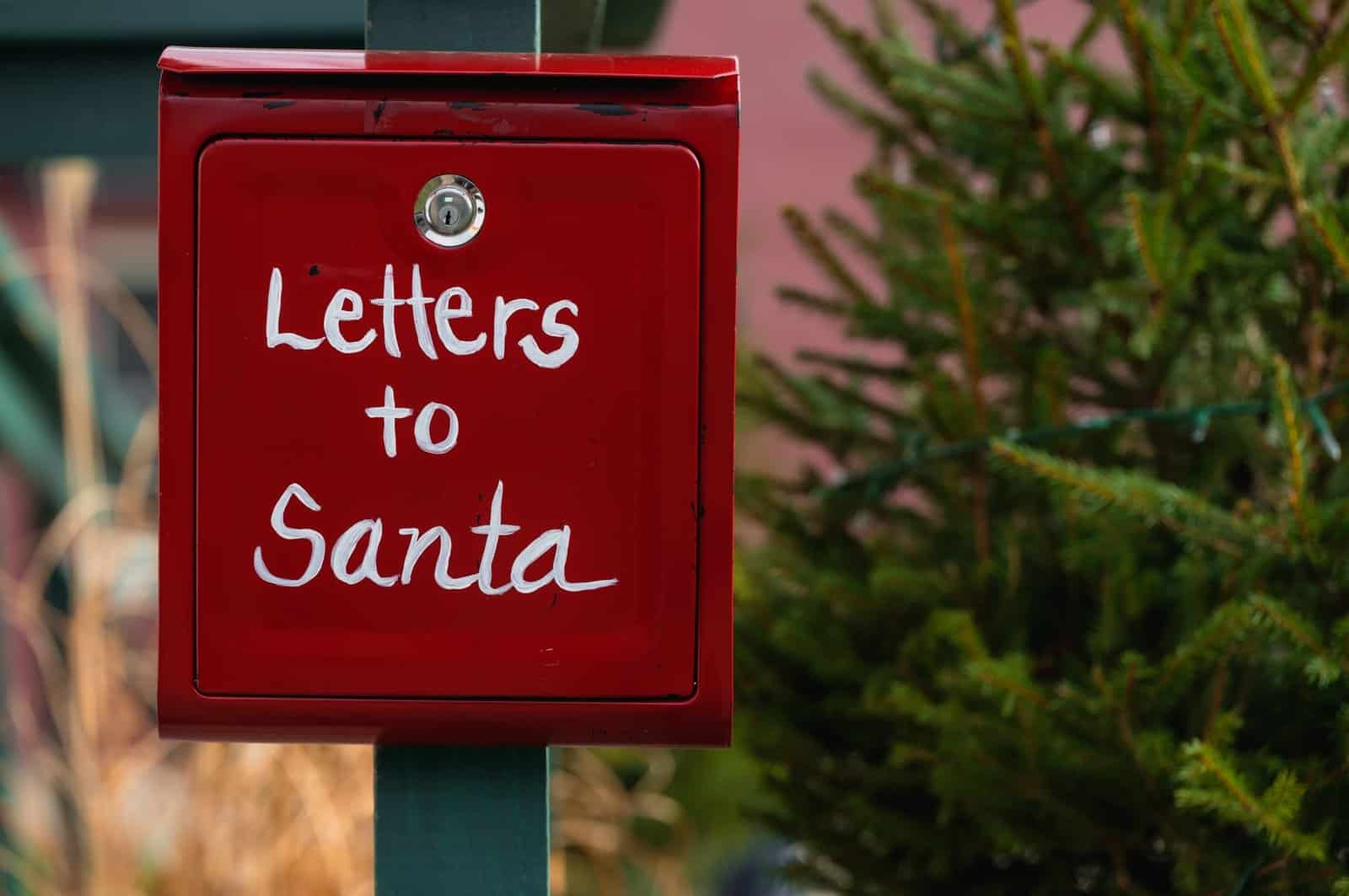
The process has stayed simple even as volume grew. Here’s how a letter moves through the system:
- Mail addressed to Santa Claus, P.O. Box 1, Santa Claus, IN 47579 lands at the town’s post office. The US Postal Service also routes many letters addressed simply to “Santa” here.
- Volunteers pick up the mail and bring it to the original post office building at the Santa Claus Museum & Village, where the elves work in a back room.
- Each letter is opened and read. Volunteers check spelling of the child’s name, because, as longtime chief elf Pat Koch has put it in interviews, the child will know if you didn’t read it properly.
- The volunteer selects one of four preprinted letters, writes the child’s name, and adds a personal note at the bottom.
- Replies go out with a Santa Claus postmark. Each year a local high school student designs a special cancellation stamp.
At the peak of the season, volunteers have worked long daily shifts, roughly 8 a.m. to 8 p.m., through about December 21, the last day replies can go out with a good chance of arriving before Christmas. Hundreds of volunteers rotate through over the season, while a smaller core group comes in day after day. On busy days the team can write around 2,000 replies.
Why Letters Come to This Town at All
The town got its name in 1856. The most common story is that residents needed a name for a post office application after their first choice was rejected, and “Santa Claus” was chosen around Christmastime. There are several versions of how exactly it happened, and local historians tell more than one.
Once the name stuck, children’s letters to Santa started arriving on their own. James Martin answered them as postmaster beginning in 1914. Later, Jim Yellig, a World War I Navy veteran who played Santa for decades, took up the work. His daughter, Pat Koch, started answering letters as a girl of about 12 and spent more than 80 years at it, eventually leading the volunteer group as chief elf and founding the Santa Claus Museum & Village in 2006.
The volume swings with publicity. In the 1950s, after the town was featured in “Ripley’s Believe It or Not,” the post office reportedly handled about 100,000 letters in one season. Today the typical range is about 20,000 to 30,000. In 2023, the volunteers replied to almost 24,000.
What the Letters Say
The elves have been open about the range. Many letters are wish lists. Some report milestones like learning to use the potty or giving up thumb-sucking. Some children send keys “so Santa can get in” because the family doesn’t have a chimney.
Some letters are hard to read. Volunteers get letters from children worried about a parent’s health, from families in tough financial spots, and from adults in difficult situations. The elves’ approach is to answer each one with compassion and without making promises they can’t keep. Letters that are obscene, abusive, or have no usable return address can’t be answered.
Letters also arrive from other countries. Volunteers have mentioned mail from China, Taiwan, Japan, Ukraine, and across Europe, and local exchange students sometimes help with replies in other languages.
How to Send a Letter and Get a Reply
If you want your child’s letter answered, follow a few rules:
- Address it to Santa Claus, P.O. Box 1, Santa Claus, IN 47579.
- Include a complete, legible return address inside the letter as well as on the envelope.
- Mail it early. Letters should arrive by about December 20 or 21 to get a reply before Christmas. Later letters are still answered but may arrive after the holiday.
- Use enough postage. The elves cover the return postage, but your letter needs a stamp to get there.
- If you want to support the effort, the museum accepts donations that go toward postage and supplies.
Letters arrive year-round, but the bulk come in November and December. In recent years volunteers have started answering before Thanksgiving because the volume showed up early.
Visiting the Santa Claus Museum & Village
The town is in Spencer County in far southern Indiana, a few miles off Interstate 64, about an hour east of Evansville and roughly two hours west of Louisville. The museum sits on State Road 245.
At the museum and village you can:
- See exhibits on the town’s history, including letters dating back to the 1930s and artifacts tied to the Yellig and Koch families.
- Visit the original Santa Claus Post Office building where the elves work.
- Step into the historic 1880 Santa Claus Church.
- See the 22-foot Santa Claus statue dedicated in 1935.
- Have kids write a letter to Santa on-site for free.
Admission to the museum has traditionally been free, though donations are welcome. Hours expand during the holiday season, so check before you go.
Other Stops in Town
The town leans into its name year-round. Expect:
- Santa’s Candy Castle, a holiday-themed candy shop where visitors can buy treats, sometimes alongside seasonal activities like roasting chestnuts.
- Streets in the Christmas Lake Village neighborhood with holiday names, many of which were chosen by Pat Koch and her husband, Bill.
- Holiday World & Splashin’ Safari, a theme park founded in 1946 as Santa Claus Land, generally considered one of the first themed amusement parks in the country. It’s a summer and fall operation, so it’s closed by the Christmas season.
- Lincoln Boyhood National Memorial, a short drive away in Lincoln City, where Abraham Lincoln lived from age 7 to 21.
How to Volunteer or Help
The operation depends on volunteers and donations, and it has stayed free on purpose. Over the years people have suggested charging families for replies, and the elves have refused. That means the work only continues if people give time or money.
Ways to help:
- Donate to Santa’s Elves through the Santa Claus Museum & Village. Postage is the biggest recurring cost when you’re mailing tens of thousands of replies.
- If you live within driving distance, ask the museum about volunteering during the letter season. Shifts are long in December, and help is especially welcome in the weeks right after Thanksgiving.
- Encourage kids to write clearly and include a full return address. Illegible or incomplete addresses are one of the main reasons a letter can’t be answered.
Tips for Families Writing a Letter
A few small things make a reply more personal:
- Have your child mention something specific, like a pet, a sibling, or something they’re proud of this year. Volunteers use those details in the handwritten note.
- Write the child’s name clearly at the top and bottom of the letter.
- Put the return address inside the letter too, in case the envelope gets damaged.
- Mail by early December if you want plenty of margin.
- Keep a photo of the letter. Many families like to compare it with the reply.
If you’re visiting in person, kids can write their letters at the museum and drop them off on-site, which gets them into the elves’ pile without postage.
When to Go
Weather in southern Indiana in December is usually cold and gray rather than snowy, with occasional ice. Roads around Santa Claus are rural two-lane highways, so allow extra time after dark. Lodging in town is limited, and many visitors stay in nearby Jasper, Dale, or Evansville and drive in for the day.
Late November and December are the busiest times, and the town’s holiday events fill weekends. If you want to see the letter operation at its liveliest, early to mid-December is the stretch when the elves are working at full tilt. If you’d rather avoid crowds, a weekday in November gives you the museum and the post office without long lines.
Plan on two to three hours for the museum, the post office, and the church, longer if your kids want to write letters on-site or you add Santa’s Candy Castle. Either way, mail a letter before you leave. A reply postmarked Santa Claus, Indiana, written by a volunteer who read every word, is the souvenir most families keep.