Racine, Wisconsin Has Been Baking Kringle for More Than a Century. 7 Things to Know Before You Order One for Thanksgiving
We may earn money or products from the companies mentioned in this post. This means if you click on the link and purchase the item, I will receive a small commission at no extra cost to you ... you're just helping re-supply our family's travel fund.
Racine Danish kringle shows up on a lot of Midwest Thanksgiving tables, and plenty of people order one without knowing what makes it different from a supermarket coffee cake. Danish immigrants brought the pastry to Racine, Wisconsin, in the late 1800s, local bakeries have made it there ever since, and in 2013 Wisconsin made kringle its official state pastry.
Racine sits on Lake Michigan about 30 miles south of Milwaukee and about 70 miles north of Chicago. For generations it had one of the largest Danish-American communities in the country, and the bakeries that grew out of that community still ship kringle all over the US every November and December. Here’s what’s worth knowing before you place an order or drive up to buy one in person.
7 Things to Know Before You Order Kringle
1. Racine’s kringle is oval, not pretzel-shaped
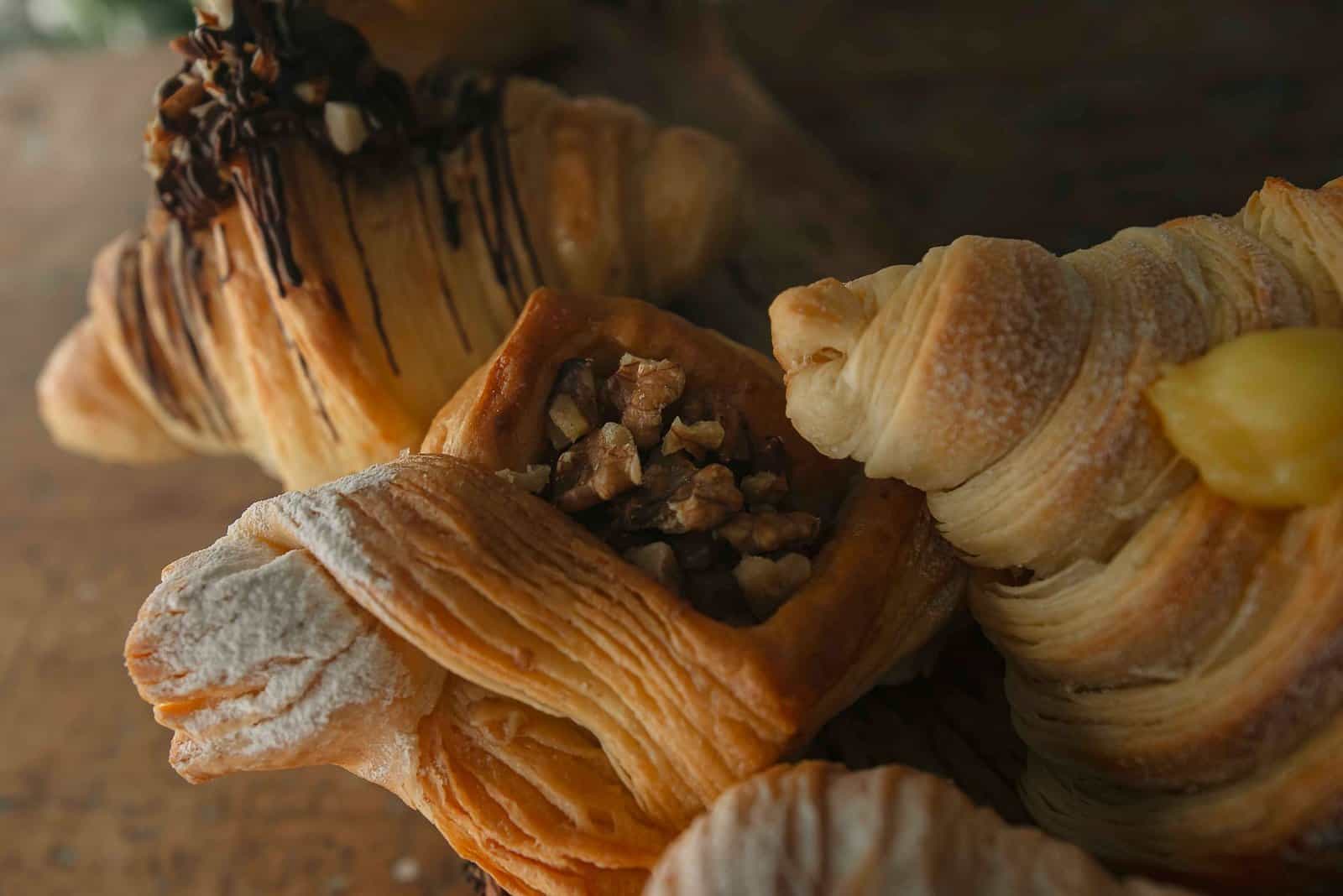
In Denmark, a kringle is traditionally twisted into a pretzel shape, and the pretzel symbol still hangs over some Danish bakeries. Racine bakers flattened the idea into a large oval ring, which made it easier to fill, bake evenly, and slice for a crowd. That oval is the shape you’ll get from every Racine bakery today, usually about 12 to 14 inches long and filled all the way around.
The shape matters for your table. A single kringle typically serves eight to twelve people in thin slices, so one is usually enough for a family breakfast and two cover a bigger gathering.
2. The dough takes days, and that’s the whole point
Kringle dough is laminated, meaning butter is folded into the dough over and over to create many thin layers, the same basic technique behind croissants. Racine bakeries describe the process as taking multiple days because the dough has to rest and chill between folds. The result is flaky and tender rather than bready.
That’s also why kringle costs more than a grocery-store Danish. When you see a price of roughly $15 to $25 per kringle at the bakery counter, you’re paying for butter and labor.
3. It’s been Wisconsin’s official state pastry since 2013
Wisconsin lawmakers designated kringle the official state pastry in 2013, and Governor Scott Walker signed it into law that summer. Racine bakeries pushed for the designation, and the state now marks a Kringle Day each year around the June 30 anniversary.
For visitors, the designation is less about trivia and more about a signal. Kringle isn’t a gimmick invented for tourists. It’s a working local food that Racine families buy for birthdays, office mornings, and holidays all year.
4. A few old family bakeries make most of the famous kringle
You’ll find kringle in grocery stores across the Midwest, but the reputation comes from a short list of Racine bakeries, several of them family-run for generations. Names you’ll see:
- O&H Danish Bakery, founded by Danish immigrant Christian Olesen in 1949 and now run by later generations of the family, with several Racine-area shops and a large shipping operation.
- Racine Danish Kringles, which has baked and shipped kringle since 1981.
- Bendtsen’s Bakery, a long-running family shop on Racine’s north side.
- Larsen Bakery, another Racine family bakery known for traditional Danish recipes.
O&H also bakes the kringle sold at Trader Joe’s, which is why many people outside Wisconsin have tried one without realizing where it came from. If you’re in Racine, buying at a bakery counter gets you the freshest pastry and the full flavor lineup, which is usually larger than what ships.
5. Flavors rotate with the seasons, and Thanksgiving has its own lineup
Year-round flavors usually include almond, pecan, raspberry, cherry, apple, and cream cheese. Then the seasonal ones come in. Around Thanksgiving and Christmas, bakeries add flavors built around pumpkin, cranberry, and other holiday fillings, and each bakery has its own versions.
A few ordering tips:
- Pecan and almond are the classic, safe crowd-pleasers.
- Fruit kringles like raspberry or cherry cut through a heavy holiday breakfast.
- O&H makes a “Wisconsin Kringle” with Door County cherries, Wisconsin cranberries, and cream cheese, created in 2013 to mark the state pastry designation.
- If you’re feeding a group with mixed tastes, buy two different flavors rather than one big order of the same thing.
6. Order early for holiday shipping, and budget for it
Kringle ships well because it freezes well, and Racine bakeries ship nationwide. But the weeks before Thanksgiving and Christmas are their busiest of the year. If you want kringle on the table on a specific morning, order at least a week or two ahead and choose a delivery date that lands a day or two before you need it.
Shipping is the part people underestimate. Because the pastry travels in insulated packaging with expedited delivery, shipping costs can approach or exceed the cost of the kringle itself, especially for a single unit. Bakeries usually price bundles of two or more so the shipping math works better per kringle. If you have family in the Chicago or Milwaukee area, picking up in person is far cheaper.
7. Store it, freeze it, and warm it the right way
Fresh kringle keeps at room temperature for a few days if it’s well wrapped. For anything longer, freeze it. Wrapped tightly, kringle holds in the freezer for weeks, which is why many Midwest families buy several in November and pull them out through the holidays.
To serve:
- Thaw it, still wrapped, at room temperature for a few hours or overnight.
- Warm it briefly in a low oven, around 350°F for five to ten minutes, which brings the pastry back to flaky.
- Slice it in narrow pieces across the oval. A serrated knife keeps the layers from crushing.
- Don’t microwave it unless you’re eating it immediately. The icing melts and the pastry turns soft.
Why Racine Danish Kringle Became a Wisconsin Icon
Danish immigrants began settling in Racine in the mid-1800s, and by the late 19th century the city had a large Danish neighborhood with its own churches, clubs, and bakeries. Kringle was a bakery staple, and the bakers adapted it into the oval form that stuck.
The tradition survived because it stayed a daily food rather than a museum piece. Racine bakeries kept selling kringle for ordinary mornings, and mail-order sales later carried it to Danish-Americans and former Wisconsinites across the country. The 2013 designation formalized what Racine already treated as fact.
How Kringle Fits Into a Midwest Thanksgiving
In much of Wisconsin and northern Illinois, kringle isn’t dessert. It’s breakfast, or the thing set out while the turkey roasts and relatives arrive. That role explains why it shows up so often in November. A kringle can be thawed the night before, warmed in minutes, and sliced without plates if needed, which makes it easy on a host who has every burner going.
It also travels well as a host gift. Bringing a kringle to someone else’s Thanksgiving is a common Midwest move, partly because it doesn’t compete with anyone’s pie. If you’re the guest, a pecan or almond kringle is the safe pick. If you know the host well, a seasonal flavor makes a better story.
Some families also make kringle part of the long weekend that follows. A second kringle on Friday morning, with coffee and leftovers, is a small tradition in plenty of Racine-area households.
How to Tell a Good Kringle From a Mediocre One
Not every kringle is equal, and once you’ve had a good one the difference is obvious. Look for:
- Visible layers when you slice it. A good kringle shows thin, distinct sheets of pastry, not a uniform bread texture.
- Filling that reaches all the way around the oval, not just a stripe down the middle.
- Icing that’s thin enough to let the pastry flavor through. Heavy icing can hide a dry pastry.
- A buttery smell when it’s warmed. If it smells like shortening or tastes stale, it’s either old or made with shortcuts.
If You Go to Racine in Person
A kringle run makes a good half-day stop on a drive between Chicago and Milwaukee. Racine is a few miles east of Interstate 94, and the bakeries are spread across the city and nearby Mount Pleasant.
While you’re there:
- Walk the downtown lakefront near the harbor and Racine’s North Beach, which is wide and sandy and worth a cold-weather stroll.
- See the Wind Point Lighthouse just north of the city, one of the older and taller lighthouses on the Great Lakes.
- Book a tour of the SC Johnson headquarters campus, which includes the Administration Building and Research Tower designed by Frank Lloyd Wright. Tours are offered by reservation and fill up, so check availability before you go.
Go early in the day. Bakeries sell out of popular flavors on holiday weekends, and the day before Thanksgiving brings the longest lines of the year.
What a Kringle Order Typically Costs
Here’s a realistic range for planning:
- At a Racine bakery counter: about $15 to $25 per kringle, depending on flavor and bakery.
- Shipped: the pastry cost plus shipping, which for one kringle can push the total past $40 to $50; multi-packs bring the per-kringle cost down.
- At a grocery chain outside Wisconsin: usually lower, though the selection is smaller.
One kringle feeds a family breakfast. Two cover a holiday crowd. And a third in the freezer means you’ll have one ready when someone shows up unannounced in December.