Prescott, Arizona Costs Half What Sedona Does. Retirees Figured That Out Years Before Anyone Else Did.
We may earn money or products from the companies mentioned in this post. This means if you click on the link and purchase the item, I will receive a small commission at no extra cost to you ... you're just helping re-supply our family's travel fund.
Sedona gets the postcards, the red rocks, and the national media attention, but Prescott, roughly 50 miles southwest at a considerably higher elevation, has steadily become one of Arizona’s most consistent retirement destinations, offering milder summers than Phoenix, cooler winters than the desert floor, and home prices that remain substantially below Sedona’s inflated tourism-driven market.
The Elevation Advantage Nobody Markets
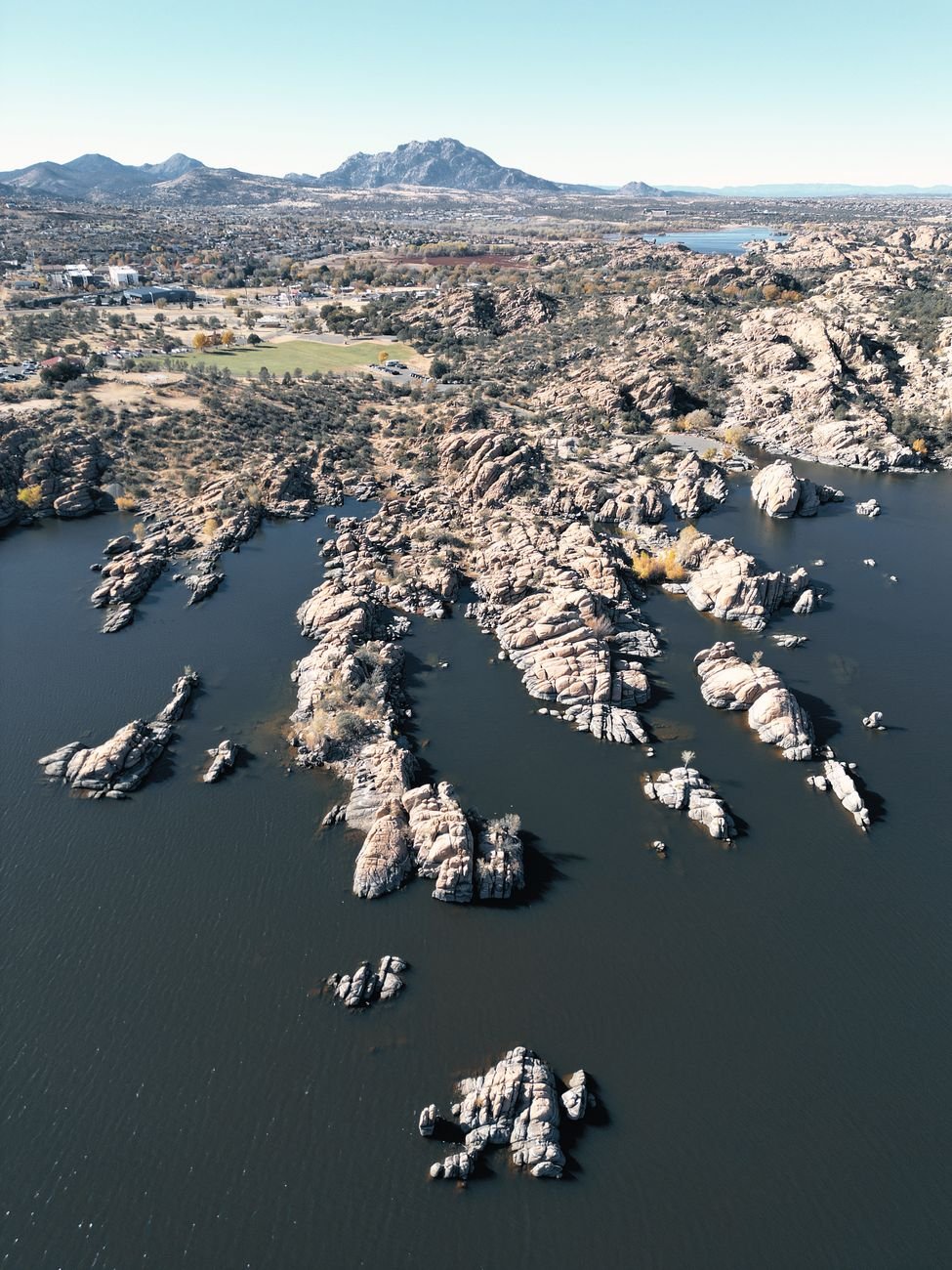
Prescott sits at roughly 5,400 feet elevation, high enough to avoid the most extreme summer heat that makes Phoenix genuinely dangerous for outdoor activity for months at a time, while remaining low enough to avoid the heavy snow loads of higher Arizona mountain towns like Flagstaff, a climate middle ground that has made it a longtime favorite for Arizona retirees looking to avoid both extremes.
Median home prices in Prescott run meaningfully below Sedona’s, where limited land availability within the surrounding national forest boundaries and heavy tourism demand have pushed prices to levels that would be considered high even in much larger Arizona metro areas, a scarcity dynamic that simply doesn’t constrain Prescott’s more expansive buildable land to the same degree.
What Prescott Actually Offers Beyond the Price Difference
The Practical Comparison
- Prescott’s historic downtown courthouse square anchors a genuinely walkable small city core
- Whiskey Row’s saloons trace back to the frontier era and remain a functioning nightlife district
- Yavapai College and a growing healthcare sector provide employment beyond tourism and retirement services
- Access to Prescott National Forest offers hiking and recreation without Sedona’s parking and permit pressures
Prescott’s retirement-driven growth has been steadier and less dramatic than Sedona’s tourism-driven price spikes, producing a housing market that, while still expensive by historic local standards, hasn’t experienced the same short-term rental-driven volatility that has made Sedona property increasingly difficult for full-time residents to compete for against investors.
What retirees who’ve made the comparison directly tend to conclude is that Prescott offers roughly 80 percent of the climate and scenery advantages that draw people to Sedona, at a meaningfully lower cost and with a more functional, less tourist-saturated daily living experience, a tradeoff that has made word-of-mouth referrals among Arizona retirees one of the strongest drivers of Prescott’s population growth for decades.
What This Means Going Forward
The broader pattern here reflects something researchers and local officials increasingly track closely: the gap between how a place or trend is perceived from the outside and how it actually functions day to day for the people living inside it or making decisions about it. That gap rarely closes on its own, and it tends to widen further whenever outside attention, whether from tourism, media coverage, or social platforms, arrives faster than the underlying infrastructure or community capacity can absorb it.
What tends to happen next depends heavily on decisions made by the people closest to the situation, whether that means local governments, longtime residents, or the businesses that have to adapt fastest, and those decisions rarely get the same national attention as the initial trend or story that put the place on the map in the first place, even though they matter considerably more to how things actually turn out over the following decade.
The Longer-Term Trajectory
Longtime observers of this pattern note that the early years after a place or trend gains attention are rarely the ones that determine its lasting character. The more decisive period tends to arrive several years later, once the initial wave of interest either sustains itself through genuine infrastructure investment or fades as attention moves elsewhere, leaving behind whatever changes already took root during the busier years.
That delayed reckoning is precisely why comparisons across a full decade, rather than a single before-and-after snapshot, tend to produce a more accurate picture of what actually changed and what merely appeared to change while the cameras and headlines were still pointed in that direction.
Why This Keeps Getting Overlooked
Part of the reason this dynamic receives less attention than it probably deserves is structural: the initial story, whether a viral moment, a policy change, or a shift in travel patterns, is simply more compelling to cover than the slower, less dramatic process of adjustment that follows it over subsequent years, which rarely fits into a single headline or a short video.
That mismatch between what gets covered and what actually matters most to the people living through the change is a recurring feature of how places, trends, and communities get discussed publicly, and it tends to leave a persistent gap between popular perception and the more complicated reality on the ground.
What This Means Going Forward
The broader pattern here reflects something researchers and local officials increasingly track closely: the gap between how a place or trend is perceived from the outside and how it actually functions day to day for the people living inside it or making decisions about it. That gap rarely closes on its own, and it tends to widen further whenever outside attention, whether from tourism, media coverage, or social platforms, arrives faster than the underlying infrastructure or community capacity can absorb it.
What tends to happen next depends heavily on decisions made by the people closest to the situation, whether that means local governments, longtime residents, or the businesses that have to adapt fastest, and those decisions rarely get the same national attention as the initial trend or story that put the place on the map in the first place, even though they matter considerably more to how things actually turn out over the following decade.
The Longer-Term Trajectory
Longtime observers of this pattern note that the early years after a place or trend gains attention are rarely the ones that determine its lasting character. The more decisive period tends to arrive several years later, once the initial wave of interest either sustains itself through genuine infrastructure investment or fades as attention moves elsewhere, leaving behind whatever changes already took root during the busier years.
That delayed reckoning is precisely why comparisons across a full decade, rather than a single before-and-after snapshot, tend to produce a more accurate picture of what actually changed and what merely appeared to change while the cameras and headlines were still pointed in that direction.