Portland, Oregon’s Pearl District Fully Recovered. Old Town Chinatown Two Blocks Away Still Hasn’t.
We may earn money or products from the companies mentioned in this post. This means if you click on the link and purchase the item, I will receive a small commission at no extra cost to you ... you're just helping re-supply our family's travel fund.
Portland’s reputation took a genuine hit nationally following widely circulated images of downtown vacancy and unrest in the early 2020s, but the recovery since then has been sharply uneven across neighborhoods, with the Pearl District’s converted warehouses and condo towers rebounding to near pre-pandemic occupancy while Old Town Chinatown, just a few blocks east, continues struggling with vacancy, visible homelessness, and a commercial vacancy rate that remains stubbornly elevated.
Why the Recovery Split So Sharply by Neighborhood
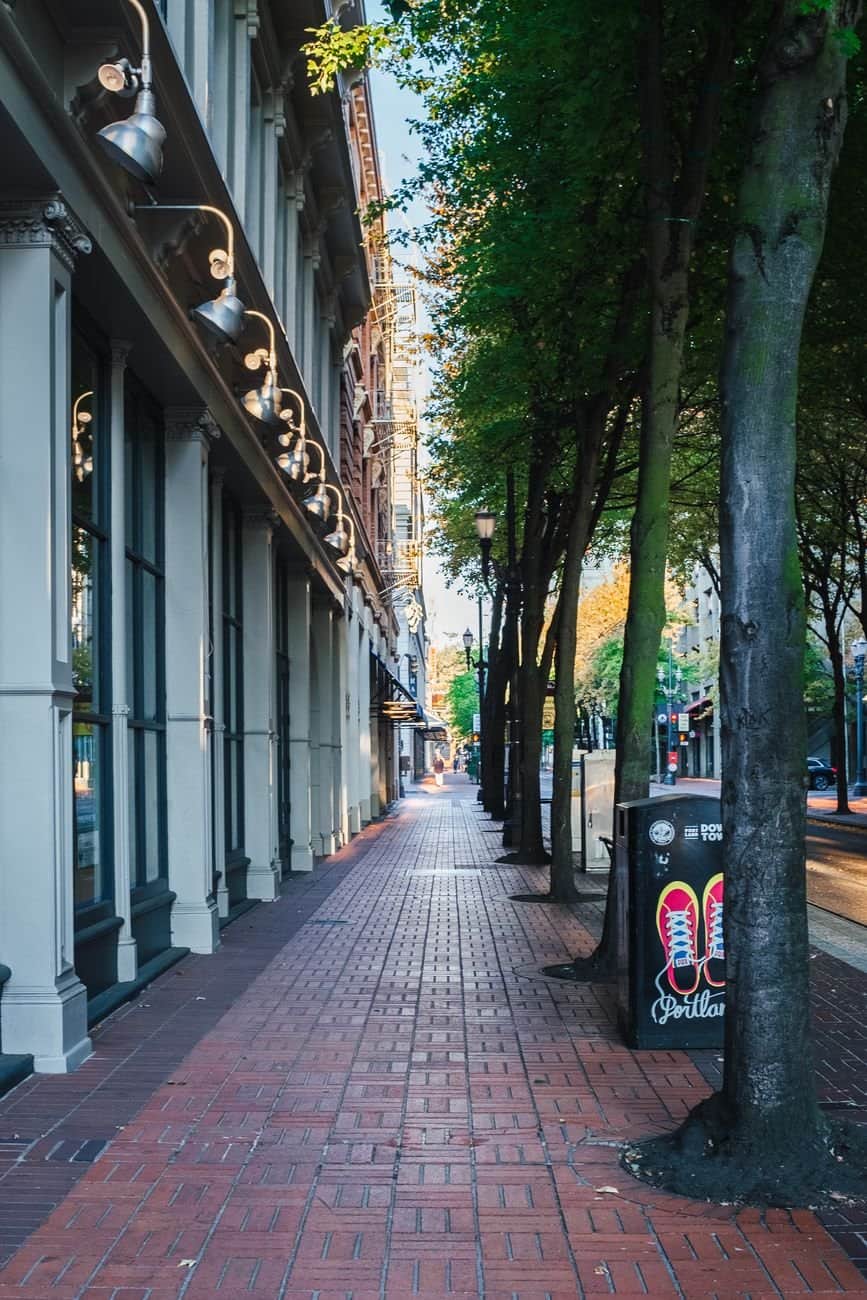
The Pearl District benefited from a concentration of higher-income residents and retail tenants with the capital reserves to weather the pandemic-era disruption, along with a redevelopment history dating to the 1990s that had already established the neighborhood as a premium address before the recent troubles began, giving it a stronger baseline to recover toward.
Old Town Chinatown, by contrast, had already been dealing with decades of disinvestment and a concentration of social services that, while necessary citywide, created concentrated visible need in a small geographic area, a pattern that accelerated during the pandemic as downtown office workers, who had previously provided daytime retail traffic, shifted to remote work and never fully returned.
What the City Has Tried
The Specific Interventions
- Increased police and outreach presence in Old Town starting in recent years
- Business improvement district investment aimed at storefront activation
- Proposed relocation of some concentrated social services to distribute need more evenly citywide
- Continued struggles attracting street-level retail tenants despite lower rents than the Pearl
Portland’s own downtown business associations have publicly acknowledged that recovery has not been uniform, and that the contrast between adjacent neighborhoods just blocks apart has become a talking point in local political debates about how city resources get allocated and whether downtown revitalization efforts have adequately addressed the specific, concentrated challenges facing Old Town Chinatown.
What the divergence between these two neighborhoods illustrates is how much pre-existing economic foundation matters during a citywide disruption, since the same broad forces, pandemic-era remote work, national media attention, and shifting retail patterns, produced completely different outcomes depending on which neighborhood had the deeper reserves and stronger baseline conditions to draw on going into the disruption in the first place.
The Longer-Term Trajectory
Longtime observers of this pattern note that the early years after a place or trend gains attention are rarely the ones that determine its lasting character. The more decisive period tends to arrive several years later, once the initial wave of interest either sustains itself through genuine infrastructure investment or fades as attention moves elsewhere, leaving behind whatever changes already took root during the busier years.
That delayed reckoning is precisely why comparisons across a full decade, rather than a single before-and-after snapshot, tend to produce a more accurate picture of what actually changed and what merely appeared to change while the cameras and headlines were still pointed in that direction.
Why This Keeps Getting Overlooked
Part of the reason this dynamic receives less attention than it probably deserves is structural: the initial story, whether a viral moment, a policy change, or a shift in travel patterns, is simply more compelling to cover than the slower, less dramatic process of adjustment that follows it over subsequent years, which rarely fits into a single headline or a short video.
That mismatch between what gets covered and what actually matters most to the people living through the change is a recurring feature of how places, trends, and communities get discussed publicly, and it tends to leave a persistent gap between popular perception and the more complicated reality on the ground.
What This Means Going Forward
The broader pattern here reflects something researchers and local officials increasingly track closely: the gap between how a place or trend is perceived from the outside and how it actually functions day to day for the people living inside it or making decisions about it. That gap rarely closes on its own, and it tends to widen further whenever outside attention, whether from tourism, media coverage, or social platforms, arrives faster than the underlying infrastructure or community capacity can absorb it.
What tends to happen next depends heavily on decisions made by the people closest to the situation, whether that means local governments, longtime residents, or the businesses that have to adapt fastest, and those decisions rarely get the same national attention as the initial trend or story that put the place on the map in the first place, even though they matter considerably more to how things actually turn out over the following decade.
The Longer-Term Trajectory
Longtime observers of this pattern note that the early years after a place or trend gains attention are rarely the ones that determine its lasting character. The more decisive period tends to arrive several years later, once the initial wave of interest either sustains itself through genuine infrastructure investment or fades as attention moves elsewhere, leaving behind whatever changes already took root during the busier years.
That delayed reckoning is precisely why comparisons across a full decade, rather than a single before-and-after snapshot, tend to produce a more accurate picture of what actually changed and what merely appeared to change while the cameras and headlines were still pointed in that direction.
Why This Keeps Getting Overlooked
Part of the reason this dynamic receives less attention than it probably deserves is structural: the initial story, whether a viral moment, a policy change, or a shift in travel patterns, is simply more compelling to cover than the slower, less dramatic process of adjustment that follows it over subsequent years, which rarely fits into a single headline or a short video.
That mismatch between what gets covered and what actually matters most to the people living through the change is a recurring feature of how places, trends, and communities get discussed publicly, and it tends to leave a persistent gap between popular perception and the more complicated reality on the ground.
What This Means Going Forward
The broader pattern here reflects something researchers and local officials increasingly track closely: the gap between how a place or trend is perceived from the outside and how it actually functions day to day for the people living inside it or making decisions about it. That gap rarely closes on its own, and it tends to widen further whenever outside attention, whether from tourism, media coverage, or social platforms, arrives faster than the underlying infrastructure or community capacity can absorb it.
What tends to happen next depends heavily on decisions made by the people closest to the situation, whether that means local governments, longtime residents, or the businesses that have to adapt fastest, and those decisions rarely get the same national attention as the initial trend or story that put the place on the map in the first place, even though they matter considerably more to how things actually turn out over the following decade.