Portsmouth, New Hampshire Keeps Landing on ‘Best Small City’ Lists. Its Median Home Price Says a Different Story
We may earn money or products from the companies mentioned in this post. This means if you click on the link and purchase the item, I will receive a small commission at no extra cost to you ... you're just helping re-supply our family's travel fund.
Portsmouth, New Hampshire has a population of 22,138 people and a reputation that outweighs it by a wide margin. It shows up on national livability rankings almost every year, gets described in glossy magazine features as a walkable coastal gem with cobblestone streets and a working harbor, and pulls in weekenders from Boston who leave convinced they have found the one New England city that still feels affordable. Then they check housing listings and discover that Portsmouth is not affordable at all, according to a 2026 cost-of-living breakdown from Kurby AI, which puts the median home value at $594,000 and median household income at $100,169. Other sources push those numbers even higher, with Redfin reporting a median sale price of $915,500 and single-family homes selling for a median of $1,088,000.
A Small City Built Around a Naval Yard and a Harbor
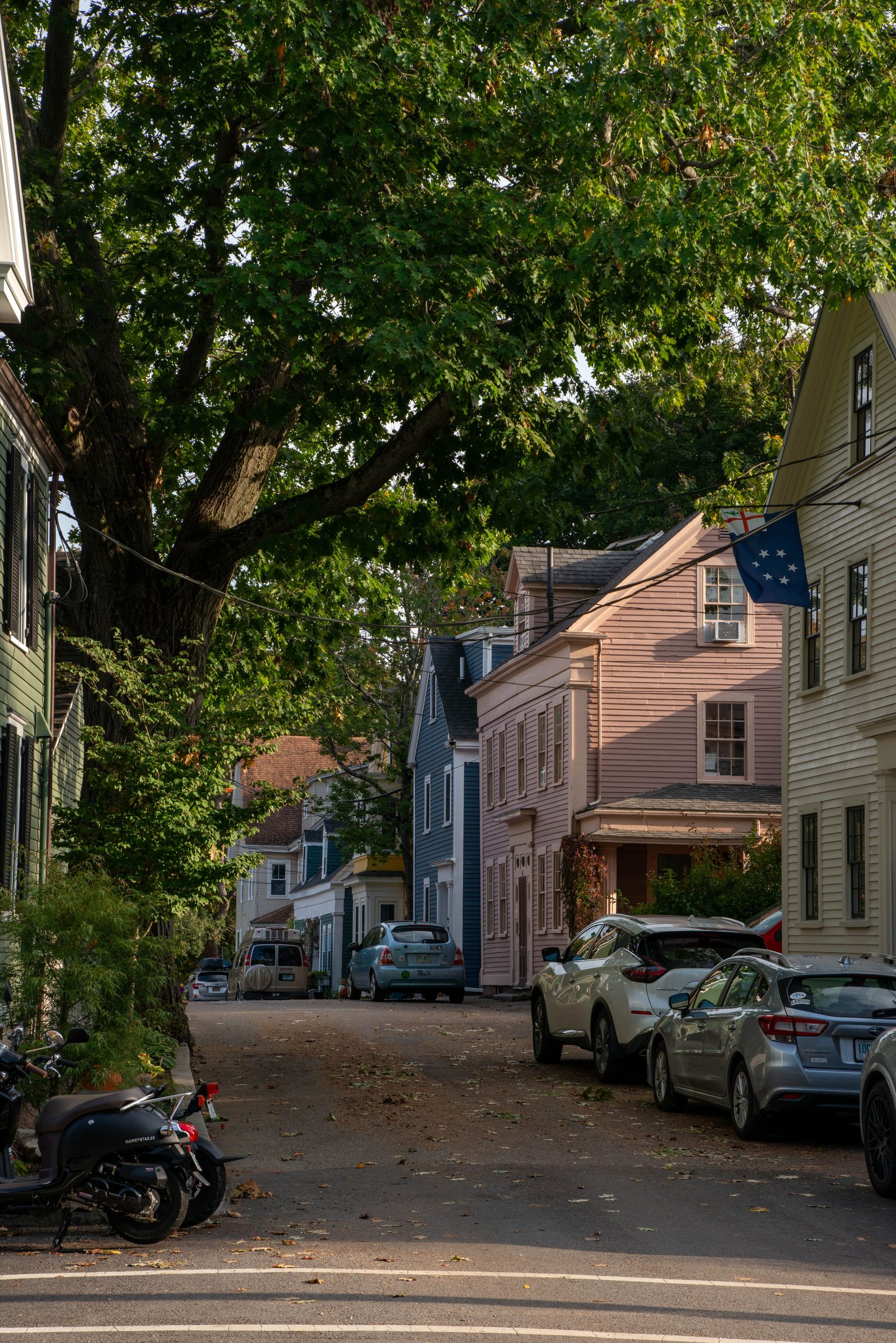
Portsmouth sits where the Piscataqua River meets the Atlantic, a location that made it a shipbuilding and naval hub for more than 300 years before it became a magazine darling. The Portsmouth Naval Shipyard, technically located across the river in Kittery, Maine, still employs thousands of people and anchors the regional economy, while the compact downtown of brick storefronts and 18th-century houses draws the tourists who never see the industrial side of the city at all. That split identity, half working port and half boutique downtown, is part of what makes Portsmouth’s cost of living so confusing to newcomers who assume a city this size, with this little name recognition outside New England, should be cheap.
It is not cheap. According to HomeSnacks, Portsmouth carries a cost-of-living index of 148, roughly 1.5 times the national average, with a median home value approaching $765,000 and median household income around $105,756. Niche puts median rent at $1,869 against a national median of $1,413, and AreaVibes reports the city’s median real estate value running 90.3 percent higher than the New Hampshire state average. New Hampshire has no state income tax and no state sales tax, a detail every relocation guide leads with, but the tradeoff shows up in property taxes, which are among the highest in the country, and in a housing market that has stopped pretending to be a secret.
The Rental Math Nobody Puts in the Brochure
The most precise picture of what has happened to Portsmouth comes not from a lifestyle ranking but from the city’s own planning department. The Portsmouth Housing Market Study, commissioned by the city itself, found that the share of the rental stock priced at $1,500 a month or higher jumped from 21 percent to 39 percent over the study period, a 56.3 percent increase in the proportion of expensive units. That is not a market drifting upward. That is a market reorganizing itself around a different income bracket entirely.
The same study tracked who has been moving in. Households earning between $150,000 and $199,000 a year grew by 32 percent over the decade covered, and households earning $200,000 or more grew by 56 percent, by far the fastest-growing income bracket in the city. Meanwhile, the study identified a deficit of 373 units for extremely-low-income renters, meaning the housing that would let a service worker, a teacher, or a shipyard tradesperson live in the city they work in simply does not exist in sufficient supply. Portsmouth did not get expensive by accident. It got expensive because a six-figure household now competes for the same small housing stock as everyone else, and the six-figure households are winning.
Why Boston Weekenders Keep Getting the Wrong Idea
Portsmouth is close enough to Boston, about an hour north on I-95, that it functions as a day-trip destination for people who never have to reckon with its actual cost structure. They walk Market Street, eat at a harborside restaurant, buy a candle at one of the boutique shops that have replaced the hardware stores and shoe repair places of an earlier downtown, and leave with the impression that this is what an affordable New England city looks like now. It is not. It is what a New England city looks like after two decades of being discovered by exactly the kind of visitor who has the income to eventually move there.
- Median home value: roughly $594,000 to $915,500 depending on the data source and property mix
- Median rent: $1,227 to $1,869 depending on unit type and neighborhood
- Cost-of-living index: 119.6 to 148, meaning 20 to 48 percent above the national average
- Share of rental units priced above $1,500 a month: up from 21 percent to 39 percent in a decade
What Actually Happens to a Shipyard Town Like This
The pattern is familiar to anyone who has watched a small coastal city get rediscovered: a compact, walkable downtown with genuine architectural history becomes a magnet for remote workers and retirees who can outbid the people whose families have lived there for generations. Portsmouth’s naval and maritime workforce, the electricians, machinists, and shipyard employees who make up a meaningful share of the regional economy, increasingly commute in from towns twenty or thirty minutes away because the city they build submarines fifteen minutes from can no longer house them. The city government’s own data confirms it. The market study was not commissioned to celebrate Portsmouth’s rise up the livability rankings. It was commissioned because the city council wanted to understand why its workforce housing kept disappearing, and the answer it got back was a straightforward supply-and-demand story with an uncomfortable ending.
What a $700,000 Median Home Actually Buys
Walk the actual housing stock and the price tag makes more sense even as it stays out of reach for most local wage earners. Portsmouth’s downtown core is built almost entirely of 18th- and 19th-century brick and clapboard structures, many on tiny historic lots that would never be approved for new construction today, which means the supply of that specific housing type is effectively fixed. There is no vacant land downtown to build more of it, and the historic district commission reviews exterior changes closely enough that even renovations move slowly. That scarcity, combined with a school district that consistently ranks among the state’s strongest and a walkable downtown with restaurants that draw weekend visitors from Boston, is what keeps demand well ahead of supply.
The practical effect shows up in who can actually live there. Municipal employees, teachers, and service workers who keep the city running increasingly commute in from towns twenty or thirty minutes inland, where housing costs a fraction as much, a pattern playing out in coastal small cities across New England. Portsmouth’s city government has debated inclusionary zoning and workforce housing incentives for years, but the geography works against any quick fix: there is simply very little land left within the city limits to build meaningfully more housing without tearing down something historic first.
None of this means Portsmouth is a bad place to visit, or even a bad place to live if the budget works. The harbor is real, the seafood is good, and the historic district earns its reputation on architecture alone. What it means is that “best small city in America” lists are measuring something different than “place you can actually afford to move to,” and Portsmouth has become one of the clearest examples of how far those two rankings can drift apart in a single generation.