Portland’s Reputation Didn’t Collapse Overnight. It Took Exactly One Summer and Four Years of Headlines to Finish the Job
We may earn money or products from the companies mentioned in this post. This means if you click on the link and purchase the item, I will receive a small commission at no extra cost to you ... you're just helping re-supply our family's travel fund.
For most of the 2010s, Portland, Oregon was a punchline in the friendly sense: bikes, brunch, a show that gently mocked its own quirks. By 2023, the Los Angeles Times was describing a city testing the limits of its own progressive identity against visible homelessness and open drug use. The shift did not happen because Portland became a different city overnight. It happened because a specific set of events in 2020, followed by years of policy experiments that did not go as planned, reset how the rest of the country saw a place that had spent a decade selling itself as the good version of urban life.
The Summer That Changed the Narrative
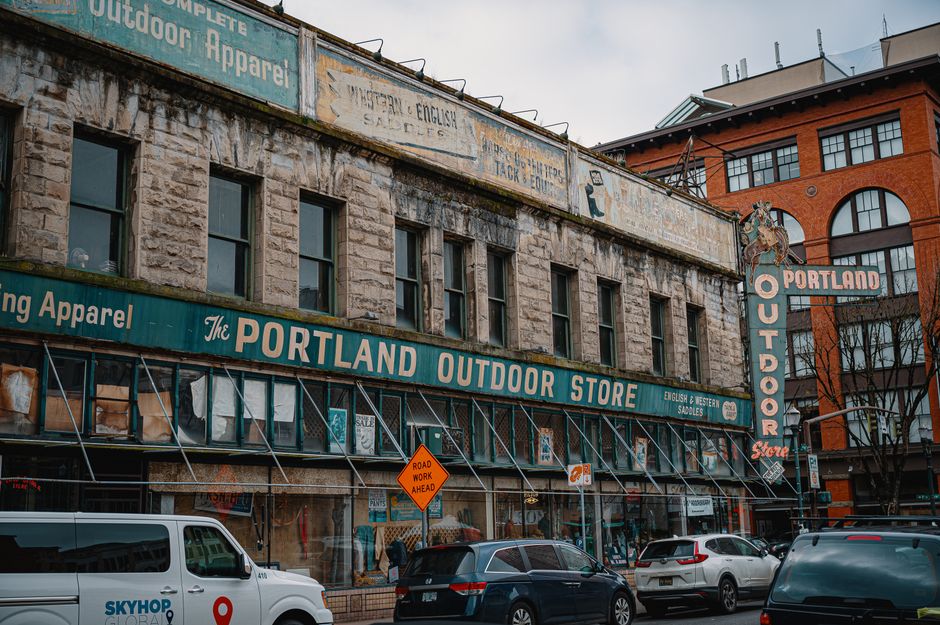
The 2020 protests in Portland ran longer and more visibly than in almost any other American city, with nightly demonstrations near the federal courthouse drawing national television coverage for months. Route Fifty reported on what it called the city’s ongoing reputation problem by late 2021, tying together the protest coverage, a rise in homicides, and a struggling hospitality sector that could not recover its footing. A Fox News poll from that period found residents were actively avoiding downtown, not because of any single event but because the accumulation of visible disorder had changed how people used the city’s core.
What Actually Changed on the Ground
- Portland decriminalized possession of small amounts of hard drugs under Oregon’s Measure 110 in 2021, a policy the state legislature partially reversed within a few years after visible public drug use increased
- Downtown foot traffic and retail occupancy dropped sharply as remote work emptied office buildings that had anchored lunch and after-work spending
- Homicides in Portland rose well above pre-2020 levels for several consecutive years
- National media, including outlets with no local newsroom presence, ran repeated stories using similar language about abandonment and decline
The Gap Between the Headlines and the Data
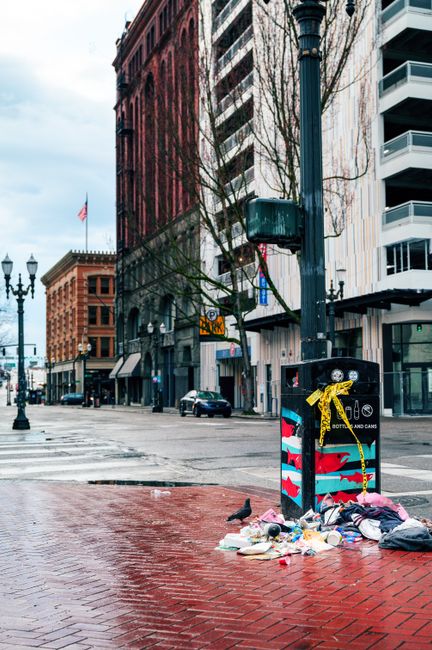
Here is the part that gets lost. The City of Portland’s own police bureau reported a measurable crime decrease around the city’s overnight shelters by mid-2025, and city leaders have pointed to stabilizing numbers as evidence that the worst period has passed. But reputational damage does not move on the same timeline as crime statistics. A national news cycle can compress four years of gradual improvement into a single lingering impression, and conservative-leaning outlets in particular kept the ‘abandoned wasteland’ framing alive well past the point where downtown Portland’s daytime foot traffic had partially recovered.
Longtime residents describe something more nuanced than collapse or recovery. Neighborhoods outside the downtown core, places like Sellwood, Hawthorne, and Alberta Street, largely retained the walkable, food-cart-and-bookstore character that built Portland’s reputation in the first place. It was specifically the downtown core and Old Town that bore the visible brunt of the crisis, and that visible core is disproportionately what visitors and media crews photograph.
Why the Story Stuck
- Portland’s identity was built almost entirely on downtown-adjacent quirkiness, so damage to that core hit the brand harder than it would in a more decentralized city
- The city became a proxy in national political arguments about policing and drug policy, which kept the story alive long after local conditions began shifting
- Measure 110’s reversal itself became a story, reinforcing the narrative of failure even though policy course-correction is a normal function of governance
What Visiting Portland Actually Feels Like Now
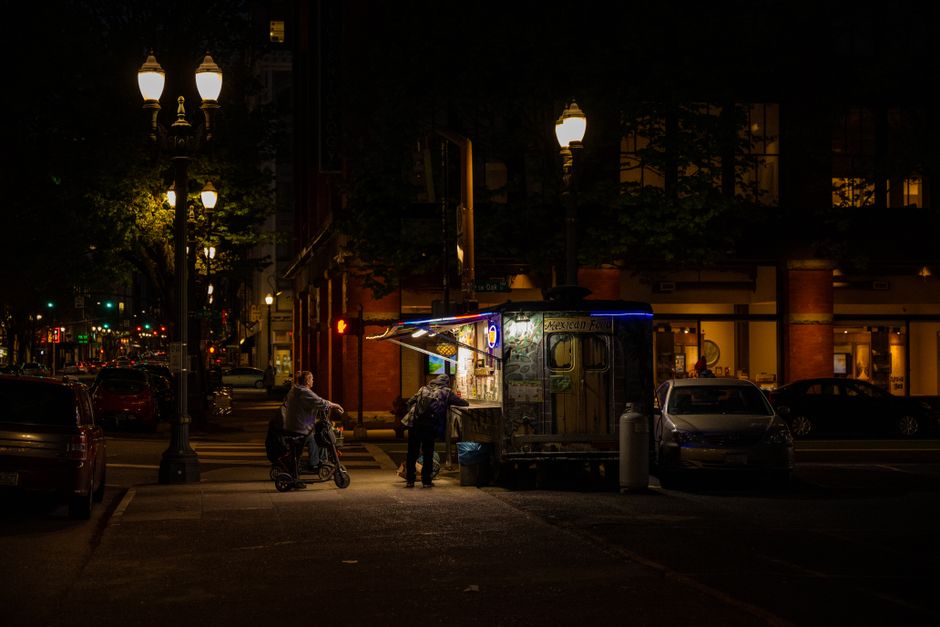
Tourists who show up expecting a wasteland are often surprised, and tourists who show up expecting the 2015 version are also surprised, just in the other direction. Downtown still has empty storefronts and a visible population living outside. It also still has Powell’s Books, the food cart pods, and neighborhoods a fifteen-minute bike ride away that look almost untouched by any of it. The honest version of Portland right now is a city mid-recovery, self-conscious about its reputation, with a downtown that needs another five years and neighborhoods that never really left.
The Business Owners Caught in the Middle
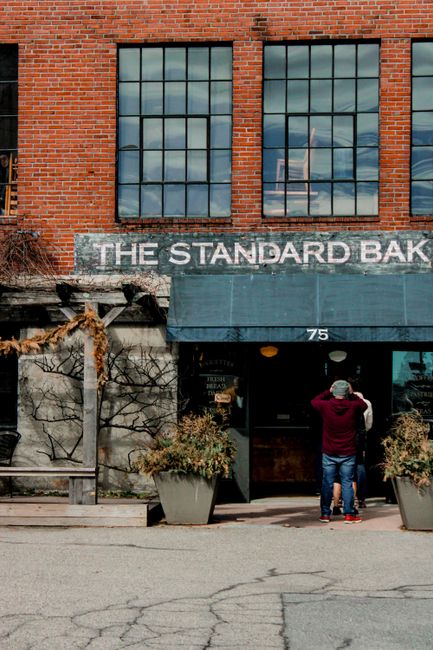
Small business owners in downtown Portland describe a specific kind of exhaustion that doesn’t map neatly onto either the collapse narrative or the recovery narrative. Restaurant and retail operators who stayed through 2020 and 2021 talk about insurance costs that never came back down after repeated vandalism during the protest period, about lunch crowds that thinned when downtown office occupancy dropped and never fully returned even as some workers trickled back, and about a persistent psychological hurdle where suburban customers who used to come downtown regularly now need convincing that it’s worth the trip. Rebuilding that habit has proven slower than rebuilding a storefront window.
At the same time, a specific cohort of independent restaurants and bars has managed not just to survive but to thrive during this period, often by leaning into a scrappier, more neighborhood-oriented identity than the pre-2020 downtown business model, which depended heavily on convention traffic and office lunch crowds that are not coming back at their old volume. Some of the city’s most talked-about new restaurant openings in the past two years have been in neighborhoods like Montavilla and St. Johns, areas that were never part of the downtown collapse story and have built their own dining identity almost independent of what’s happening a few miles away in the core.
What Portland Locals Say Actually Determines the Vibe of a Visit
- Which specific blocks you’re on matters more in Portland than in almost any other major U.S. city, since conditions vary block by block rather than neighborhood by neighborhood
- Daytime downtown Portland and nighttime downtown Portland are functionally different experiences, with far more visible disorder after dark
- Neighborhoods like Sellwood, Alberta, and Hawthorne have retained the walkable, independent-business character that built the city’s reputation originally
- Public transit ridership on the MAX light rail has been slower to recover than driving, meaning downtown visits are easier and less stressful by car than they were pre-2020
None of this diminishes what Portland got right for over a decade before the pandemic. The city’s food scene, bike infrastructure, and land use policy were genuinely influential nationally, copied by planners in cities from Denver to Minneapolis. The reputation collapse was real, but it was also narrower in scope than the national coverage implied, concentrated in a downtown core that represents a small fraction of the city’s total geography and population.