This Louisiana Town Is Four Years Older Than New Orleans—And Its Name Still Trips Up Most Travelers
We may earn money or products from the companies mentioned in this post. This means if you click on the link and purchase the item, I will receive a small commission at no extra cost to you ... you're just helping re-supply our family's travel fund.
Natchitoches, Louisiana, founded in 1714, holds the distinction of being the oldest permanent settlement in the entire Louisiana Purchase territory, predating New Orleans by four years and giving this small city of roughly 17,000 residents in northwest Louisiana a genuine historical significance that its modest size and relative obscurity outside the state rarely reflect, compounded by a name, pronounced roughly nack-uh-tush, that most first-time visitors and even some longtime Louisiana residents from other regions of the state mispronounce.
The city’s well-preserved historic downtown, featuring one of the largest National Historic Landmark districts in the South, sits along Cane River Lake and has served as a filming location for numerous movies, most notably Steel Magnolias, giving Natchitoches an additional layer of pop culture recognition that occasionally draws visitors unaware of the city’s much deeper colonial French history.
Why Natchitoches Predates New Orleans
French colonial explorer Louis Juchereau de St. Denis established Natchitoches in 1714 as a trading post along the Red River, specifically positioned to facilitate trade with Spanish territory to the west and Native American communities in the region, four years before New Orleans’s founding in 1718 as the larger, more strategically positioned Mississippi River port that would eventually become Louisiana’s dominant city.
Natchitoches’s early strategic importance as a border trading post between French and Spanish colonial territory gave it an outsized historical role in the colonial period despite never growing to anything close to New Orleans’s eventual scale, a divergence in trajectory that has left Natchitoches as a smaller, more intimate historic city rather than the major metropolis its founding-era significance might have suggested.
What the Historic District Actually Preserves
Natchitoches’s National Historic Landmark district downtown preserves one of the most architecturally significant collections of French colonial and antebellum buildings in the South, including ironwork balconies along Front Street that echo New Orleans’s French Quarter aesthetic on a smaller, quieter scale.
- Natchitoches’s Front Street historic district runs directly along Cane River Lake, offering a walkable waterfront historic core
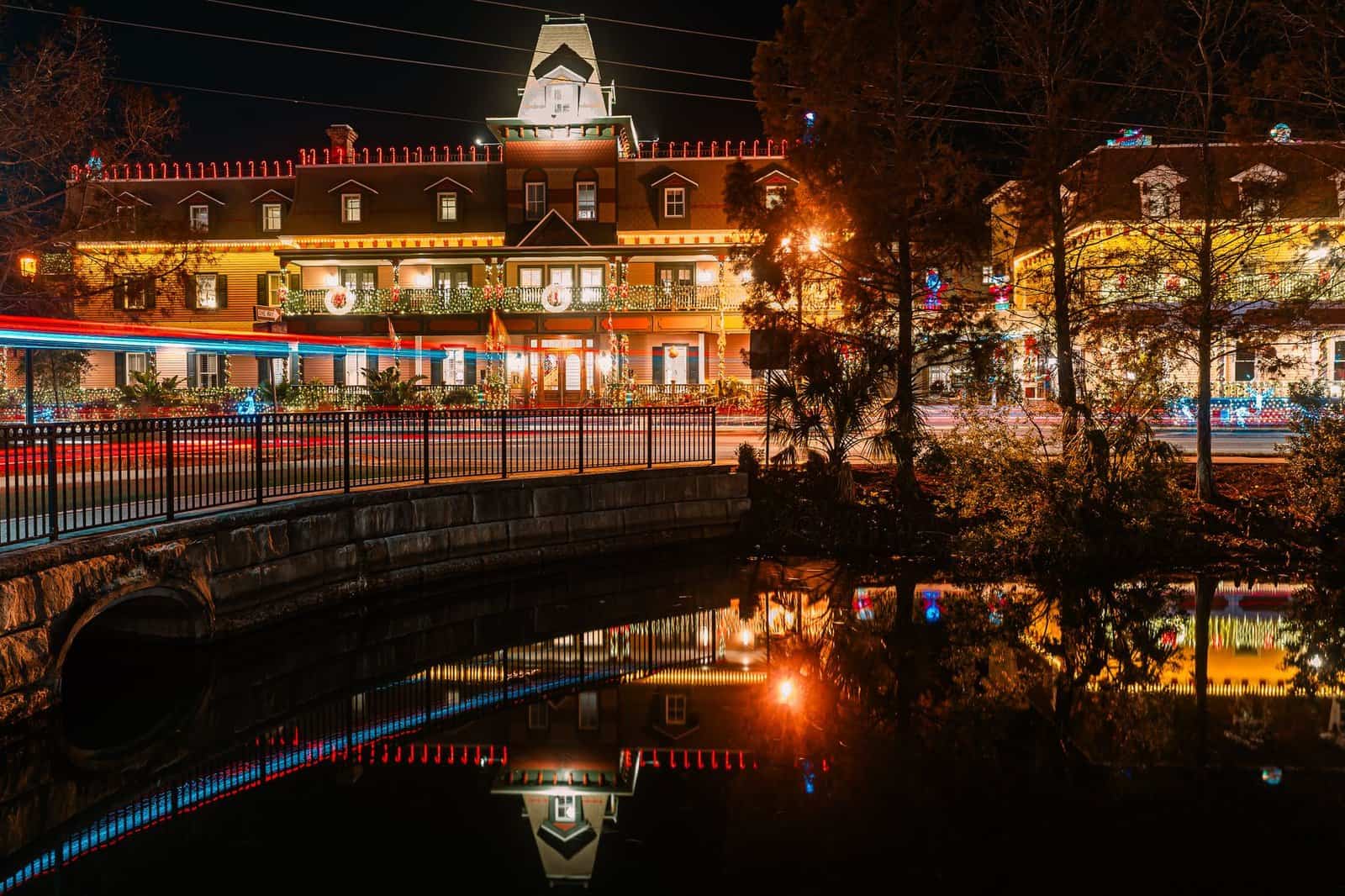
- The city’s annual Christmas Festival of Lights, running since 1927, has become one of Louisiana’s most attended seasonal tourism events
- Melrose Plantation, near Natchitoches, preserves a significant site tied to the history of free people of color in antebellum Louisiana
- The Cane River Creole National Historical Park preserves several plantation sites documenting the region’s complex Creole cultural history
The Steel Magnolias Connection Most Visitors Know Best
Natchitoches served as the primary filming location for the 1989 film Steel Magnolias, and the city has leaned into that association for tourism purposes, offering film location tours and maintaining several filming sites as recognizable visitor attractions, giving the city a specific pop culture tourism draw that operates somewhat separately from its deeper colonial history appeal.
This film-driven tourism recognition has, somewhat paradoxically, done more to put Natchitoches on the map for casual travelers than its genuinely more historically significant status as Louisiana’s oldest permanent settlement, illustrating how pop culture association can outweigh historical significance in shaping actual visitor awareness and trip planning decisions.
Why the City Remains Relatively Undervisited
Natchitoches’s location in rural northwest Louisiana, several hours from both New Orleans and Baton Rouge, keeps it off the primary route for most Louisiana tourism itineraries, which tend to concentrate heavily on New Orleans and the immediately surrounding region, leaving Natchitoches dependent primarily on regional Louisiana and Texas visitors along with the dedicated Christmas Festival of Lights crowd each December.
This relative obscurity has helped the city maintain a genuinely unhurried, small-town historic character that contrasts with the more heavily commercialized tourism experience found in Louisiana’s better-known destinations, an appeal that historic preservation advocates argue is worth protecting even as it limits the city’s broader economic development potential tied to tourism growth.
What This Means Looking Ahead
The trends described here are likely to continue evolving over the coming years, and the specific dynamics at play, economic, demographic, or environmental, will keep shaping how Natchitoches’s colonial history develops going forward, making it worth continued attention from anyone with a genuine interest in the place or subject rather than a one-time curiosity.
For now, understanding the fuller context behind Natchitoches’s colonial history gives a more accurate picture than the surface-level version most casual observers encounter, and that accuracy matters increasingly as more people make real decisions, about where to live, where to visit, or how to spend their money, based on incomplete or outdated impressions.
What Locals Say Compared to What Visitors Assume
Longtime residents familiar with Natchitoches’s colonial history often describe a considerably more nuanced picture than outside visitors or casual observers typically assume, with the day-to-day reality involving tradeoffs and complications that don’t fit neatly into either an overly romanticized or overly dismissive narrative about the place.
That gap between local knowledge and outside perception shows up repeatedly across similar cases nationally, and it’s a useful reminder that Natchitoches’s colonial history rewards a closer, more careful look rather than the quick surface judgment that most passing visitors or online commentary tend to settle for.
The Practical Takeaway for Anyone Paying Attention
Anyone planning to engage more seriously with Natchitoches’s colonial history, whether as a visitor, a potential resident, or simply someone trying to understand the underlying dynamics accurately, benefits from looking past the most commonly repeated version of the story and toward the specific data and history that actually explain how things got this way.
That extra bit of research rarely takes long, and it consistently produces a more useful and more accurate understanding than relying on secondhand impressions, making it worth the modest additional effort for anyone whose decisions actually depend on getting Natchitoches’s colonial history right.
What a Visit Actually Involves Today
A typical Natchitoches visit combines a walking tour of the Front Street historic district, a stop at one of several plantation sites within the Cane River Creole National Historical Park, and, depending on the season, a visit during the Christmas Festival of Lights when the entire historic downtown fills with light displays and holiday crowds that far exceed the city’s normal visitor volume for the rest of the year.
For history-focused travelers willing to make the drive to rural northwest Louisiana, Natchitoches offers a genuinely distinctive colonial history experience considerably less commercialized than New Orleans, along with a smaller, more manageable historic district that can be thoroughly explored within a single day rather than requiring the multi-day commitment a full New Orleans visit typically demands.