Montauk Median Home Price Hit $2.2 Million. The Fishermen Who Built the Town Are Mostly Gone
We may earn money or products from the companies mentioned in this post. This means if you click on the link and purchase the item, I will receive a small commission at no extra cost to you ... you're just helping re-supply our family's travel fund.
Montauk sits at the very end of Long Island, past East Hampton and Amagansett, at the point where the highway simply stops because there is no more land. For decades that remoteness made it the un-Hamptons: a fishing village with a surf culture, cheap motels, and a population that thought the money three towns over was somebody else’s problem. That is no longer true. The median home price in Montauk reached roughly $2.24 million in 2025, according to Douglas Elliman-linked market data, and some non-waterfront homes have sold for more than $13 million.
What Actually Happened
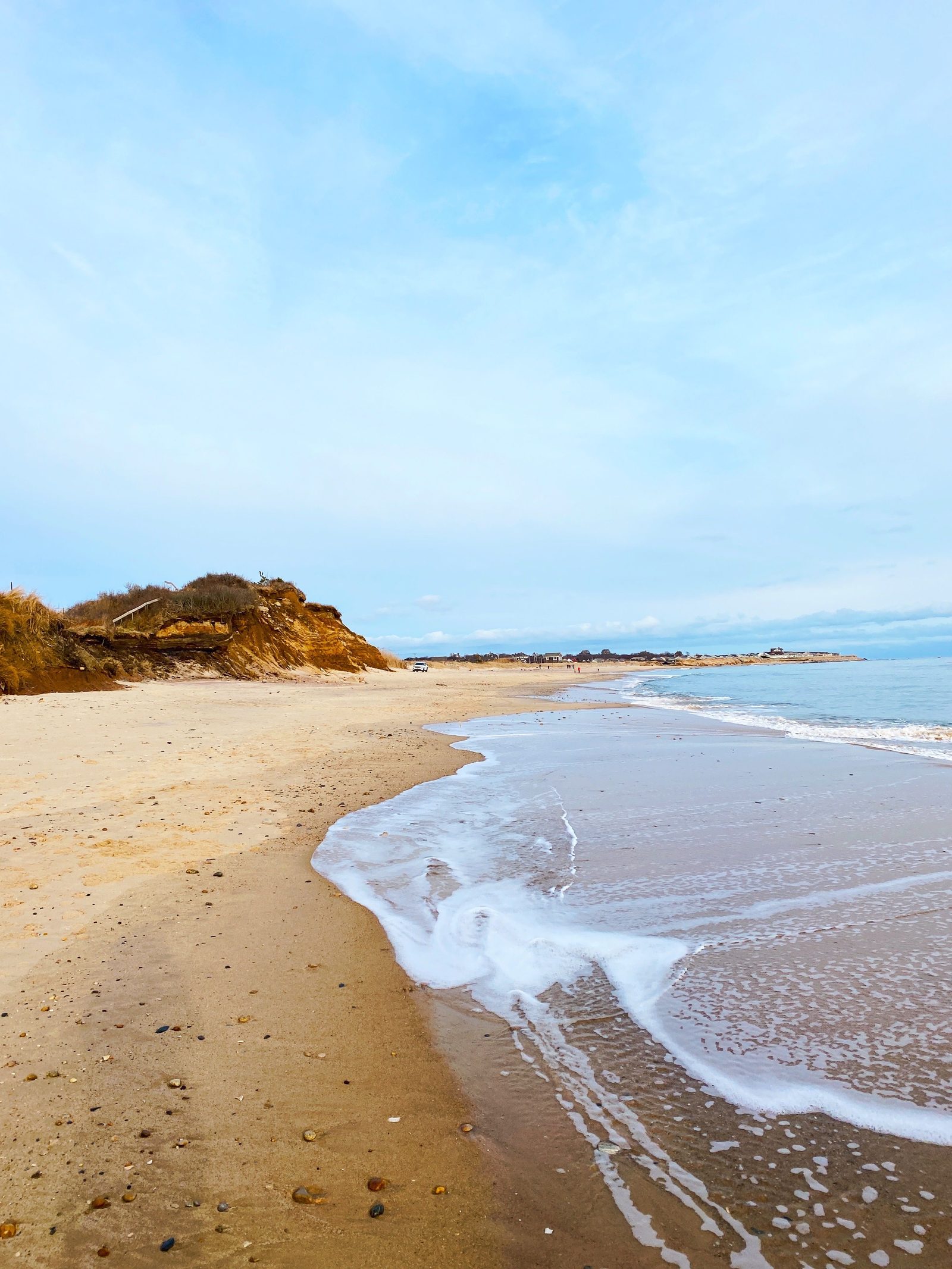
The turning point most locals point to is 2008, the year a hotel called the Surf Lodge opened on Fort Pond and started drawing a crowd from Manhattan that had never previously bothered driving the extra 20 minutes past East Hampton. Before that, Montauk was where surfers, commercial fishermen, and middle-class families with modest summer cottages coexisted without much friction. The town had a reputation for being scruffy on purpose. Ditch Plains, the surf break that anchors the town’s identity, was lined with modest two-bedroom cottages that traded for a few hundred thousand dollars in the early 2000s.
Those same cottages now sell for $2 million to $3 million, and that’s the entry-level tier. A vacant one-acre oceanfront lot on DeForest Road sold for $9 million in December 2024, the highest price ever paid for a one-acre parcel in Montauk, and the eight-bedroom house built on the adjacent lot closed at $17 million. None of this happened because Montauk got bigger. The town has roughly the same footprint and the same limited housing stock it had in 1995. What changed is who wanted in.
The People Who Actually Fish
Montauk still has a working commercial fishing fleet, one of the last significant ones left on Long Island, docked around the harbor near West Lake Drive. But the economics of being a fisherman who also needs to live in Montauk have become close to absurd. A deckhand or dock worker earning an hourly wage cannot compete for housing against a hedge fund associate looking for a weekend rental, and rentals are exactly where the pressure shows up first. Summer rentals in Ditch Plains cottages run $15,000 to $25,000 per week. Oceanfront properties go for $50,000 to $100,000 a week. Even modest inland houses, the kind with no view at all, rent for enough in July and August that owners have little financial reason to offer anything at a rate a local worker could pay.
The result is a town increasingly staffed by people who commute in from Riverhead, Manorville, or further west, driving 45 minutes to an hour each way to work the restaurants, hotels, and charter boats that depend on Montauk’s cachet. Restaurant owners in town have talked publicly for years about the difficulty of finding staff who can actually afford to live within a reasonable distance of their jobs. Some businesses have resorted to housing employees themselves, renting group houses at a loss just to guarantee they show up for a shift.
Who Is Actually Buying
The buyer profile has shifted from old Hamptons money looking for a rustic getaway to a younger, more liquid cohort: people in their 30s and 40s in finance, tech, and media who came out for a Surf Lodge weekend once and never really left psychologically. They are not necessarily wealthier than traditional East Hampton buyers, but they want something different — informality, a beach-town identity, proximity to surfing — and Montauk is the only place on the South Fork that still plausibly offers it, even as it prices out the exact culture that made it desirable.
- Ditch Plains cottages: $2 million to $3 million for basic two-bedroom homes near the surf break
- Old Montauk Highway bluffs: $4 million to $10 million for elevated ocean-view properties
- Inland Montauk: $1.6 million to $3 million, the closest thing to an entry point left
- Montauk Manor condos: studios starting under $500,000, the true low end of the market
What Locals Actually Say
Ask someone who grew up in Montauk what changed and the answer is rarely nostalgic in a soft way. It is usually specific: the bar that used to be full of guys off the boats is now full of people who drove out from Brooklyn for the weekend. The bait and tackle shop is still there, but the parking lot next to it fills up with cars that cost more than most houses did twenty years ago. Longtime residents describe a town that still looks the same from the road — the same low buildings, the same weathered shingles — while operating on an entirely different economic logic underneath.
There is also a practical, unglamorous consequence that gets less attention than the price tags: municipal workers, teachers, and emergency responders in Montauk increasingly cannot afford to live in the district they serve. East Hampton Town has explored workforce housing initiatives for years precisely because the math no longer works for anyone paid a public salary. Montauk did not lose its identity in one dramatic event. It lost it in the accumulation of a thousand rental listings, each one slightly higher than the last, until the town that fishermen built became a town fishermen mostly visit for work and leave.
The Ripple Effect on East Hampton and Amagansett
Montauk’s price surge has not happened in isolation. It has pushed pressure back down the South Fork toward East Hampton and Amagansett, both of which have seen their own median prices climb sharply, with Amagansett’s median home price up close to 89% year over year in early 2026 according to Douglas Elliman market reports. Real estate agents who work the entire South Fork describe a kind of chain reaction: buyers priced out of the most established Hamptons villages start looking toward Montauk, driving its prices up, which in turn makes Montauk less of a relative bargain and pushes some buyers even further out, toward Napeague or inland pockets that had never previously registered as desirable.
This kind of spillover is common in constrained coastal markets, but Montauk’s version is unusual because the town spent so long defining itself in opposition to the wealth further west. Being the affordable alternative was part of the town’s identity for decades. Losing that status has forced a kind of identity crisis that shows up in local town hall meetings, where zoning and short-term rental restrictions have become genuinely contentious issues, pitting longtime homeowners who want to preserve the town’s character against newer owners who want fewer restrictions on how they use properties they paid millions of dollars for.
What Happens to a Town Like This Next
There is no obvious mechanism that reverses this kind of transformation once it’s underway. Montauk cannot build meaningfully more housing; it is constrained by the same geography that made it desirable in the first place, hemmed in by the ocean, Fort Pond, and Lake Montauk, with limited undeveloped land left to absorb new supply. Local zoning has generally trended toward preservation rather than densification, which protects the town’s look but does nothing to relieve the pricing pressure. Forecasts for 2026 point to continued, if more modest, price growth in the 2% to 4% range, which sounds tame compared to the previous decade’s appreciation but still compounds on a base that has already tripled or quadrupled since the early 2000s. Whatever Montauk becomes next, it will not be the fishing village it was even fifteen years ago, and most people who live there now seem to have accepted that the argument is no longer about whether that change happened, but about how much of the town’s original character can be preserved for the people who remain.