Molokai Has No Traffic Lights and No Buildings Taller Than a Coconut Tree. 7 Things to Know Before You Visit
We may earn money or products from the companies mentioned in this post. This means if you click on the link and purchase the item, I will receive a small commission at no extra cost to you ... you're just helping re-supply our family's travel fund.
Molokai has no traffic lights. It also has a long-standing local rule of thumb that no building should be taller than a coconut tree. Visiting Molokai Hawaii is less like going to a resort island and more like stepping into a rural community that happens to have world-class coastline.
The island is about 38 miles long and 10 miles wide, with around 7,400 residents. Its main town, Kaunakakai, has a few blocks of shops, churches, and a long wharf. Molokai also has one of the highest shares of Native Hawaiian residents of any island in the state, and residents have pushed back hard against big resorts, cruise ships, and other kinds of development that changed Maui and Oahu.
That is exactly why some travelers love it. Molokai offers empty beaches, deep valleys, sea cliffs, and a strong sense of place. But it rewards visitors who plan ahead and adjust their expectations. Here are seven things to know before you go.
7 Things to Know Before Visiting Molokai Hawaii
1. There Are No Traffic Lights, and the Pace Matches
The no-traffic-light fact gets repeated in guidebooks for a reason. It is the simplest way to explain Molokai. Roads are two lanes, traffic is light, and people wave at each other. Nobody honks. Drivers pull over to talk to friends.
Bring that pace with you. Stores, restaurants, and services keep their own hours, and some close on Sundays or for family events. Things that take five minutes on Oahu might take thirty here. If you arrive wanting resort-style service and a packed itinerary, you will be frustrated. If you arrive wanting a slower island, you will fit right in.
2. Getting There Means a Small Plane
There is no regular passenger ferry to Molokai now. The Maui-Molokai ferry service ended years ago. Most visitors fly in on small commuter airlines from Honolulu or Kahului on Maui, landing at Molokai Airport near Hoolehua.
The planes are small, sometimes nine-seaters, and weight limits apply to luggage and sometimes passengers. Flights take about 25 to 40 minutes. Schedules can shift with weather and demand, so leave buffer time on both ends of your trip, especially if you are connecting to a mainland flight in Honolulu.
3. Lodging and Rental Cars Are Limited
Molokai has very few hotels. Hotel Molokai near Kaunakakai is the main hotel-style option. Beyond that, most visitors stay in condos on the West End or East End, or in vacation rentals and cottages. The large resort on the West End closed in 2008 and has not reopened.
Rental cars are also scarce, and you need one. There is no public transit system built for visitors, and taxis are limited. Book your car as soon as you book your flights. Expect to pay more than on Oahu for both lodging and car rental, and expect to pay more for gas, which has to be shipped in.
4. Stores Close Early and Supplies Are Limited
Kaunakakai has a few grocery stores, a hardware store, small restaurants, and food trucks. That is most of what the island offers for shopping. Prices are higher than on the mainland because almost everything arrives by barge.
- Buy groceries in Kaunakakai before heading to the West End or East End.
- Expect many businesses to close by late afternoon or early evening.
- Sunday hours are limited, and some places are closed.
- Bring any specialty items you need, from reef-safe sunscreen to prescriptions.
- Carry cash for small vendors and farmers markets.
The Saturday morning market in Kaunakakai is a good place to buy local produce, baked goods, and crafts.
5. Kalaupapa Is Not a Casual Day Trip
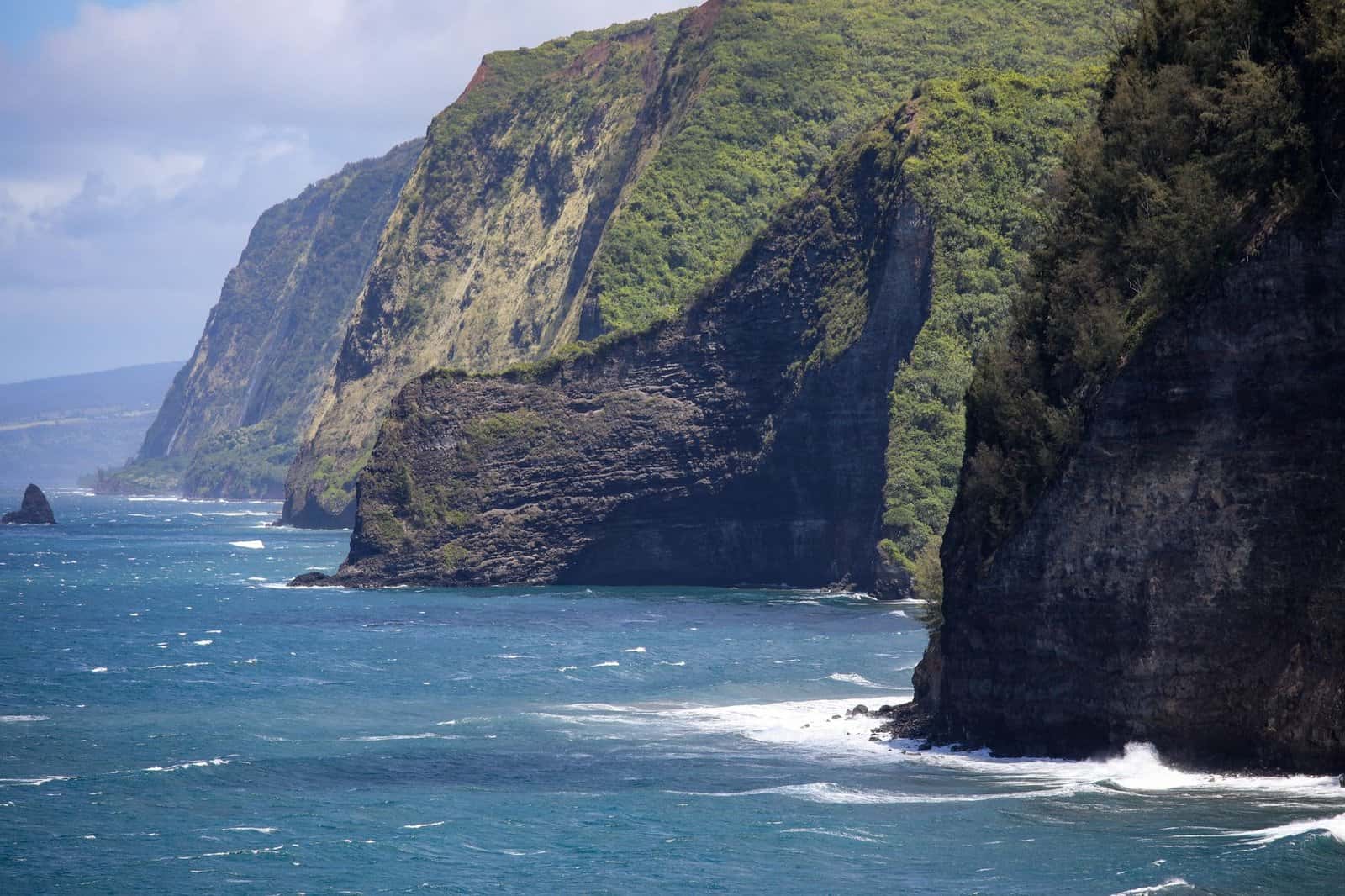
Kalaupapa, on a peninsula below some of the highest sea cliffs in the world, is where the Kingdom of Hawaii and later territorial governments forcibly isolated people with Hansen’s disease, starting in 1866. Thousands of people were sent there. Father Damien and Mother Marianne Cope, both later canonized as saints, worked in the settlement.
Today it is Kalaupapa National Historical Park, and a small number of former patients have lived there by choice. Access has always been tightly controlled, and in recent years visitor access has been closed or heavily restricted. Check with the National Park Service before planning around it. You can still see the peninsula from the Kalaupapa Lookout in Palaau State Park, a short walk from the parking area on the island’s north side.
6. Halawa Valley Requires a Local Guide
Halawa Valley, at the far east end of the island, is among the earliest settled places in Hawaii. It is reached by a long, winding drive along the east coast, past fishponds and churches. The valley is mostly private land, and families there offer guided cultural hikes to a waterfall, sharing history and protocol along the way.
Do not hike into the valley on your own. Go with a guide, follow their lead, and you will learn far more than you would on a trail. The drive itself, with sea views, ancient Hawaiian fishponds along the south shore, and the valley opening below the road at the end, is worth the morning.
7. Local Culture Comes First
Molokai residents have long protected their island from changes that crowded other parts of Hawaii. Many families still rely on fishing, hunting, and gathering. Visitors are welcome, but they are expected to behave like guests.
- Ask before entering private land, and respect “kapu” or no-trespassing signs.
- Do not take rocks, sand, or shells as souvenirs.
- Leave fishing spots and gathering areas to those who depend on them.
- Keep beaches clean and give monk seals and turtles plenty of space.
- Be patient and friendly. A wave goes a long way.
A Little History Before You Go
Molokai’s past shapes how residents think about visitors today. In ancient Hawaii, the island was known for its fishponds, its powerful priests, and the deep valleys of its north shore. Hawaiian fishponds built along the south coast, some centuries old, are among the most extensive in the islands, and community groups have worked to restore several of them.
In the 20th century, ranching and pineapple plantations dominated the economy. Large pineapple operations ran on the island for decades before closing by the 1980s, and ranching shaped the West End. Molokai Ranch, which once owned a huge share of the island, shut down its operations in 2008, closing its lodge, golf course, and other businesses and cutting hundreds of jobs. Plans for new resort development since then have faced strong community opposition.
That history explains why you will not find chain hotels or crowded resort strips. Many residents see the island’s lack of development as something they fought to keep.
What to Pack for Molokai
- Reef-safe sunscreen, a hat, and rash guards, since shade is limited at many beaches.
- Sturdy shoes for rocky shorelines and the walk to the Kalaupapa Lookout.
- A rain jacket for the windward side and the uplands, which get more rain than the dry West End.
- A cooler bag for groceries from Kaunakakai.
- Downloaded maps, since cell service can be spotty in rural areas.
What to See When You Get There
Once you have the logistics handled, Molokai’s highlights are mostly outdoors.
- Papohaku Beach on the West End is one of the largest white-sand beaches in Hawaii, about three miles long. Winter surf can make swimming dangerous, so watch from the sand on big days.
- The Kalaupapa Lookout and Phallic Rock in Palaau State Park overlook the north shore cliffs.
- The south shore drive east of Kaunakakai passes Hawaiian fishponds, some restored, along the reef-protected coast.
- Kaunakakai Wharf stretches far into the channel and is a good place to watch the sunset.
- Coffee and macadamia nut farms near Kualapuu and Hoolehua offer tastings and tours.
Budgeting for Molokai
Molokai is not cheap, even though it feels rural. Inter-island flights on small carriers are often priced higher per mile than larger routes, rental cars on the island can run well above mainland rates when supply is tight, and groceries cost more because they arrive by barge. Condos on the West End are often the best value for longer stays, especially if you cook. Activities such as guided valley hikes, fishing charters, and cultural tours are priced per person and worth budgeting for, since they are how you see the parts of the island you cannot reach alone.
When to Go
Molokai is warm year-round, with winter highs often around 80 degrees. Late fall and winter bring larger north and west swells, which make some beaches unsafe for swimming but produce dramatic surf. The south shore stays calmer.
Holiday weeks are busier than you might expect because residents’ families visit and lodging is limited. Book well ahead for Thanksgiving through New Year’s.
The Bottom Line on Visiting Molokai
Molokai is not a resort island and does not want to be one. That is its strength. Plan your flights, car, and lodging early, stock up in Kaunakakai, hire local guides, and travel slowly. Do that, and the island without traffic lights may become the one you remember most.