Middlesboro, Kentucky Sits Inside a Meteor Crater at the Cumberland Gap. Almost Nobody Mentions That Part.
We may earn money or products from the companies mentioned in this post. This means if you click on the link and purchase the item, I will receive a small commission at no extra cost to you ... you're just helping re-supply our family's travel fund.
Middlesboro, Kentucky, population around 9,500, occupies a genuinely unusual piece of geology: the town sits inside what geologists believe is an ancient meteor impact crater, a fact that gets far less attention locally than the town’s more famous connection to the nearby Cumberland Gap, the historic mountain pass that Daniel Boone helped popularize as a route westward for early American settlers.
The Gap That Shaped the Region
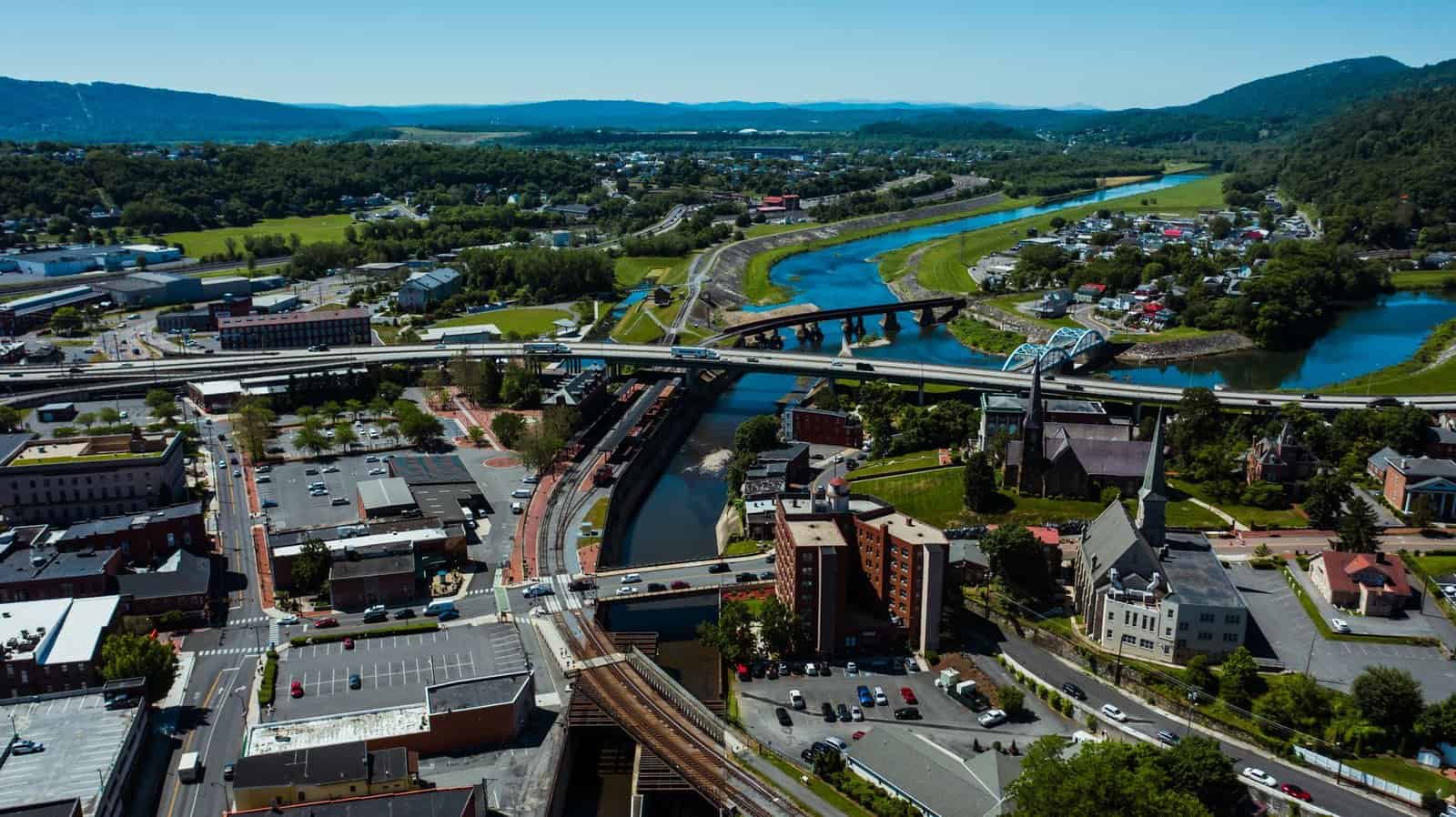
The Cumberland Gap National Historical Park, straddling the Kentucky, Virginia, and Tennessee borders, preserves the mountain pass that funneled hundreds of thousands of settlers westward in the decades following Boone’s exploration in 1775, and the park today draws visitors interested in both the historical significance and the genuinely dramatic overlook views from Pinnacle Overlook, accessible by a short drive above Middlesboro itself.
Middlesboro’s coal mining history, like much of the surrounding Appalachian coalfield region, brought boom-era wealth in the early 1900s followed by decades of steady decline as mechanization and, later, the broader collapse of Appalachian coal employment reduced the workforce needed to extract the region’s remaining reserves, leaving the town considerably smaller than its peak population.
What the Region Looks Like Economically Now
The Numbers Behind the Decline
- Bell County, where Middlesboro sits, has seen population decline for decades tied to coal industry contraction
- Tourism tied to the Cumberland Gap park provides some economic activity but not enough to offset job losses
- Healthcare has become one of the region’s largest employment sectors, replacing mining in relative importance
- Outdoor recreation tourism, including hiking and the park’s historical sites, remains a small but growing sector
Local economic development efforts have increasingly focused on outdoor recreation and heritage tourism tied to the Cumberland Gap as a partial replacement for lost coal employment, though the scale of tourism activity remains far smaller than what coal mining once provided in terms of both jobs and tax revenue for the broader county.
What makes Middlesboro’s crater geology particularly overlooked is that it requires no additional infrastructure or marketing to exist as a fact worth knowing, unlike the Cumberland Gap’s historical sites, yet it rarely appears in local tourism materials at all, a strange omission for a town that could easily market itself as one of the only communities in America built inside a meteor impact site.
The Longer-Term Trajectory
Longtime observers of this pattern note that the early years after a place or trend gains attention are rarely the ones that determine its lasting character. The more decisive period tends to arrive several years later, once the initial wave of interest either sustains itself through genuine infrastructure investment or fades as attention moves elsewhere, leaving behind whatever changes already took root during the busier years.
That delayed reckoning is precisely why comparisons across a full decade, rather than a single before-and-after snapshot, tend to produce a more accurate picture of what actually changed and what merely appeared to change while the cameras and headlines were still pointed in that direction.
Why This Keeps Getting Overlooked
Part of the reason this dynamic receives less attention than it probably deserves is structural: the initial story, whether a viral moment, a policy change, or a shift in travel patterns, is simply more compelling to cover than the slower, less dramatic process of adjustment that follows it over subsequent years, which rarely fits into a single headline or a short video.
That mismatch between what gets covered and what actually matters most to the people living through the change is a recurring feature of how places, trends, and communities get discussed publicly, and it tends to leave a persistent gap between popular perception and the more complicated reality on the ground.
What This Means Going Forward
The broader pattern here reflects something researchers and local officials increasingly track closely: the gap between how a place or trend is perceived from the outside and how it actually functions day to day for the people living inside it or making decisions about it. That gap rarely closes on its own, and it tends to widen further whenever outside attention, whether from tourism, media coverage, or social platforms, arrives faster than the underlying infrastructure or community capacity can absorb it.
What tends to happen next depends heavily on decisions made by the people closest to the situation, whether that means local governments, longtime residents, or the businesses that have to adapt fastest, and those decisions rarely get the same national attention as the initial trend or story that put the place on the map in the first place, even though they matter considerably more to how things actually turn out over the following decade.
The Longer-Term Trajectory
Longtime observers of this pattern note that the early years after a place or trend gains attention are rarely the ones that determine its lasting character. The more decisive period tends to arrive several years later, once the initial wave of interest either sustains itself through genuine infrastructure investment or fades as attention moves elsewhere, leaving behind whatever changes already took root during the busier years.
That delayed reckoning is precisely why comparisons across a full decade, rather than a single before-and-after snapshot, tend to produce a more accurate picture of what actually changed and what merely appeared to change while the cameras and headlines were still pointed in that direction.
Why This Keeps Getting Overlooked
Part of the reason this dynamic receives less attention than it probably deserves is structural: the initial story, whether a viral moment, a policy change, or a shift in travel patterns, is simply more compelling to cover than the slower, less dramatic process of adjustment that follows it over subsequent years, which rarely fits into a single headline or a short video.
That mismatch between what gets covered and what actually matters most to the people living through the change is a recurring feature of how places, trends, and communities get discussed publicly, and it tends to leave a persistent gap between popular perception and the more complicated reality on the ground.