Huntsville, Alabama Has NASA, a Thriving Tech Sector, and Home Prices That Still Make Sense
We may earn money or products from the companies mentioned in this post. This means if you click on the link and purchase the item, I will receive a small commission at no extra cost to you ... you're just helping re-supply our family's travel fund.
Huntsville, Alabama was a mid-size Southern city for most of its existence — cotton and railroad, then the Army’s Redstone Arsenal, then NASA’s Marshall Space Flight Center and the Saturn V rockets that took the first humans to the moon. For decades, Huntsville had the aerospace economy without the national profile that cities with comparable industries would have developed. That changed in the 2010s, and it’s accelerating in 2026.
What Huntsville Is Becoming — and Why the Window Is Still Open
The Huntsville metro has one of the highest concentrations of engineers and scientists per capita of any mid-size US city — a legacy of its aerospace and defense economy that has attracted technology companies looking for talent at a fraction of the cost of Silicon Valley or the DC suburbs. Boeing, Lockheed Martin, Raytheon, and dozens of defense technology contractors have major operations here. Blue Origin chose Huntsville for its engine manufacturing facility. The US Space Command headquarters recently relocated here, bringing federal employment and contractor spending that will take years to fully flow through the local economy.
The Numbers
- Median home price: approximately $300,000–$340,000 as of 2025
- Population growth: among the fastest-growing cities in the South
- Unemployment: consistently below the national average
- Alabama has relatively low state income tax compared to many northern states
- Cost of living: significantly below equivalent tech hub cities on the coasts
What Huntsville Offers Beyond the Defense Economy
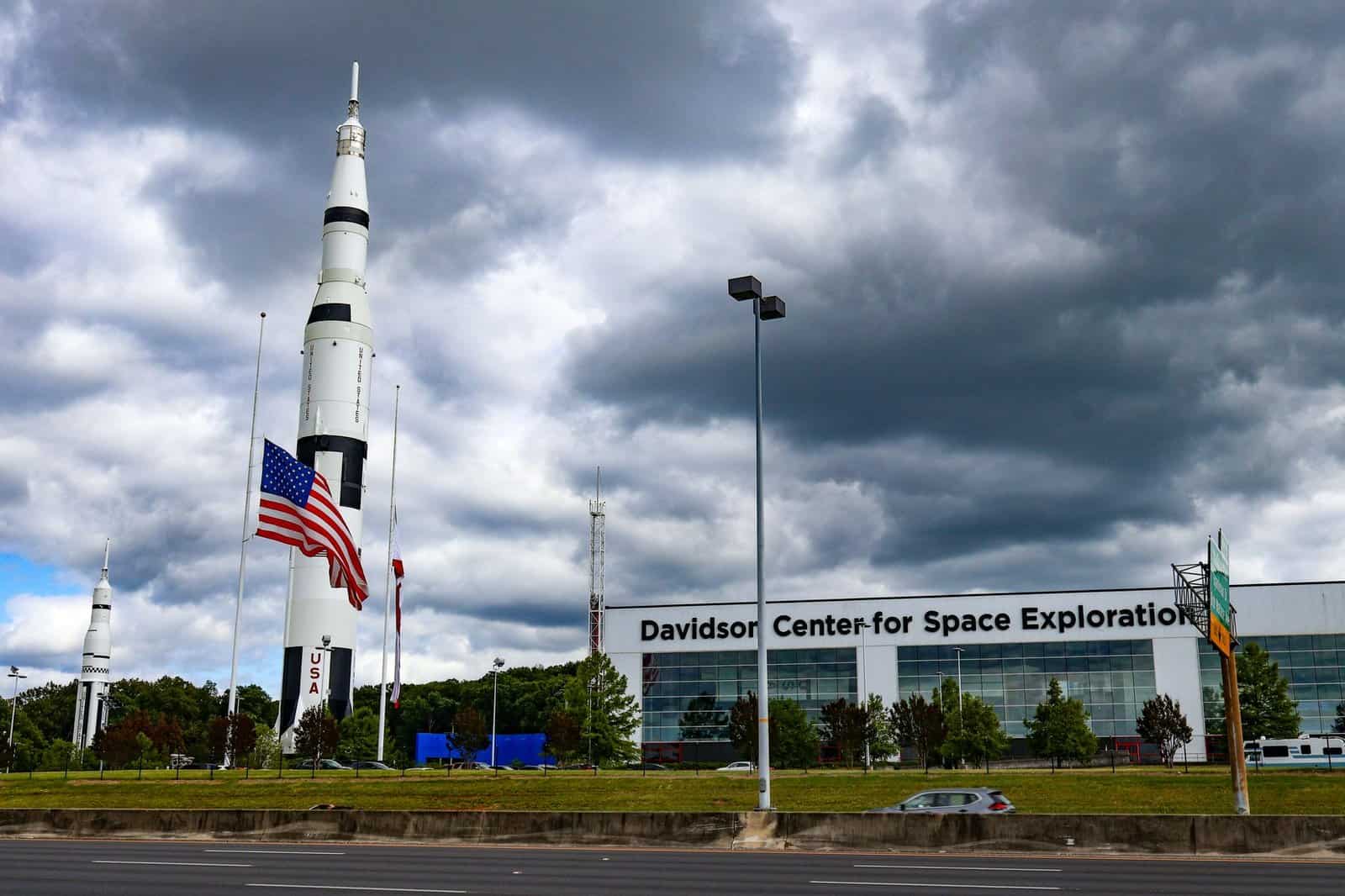
The US Space and Rocket Center is one of the finest aerospace museums in the world — the Saturn V on display is a real flight vehicle, not a replica. The Huntsville Museum of Art punches above its weight. Monte Sano State Park on the mountain east of the city provides legitimate hiking and mountain biking within 15 minutes of downtown. The Big Spring International Park in the heart of downtown provides a rare walkable urban green space in a Southern city of this size.
The Honest Concerns
Huntsville is growing faster than its infrastructure is adapting. Traffic on US-72 and the Memorial Parkway corridors has become a genuine daily frustration as population has grown without corresponding road investment. The restaurant and cultural scene, while significantly better than it was a decade ago, is still developing relative to the city’s now-substantial educated population. And the political and cultural environment of Alabama more broadly is a factor that every potential resident assesses differently — it’s part of the cost-benefit calculation, not an asterisk.
For visitors, Huntsville is an excellent day trip or short stay — the space museum alone justifies an overnight. For people evaluating whether to move there: the window of affordability is real and narrowing as the city’s profile rises. The people who moved there three years ago are already watching their home values climb. The next three years likely accelerate that trend.