You’re Sitting in the Wrong Part of the Airport — How to Get Into Any Lounge Without Paying $600 a Year
We may earn money or products from the companies mentioned in this post. This means if you click on the link and purchase the item, I will receive a small commission at no extra cost to you ... you're just helping re-supply our family's travel fund.
You’ve done it. You’ve dragged your bags through security, survived the TSA shuffle, and now you’re standing in a terminal that smells like fast food and broken dreams. There are 47 people fighting over 12 outlets. A toddler is crying directly into a microphone, apparently. Your gate is a 15-minute walk away and your flight boards in two hours.
Now picture this instead: you push open a frosted glass door. The noise disappears. Someone hands you a glass of wine. There’s a hot buffet. Fast Wi-Fi. A shower if you want it. And absolutely no one is watching a YouTube video at full volume on their phone.
That’s an airport lounge. And you don’t need a $600 annual fee or a first-class ticket to get in.
What Airport Lounges Actually Give You
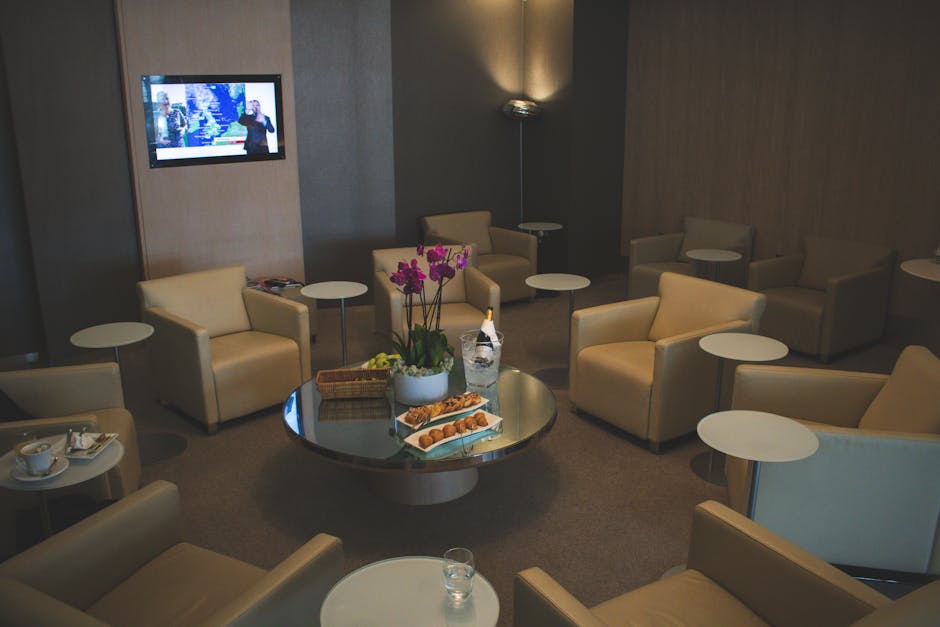
Before we talk access, let’s be clear about what you’re actually getting — because the gap between a lounge and a regular terminal is genuinely staggering.
Most lounges include:
- Free food — real food, not a $18 granola bar. Many Centurion Lounges serve full hot meals crafted by regional chefs.
- Free alcohol — an open bar in many lounges, including spirits, wine, and craft beer
- Fast, dedicated Wi-Fi — none of that shared-terminal crawl
- Comfortable seating — armchairs, quiet zones, some with sleeping pods
- Showers (at most major hub lounges)
- Printing, charging stations, and business services
- Significantly fewer children screaming at full volume
The difference is not marginal. If you have even a 90-minute layover, a good lounge transforms the experience. Now let’s talk about how to get in.
How to Get In: Every Method Explained

Amex Platinum: Centurion Lounges + Priority Pass Select
If lounge access is a priority, the American Express Platinum Card is the benchmark. It gets you into the Centurion Lounge network — the best proprietary lounges in the US by a wide margin. Think chef-driven hot food, a full open bar with quality spirits, showers, and design that actually makes you feel like a human being.
The rules: you must be departing within 3 hours of your flight. Cardholders can bring 2 guests for free; additional guests cost $50 each as of recent policy changes. The Amex Platinum also includes Priority Pass Select, which opens the door to 1,300+ partner lounges worldwide.
The catch: the $695 annual fee stings until you stack the credits — $200 airline fee credit, $200 hotel credit, $240 digital entertainment credit, and more. For frequent travelers, the math works. For occasional flyers, it may not.
Chase Sapphire Reserve: Sapphire Lounges + Priority Pass
The Chase Sapphire Reserve ($550/year) has been a lounge-access staple for years, but the picture has gotten more complicated. Chase launched its own Sapphire Lounges (currently at select airports including BOS, LGA, and HKG — more opening soon), which are genuinely excellent. The $300 annual travel credit effectively brings the fee down to $250, which is easier to stomach.
The Priority Pass situation has degraded. Chase removed restaurant credits from its Priority Pass in 2024, meaning the “lounge” access through Priority Pass is now limited to actual lounge locations — not the restaurant workaround that made it so flexible. If your home airport relies on restaurant-based Priority Pass options, that perk has essentially disappeared.
- Best for: travelers who fly frequently through airports with Chase Sapphire Lounges
- Priority Pass quality: reduced since 2024 restaurant credit removal
- Annual fee after travel credit: effectively ~$250
Capital One Venture X: Capital One Lounges + Unlimited Priority Pass
Here’s the card that surprised everyone. The Capital One Venture X ($395/year) includes access to Capital One Lounges — currently at DFW, DEN, and IAD — and these lounges serve the best free food of any proprietary lounge in the US. The menus are locally inspired, the cocktail programs are serious, and the design is modern and spacious.
The Venture X also includes unlimited Priority Pass for the cardholder and up to 2 guests free. That’s a genuinely powerful combination at a lower price point than Amex Platinum.
- Capital One Lounge locations: Dallas-Fort Worth (DFW), Denver (DEN), Washington Dulles (IAD)
- Guest policy: 2 free guests per visit
- Priority Pass: unlimited, including guests
- Annual fee: $395 — offset by a $300 travel credit
Priority Pass Standalone Membership
If you don’t want a premium travel card but want lounge access, Priority Pass sells direct memberships. The unlimited plan runs $429/year. Individual visits without a membership cost $32 each.
The math: you need to use it 14+ times per year for the annual plan to beat per-visit pricing. If you fly frequently but not constantly, pay per visit or get one of the credit cards above — most of which include Priority Pass as a perk and offer additional value beyond just lounge access.
Day Passes: The Last Resort Option
Most airport lounges sell day passes at the door, typically ranging from $45 to $90. Some can also be found and pre-purchased through the LoungeBuddy app.
Honestly? Day passes are rarely worth it. You’d have to spend a meaningful chunk of your layover in the lounge to justify the cost, and if you’re only there for 60-90 minutes, you might get one drink and a plate of food before you need to leave. If you fly infrequently, your money is better spent eating at a nice airport restaurant.
Airline-Specific Lounges: The Fine Print
Major airlines have their own lounge networks, but access has gotten significantly more restrictive:
- Delta Sky Club: As of early 2025, Delta removed Chase Sapphire Reserve as a qualifying access card. You now need a Delta co-branded Amex Reserve card (or business class ticket) to get in. Annual membership runs $695/year standalone.
- United Club: $650/year for membership, or included with the United Club Infinite Card. One of the more accessible airline lounges if you’re a United loyalist.
- American Admirals Club: $650/year standalone membership or included with the Citi AAdvantage Executive World Elite card. Access is available to all members regardless of airline or class, unlike Delta.
The Trick Most People Miss: Regional Bank Travel Cards
This one flies under the radar. Many credit unions and regional banks offer Priority Pass membership as a perk with their mid-tier travel cards — often with lower annual fees than the big-name cards. Before you pay $429 for a standalone Priority Pass or $695 for a premium Amex card, check the travel cards offered by your bank or credit union. You may already be eligible for Priority Pass and not know it.
The Best US Airport Lounges by City
Dallas-Fort Worth (DFW) — Capital One Lounge
The Capital One Lounge at DFW is genuinely one of the best airport lounges in the country. Located in Terminal D, it features Texas-inspired food, a Peloton room, a nap room, and a cocktail bar that changes seasonally. Get the brisket tacos. Get the Topo Chico. You’ll be sad when it’s time to board.
New York JFK — Centurion Lounge
The Centurion Lounge at JFK (Terminal 4) is the gold standard for east coast travelers. The food is chef-curated and legitimately excellent — not just acceptable airport fare. The bar is fully stocked with premium spirits. There’s a spa treatment area. If you’re flying international from JFK on Amex Platinum, arrive early just for the lounge experience.
Los Angeles (LAX) — Centurion Lounge
The LAX Centurion Lounge (Tom Bradley International Terminal) is massive and tends to get crowded, but the quality is still there. The West Coast food program is strong — think local produce, fresh seafood, California-sourced ingredients. The terrace seating with runway views is a genuine highlight.
Seattle (SEA) — Alaska Lounge
For Pacific Northwest travelers, the Alaska Lounge at SEA-TAC is underrated. The Pacific Northwest-themed food and drink program (local craft beers, salmon, great coffee) makes it feel genuinely regional. Alaska Airlines credit card holders get in, as do Alaska MVP Gold members — a solid option if you’re a frequent SEA traveler.
Which Card Is Right for Which Traveler

- Frequent flyer who values the absolute best lounge experience: Amex Platinum. The Centurion network is unmatched. Stack the credits to offset the $695 fee.
- Traveler who wants the best value for the fee: Capital One Venture X at $395. The Capital One Lounges are exceptional where available, and the Priority Pass is unlimited.
- Road warrior who flies through Chase Sapphire Lounge cities: Chase Sapphire Reserve, especially with the $300 travel credit factored in.
- Delta loyalist: Delta Amex Reserve — now the only reliable way to access Sky Club.
- Occasional traveler who doesn’t want a premium card: Priority Pass per-visit at $32, or lounge day passes through LoungeBuddy when you have a long layover worth spending.
- Budget-conscious frequent traveler: Check your regional bank’s travel card first. Priority Pass through a $95/year card is one of the best-kept secrets in travel.
The bottom line is simple: if you fly more than 6-8 times a year, lounge access will improve your life and the math will likely work out in your favor. The days of needing a first-class ticket to escape the gate chaos are long over. You just have to know where to look.