Group Travel Almost Always Leaves Someone Miserable — Here’s the Exact Psychology Why
We may earn money or products from the companies mentioned in this post. This means if you click on the link and purchase the item, I will receive a small commission at no extra cost to you ... you're just helping re-supply our family's travel fund.
This article contains affiliate links. If you book through our links, we may earn a commission at no additional cost to you.
Group trips occupy a special category in the travel imagination. The road trip with college friends. The bachelorette weekend. The annual family reunion trip. The coworker group that thought it would be fun to rent a house together. In the planning phase, these trips generate enormous enthusiasm. By day two or three of the actual trip, the social dynamics of putting multiple people in an unstructured shared environment for days at a time are often producing discomfort that nobody knows quite how to address.
The misery doesn’t always announce itself. It appears as someone being slightly quieter than usual. A tone in a response that’s a half-degree cooler than it was yesterday. A person who keeps volunteering to make coffee runs alone. By the final day, most groups have at least one person who is genuinely relieved it’s ending.
The Group Trip Mythology

Group travel has been romanticized in ways that make the reality harder to process when it arrives. The mythology of the perfect group trip — everyone laughing, everyone agreeing, the effortless shared adventure — is genuinely achievable in brief windows. It’s not sustainable for multiple consecutive days across all interactions.
The social technology that makes everyday group life manageable — people have separate spaces to retreat to, different schedules, the ability to opt out of activities without explanation — is largely absent on a trip. You’re together constantly. You eat together. You decide together. You see each other’s moods in real time, without the buffer of ordinary social distance.
This is wonderful when everyone’s in a good state and aligned on what they want. It’s intensely uncomfortable when they’re not, and in a group of four or more people, the probability that everyone is in a good state and aligned on everything for five consecutive days is essentially zero.
How Groups Make Decisions — and Why It Goes Wrong

Group decision-making has been studied extensively in organizational psychology, and the patterns that emerge in work contexts translate directly to travel groups. A few reliable phenomena:
Groupthink: Groups under social pressure to maintain harmony often converge on decisions nobody actually wanted, because each individual would rather suppress their preference than be the person who disrupts the group. The result is a “consensus” that nobody is satisfied with and that nobody specifically chose.
Social loafing and over-involvement: Most groups have one person who ends up doing a disproportionate amount of the planning, booking, and deciding — often because others defaulted to them. That person accumulates resentment. The people who defaulted often resent the outcomes of decisions they didn’t make.
Preference falsification: Individuals in groups regularly report preferences they don’t actually hold because the group dynamic makes honesty feel risky. Asked “is everyone okay with this restaurant?” people say yes because the cost of saying no seems higher than the cost of a meal they don’t particularly want. These small falsifications compound over five days.
A group of six people trying to agree on where to eat dinner represents something like fifteen different two-person negotiations happening simultaneously, plus the meta-negotiation of who has standing to advocate for their preference and how strongly. This is why groups take an hour to agree on dinner and why someone always ends up eating somewhere they didn’t want to go.
The Hidden Variable: Everyone Has a Different Trip in Mind
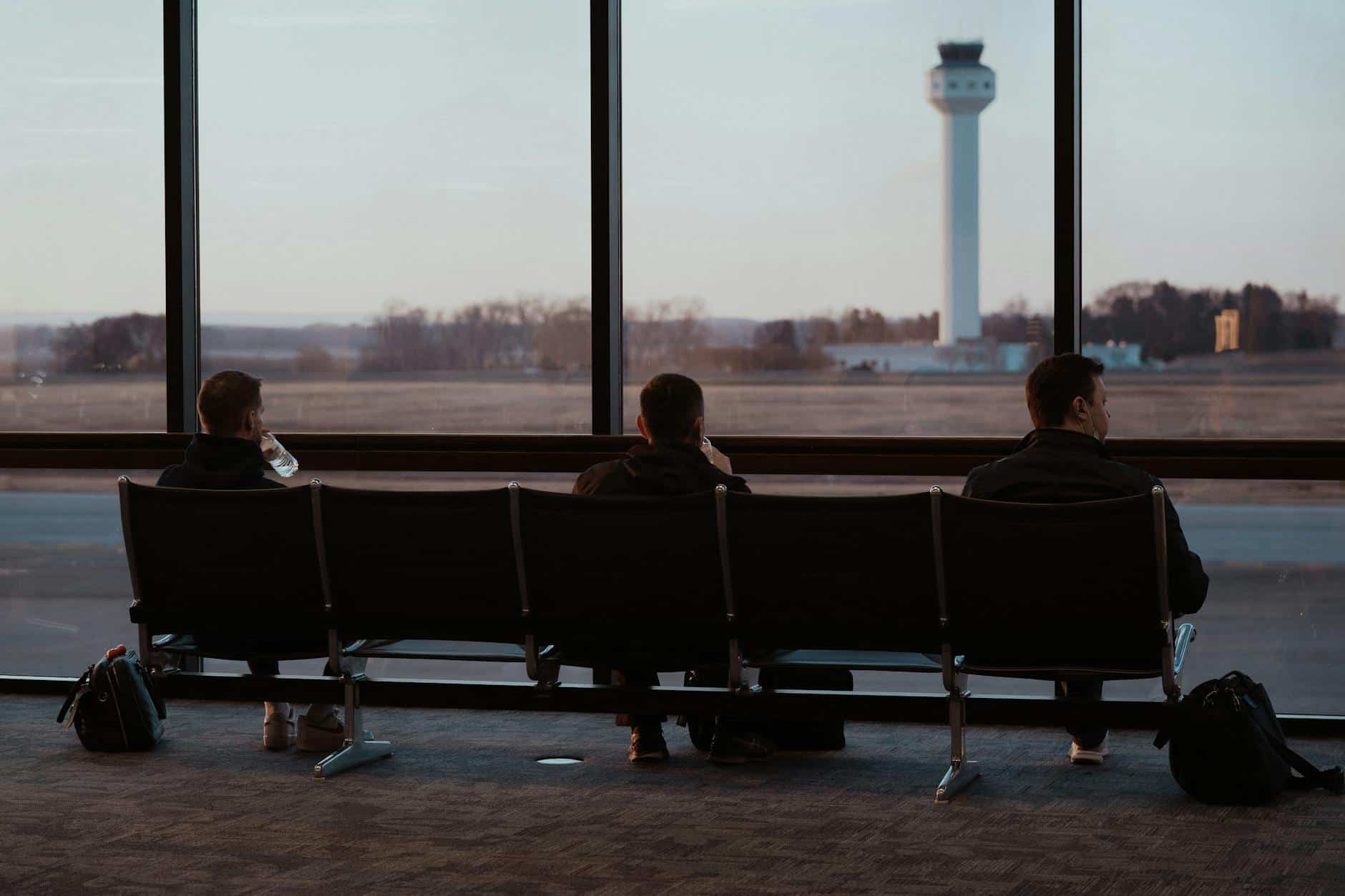
Group trips are routinely planned around a destination rather than around a shared vision of what the trip should feel like. The gap between what different people imagined is usually not discovered until the trip is underway.
Person A imagined the trip as an opportunity to relax — beach time, late mornings, unhurried meals. Person B imagined an active itinerary — things to see and do, a checked-off list of experiences, productivity in vacation form. Person C assumed the evenings would be mostly about going out; Person D assumed early bedtimes because they need sleep to function. Person E assumed the group would spend most of their time together; Person F assumed there’d be space for solo wandering.
None of these imagined trips are wrong. They’re incompatible with each other, and in a group of four to six people, you will typically have several incompatible mental models of the trip colliding from day one. The collision is invisible in planning because nobody describes their mental model explicitly — they just book the flights and agree on the Airbnb.
The Spending Gap Nobody Wants to Acknowledge

Money is the most common source of genuine group trip conflict and the thing most groups are least equipped to discuss openly before it becomes a problem.
In most friend and family groups, there’s variation in financial comfort. Some people can afford and want to splurge; others are watching a budget carefully. These differences rarely surface during planning, because nobody wants to be the person who admits constraint, and nobody wants to be the person who insists on expensive things and makes others uncomfortable.
The result is a trip where the spending decisions are made implicitly, usually by whoever is most comfortable spending money, and the financial anxiety of the people who can least afford it builds steadily until it either explodes or produces a specific kind of withdrawal — they stop suggesting activities, they order less at restaurants, they find reasons to sit things out.
Groups that discuss spending expectations explicitly before the trip — including budget ranges, whether to split everything equally or track individually, which experiences are considered shared costs versus individual choices — consistently report fewer money-related tensions. It feels awkward to have this conversation before a fun trip. It’s significantly less awkward than having the argument mid-trip, which is what happens to groups that don’t.
The Introvert Problem in Group Travel

Introverts, who recharge through solitude and are depleted by sustained social engagement, are structurally disadvantaged in group travel. The vacation format — constant social stimulation, group decision-making, shared meals, shared activities — is almost exactly the environment most depleting for an introvert operating at baseline energy.
An introvert who goes on a five-day group trip with four extroverts is facing a sustained energy deficit from day one. By day three, they’re running on empty but still expected to be engaged, enthusiastic, and present. This is visible to the group as mood changes, withdrawal, shorter responses — which the group often interprets as unhappiness with them specifically, rather than as ordinary introvert depletion.
Groups that include introverts and extroverts in roughly equal measure tend to have better outcomes when the introvert needs are explicitly acknowledged and built into the schedule. “Alone time” built into the itinerary — not as a concession to a problem member but as a planned part of the trip structure — allows introverts to recharge and extroverts to do solo activities they wouldn’t otherwise pursue. Everyone benefits, and nobody has to fake their way through day four.
The Specific Roles That Emerge and Lock In

Groups under sustained social pressure tend to develop role differentiation quickly and lock into those roles. These role allocations happen without explicit agreement and are often resented by the people occupying them:
- The Planner — the person who researches, books, and manages logistics. Appreciated in the abstract; taken for granted in practice.
- The Accommodator — the person who is always okay with whatever the group decides, until they’re not, and then nobody saw it coming.
- The Complainer — often the person most honest about their preferences, but in a social environment that has decided honesty is negative, this gets read as difficult.
- The Peacemaker — the person who detects tension and works to neutralize it, often at cost to their own authentic experience of the trip.
These roles aren’t chosen; they’re assigned by group dynamics and then enforced by social pressure. The accommodator who has been endlessly flexible for four days and finally says “actually, I really don’t want to do this” encounters confusion and mild resentment, because the group’s model of them doesn’t include opinions.
What the Research on Groups Under Shared Stress Shows

Social psychology research on groups in shared stressful situations — whether forced proximity, resource constraints, or decision-making under uncertainty — finds some consistent patterns:
Groups that are already strong before the stressful situation tend to become stronger through it. Groups that have unresolved conflicts or weak communication patterns tend to have those issues amplified. The situation itself is less predictive of group outcome than the group’s starting condition.
For travel groups, this means: a trip with people you have a strong, honest relationship with will probably be fine even when things go wrong. A trip with people where the relationship involves performance or unexpressed tension is more vulnerable. A trip designed as a shortcut to closeness — traveling together before you’re actually close — is the highest-risk scenario.
How to Make Group Travel Actually Work

The groups that consistently report successful shared travel tend to share some practices that take some social courage to implement:
- Have the planning conversation honestly — what each person actually wants from the trip, what their deal-breakers are, what their budget range is
- Build in opt-out flexibility — make it explicitly acceptable for individuals to skip shared activities without social penalty
- Plan some structured separation — mornings apart, one solo meal, an afternoon where people do different things. This counterintuitively often produces the best shared meals, because everyone is bringing something different back to the table.
- Name the planner explicitly and thank them — and then actually let them participate in the trip rather than continuing to manage it
- Establish a decision protocol — not formally, but agree that majority rules on decisions under a certain significance threshold so the group isn’t negotiating for 45 minutes about dinner every night
None of these are glamorous. They’re the social infrastructure that makes the romanticized version of group travel possible — the version where everyone is laughing, the trip goes well, and the friendship is stronger after than before. That version is real. It just requires more honest groundwork than the mythology suggests.