Depoe Bay, Oregon Has a 6-Acre Harbor and Rocks That Spout Like Whales. Here’s When to Watch the Winter Storms
We may earn money or products from the companies mentioned in this post. This means if you click on the link and purchase the item, I will receive a small commission at no extra cost to you ... you're just helping re-supply our family's travel fund.
Depoe Bay, Oregon bills its harbor as the world’s smallest navigable harbor, at about 6 acres, reached through a rock channel only about 50 feet wide. Right beside it, waves slam into lava-rock shelves and shoot through cracks called spouting horns, sending plumes of seawater over the highway. Depoe Bay storm watching turns that combination into one of the best free winter shows on the West Coast.
The answer to when is simple. Come between November and February, watch the surf forecast for a big westerly swell, and time your visit for the two or three hours around high tide. The biggest days often line up with the December and January king tides, the highest tides of the year. On those days the horns can throw water dozens of feet into the air and soak cars on U.S. 101.
The town is tiny, with a permanent population of around 1,500, and it sits right on the highway roughly 12 miles north of Newport. You can watch nearly everything from the seawall sidewalk, a coffee shop window, or a parked car. That is part of the appeal. You do not need to hike to a remote headland to feel the ocean’s force.
Here’s When to Watch the Winter Storms
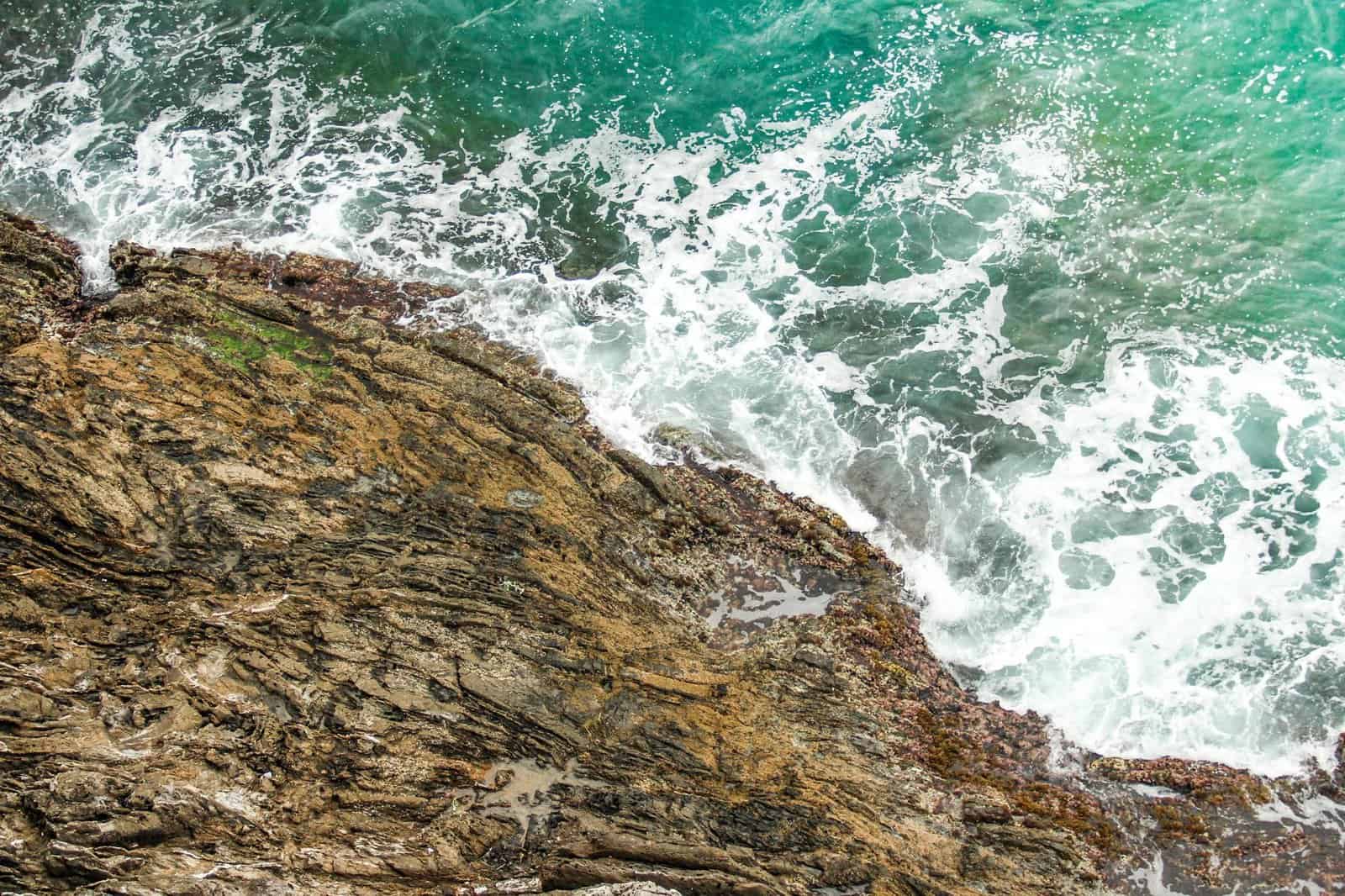
Oregon’s storm season generally runs from late fall through early spring. Low-pressure systems spin up over the North Pacific and send long-period swells toward the coast, sometimes from storms more than a thousand miles away. The swell often arrives before the wind and rain, which means a dramatic surf day can come with surprisingly decent weather.
Here is how to pick your day:
- Months: November through February are the core season, with December and January typically the most active.
- Swell: look for wave heights forecast in the teens or higher, with a period of 14 seconds or more. Long-period swell carries more energy and hits the rocks harder.
- Tide: the spouting horns perform best on an incoming tide and around high tide, when water reaches the openings in the rock shelf.
- King tides: Oregon’s king tides usually arrive in late fall and winter. Combined with swell, they push water higher up the shore than any other time.
- Time of day: storms do not care about the clock, but daylight hours in Oregon in December run only about nine hours. Plan to be on the seawall in the middle of the day.
The National Weather Service office in Portland issues high surf advisories and sneaker wave warnings for the coast. When you see one, that is your cue to go watch, and also your cue to watch from a safe distance.
How the Spouting Horns Work
Depoe Bay’s shoreline is made of basalt from ancient lava flows. Over thousands of years, waves carved channels, caves, and cracks into the rock shelf in front of the town. When a big wave rushes into a crack that narrows or connects to an opening on top of the shelf, the water has nowhere to go but up.
The result looks a lot like a whale exhaling. Small spouts happen on ordinary days. On a winter storm day with a high tide, the main spouting horn near the seawall can blast spray high enough to rain down on pedestrians and the northbound lanes of the highway. Locals know that a wet windshield is part of the experience.
Real whales add to the confusion. Depoe Bay has a reputation as one of the best whale-watching towns in Oregon, and some gray whales feed near shore for much of the year. In winter, thousands of gray whales pass the Oregon coast on their way south to Mexico, with the southbound migration usually peaking around late December and early January. On a calm morning between storms, you might see both kinds of spouts in the same view.
Where to Watch Depoe Bay Storm Watching From
Most of the action happens within a few blocks of the harbor bridge.
- The seawall sidewalk along U.S. 101 in the center of town gives you a front-row view of the spouting horns and the open ocean.
- The Oregon State Parks Whale Watching Center, on the seawall, has big windows, exhibits, and binoculars, and makes a warm indoor perch when rain blows sideways.
- The harbor bridge lets you look down into the narrow channel, where boats wait for a safe moment to run in or out and waves surge through the gap.
- Boiler Bay State Scenic Viewpoint, about a mile north, has wide views of breaking surf and the rusted remains of a ship boiler visible at low tide.
- Rocky Creek State Scenic Viewpoint and the Otter Crest Loop to the south offer cliffside views of waves exploding against headlands.
If you want a longer drive, the Devils Punchbowl at Otter Rock and the Yaquina Head Outstanding Natural Area near Newport are both within about 20 minutes and put on their own shows in heavy surf.
Staying Safe When the Ocean Is Angry
Storm watching is safe if you watch from the right place. It becomes dangerous when people try to get closer for a better photo.
- Stay on the seawall sidewalk, viewpoints, and established paths. Do not climb out onto the rock shelf.
- Never turn your back on the ocean. Sneaker waves can run far higher up the shore than the waves before them.
- Keep kids and dogs close, especially near low walls.
- Stay off logs on beaches nearby. A single wave can roll a heavy log and pin a person.
- Respect closures. Viewpoints sometimes close when conditions get extreme.
- Drive carefully on U.S. 101, which can be wet, windy, and occasionally blocked by debris or slides.
Every winter, Oregon news outlets report people swept off rocks and jetties along the coast. Nearly all of those incidents involve someone who went past the safe viewing area. The spouts look just as impressive from the sidewalk.
Where to Stay and Eat
Depoe Bay has a cluster of small motels, inns, and vacation rentals, many with ocean views, plus resorts just to the north and south. Winter rates are often lower than summer, and a room with a window facing the water turns a stormy night into entertainment. Expect a broad range, from roughly $120 to $300 a night depending on the view and the weekend.
Restaurants along the highway serve chowder, Dungeness crab, and fish and chips, and several have windows that look straight at the surf. Oregon’s commercial Dungeness crab season usually opens in December, weather and testing permitting, so fresh crab often shows up on menus around the holidays.
A Winter Weekend Plan for the Central Coast
If you can give it two days, build in flexibility for weather.
- Day one: arrive by early afternoon, check the tide table, and walk the seawall around high tide. Stop at the Whale Watching Center.
- Evening: dinner with an ocean view, then listen to the surf from your room.
- Day two morning: drive the Otter Crest Loop south to the Devils Punchbowl and Cape Foulweather viewpoint if the road is open.
- Day two afternoon: visit Yaquina Head Lighthouse near Newport, then head home or return to Depoe Bay for the next high tide.
The beauty of a storm weekend is that rain does not ruin it. A gray, windy day with a big swell is exactly what you came for. Bring rain gear with a hood, waterproof shoes, and a lens cloth, because salt spray will find your camera.
What to Bring for a Storm Day
Storm watching is mostly standing around in wind and spray, so gear matters more than it seems.
- A waterproof jacket with a hood that cinches tight. Umbrellas turn inside out on the seawall within minutes.
- Waterproof shoes or boots. Spray from the horns soaks the sidewalk.
- A dry bag or plastic bag for your phone and camera between shots.
- Binoculars for spotting whales and watching boats in the channel.
- A printed or saved tide table, since cell service is fine in town but not always at viewpoints.
Oregon also runs a King Tides Project that invites the public to photograph the highest winter tides and share them, which helps scientists and planners understand how rising seas may affect the coast. If you are in town on a king tide date, your photos can be part of that record.
Why Depoe Bay Stands Out on the Oregon Coast
Plenty of Oregon towns have dramatic beaches, but few put the action so close to the road. In Depoe Bay, the ocean meets the town at a wall. The harbor channel runs right under the main bridge, the spouting horns sit across the sidewalk from shops, and the open Pacific fills the view.
That compact geography is what makes the town worth a winter trip. You can watch a charter boat thread a 50-foot gap between rock walls, get splashed by a spouting horn, and warm up with chowder, all inside a few hundred yards. Pick a high tide, pick a big swell, and let the Pacific do the rest.