We may earn money or products from the companies mentioned in this post. This means if you click on the link and purchase the item, I will receive a small commission at no extra cost to you ... you're just helping re-supply our family's travel fund.

No public agency publishes an official ranked countdown of American cities most likely to be hit first in a world war. Still, public defense material and strategic analysis keep circling the same kinds of places: national command centers, missile-warning hubs, submarine ports, bomber headquarters, and major nuclear infrastructure. That pattern shifts the imagined map of catastrophe away from famous skylines alone and toward harbors, airfields, and inland command posts whose importance is measured less by celebrity than by strategic value.
Washington, D.C.

Washington would sit near the top of almost any public strategic discussion, not simply because it is the capital, but because the Pentagon in the Washington area remains the headquarters and nerve center of the U.S. military. FAS identifies leadership and command-and-control infrastructure as classic counterforce targets, and Pentagon history materials describe the building as the home of the Joint Chiefs, the Office of the Secretary of Defense, and the highest echelons of the services. In strategic terms, political authority, military command, and symbolic weight converge here in a way few places can match.
Omaha, Nebraska
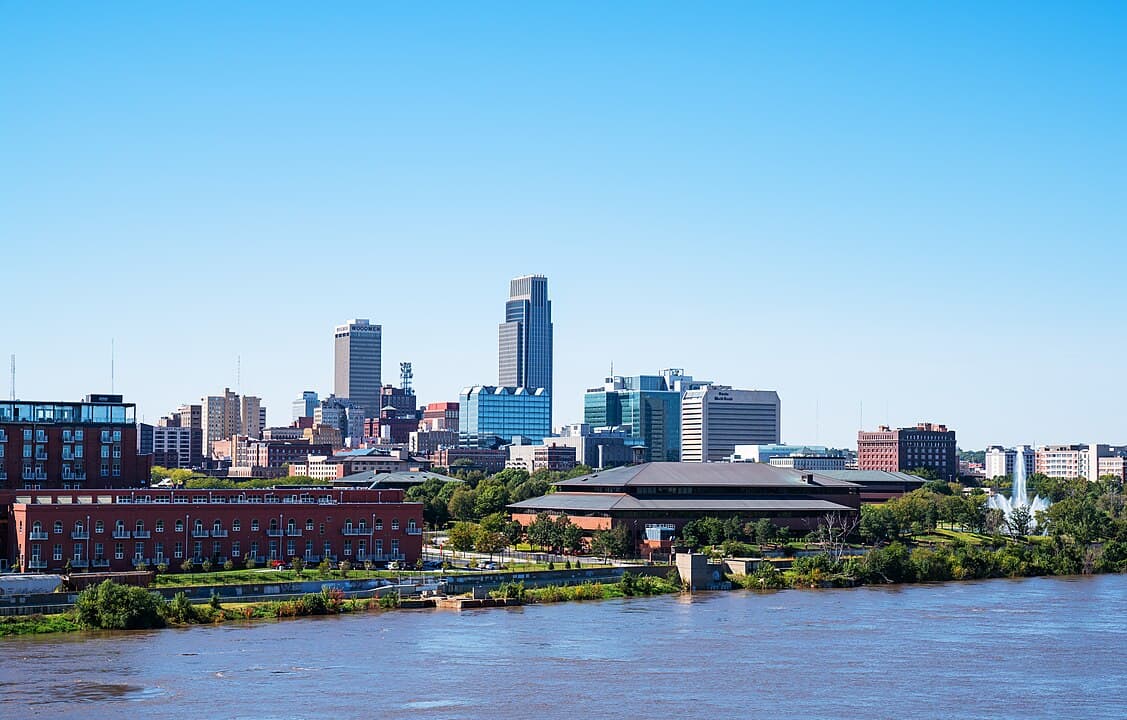
Omaha appears on serious war maps for a colder reason: Offutt Air Force Base near the city houses U.S. Strategic Command, the combatant command tied directly to nuclear operations and deterrence readiness. Public USSTRATCOM material says the command is headquartered there, and senior leadership biographies note responsibility for the day-to-day readiness of U.S. nuclear command and control and strategic deterrent forces. That makes the Omaha area far more than a Midwestern city; in a major-power conflict, it becomes one of the country’s most consequential command nodes.
Colorado Springs, Colorado

Colorado Springs has long carried an outsized strategic role because Peterson Space Force Base hosts both NORAD and U.S. Northern Command, while nearby Cheyenne Mountain remains a critical warning and defense complex. NORAD says its commander maintains headquarters at Peterson, USNORTHCOM says its headquarters are there as well, and Space Force reporting describes Cheyenne Mountain as an initial correlation point for incoming missile and space-warning data. That combination of homeland defense, aerospace warning, and emergency command functions gives Colorado Springs a prominence that goes far beyond its mountain-town image.
Norfolk, Virginia

Norfolk keeps surfacing in public analysis because it anchors the largest naval complex in the world and the Navy’s largest concentration of forces. Navy sources describe Naval Station Norfolk both as the world’s largest naval complex and as the home for the service’s largest concentration of naval forces, with broad joint support functions layered on top. In any major war, ports that concentrate ships, logistics, maintenance, and command capacity become obvious early priorities, which is why Norfolk’s waterfront carries strategic gravity far beyond its tourism and beach reputation.
San Diego, California

San Diego would be difficult for any adversary to ignore because Naval Base San Diego is the largest West Coast naval installation and the principal homeport of the Pacific Fleet’s surface navy. Navy material says the base supports more than 60 combatant and auxiliary ships and more than 250 shore commands, making the city one of the clearest concentrations of Pacific-facing naval power in the country. In plain terms, a place that launches, repairs, supplies, and coordinates so much fleet activity would loom large in any opening strike calculus.
Honolulu, Hawaii

Honolulu carries a dual weight that makes it especially significant: U.S. Indo-Pacific Command is headquartered just outside the city at Camp H.M. Smith, and Joint Base Pearl Harbor-Hickam remains one of the Navy’s busiest and most strategic Pacific hubs. Official sources place USINDOPACOM headquarters there and describe JB Pearl Harbor-Hickam as home to hundreds of tenant commands, submarines, aviation squadrons, and the commander of the U.S. Pacific Fleet. In a Pacific-centered conflict, Honolulu would represent both command authority and forward naval power at once.
Bremerton, Washington

Bremerton rarely dominates pop-culture war talk, yet the broader Kitsap area is one of the strongest candidates to appear early in a real strategic assessment. Naval Base Kitsap says it supports a wide range of strategic missions, including submarines and major naval maintenance infrastructure, while the Trident Refit Facility at Bangor states that its singular focus is supporting the nation’s strategic deterrent by modernizing Pacific ballistic-missile submarines. That places the Bremerton-Kitsap region close to the hidden backbone of the U.S. sea-based nuclear deterrent.
Shreveport-Bossier City, Louisiana
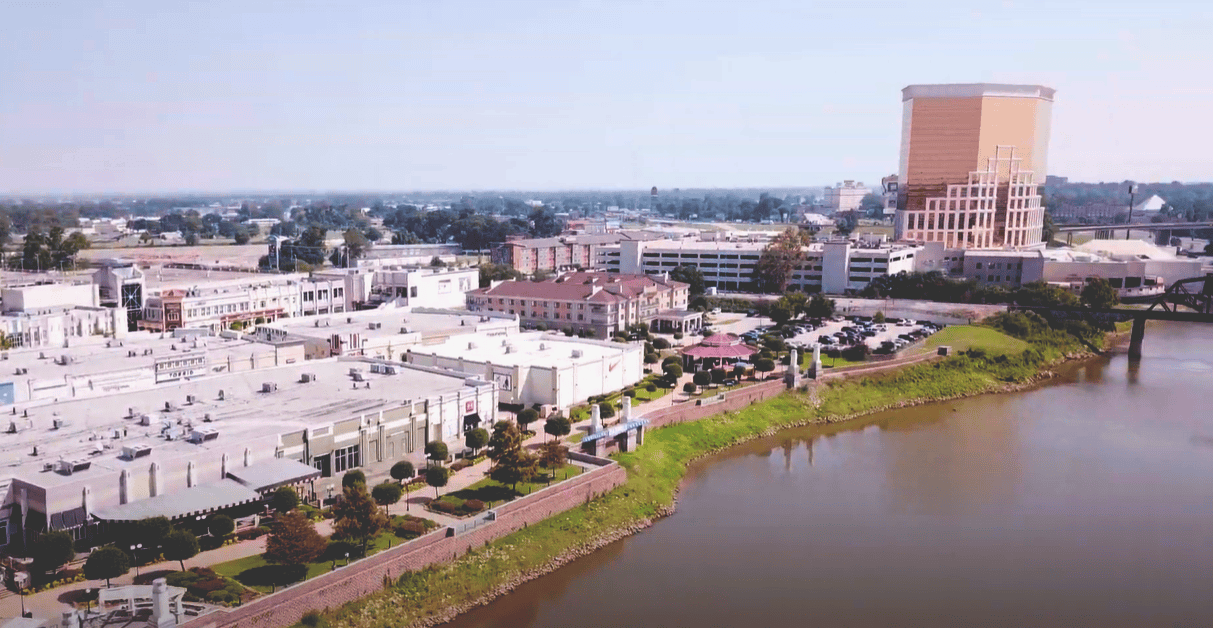
The Shreveport-Bossier City area enters the conversation because Barksdale Air Force Base houses Air Force Global Strike Command, a headquarters central to America’s bomber and strategic air mission. Air Force fact sheets say AFGSC is headquartered at Barksdale, and Barksdale’s own higher-headquarters page notes that the command also serves as Air Forces Strategic-Air, the USSTRATCOM warfighting air component. Cities near bomber-command hubs matter in war planning because they tie leadership, aircraft, readiness, and nuclear mission support into one geographic point.
Cheyenne, Wyoming

Cheyenne is a reminder that some of the most strategically exposed places in America are not giant metros at all. F.E. Warren Air Force Base, on the edge of the city, says it became the nation’s first operational ICBM base and that its 90th Missile Wing still operates Minuteman III missiles on full alert 24 hours a day, while also falling under both Air Force Global Strike Command and U.S. Strategic Command. In a conflict shaped by counterforce logic, active missile infrastructure would place Cheyenne on a far grimmer map than its size suggests.
Minot, North Dakota

Minot belongs in the same uneasy category as Cheyenne, but with an added layer of strategic weight. Minot Air Force Base says it is home to both the 5th Bomb Wing and the 91st Missile Wing, and official base material describes the 91st as one of the Air Force’s three operational missile units responsible for a combat-ready nuclear force. When bomber capability and missile fields sit in the same region, a relatively small city begins to matter in ways that feel almost invisible during peacetime and intensely obvious in any discussion of first-wave targets.