Buffalo Is Not the City in Your Head. It Hasn’t Been for Years.
We may earn money or products from the companies mentioned in this post. This means if you click on the link and purchase the item, I will receive a small commission at no extra cost to you ... you're just helping re-supply our family's travel fund.
Say “Buffalo, New York” to most Americans and they picture the same three things: snow, the Bills, and a Rust Belt downtown hollowed out by decades of manufacturing decline. That image was accurate for a long stretch of the late twentieth century. It has not been accurate for the waterfront, the downtown core, or the neighborhoods drawing new residents for close to fifteen years now, and the gap between the reputation and the reality has become one of the more striking mismatches in any mid-sized American city.
The Waterfront Buffalo Spent Decades Fighting to Get Back
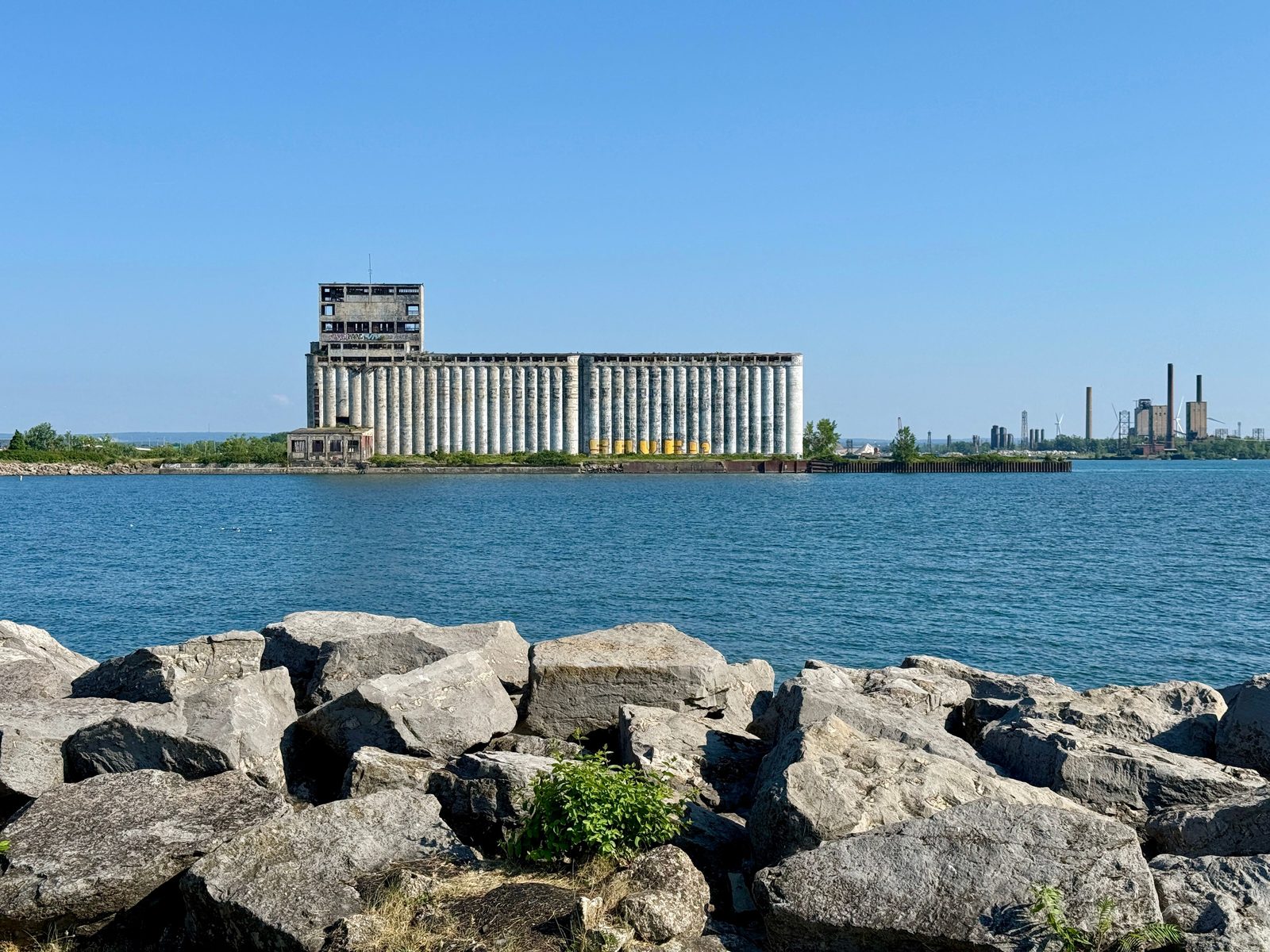
For most of the twentieth century, Buffalo’s Lake Erie waterfront was industrial land, grain elevators, rail yards, and later a highway that cut the city off from its own shoreline. Starting in the 2000s, the city and state began a sustained push to reclaim it, turning former industrial parcels into Canalside, a public park and events space built around the historic Erie Canal terminus, and Wilkeson Pointe on the Outer Harbor, which opened in 2025 with new public beach access and green space. The state has continued funding waterfront reconnection projects, including a $10 million initiative aimed at physically reconnecting downtown streets to the shoreline that highway construction severed generations ago.
The result is a waterfront that now hosts concerts, a seasonal ice rink, kayak rentals, and one of the more active public gathering spaces in the city, a total reversal from a shoreline that was functionally inaccessible to residents for most of living memory.
Why People Are Actually Moving There
Buffalo’s appeal in the 2020s rests on a combination most growing cities can’t offer simultaneously: housing costs far below comparable Northeastern metros, a genuine medical and research corridor anchored by the University at Buffalo and Roswell Park Comprehensive Cancer Center, and an intact stock of architecturally significant housing, including work by Frank Lloyd Wright, Louis Sullivan, and H.H. Richardson, that would cost multiples more in Boston or Philadelphia. The city’s downtown vacancy problem, real and still unresolved, has pushed state and local officials toward office-to-residential conversion incentives, offering subsidies of up to $75 per square foot to convert empty commercial buildings into market-rate housing aimed at middle-income residents.
The Buffalo That Exists Now
- A revitalized Elmwood Village with an independent retail and restaurant corridor that draws comparisons to walkable neighborhoods in much larger cities
- Growing tech, life sciences, and creative-industry employment layered on top of the traditional healthcare and education base
- A downtown still working through post-pandemic office vacancies even as residential conversion accelerates
The demographic story underneath Buffalo’s built-environment transformation is just as important as the buildings themselves. After decades of population loss, from a peak near 580,000 in 1950 down to roughly 255,000 by the 2010 census, Buffalo’s population has stabilized and shown modest growth in recent counts, driven substantially by refugee resettlement and immigration, particularly from Myanmar, Yemen, and Puerto Rico, that has reshaped the city’s West Side into one of its most dynamic and diverse neighborhoods. That immigrant-driven repopulation is a pattern shared with several other Rust Belt cities working through similar post-industrial recoveries, but Buffalo’s scale of resettlement has been unusually significant relative to its size.
Sports culture remains the most durable part of Buffalo’s national image, and it’s not entirely inaccurate, Bills fandom is a genuine civic religion, complete with the now-famous tradition of fans jumping onto folding tables in stadium parking lots. But treating Buffalo as merely a football town undersells a city that also hosts a respected classical music scene anchored by the Buffalo Philharmonic Orchestra, performing in Kleinhans Music Hall, a Saarinen-designed acoustic landmark, and an art museum, the Buffalo AKG Art Museum, formerly the Albright-Knox, that completed a major expansion and reopened in 2023 with a collection ranking among the strongest in the country for a city of Buffalo’s size.
Niagara Falls sits just twenty minutes north, a detail that gets lost when Buffalo is discussed purely as a Rust Belt case study but that matters enormously to the city’s actual tourism potential. A traveler who flies into Buffalo can combine a genuinely revitalized mid-sized American city with one of the most famous natural landmarks in North America in the same weekend, at a fraction of the cost and crowd density of flying into Toronto to approach the falls from the more heavily marketed Canadian side.
Buffalo’s food scene has become its own understated argument for a visit, anchored by the city’s genuine claim to have invented the buffalo wing at the Anchor Bar in 1964, but extending well past that single dish into a strong Polish, Italian, and increasingly West African and Southeast Asian food culture that reflects the city’s layered immigration history far more accurately than the wing-and-beef-on-weck stereotype most outsiders arrive expecting.
Getting around Buffalo without a car has also gotten easier as the city’s revival has progressed, with an expanded bike-share network and a walkable downtown core connecting the waterfront, the theater district, and Allentown, the city’s historic bohemian neighborhood known for its Victorian architecture and concentration of independent bars and galleries, making a car-free long weekend a realistic option in a way it would not have been fifteen years ago.
Winters remain Buffalo’s most persistent branding challenge, and the reputation for extreme lake-effect snowfall isn’t undeserved, the city does regularly rank among the snowiest large cities in the country. But locals point out, correctly, that the same lake-effect systems tend to dump snow in intense, localized bursts followed by clear skies, rather than the prolonged gray overcast that makes some other northern cities feel more oppressive through the winter months, a distinction that matters more to actually living somewhere than it does to a headline statistic.
None of this erases Buffalo’s real challenges. Winters are still genuinely harsh, the population is still well below its mid-century peak of nearly 600,000, and downtown office vacancy remains a serious drag on the local economy even as residential interest grows. But the caricature of Buffalo as an emptied-out Rust Belt husk has stopped matching what’s actually on the ground. The city that shows up now is smaller than it used to be, but considerably more livable, walkable, and architecturally intact than its national reputation gives it credit for.