Bethlehem, Pennsylvania Has Called Itself Christmas City USA Since 1937. Here’s How to Do It Right
We may earn money or products from the companies mentioned in this post. This means if you click on the link and purchase the item, I will receive a small commission at no extra cost to you ... you're just helping re-supply our family's travel fund.
Bethlehem takes Christmas more seriously than almost any town in America, and it has the paperwork to prove it. The city formally adopted the nickname Christmas City USA on December 7, 1937, and a Bethlehem PA Christmas trip done well comes down to one plan: go on a weekday or early on a Sunday in November, split your day between Christkindlmarkt on the South Side and the Moravian historic district on the North Side, and stay after dark for the lights.
The nickname came at a ceremony during the Great Depression that included Marion Brown Grace, wife of the Bethlehem Steel president, according to the city’s history on Wikipedia. But the roots go back two centuries further. Moravian settlers christened the town Bethlehem on Christmas Eve 1741, when their patron, Count Nicolaus Zinzendorf, led a service in a building shared with livestock and sang a hymn about the town of Jesus’ birth. The Moravians also brought the tradition of the putz, the nativity scene, and the many-pointed Moravian star.
That history is what makes Bethlehem different from a mall with garland. There are two very different halves to the season here, and most first-time visitors only see one of them.
How to Do Bethlehem PA Christmas Right
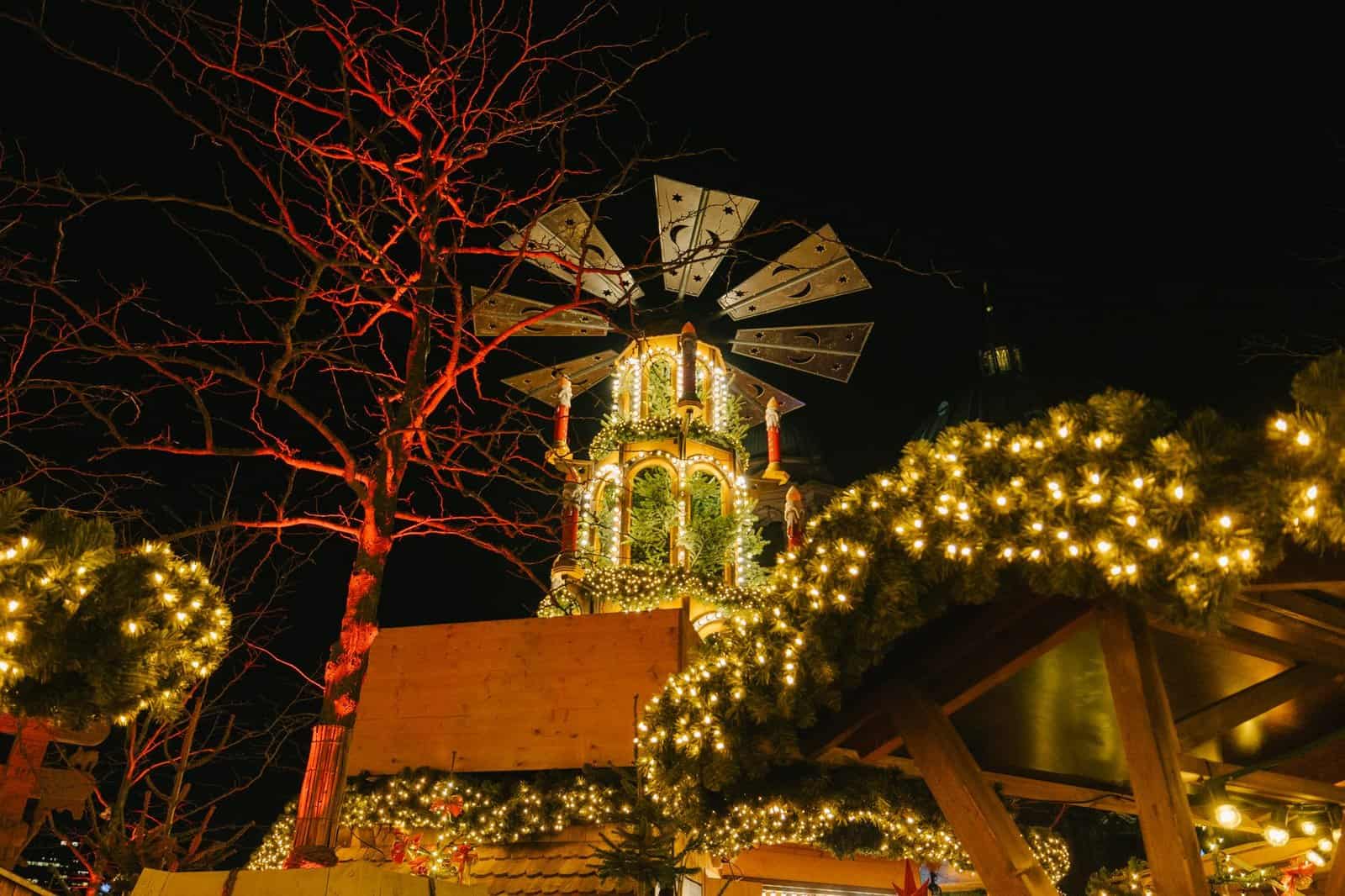
The best Bethlehem day looks like this. Arrive at Christkindlmarkt when it opens at 10 a.m. on a Thursday or Sunday. Spend two hours there. Drive or take a rideshare across the Lehigh River to the North Side, eat lunch on Main Street, and walk the Moravian historic district in the afternoon. Stay until dark to see the candles in the windows, the lights on Main Street, and the Star of Bethlehem shining from South Mountain.
- Best days: Thursdays and Sundays in November, before Thanksgiving crowds arrive.
- Worst days: Saturdays in December, when parking and the market’s heated tents both fill.
- Time needed: A full day, or a night in town if you want to see the lights without rushing.
- Budget: Plan for $40 to $80 per person on food, drinks, and a small ornament or two, and check the ArtsQuest site for any admission or ticketing details before you go.
Christkindlmarkt at SteelStacks: 2026 Dates and Tips
ArtsQuest runs Christkindlmarkt on PNC Plaza at SteelStacks, 645 East First Street, beneath the rusted blast furnaces of the old Bethlehem Steel plant. It is in its 34th year, and the setting is part of the appeal. Glass-blowing demonstrations, German food, mulled wine, and artisan ornaments under the shadow of a 1900s steel works make for a scene you will not find at other Christmas markets.
According to the ArtsQuest FAQ, the 2026 market runs on these dates:
- November 13–15
- November 20–22
- November 27–29
- December 3–6
- December 10–13
- December 17–20
Hours are 10 a.m. to 6 p.m. on Thursdays and Sundays and 10 a.m. to 8 p.m. on Fridays and Saturdays. Free public parking is available in the lots next to SteelStacks, and event staff direct you on arrival.
Four practical tips make the market better:
- Go early on opening weekend. The first weekend, November 13–15, comes before most holiday travelers start shopping.
- Bring a reusable bag. Many vendors sell fragile glass and ornaments, and a sturdy bag beats juggling tissue paper.
- Eat a real meal there. Bratwurst, potato pancakes, pierogies, and pretzels are served throughout the tents, and the food is a highlight.
- Walk outside to the Hoover-Mason Trestle. The elevated walkway runs along the blast furnaces and gives you the best view of the steel plant. It is free.
The North Side: Where the Moravian Christmas Lives
Across the river is the Bethlehem that the 1937 nickname was built on. The Moravian historic district, centered on Main Street and Church Street, holds some of the oldest buildings in Pennsylvania. Parts of it are a UNESCO World Heritage Site, added in 2024 as an extension of the Moravian Church settlements listing.
Here is what to look for in the afternoon:
- The putz. A putz is a Moravian nativity display, often an elaborate miniature landscape with figures, animals, and buildings. The word comes from the German “putzen,” to decorate. Historic Bethlehem Museums and Sites and local Moravian congregations put up putz displays each season, and some offer narrated viewings. Check schedules, because times are limited.
- Central Moravian Church. Built in 1806, it is the mother church of the Moravian Church in North America. The church is known for its music and its candlelight Christmas Eve vigils, which are among the most popular services in the city.
- Moravian stars. The many-pointed stars hang in windows and porches throughout the district. Several shops on Main Street sell them, from small paper versions to lit glass stars.
- Single candles in windows. A long Bethlehem tradition is a single white candle in each window. On a December evening, entire blocks glow with them.
The district is very walkable. Main Street runs about half a mile from the Hotel Bethlehem down to the historic buildings near Monocacy Creek, with shops, cafés, and bars in between.
The Star on South Mountain
After dark, look south. A large illuminated star sits on South Mountain above the city, and it is visible from most of Bethlehem. It has been a city landmark for decades and is lit year-round, but it means the most during December, when the rest of the city is decorated around it.
For the best view, stand on the Fahy Bridge or the Hill-to-Hill Bridge, which cross the Lehigh River between the North and South Sides. You will see the star, the blast furnaces, and the church steeples in one frame.
Getting There and Getting Around
Bethlehem is about 60 miles north of Philadelphia and roughly 80 miles west of New York City. Most visitors drive.
- From Philadelphia: Take I-476 north (the Northeast Extension of the Pennsylvania Turnpike) to Route 22 or I-78. Expect about 75 to 90 minutes.
- From New York: Take I-78 west. Expect about 90 minutes to two hours, longer on Friday afternoons.
- By bus: Several carriers run service from New York’s Port Authority Bus Terminal to the Bethlehem area, often to a stop near the casino on the South Side.
- Between the sides: The North Side historic district and the South Side SteelStacks are about a mile apart across the river. The walk is doable in good weather but cold and exposed in December. Most people drive or use a rideshare.
Where to Stay and What It Costs
The Historic Hotel Bethlehem on Main Street is the classic choice. Built in 1922 on the site of the town’s first house, it is decorated heavily for the season and sits in the middle of the historic district. December rates often run $250 to $450 a night, and weekends book early.
For a cheaper stay, look at chain hotels along Route 22 and near the Lehigh Valley International Airport, which typically run $110 to $200 a night in the season. The casino resort on the South Side also has rooms within walking distance of Christkindlmarkt.
Mistakes That Make the Visit Worse
Most bad Bethlehem trips come down to timing and geography.
- Only seeing the market. Christkindlmarkt is great, but the 1937 nickname was built on the Moravian North Side. Skip it and you miss what makes Bethlehem different.
- Going on a December Saturday. The market, parking lots, and Main Street restaurants are at their most crowded.
- Leaving before dark. The candles, the star, and the lit streets are the best part. Plan at least one hour after sunset, which is around 4:40 p.m. in early December.
- Skipping dinner reservations. Main Street restaurants fill on weekend evenings throughout the season. Reserve a few days ahead.
- Forgetting the cold. The South Side sits in an open river valley next to steel structures. Wind cuts through quickly, especially on the Hoover-Mason Trestle.
A Sample Two-Day Bethlehem Itinerary
If you can stay overnight, the season is far more relaxed. Here is a plan that spreads the main sights over two days without backtracking.
- Day one, morning: Arrive at Christkindlmarkt when it opens at 10 a.m. Watch a glass-blowing demonstration, eat lunch in the food tents, and walk the Hoover-Mason Trestle.
- Day one, afternoon: Visit the National Museum of Industrial History on the SteelStacks campus, which covers the steel and manufacturing history that built the South Side. Check in at your hotel by late afternoon.
- Day one, evening: Dinner on Main Street, then a walk through the historic district to see the window candles and the star on South Mountain.
- Day two, morning: Tour a putz display or a Historic Bethlehem Museums and Sites building, such as the Moravian Museum in the 1741 Gemeinhaus, one of the oldest buildings in the city.
- Day two, afternoon: Shop the Main Street stores for Moravian stars and ornaments, then stop at the Moravian Book Shop, which traces its roots to 1745 and is often described as one of the oldest bookstores in the world.
This pace gives you both halves of the city and leaves time for the cold. It also means you can avoid driving after dark on a busy Saturday.
What to Buy Before You Leave
Bethlehem shopping is better than most holiday towns because many of the goods connect to local tradition. A few items are worth bringing home:
- A Moravian star: Paper, plastic, or lit glass versions are sold on Main Street. A lit star in your own window is the most Bethlehem souvenir there is.
- Moravian sugar cake or mints: Local bakeries and shops sell Moravian sweets, and sugar cake is a regional breakfast tradition.
- Hand-blown glass: Christkindlmarkt vendors sell ornaments and glass art, some of it made on site.
- Putz figures: Small figures and buildings for a home nativity display are sold in some Main Street shops during the season.
Why the Nickname Still Fits
Plenty of towns have holiday festivals. Bethlehem has a founding story set on Christmas Eve, a church community that has kept its candle and star traditions for nearly 300 years, and a 1937 civic decision to make Christmas its identity. The market at the steel plant is the modern layer on top. If you plan the day to see both, the Christmas City name makes sense by the time the star comes on.