The Best National Park in Every Region — And the One Secret Spot Locals Don’t Tell You About
We may earn money or products from the companies mentioned in this post. This means if you click on the link and purchase the item, I will receive a small commission at no extra cost to you ... you're just helping re-supply our family's travel fund.
Yosemite Valley is extraordinary. Yellowstone is spectacular. The Grand Canyon will stop your heart.
They’re also legitimately overcrowded, increasingly hard to access, and require planning that rivals booking a European vacation. Meanwhile, 58 other national parks — many of them genuinely world-class — sit an hour away from major airports with open trailheads and no timed entry required.
Here’s the best park in every region, what makes it remarkable, and the one spot at each that most visitors completely miss.
The Northeast: Acadia and the Secret Carriage Roads

Acadia National Park on Mount Desert Island, Maine, is the most-visited national park in the Northeast — and one of the most loved in the entire system.
What everyone does:
- Summit Cadillac Mountain (the first place in the U.S. to see sunrise from October through March)
- Walk the Ocean Path between Thunder Hole and Otter Cliff
- Drive the 27-mile Park Loop Road
What most people miss:
The Carriage Roads
— 45 miles of crushed stone paths built by John D. Rockefeller Jr. between 1913 and 1940, specifically to keep automobiles out. No cars allowed. The bridges alone — 17 hand-built stone arch bridges — are architectural masterpieces. Rent a bike in Bar Harbor and spend a full day here. Crowds are a fraction of the main attractions.The Quiet Side (Southwest Harbor)
— The western shore of Mount Desert Island gets 10% of the visitors of the eastern shore. Same views, same park, none of the summer crowds.Isle au Haut
— A remote section of the park accessible only by mail boat from Stonington. Permits required. Fewer than 100 people per day allowed. If you can get a spot, it is the most stunning and isolated coastal hiking in the eastern U.S.
Best time to visit: September is the best month in Acadia — crowds thin, the light is golden, and leaf color starts on the higher summits.
The Mid-Atlantic and Southeast: Shenandoah’s Hidden Hollows

Shenandoah National Park runs along the Blue Ridge Mountains in Virginia — 200,000 acres of second-growth forest, cascading waterfalls, and wildlife so dense that seeing deer is as routine as seeing trees.
What everyone does:
- Drive Skyline Drive from Front Royal to Rockfish Gap
- Hike to Old Rag Mountain (the most popular trail in the park)
- Stop at Hawksbill, the park’s highest peak
What most people miss:
The Central District Hollows
— Whiteoak Canyon, Cedar Run Canyon, and the Rapidan Camp loop lead into deep hollows that few park visitors explore. Whiteoak Canyon has six waterfalls in 3 miles. On a weekday you may have it entirely to yourself.Dark Hollow Falls in the morning
— The most popular short hike in the park looks completely different at 7am before the crowds arrive. Go then.The Southern District
— Roughly half the park’s acreage gets roughly 15% of its visitors. Hikes like Hightop Mountain and Blackrock Summit have panoramic views and no crowds.
Runner-up for the region: Congaree National Park in South Carolina — the largest intact old-growth bottomland hardwood forest in the U.S. Genuinely feels like Jurassic Park. Almost no one goes.
The Deep South and Gulf Coast: Great Smoky Mountains Off the Trail

Great Smoky Mountains is the most-visited national park in America — nearly 13 million visitors per year, almost double Yellowstone. That sounds discouraging.
But the park has 800 miles of trails. The vast majority of visitors stay within a mile of their car.
What everyone does:
- Clingmans Dome tower at the highest point in the Appalachians
- Cades Cove wildlife loop drive
- Laurel Falls (most visited waterfall in the park)
What most people miss:
The Appalachian Trail through the Smokies
— Over 70 miles of the AT run through the park. Most visitors never step on it. Even the trailheads a mile in are nearly deserted.Cataloochee Valley
— On the North Carolina side, accessible via a winding unpaved road. Elk were reintroduced here in 2001 and now number over 200 animals. Historic homesteads, no crowds, and the most reliable elk viewing in the eastern U.S.Synchronous Fireflies
— For two weeks each June, Photinus carolinus fireflies in the Elkmont area synchronize their flash patterns. It’s one of the rarest natural phenomena in North America. Timed entry permits are required and sell out instantly — but worth pursuing.
The Midwest and Great Plains: Badlands After Dark

Badlands National Park in South Dakota is one of the most visually dramatic landscapes in America — 244,000 acres of sharply eroded buttes, pinnacles, and spires in colors that shift from ochre to lavender to pink as the light changes.
What everyone does:
- Drive Badlands Loop Road (SD-240)
- Stop at the Pinnacles and Window Trail overlooks
- Photograph at sunrise or sunset from the parking areas
What most people miss:
The Sage Creek Wilderness Area
— The western section of the park requires no entry fee and no permit. Drive the unpaved Sage Creek Rim Road and you’ll encounter bison, pronghorn, and black-footed ferrets with almost no other humans. This is the park at its wildest.Night sky viewing
— Badlands is a certified International Dark Sky Park with some of the darkest skies in the eastern half of the country. The summer Milky Way over the formations is genuinely otherworldly. Most visitors are gone by 9pm.Roberts Prairie Dog Town
— A 106-acre prairie dog colony right along the main road where you can watch hundreds of prairie dogs from your car. Free, fascinating, and almost always uncrowded.
Runner-up: Theodore Roosevelt National Park in North Dakota. Bison, wild horses, painted canyon. Fewer than 750,000 visitors per year — compared to 13 million at the Smokies.
The Rocky Mountain Region: Rocky Mountain National Park’s Alpine Loop
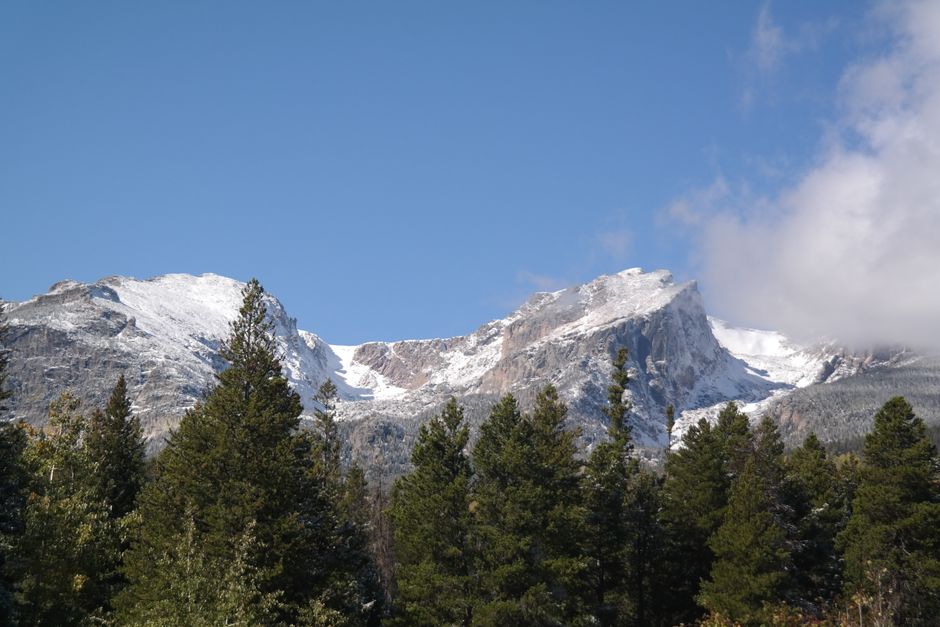
Rocky Mountain National Park sits above 10,000 feet for most of its 415 square miles. Trail Ridge Road — the highest continuous paved road in the U.S. — crosses the Continental Divide at 12,183 feet.
What everyone does:
- Drive Trail Ridge Road end to end
- Hike Bear Lake (most crowded trailhead in the park by a wide margin)
- See elk in Moraine Park at dusk
What most people miss:
The Wild Basin Area
— On the southeastern corner of the park, Wild Basin requires a timed entry permit but gets a fraction of the Bear Lake crowds. Chasm Lake, below Longs Peak, is one of the most dramatic alpine lake scenes in Colorado.Old Fall River Road
— An unpaved one-way road that climbs to the Alpine Visitor Center. The original way to cross the Continental Divide in the park, before Trail Ridge Road was built. Slower, rougher, and infinitely more atmospheric.The Never Summer Range
— The western side of the park, accessible from Grand Lake, sees dramatically fewer visitors despite having outstanding scenery and wildlife.
The Southwest Desert Parks: Zion’s Narrows Are Just the Beginning
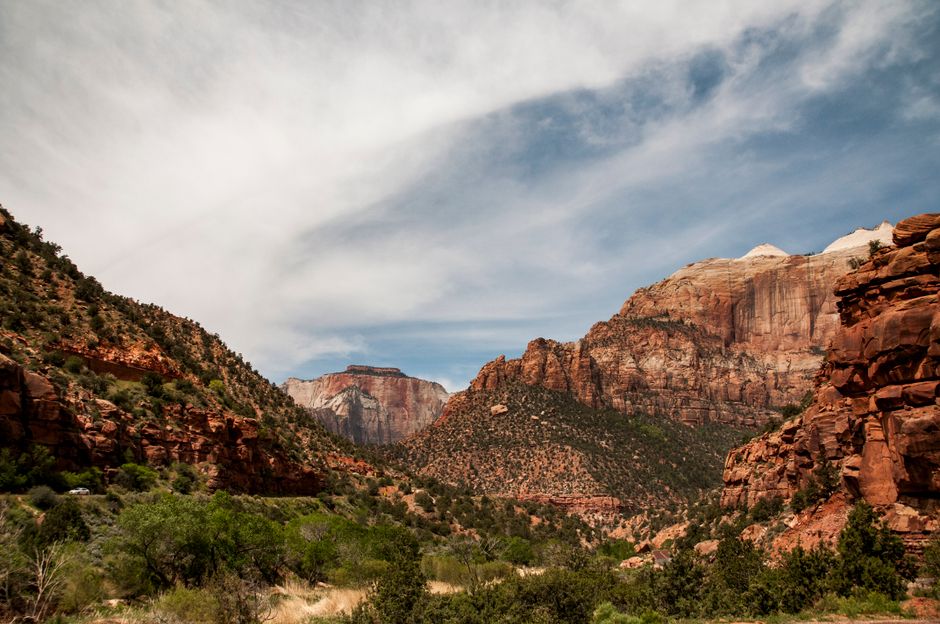
Zion National Park in Utah may be the most photogenic park in America. The Narrows — a 16-mile slot canyon hike through the Virgin River — is one of the most iconic experiences in outdoor recreation.
But the park’s reputation has created a serious crowding problem at its main attractions.
What everyone does:
- The Narrows (bottom-up from the Temple of Sinawava)
- Angels Landing (now requires a permit lottery)
- Emerald Pools trail system
What most people miss:
The Kolob Canyons section
— On the northwestern edge of the park off I-15, this separate section of Zion has its own visitor center, dramatic red canyon scenery, and virtually no crowds. Five minutes from the freeway.The Subway
— A permit-required technical hike through a canyon section that forms a natural subway tunnel of polished sandstone. One of the most remarkable geological features in the U.S. Limited to 80 people per day.The East Side (Zion–Mount Carmel Highway)
— The road through the east side of the park, including the mile-long tunnel, traverses a completely different landscape — slickrock, checkerboard mesa, and canyon overlooks that feel like a different park entirely.
Mighty Five runner-up: Canyonlands National Park. Same region, fewer than 15% of Zion’s visitors, arguably more dramatic landscape. The Island in the Sky district is the most accessible and still feels genuinely remote.
The Pacific Northwest: Olympic’s Wild Coast

Olympic National Park contains three distinct ecosystems and 73 miles of wild Pacific coastline — making it one of the most ecologically diverse parks in the system.
What everyone does:
- Hoh Rain Forest (Hall of Mosses trail)
- Hurricane Ridge (alpine views, deer, wildflowers)
- Sol Duc Hot Springs
What most people miss:
The Wilderness Coast (Ozette Triangle)
— A 9-mile loop that includes 3 miles of the most dramatic coastline in the lower 48. Boardwalk through coastal forest, sea stacks, and tide pools that rival anything in the Pacific. Very few people complete this hike compared to the rain forest crowds.Kalaloch Beach area
— The tree-of-life (a Sitka spruce growing above an eroded root cave on the beach edge) has been photographed millions of times but most visitors drive past the access point without stopping.The Quinault Rain Forest Loop
— One of four rain forests in the park. Gets a fraction of Hoh’s visitors despite similar old-growth scenery. The world’s largest Sitka spruce tree is here.
How to Visit Any National Park Without the Crowds
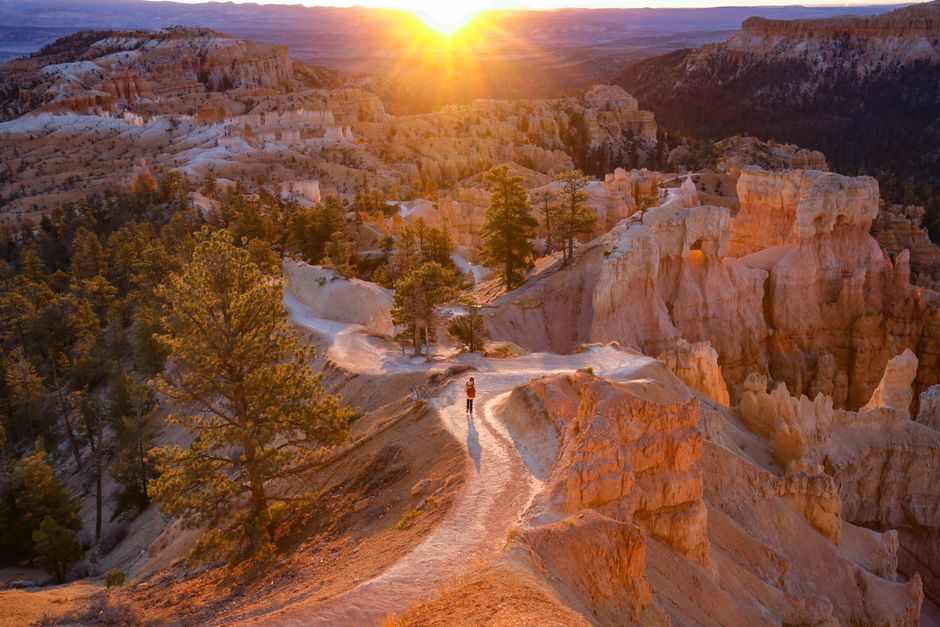
The best national park experience in 2026 doesn’t require luck. It requires strategy.
- Visit in shoulder season: September and early October are consistently the best months in almost every park — summer crowds gone, fall color beginning, facilities still open
- Start hiking before 7am — most park visitors don’t reach trailheads before 9am. The first two hours of daylight are often completely solitary.
- Book campsites and lodges 6 months in advance — recreation.gov releases campsites exactly 6 months ahead and popular spots are gone in minutes
- Study the park map before you go — every park has a “backcountry” or “wilderness” designation covering terrain that sees a tiny fraction of visitor traffic
- Check the NPS website for timed entry requirements — an increasing number of parks require reservations for vehicle entry during peak season. Get these before you go, not when you’re at the gate.
- Consider visiting the Monday–Thursday window — Friday through Sunday sees dramatically higher visitation at nearly every park
America’s national park system is the greatest public land gift in history. You just have to know where to look.