10 American Road Trips That Will Make You Fall in Love With This Country All Over Again — Ranked by How Much They’ll Change You
We may earn money or products from the companies mentioned in this post. This means if you click on the link and purchase the item, I will receive a small commission at no extra cost to you ... you're just helping re-supply our family's travel fund.
America is one of the only countries in the world where you can drive through five completely different climates and ecosystems in a single week. We have oceanic coastlines, 14,000-foot mountain passes, alien desert floors, and roads that run through dense old-growth forest for miles without a single structure in sight.
We also have a lot of people who fly everywhere and never see any of it.
These ten road trips are the ones worth rearranging your schedule for. I’ve ranked them by the depth of the experience — how much they’re likely to fundamentally shift your perspective on what this country actually is. A few are bucket-list classics. A few are deeply underrated. All of them are unforgettable.
The 10 Road Trips Ranked
1. Pacific Coast Highway — California
The PCH is the benchmark against which all other American road trips are measured. The route runs from San Francisco south through Big Sur, Cambria, San Luis Obispo, Santa Barbara, and Malibu to San Diego, following Highway 1 and the Pacific Coast through some of the most dramatic coastal scenery in the world.
- Distance: Approximately 650 miles, San Francisco to San Diego
- Days: 7-10 for a meaningful trip
- Best time: September–November for fewer crowds and clear skies (summer fog on the coast is real)
- Estimated cost: $1,500–$3,000 for two people (gas, lodging, food)
- Can’t-miss stops: Bixby Creek Bridge in Big Sur, Hearst Castle in San Simeon, Pfeiffer Beach
What makes it unlike any other drive: Big Sur. There is nothing in the continental United States that looks like Big Sur at sunrise. The road clings to cliff faces above churning Pacific surf, and you alternate between terror and pure awe for about 90 miles.
2. Blue Ridge Parkway — Virginia and North Carolina
The Blue Ridge Parkway runs 469 miles along the spine of the Appalachian Mountains from Shenandoah National Park in Virginia to Great Smoky Mountains National Park in North Carolina. There are no billboards. No commercial vehicles. No stoplights. It is one of the most intentionally peaceful roads in the country.
- Distance: 469 miles
- Days: 5-7
- Best time: Mid-October for peak fall foliage — one of the most spectacular fall color displays in the eastern US
- Estimated cost: $800–$1,800
- Can’t-miss stops: Skyline Drive (Shenandoah), Asheville (vibrant food and arts scene), Linn Cove Viaduct
What makes it unlike any other drive: The parkway was designed as an experience, not a transit route. Maximum speed limit is 45 mph for the entire length. You don’t rush this one.
3. Route 66 — Chicago to Los Angeles
The Mother Road. 2,448 miles from Chicago’s Lake Shore Drive to the Santa Monica Pier. Route 66 is as much an American mythology project as a road trip — it passes through the nostalgia of mid-century America, through the Dust Bowl plains, the New Mexico desert, and the western edge of the Colorado Plateau.
- Distance: 2,448 miles
- Days: 10-14
- Best time: Spring (April-May) or fall (September-October) — the Midwest summer is brutal and the California desert in July is worse
- Estimated cost: $2,500–$5,000
- Can’t-miss stops: Cadillac Ranch (Amarillo, TX), Petrified Forest National Park (AZ), Wigwam Motel (Holbrook, AZ), Blue Swallow Motel (Tucumcari, NM)
What makes it unlike any other drive: The ruins of American ambition. Ghost towns, closed diners, sun-bleached motel signs. Route 66 is a 2,448-mile meditation on impermanence dressed up as nostalgia.
4. Going-to-the-Sun Road — Montana
Fifty miles. That’s all this drive is. But Going-to-the-Sun Road through Glacier National Park might be the most concentrated stretch of visual drama in the country. The road crests Logan Pass at 6,646 feet, passing glaciers, hanging valleys, mountain goats on the rocks above you, and views that look digitally enhanced even when you’re standing in them.
- Distance: 50 miles
- Days: 1-2 for the road itself; 3-5 if you’re exploring Glacier fully
- Best time: Late June–September (the road is only fully open this window; snow closes it otherwise)
- Pro tip: Arrive before 6am or after 3pm. A vehicle reservation system is in effect peak season — book months in advance.
- Estimated cost: $500–$1,200 depending on how much hiking/camping you incorporate
What makes it unlike any other drive: The scale. Glacier is one of the last places in the lower 48 where the wilderness genuinely feels like it doesn’t care about you.
5. Great River Road — The Mississippi
Running through 10 states from Minnesota to Louisiana alongside the Mississippi River, the Great River Road is 3,000 miles of deeply underrated American landscape. This is the road trip almost no one takes, which is exactly why you should.
- Distance: 3,000 miles (full route)
- Days: 14-21 for the full route; segment it by state for shorter versions
- Best time: April-June or September-October
- Estimated cost: $3,000–$6,000 for the full route
- Can’t-miss stops: Natchez, Mississippi (antebellum history), New Orleans (obviously), Hannibal, MO (Mark Twain’s hometown), the bluffs of Wisconsin and Iowa
What makes it unlike any other drive: The river itself. The Mississippi is wild and enormous in a way that maps don’t capture. You get a sense of what this continent actually looks like from the ground up.
6. Death Valley and Joshua Tree Loop — California Desert
The California desert route through Death Valley and Joshua Tree is best driven October through April — temperatures above 105°F in summer are genuinely dangerous and not hyperbole. The combined landscape is otherworldly: salt flats, sand dunes, bizarre cactus forests, and some of the darkest, most star-dense skies in the country.
- Distance: 400-500 miles depending on your loop
- Days: 4-6
- Best time: November–February (mild temperatures, clearest skies)
- Estimated cost: $600–$1,400
- Can’t-miss stops: Zabriskie Point sunrise, Mesquite Flat Dunes, Skull Rock in Joshua Tree, Cholla Cactus Garden at dusk
What makes it unlike any other drive: The stargazing. Joshua Tree is an International Dark Sky Park. You will see the Milky Way with your naked eye. Bring a blanket and a bottle of wine and spend an hour flat on your back looking up.
7. The Alaska Highway — Dawson Creek to Delta Junction
This is the road trip for people who want to know what the edge of civilization feels like. The Alaska Highway runs 1,390 miles from Dawson Creek, British Columbia, through the Yukon, to Delta Junction, Alaska. You will share the road with bison. Moose will stand in your path. Bears will appear at the roadside without warning.
- Distance: 1,390 miles
- Days: 5-7 minimum; 10-14 if you’re stopping and exploring
- Best time: June–August (winter conditions make this route treacherous)
- Estimated cost: $2,000–$4,000 (gas prices in remote Canada and Alaska are significantly higher)
- Can’t-miss stops: Kluane National Park (Yukon), Liard Hot Springs Provincial Park, Tok, Alaska
What makes it unlike any other drive: The road was built in 8 months in 1942 as a military supply route to Alaska. The history is as wild as the landscape.
8. Overseas Highway — The Florida Keys
US-1 from the Florida mainland to Key West covers 113 miles across 42 bridges, spending much of its length suspended over turquoise Atlantic and Gulf water simultaneously. The Seven Mile Bridge, which crosses Florida Bay between Marathon and the Lower Keys, is one of the most photographed drives in America for obvious reasons.
- Distance: 113 miles, Florida City to Key West
- Days: 2-4 (Key West deserves at least two nights)
- Best time: November–April (summer is hot, humid, and hurricane season)
- Estimated cost: $800–$2,000 (Key West lodging is expensive)
- Can’t-miss stops: Key Largo (snorkeling, John Pennekamp Coral Reef State Park), Islamorada (best seafood in the Keys), Bahia Honda State Park, Mallory Square sunset in Key West
What makes it unlike any other drive: You can see water on both sides of the road for 20+ consecutive miles. It is the closest thing to driving on the ocean itself.
9. Beartooth Highway — Montana and Wyoming
Charles Kuralt called the Beartooth Highway “the most beautiful drive in America,” and he’s not wrong. The 69-mile highway connects Red Lodge, Montana to Cooke City and the northeast entrance of Yellowstone National Park, climbing to nearly 11,000 feet with switchbacks that give you panoramic views of the Beartooth Plateau.
- Distance: 69 miles
- Days: 1 for the highway; pair with Yellowstone for a 4-7 day trip
- Best time: Late June–September (the highway is typically closed October through late May due to snow)
- Estimated cost: $400–$900 standalone
- Can’t-miss stops: Rock Creek Vista Point, Top of the World rest area, the drop into Cooke City
What makes it unlike any other drive: The altitude change. You go from a valley town at 5,500 feet to the top of the plateau at 10,947 feet in about 25 miles. The treeline disappears and you’re suddenly in an alpine world that looks like Iceland.
10. The Loneliest Road — US-50, Nevada
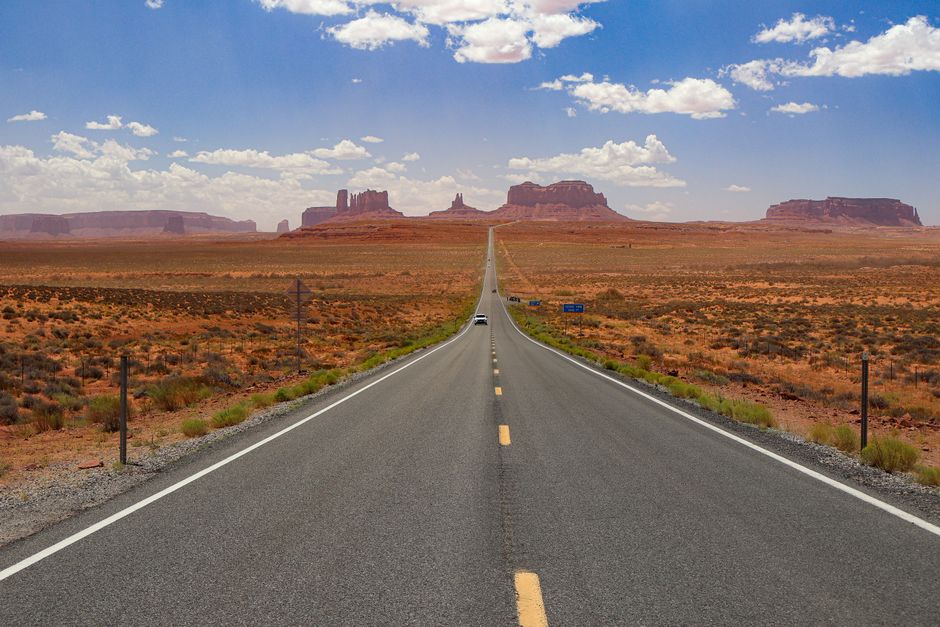
Life Magazine called US-50 across Nevada “The Loneliest Road in America” in 1986 as an insult. Nevada embraced it as a marketing tagline, and it stuck. This is the anti-road trip road trip: no tourist infrastructure, no Instagram landmarks, stretches of more than 300 miles without a gas station or town, and a landscape of dry playas and ghost town relics that feels like the end of the world.
- Distance: 287 miles, Ely to Fernley, Nevada
- Days: 2-3
- Best time: Spring or fall (summer desert heat is punishing)
- Estimated cost: $300–$600 (genuinely minimal options for spending money)
- Can’t-miss stops: Berlin-Ichthyosaur State Park (ghost town plus dinosaur fossils), Sand Mountain Recreational Area, the extraterrestrial Highway 375 detour near Rachel, NV
What makes it unlike any other drive: The silence. Most people have never experienced true silence — no ambient city noise, no aircraft, no other cars. US-50 Nevada will give it to you. It is clarifying in a way that nothing else is.
Planning Your Road Trip
A few universal principles for any of these routes:
- Never under-fuel in remote areas. Fill the tank any time it drops below half in the Mojave, Nevada, Alaska, or Montana. Services can be 100+ miles apart.
- Book lodging at least 3-6 months ahead for peak season in national park areas. Glacier, Yellowstone, and Yosemite-adjacent lodging books up fast.
- Buy the America the Beautiful Pass ($80) if visiting multiple national parks. It covers entrance fees at every federal park, monument, and recreation area for a year.
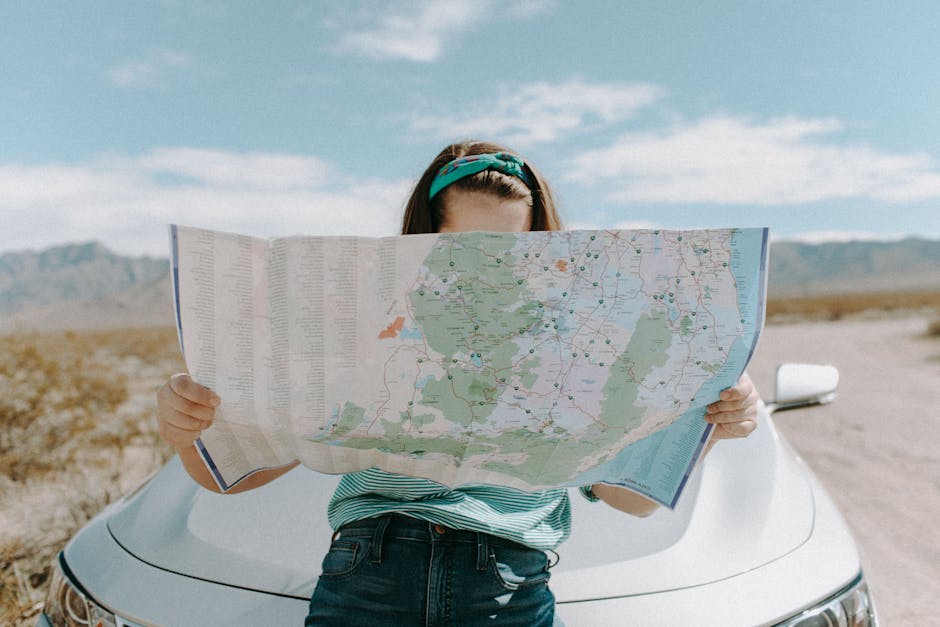
- Download offline maps before you go. Cell service is nonexistent on significant portions of most of these routes.
- Factor in the real daily driving limit. Eight hours of beautiful driving is still 8 hours. Budget for stops, photo breaks, and the unexpected discovery that makes every road trip worth it.