Annapolis Has the Naval Academy, 18th-Century Streets, and One of the Best Crab Seasons on the East Coast
We may earn money or products from the companies mentioned in this post. This means if you click on the link and purchase the item, I will receive a small commission at no extra cost to you ... you're just helping re-supply our family's travel fund.
Annapolis, Maryland is 30 miles east of Washington DC and has been the Maryland state capital continuously since 1694 — longer than anywhere else in the country. Its historic district contains more surviving 18th-century buildings than any city in the United States. The United States Naval Academy occupies a 338-acre campus on the Severn River at the edge of downtown. And from May through October, the Chesapeake Bay blue crab season delivers the best hard-shell blue crab available anywhere in the world, at restaurants and crab houses within walking distance of the State House where the Revolutionary War peace treaty was ratified in 1784.
What Annapolis Offers — and Why the Crab Season Matters
Blue crab from the Chesapeake Bay is not available at this quality anywhere else — the specific combination of estuary salinity, water temperature, and ecosystem biology that produces Chesapeake blue crabs means that the steamed hard-shells, the crab cakes, and the crab soup at Annapolis restaurants are specific to this place. Restaurants serve them steamed with Old Bay seasoning, piled on newspaper-covered tables with mallets and picks, in a format that is entirely regional and entirely worth experiencing. Peak season is July through September when crabs are largest and most plentiful.
The Naval Academy Experience
The Naval Academy grounds are open to visitors with a valid ID for self-guided tours, and guided tours are available through the Visitor Center on King George Street. The Academy Chapel — a Beaux Arts dome modeled loosely on Les Invalides in Paris — is one of the finest religious buildings in Maryland. John Paul Jones is buried in the crypt beneath the chapel in a sarcophagus that took considerable effort to return from France. The Brigade of Midshipmen formation at noon on weekdays is open to public viewing and is one of the more impressive public military traditions in the US.
The Historic District
The four-block radius around the Maryland State House contains a concentration of pre-Revolutionary and Revolutionary-era architecture — the Chase-Lloyd House, the Hammond-Harwood House, the William Paca House and Garden — that makes Annapolis the most intact colonial capital in America. The Maryland State House itself, completed in 1779, is still the seat of the Maryland General Assembly and is the oldest state capitol in continuous legislative use. Walking this district with awareness of what happened in these buildings — the founding-era decisions made in their parlors and halls — is one of the more grounded encounters with American history available in a two-hour afternoon walk.
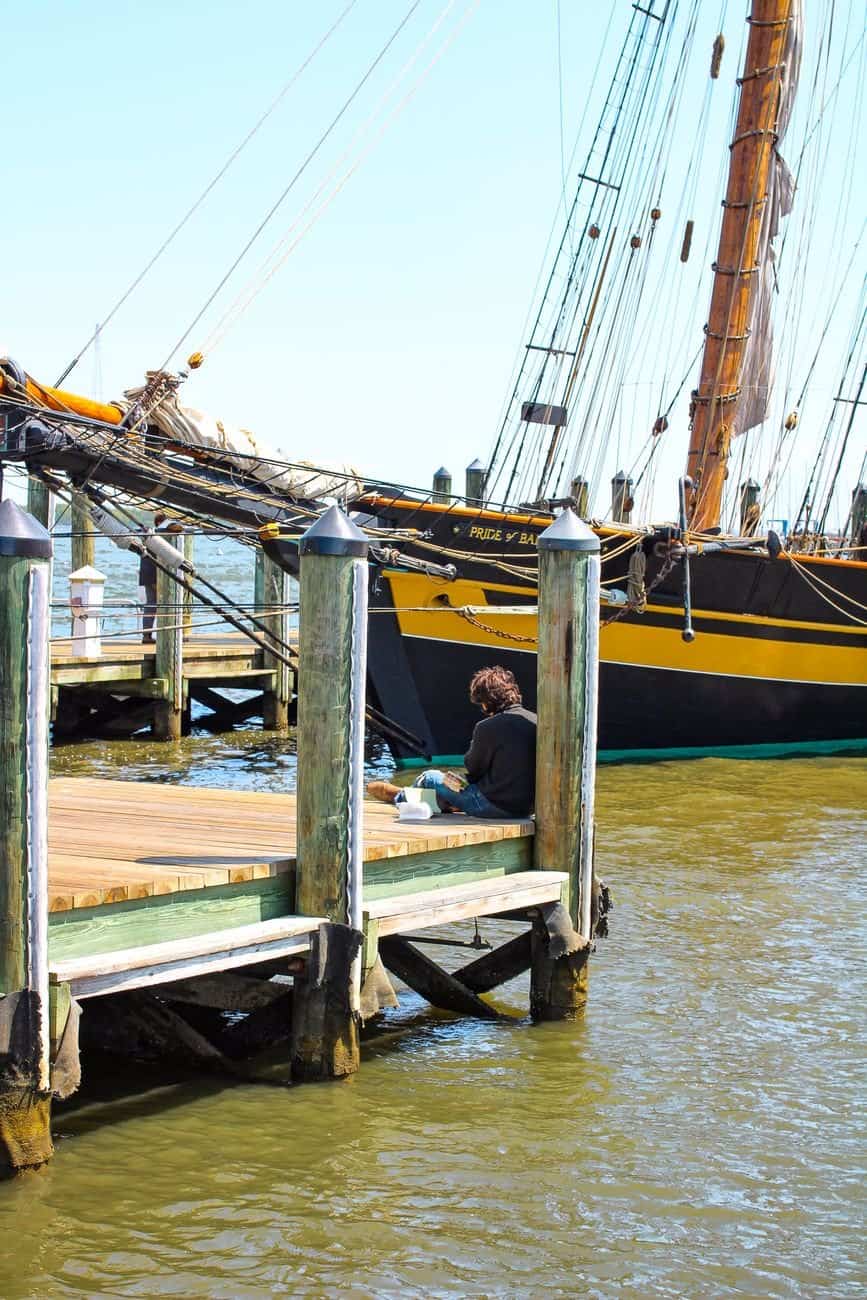
Annapolis is a day trip from DC but a better experience as an overnight — it earns time, and the combination of crab dinner, evening on the waterfront watching the sailboats come in from the Chesapeake, and a morning walk through the historic district before the DC day-tripper crowds arrive is one of the more genuinely pleasant East Coast short-trip experiences available. The State House, the Academy, and the crabs are the three things that make it worth specifically going to Annapolis, not just somewhere near DC.