Americans Tip 20% in Countries Where Tipping Was Never Supposed to Exist. Here Is How That Happened
We may earn money or products from the companies mentioned in this post. This means if you click on the link and purchase the item, I will receive a small commission at no extra cost to you ... you're just helping re-supply our family's travel fund.
Walk into a restaurant in Tokyo, Copenhagen, or Reykjavik as an American and the instinct to leave a 20% tip kicks in automatically, even in places where tipping is not customary and can occasionally feel mildly insulting to the server, as though the guest assumes the staff are underpaid and dependent on gratuity. That instinct did not appear randomly. It has a specific, well-documented American origin, and it has been spreading well beyond America’s borders for the last several years.
Tipping Was Once Considered Un-American

Tipping actually originated as a European aristocratic custom in the Middle Ages, where wealthy guests gave small sums to servants as a show of largesse. When the practice crossed the Atlantic in the years after the Civil War, many Americans initially viewed it as a corrupting, undemocratic European habit, according to historical research cited by National Geographic and NPR — incompatible with an American self-image built around egalitarian labor. Several U.S. states actually passed anti-tipping laws in the early 20th century specifically because tipping was seen as demeaning to workers and un-American.
How It Became Mandatory Instead of Optional
The practice took hold anyway, largely because restaurant owners in the post-Civil War South used it to avoid paying formerly enslaved workers, particularly Black rail and service workers, a real wage, according to research from the Shriver Center on Poverty Law and other labor historians — shifting the cost of paying staff directly onto customers instead of employers. Over the 20th century, this evolved into the modern U.S. subminimum tipped wage system, where federal law allows employers to pay tipped workers as little as $2.13 an hour, on the assumption that tips will make up the difference to at least minimum wage.
Why That System Never Existed Elsewhere

Most other developed countries pay service workers a full standard wage regardless of tips, which is why tipping in much of Europe, East Asia, and Australia has traditionally been optional, modest, or nonexistent — a small rounding-up gesture rather than a wage subsidy. Japan in particular has a long-standing cultural norm that excellent service is simply part of what you pay for, and offering a tip can be interpreted as suggesting the standard service was not already sufficient.
- In much of Western Europe, a modest rounding up of the bill, not a percentage tip, has traditionally been standard
- In Japan and South Korea, tipping is traditionally not expected and can create confusion or mild discomfort for service staff
- In Australia and New Zealand, full minimum wages for hospitality workers make tipping largely unnecessary, though optional
Why It Is Spreading Now Anyway
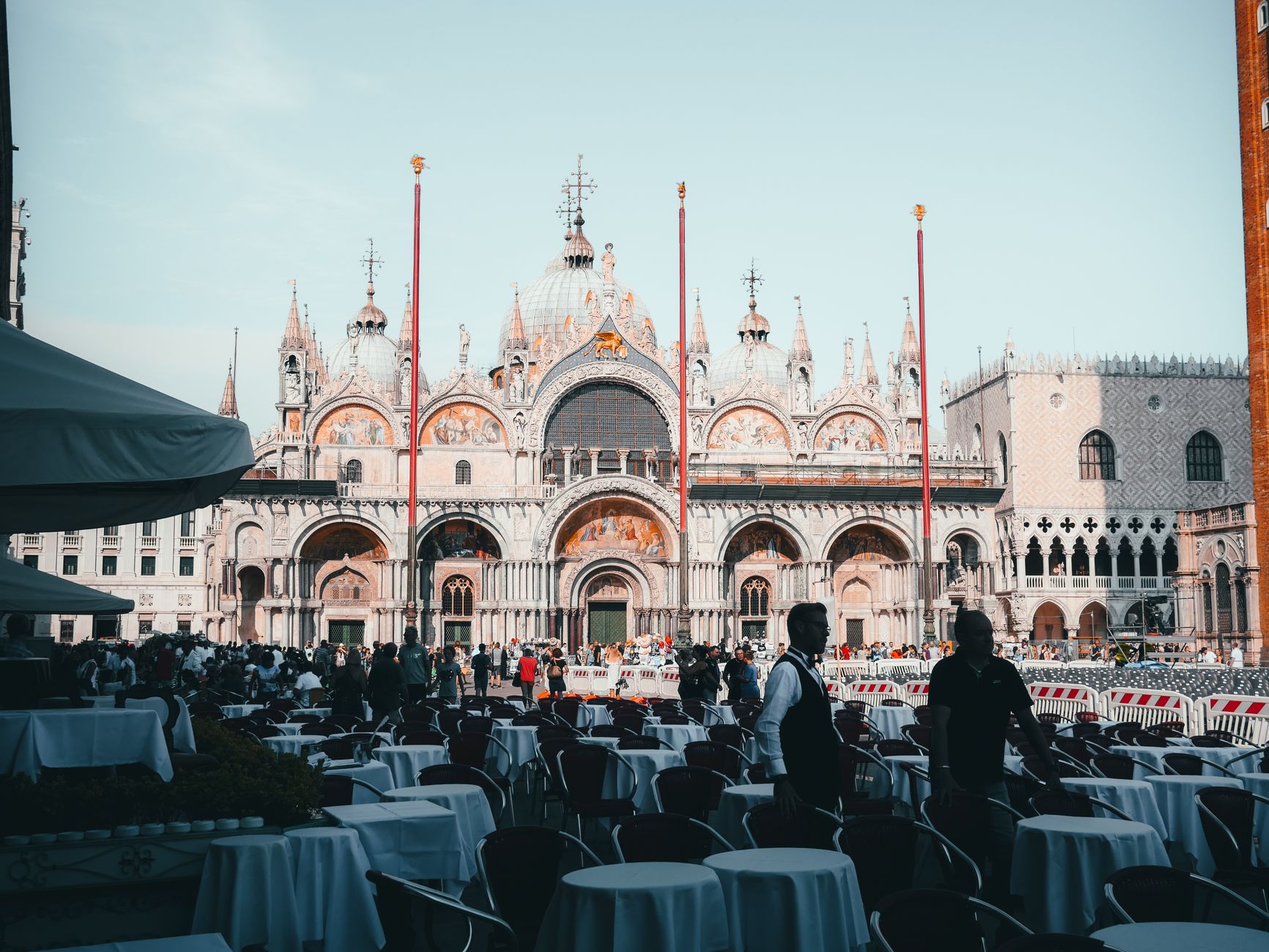
The rise of American tourism volume combined with globally standardized point-of-sale systems, many of which now include a default tip-prompt screen borrowed directly from U.S. payment processors, has begun exporting American-style tip expectations into markets that never had them, according to reporting from the BBC on the spread of “tipping creep” internationally. Tourist-facing businesses in cities with heavy American visitor traffic have started adjusting their own norms specifically to capture the tips American travelers offer instinctively, even when local customers at the same establishment continue to pay without tipping at all.
The Result Is a Two-Tier System in Some Cities
In parts of Europe and Southeast Asia with high American tourist density, some venues have begun informally expecting higher tips from visibly American customers while maintaining the traditional no-tip or minimal-tip norm for local patrons — a dynamic that frustrates workers who now field inconsistent guest expectations, and confuses American travelers who cannot tell whether a specific transaction calls for U.S.-style generosity or local-style restraint.
The practice that started as a way for post-Civil War American employers to avoid paying formerly enslaved workers a real wage has, more than 150 years later, become such a deeply internalized American reflex that it is now reshaping payment norms in countries that built entirely different, arguably more worker-protective wage systems specifically to avoid it.
What American Travelers Can Actually Do About It

Travel etiquette guides increasingly recommend a simple habit for Americans traveling abroad: research the specific tipping norm for each country before arrival rather than defaulting to a flat 20%, since the right behavior varies enormously even within a single region — Japan and South Korea skew toward no tipping at all, much of Western Europe expects a small rounding-up gesture, and some countries with lower service-industry wages, including parts of Latin America and Southeast Asia, do expect a more meaningful tip closer to American norms because service wages there genuinely are lower.
The instinct to over-tip out of guilt or habit, while well-intentioned, is precisely the mechanism reshaping local norms in tourist-heavy areas, and some etiquette researchers argue that a well-informed traveler who tips appropriately for the local context, rather than importing American habits wholesale, actually does more good for the destination’s existing labor norms than a traveler who reflexively over-tips everywhere.
The broader tension won’t resolve quickly. American tipping culture is now embedded deeply enough in domestic law and business models that reforming it at home remains politically difficult, and as long as it persists domestically, American travelers will keep carrying the habit with them, for better or worse, into every country they visit next.