8 Stops Worth Making on the 31-Mile Avenue of the Giants
We may earn money or products from the companies mentioned in this post. This means if you click on the link and purchase the item, I will receive a small commission at no extra cost to you ... you're just helping re-supply our family's travel fund.
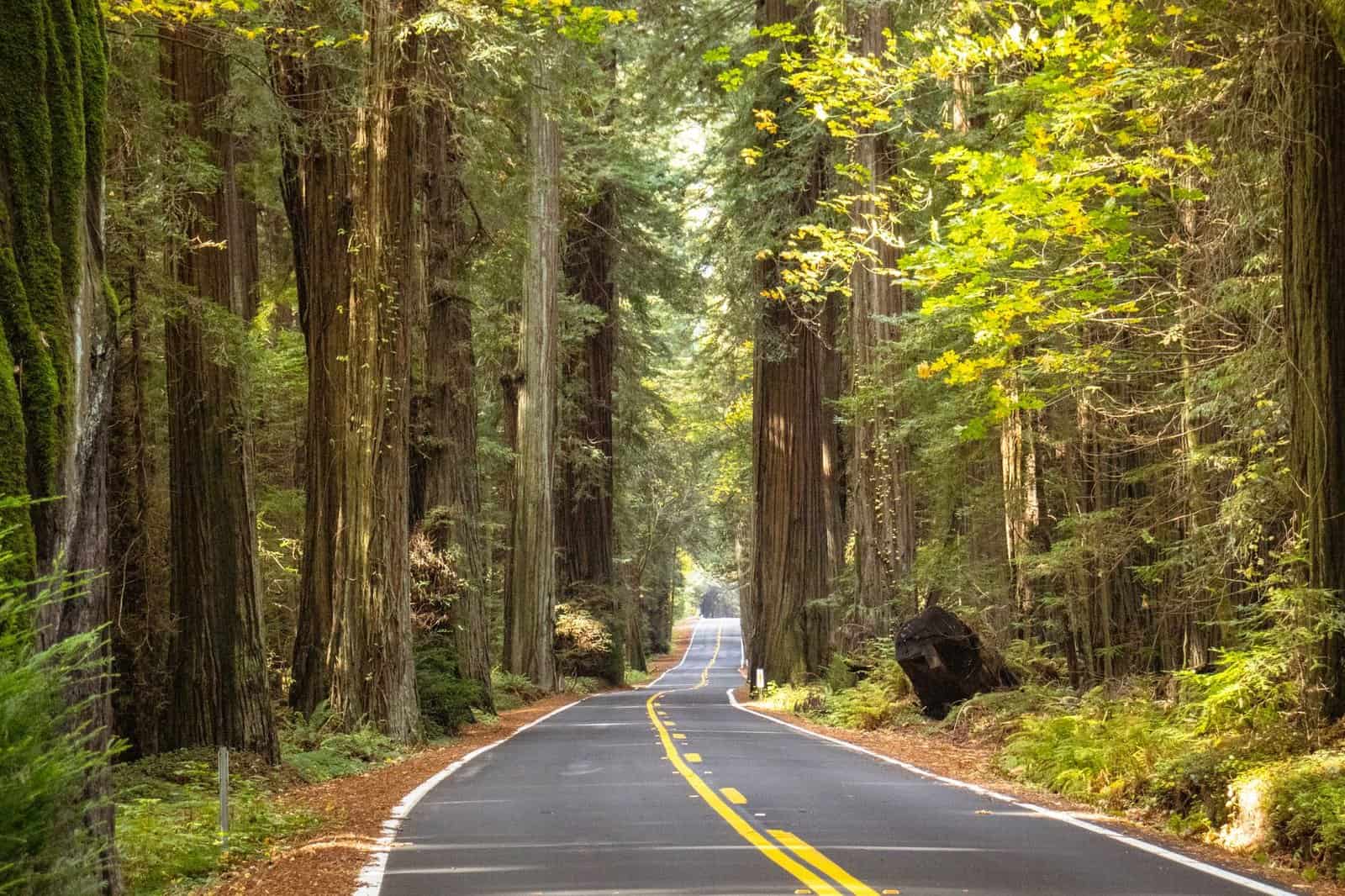
The Avenue of the Giants is a 31-mile scenic road through some of the tallest trees on Earth. It follows the old route of U.S. 101, now State Route 254, through Humboldt Redwoods State Park in Northern California, running roughly parallel to the modern freeway between Phillipsville in the south and Pepperwood in the north. For most of its length, old-growth coast redwoods crowd both sides of the pavement, many of them more than 300 feet tall and well over a thousand years old.
Humboldt Redwoods State Park protects the largest remaining stand of old-growth coast redwood forest in the world, including Rockefeller Forest, about 10,000 acres of ancient trees. The avenue passes through or near most of the park’s best groves. It is free to drive, and because it parallels Highway 101, you can hop on and off at several exits.
You could drive the whole thing in under an hour, but that misses the point. Here are eight stops worth making, listed roughly from north to south.
8 Stops on the Avenue of the Giants
1. Humboldt Redwoods State Park Visitor Center
The visitor center sits along the avenue near the small town of Weott, about midway through the drive. It is the best place to get oriented. Exhibits explain how coast redwoods grow, why they thrive in this foggy river valley, and how the park came to be. A display on the December 1964 flood shows how high the Eel River rose, burying parts of the valley under water and debris.
Volunteers and rangers can recommend trails based on your time and the weather, tell you which side roads are open, and sell maps and guidebooks. Restrooms and picnic tables make it a natural first stop. Hours vary by season, with shorter hours in winter.
2. Founders Grove
Founders Grove, near the northern end of the avenue just off the Dyerville Loop Road, is the most popular short walk in the park. A flat nature trail of about half a mile loops through towering redwoods, with interpretive signs that explain the forest’s ecology. The grove honors the founders of the Save the Redwoods League, a group formed in 1918 that raised money to buy and protect redwood groves as logging accelerated.
The trail is easy for all ages, and in the morning, light filters down through the fog into the grove in long beams. The Founders Tree, one of the tallest on the trail, rises well over 300 feet.
3. The Dyerville Giant
On the same Founders Grove trail lies the Dyerville Giant, a redwood that fell in March 1991. It stood more than 360 feet tall and was once considered among the tallest trees in the world. Nearby residents reported hearing the crash, and some said it sounded like a train wreck.
Today, you can walk along its length and look at the huge root plate, which shows how shallow redwood roots are compared with the trees’ height. Redwoods rely on wide, interlocking roots rather than deep taproots, which is why big trees occasionally topple in winter storms. Seeing the trunk on the ground gives you a sense of scale that standing trees cannot.
4. Rockefeller Forest
Rockefeller Forest lies west of the avenue along Mattole Road, which branches off near Dyerville. It is the largest remaining old-growth coast redwood forest on Earth, protected in the 1930s with major donations from John D. Rockefeller Jr. through the Save the Redwoods League.
The Rockefeller Loop, a short trail of under a mile, leads into a quiet stand of enormous trees. Longer trails, like the Bull Creek Flats Trail, follow the creek through the heart of the forest. The light is dim even at midday, the ground is carpeted in ferns and redwood sorrel, and the silence is striking. If you only have time for one serious walk in the park, this is the one many rangers recommend.
5. The Women’s Federation Grove
The Women’s Federation Grove, in the southern part of the park near Burlington, was protected in the 1930s with money raised by the California Federation of Women’s Clubs. Its centerpiece is a four-sided stone hearth designed by Julia Morgan, the architect best known for Hearst Castle.
The grove has picnic tables and easy access to the South Fork of the Eel River, making it a good lunch stop. It is also a reminder that much of the park was saved by private fundraising campaigns, many led by civic groups and individuals, rather than by government action alone.
6. The Immortal Tree in Redcrest
The Immortal Tree stands beside the avenue near the small community of Redcrest. It earned its name by surviving almost everything: an attempt to cut it down in 1908, lightning that blew off its top, fire, and the 1964 flood, which left a high-water mark on its trunk. The tree is estimated to be around 950 years old and stands about 250 feet tall even with its broken crown.
A sign beside it tells its story, and a gift shop nearby sells redwood burl carvings and souvenirs. It takes just a few minutes to see and is a good leg-stretch stop.
7. The Shrine Drive-Thru Tree in Myers Flat
The Shrine Drive-Thru Tree, in the town of Myers Flat, is one of a handful of drive-through redwoods left in California. Its opening was formed naturally by fire rather than carved, and it lets most small cars squeeze through. Larger SUVs and trucks may not fit, so check before you try.
The site, privately owned, charges a small admission fee and also has a drive-on stump and a tree house to explore. It is a classic piece of roadside Americana and a hit with kids.
8. The Chimney Tree Near Phillipsville
At the southern end of the avenue, near Phillipsville, the Chimney Tree is a living redwood hollowed out by fire. You can walk inside the base and look straight up through the hollow trunk to daylight high above. Despite the damage, the tree is still growing.
A small roadside shop and cafe nearby make it a good last stop before rejoining Highway 101.
Why the Redwoods Grow So Tall Here
Coast redwoods grow only in a narrow band along the Pacific coast from southern Oregon to central California. They need the summer fog that rolls in from the ocean, which provides moisture during the dry season, and the mild, wet winters of the North Coast. The Eel River valley in Humboldt County has rich alluvial soils deposited by floods, which help the trees reach enormous heights.
Coast redwoods are the tallest trees in the world. The tallest known tree, a redwood in nearby Redwood National Park, measures about 380 feet. Many trees along the Avenue of the Giants exceed 300 feet.
How the Park Was Saved
By the early 1900s, logging was cutting through redwood forests at a rapid pace. The Save the Redwoods League, founded in 1918, began buying groves and donating them to the state. Many groves along the avenue are named for the people and groups who paid to protect them. The state park grew over the decades and now covers about 53,000 acres.
The 1964 flood was a major setback, toppling trees and damaging communities. Today, the park is a reminder of what was saved and what was lost.
Visiting in Late Fall and Winter
The Avenue of the Giants is open year-round, and late fall and winter have their own appeal. Crowds are much smaller than in summer, the forest is lush and green, and fog and mist add atmosphere.
- Rain: expect wet weather from November through March. Bring rain gear and waterproof shoes.
- Flooding: heavy storms can flood low-lying areas near the Eel River and close side roads like Mattole Road. Check conditions with the park.
- Daylight: the forest is dark even at midday in winter. Start early and plan to finish trails by mid-afternoon.
- Salmon: in late fall and winter, salmon and steelhead return to the Eel River and its tributaries to spawn.
- Services: some businesses along the avenue keep shorter hours in winter.
Where to Stay
Humboldt Redwoods State Park has campgrounds, including Burlington Campground near the visitor center, which is open year-round. Small motels, cabins, and inns are scattered along the avenue in towns like Myers Flat, Miranda, and Redcrest. Larger towns, including Fortuna, Ferndale, Eureka, and Garberville, offer more choice.
Getting There
The avenue is about four hours north of San Francisco and about an hour south of Eureka via U.S. 101. The southern entrance is near Phillipsville, and the northern entrance is near Pepperwood. Several exits along the freeway connect to the avenue, so you can drive part of it if time is short.
A Half-Day Plan
- Start at the southern end near Phillipsville with the Chimney Tree.
- Stop at the Shrine Drive-Thru Tree in Myers Flat.
- Picnic at the Women’s Federation Grove.
- Visit the visitor center near Weott.
- Walk the Rockefeller Loop.
- Finish at Founders Grove and the Dyerville Giant before rejoining 101 at the northern end.
The Bottom Line
The Avenue of the Giants is one of the most memorable drives in the country, and it rewards anyone who slows down. Start at the visitor center, walk Founders Grove and Rockefeller Forest, and save time for the quirky roadside stops. In the quiet of late fall, with fog drifting through the trees, the giants feel even bigger.