We may earn money or products from the companies mentioned in this post. This means if you click on the link and purchase the item, I will receive a small commission at no extra cost to you ... you're just helping re-supply our family's travel fund.
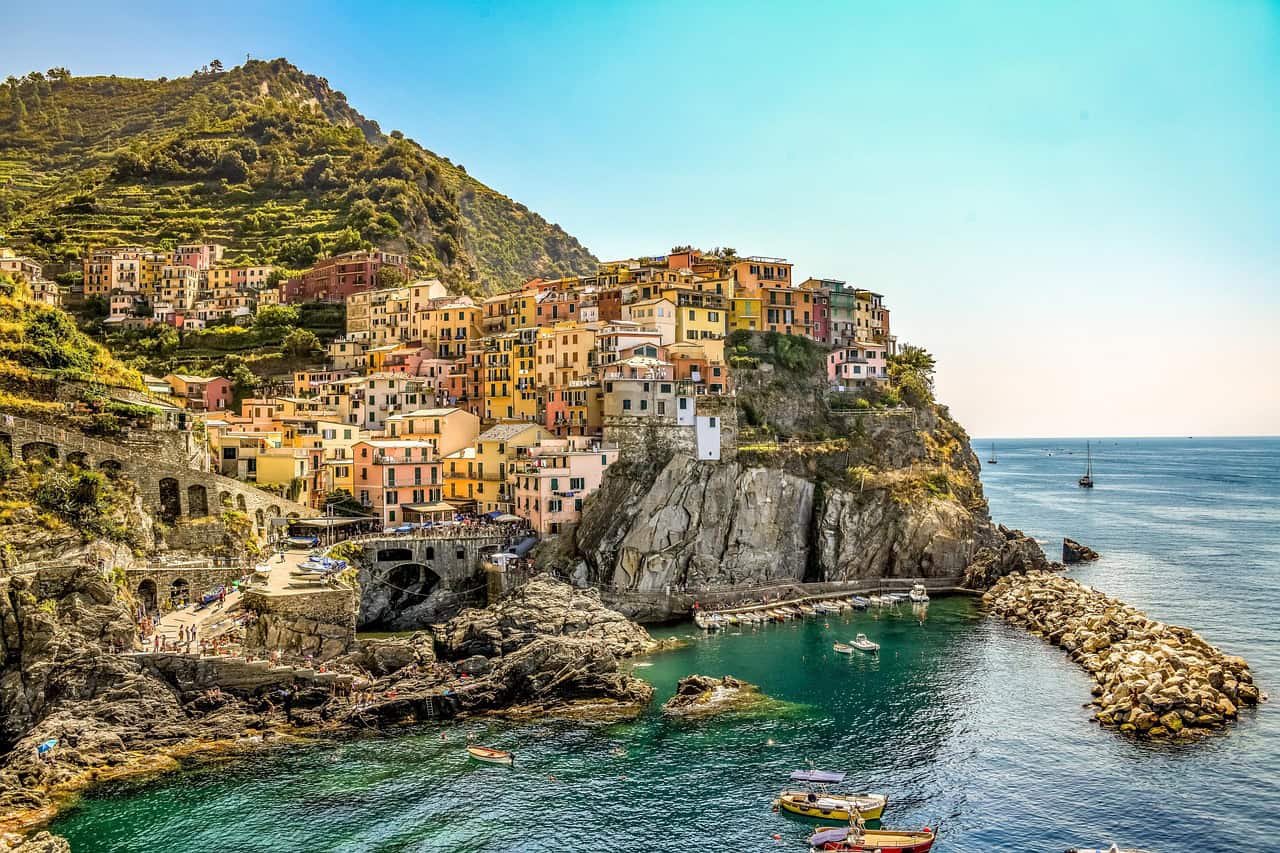
Europe’s hilltop villages were rarely built for beauty alone. Most were shaped by defense, geography, or survival, yet centuries later they appear impossibly cinematic. Perched on cliffs, ridges, and rock spines, these villages combine dramatic landscapes with human stubbornness and artistry. Stone homes cling to edges, streets twist against gravity, and views stretch for miles. What makes them feel unreal isn’t polish; it’s the way history, terrain, and daily life coexist in places that look like they should belong to paintings, not maps.
1. Civita di Bagnoregio, Italy
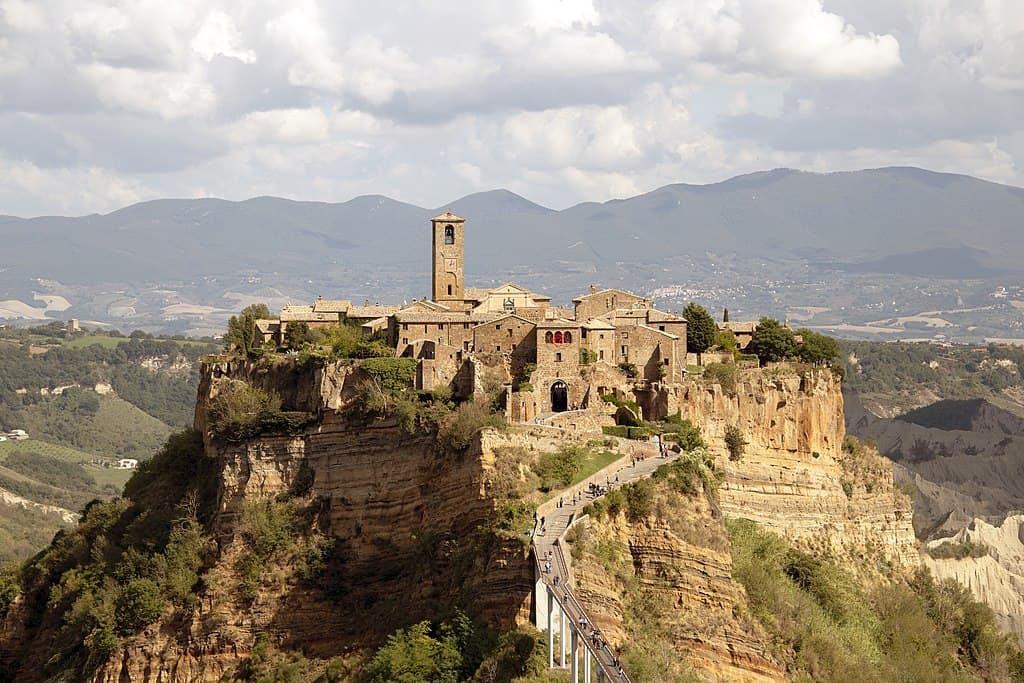
Civita di Bagnoregio rises from a plateau of volcanic tuff in central Italy, isolated by erosion that has reshaped the land for over 2,500 years. The village sits about 443 meters above sea level and is accessible only by a single pedestrian bridge measuring roughly 300 meters. Fewer than 15 residents live here year-round, giving the place an eerie stillness. Stone houses cluster tightly along narrow lanes, many dating back to the 12th century. Surrounded by deep valleys, Civita appears suspended in air, especially during fog, when visibility can drop below 100 meters.
2. Rocamadour, France
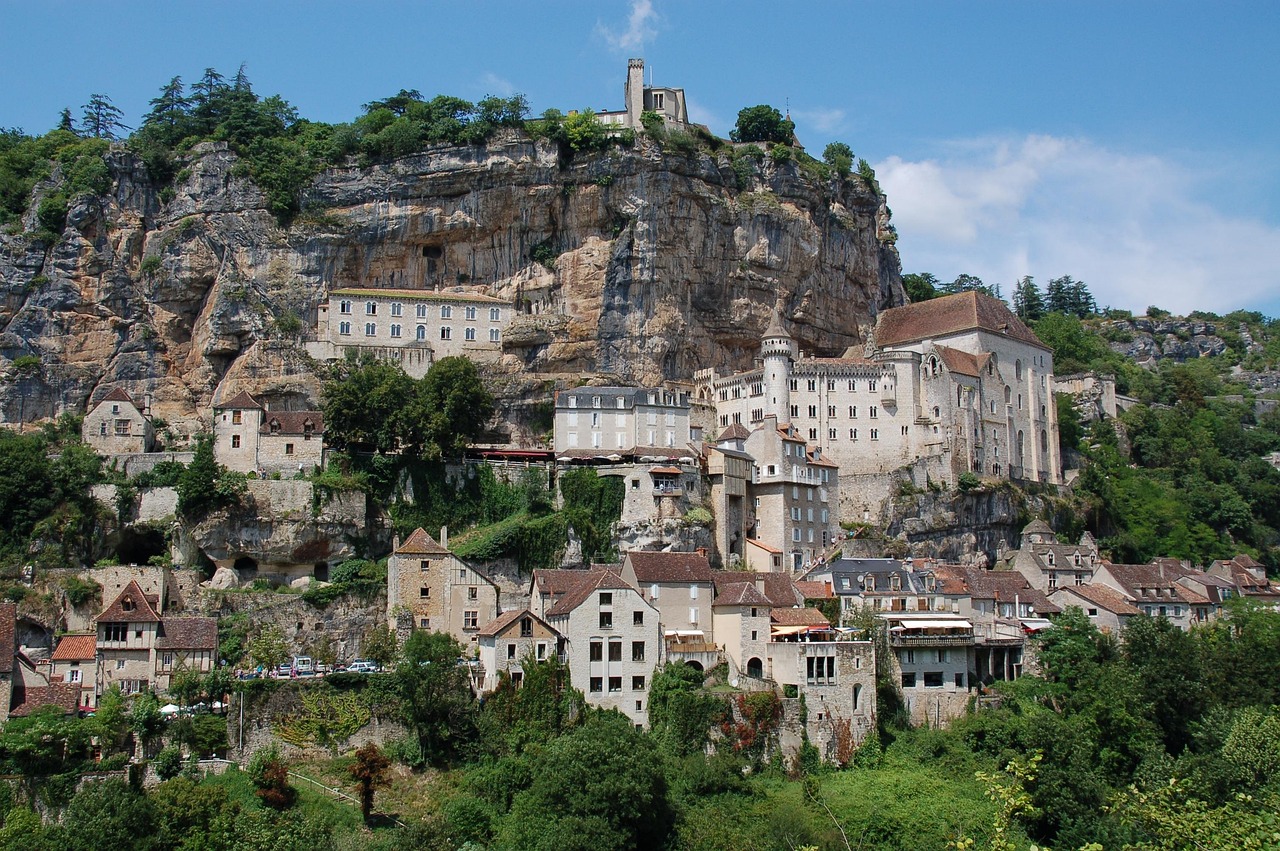
Rocamadour is vertically built into a limestone cliff in southern France, with structures stacked across nearly 120 meters of elevation. The village overlooks the Alzou River, which flows more than 200 meters below the upper sanctuaries. Its religious complex dates back to the 11th century and includes seven historic chapels. Roughly 600 permanent residents live here, though annual visitors exceed 1.5 million. Houses seem fused to the rock face, creating a gravity-defying illusion. The narrow streets and stone stairways follow the cliff’s natural contours, making the village feel sculpted rather than constructed.
3. Castellfollit de la Roca, Spain
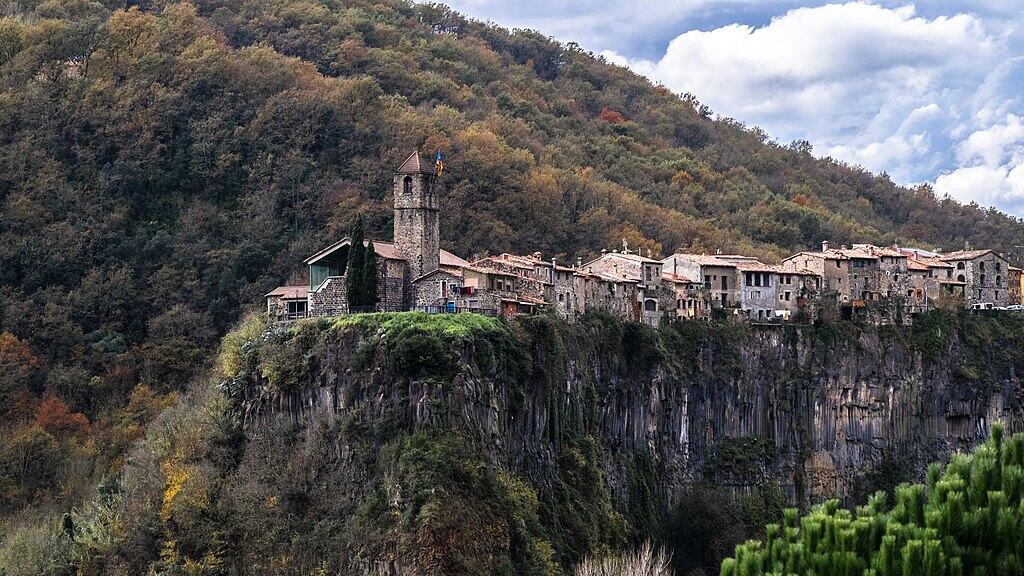
Castellfollit de la Roca sits on a dramatic basalt cliff formed by ancient lava flows approximately 50,000 years ago. The rock platform stretches nearly 1 kilometer long and rises about 50 meters above the Fluvià River. Home to around 1,000 residents, the village’s stone buildings stand directly along the cliff’s edge. Many structures date to the Middle Ages, with foundations embedded into volcanic rock. The dark basalt contrasts sharply with pale facades, and from certain angles, rooftops appear to hover over empty space, creating a striking visual tension between nature and settlement.
4. Manarola, Italy
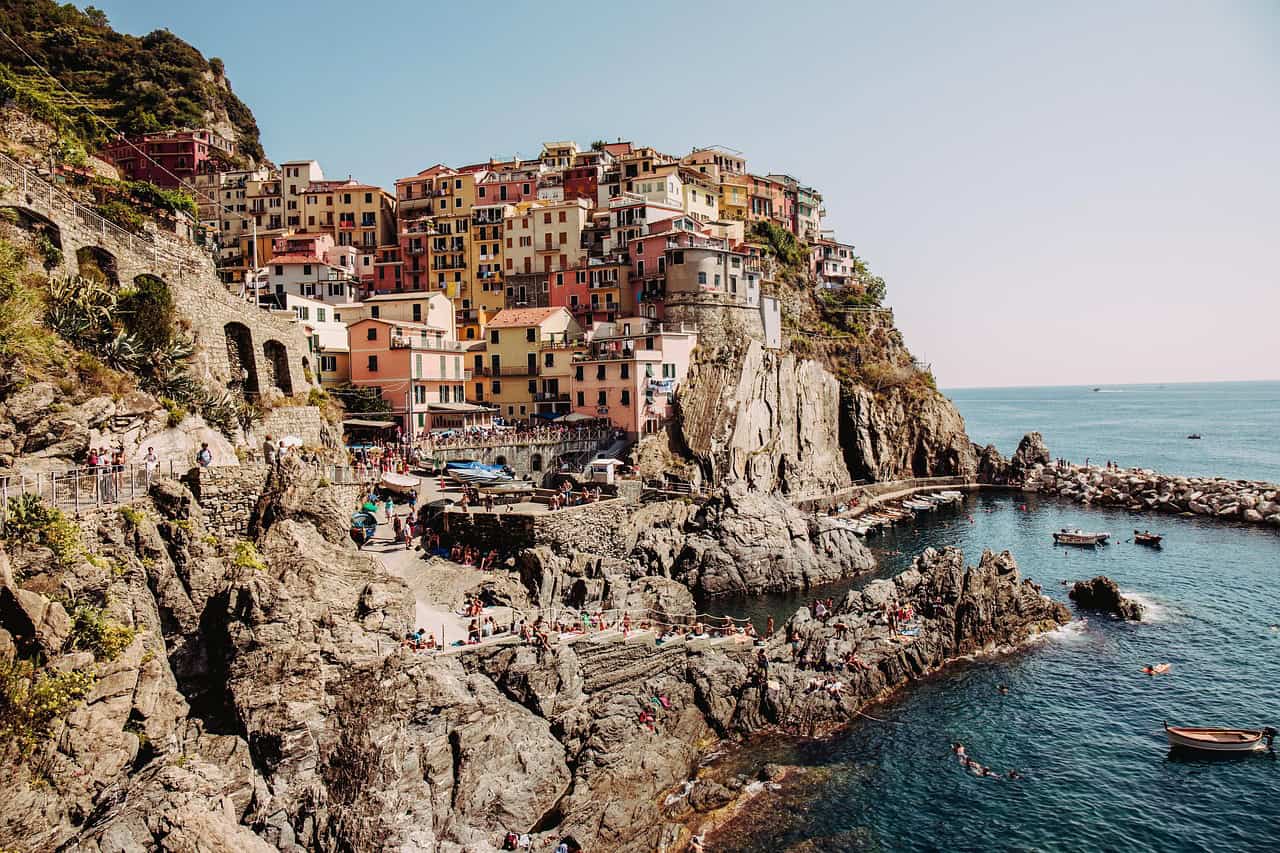
Manarola clings to the Ligurian coastline at an elevation of roughly 70 meters above the Mediterranean Sea. Founded in the 12th century, it is one of the oldest villages in Cinque Terre and has a population of about 350 residents. Colorful houses stack vertically on steep rock, connected by stairways rather than roads. Vineyards once covered much of the surrounding slopes, supported by stone terraces stretching for kilometers. From the sea, the village looks like a cascade of color frozen mid-fall, while waves crash over 10 meters below the lowest foundations.
5. Moustiers-Sainte-Marie, France
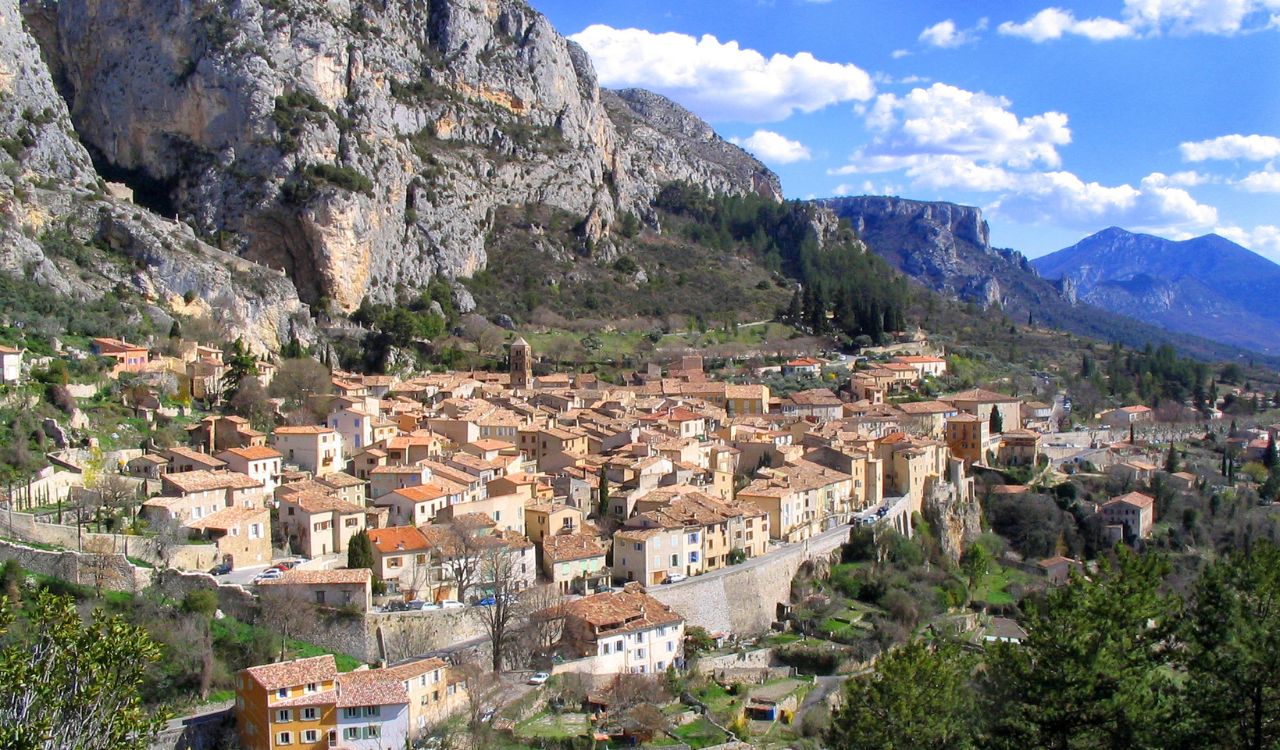
Moustiers-Sainte-Marie lies at the entrance of the Verdon Gorge, nestled between two limestone cliffs that rise nearly 400 meters. The village sits at an altitude of about 630 meters and is home to roughly 700 people. A gold star, measuring around 1.25 meters wide, hangs from a chain suspended between the cliffs, a tradition dating back over 300 years. Stone houses descend gently toward a central stream, while chapels and paths climb upward. The surrounding cliffs dominate every view, making the village feel protected yet dramatically exposed.
6. Èze, France
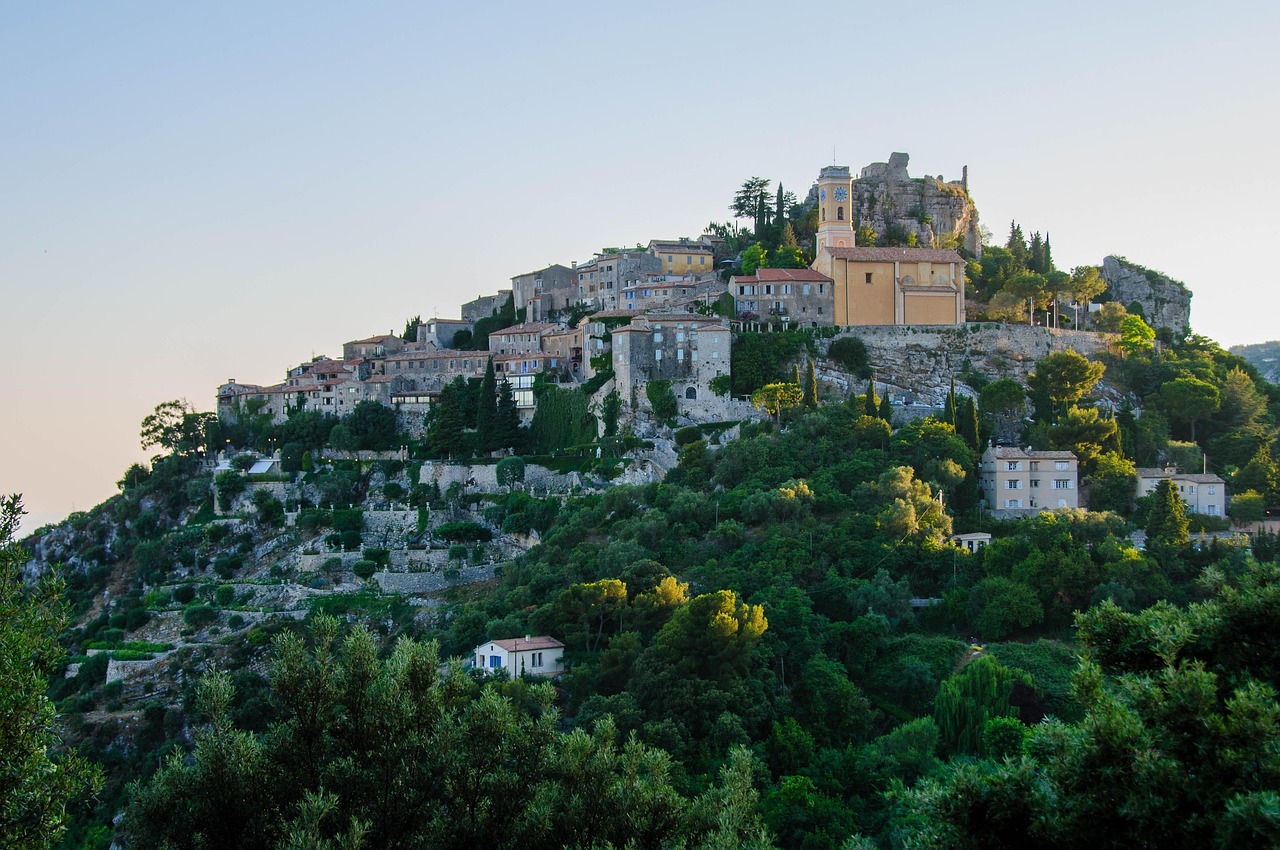
Èze is perched high above the French Riviera at approximately 429 meters above sea level, offering views that extend over 20 kilometers on clear days. With a population of fewer than 2,000, the village preserves its medieval layout of winding stone alleys and arched passages. Buildings date from the 14th century onward, constructed directly into rocky slopes. The Exotic Garden at the summit covers about 1 hectare and marks the highest point. From below, Èze appears carved from the cliff itself, blending architecture seamlessly into rugged stone.
7. Monsanto, Portugal
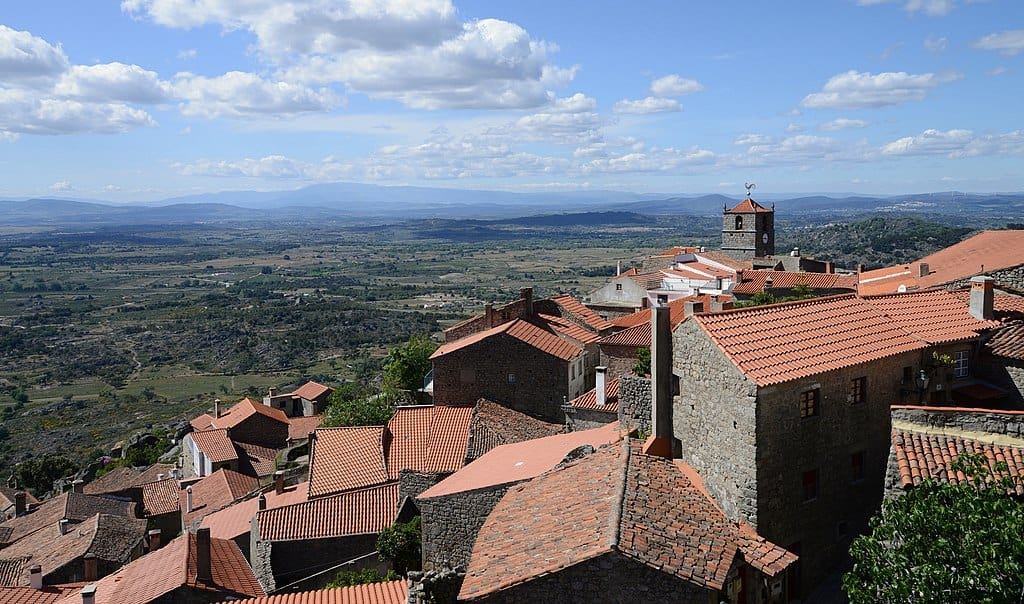
Monsanto crowns a granite hill rising about 758 meters above sea level near Portugal’s eastern border. The village has fewer than 1,000 residents and is famous for homes built around massive boulders weighing several tons each. Some rocks serve as walls, others as roofs, creating structures that seem prehistoric. The settlement developed over centuries, with visible layers from Roman, medieval, and modern periods. Narrow paths wind between stones and houses, leading to a ruined fortress at the summit. Monsanto feels less built than discovered, as if people adapted to the landscape rather than reshaping it.
8. Pienza, Italy
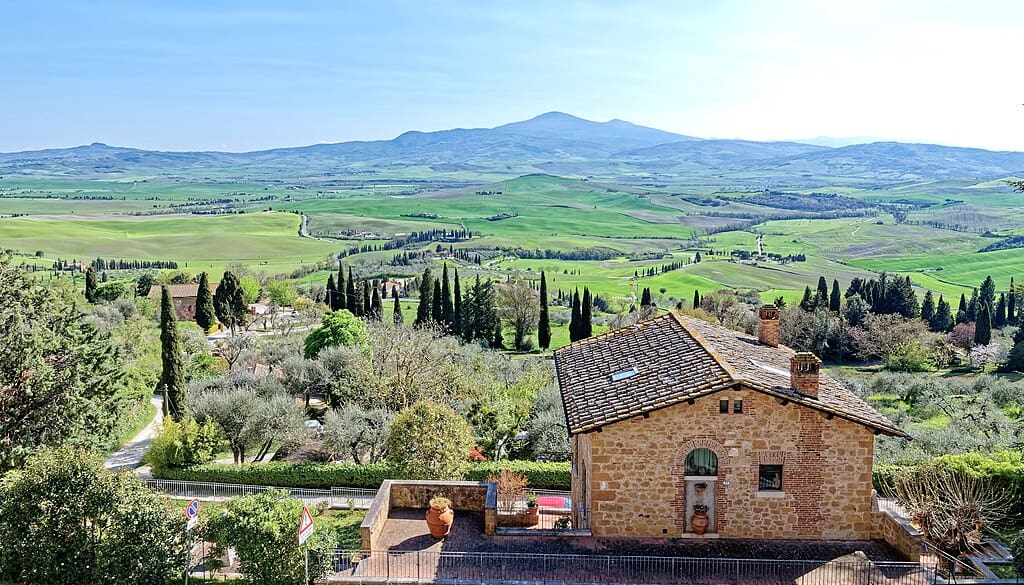
Pienza stands on a hill at roughly 491 meters above sea level, overlooking the Val d’Orcia in Tuscany. Unlike most hilltop villages, it was deliberately redesigned in the 15th century as an “ideal Renaissance city.” Home to about 2,100 residents, Pienza features balanced proportions, wide streets, and harmonious stone architecture. Key landmarks, including the cathedral and main square, were completed within just four years. The village’s alignment frames the countryside in measured views, making it feel unreal not through drama, but through its near-mathematical sense of perfection.