We may earn money or products from the companies mentioned in this post. This means if you click on the link and purchase the item, I will receive a small commission at no extra cost to you ... you're just helping re-supply our family's travel fund.
Snow usually follows seasons, but along the world’s highest and coldest trail corridors, it refuses to disappear. These snow-line routes sit so high, so far north, or so close to permanent ice that snow lingers in some form every month of the year. From glacier-fed valleys to polar plateaus, these trails offer hikers the rare chance to touch winter even in midsummer. Below are seven remarkable snow-line trails where altitude, latitude, and climate combine to keep snow a constant companion. Each delivers not just scenery, but a deeper understanding of how fragile and powerful frozen landscapes truly are.
1. Harding Icefield Trail : Alaska, USA
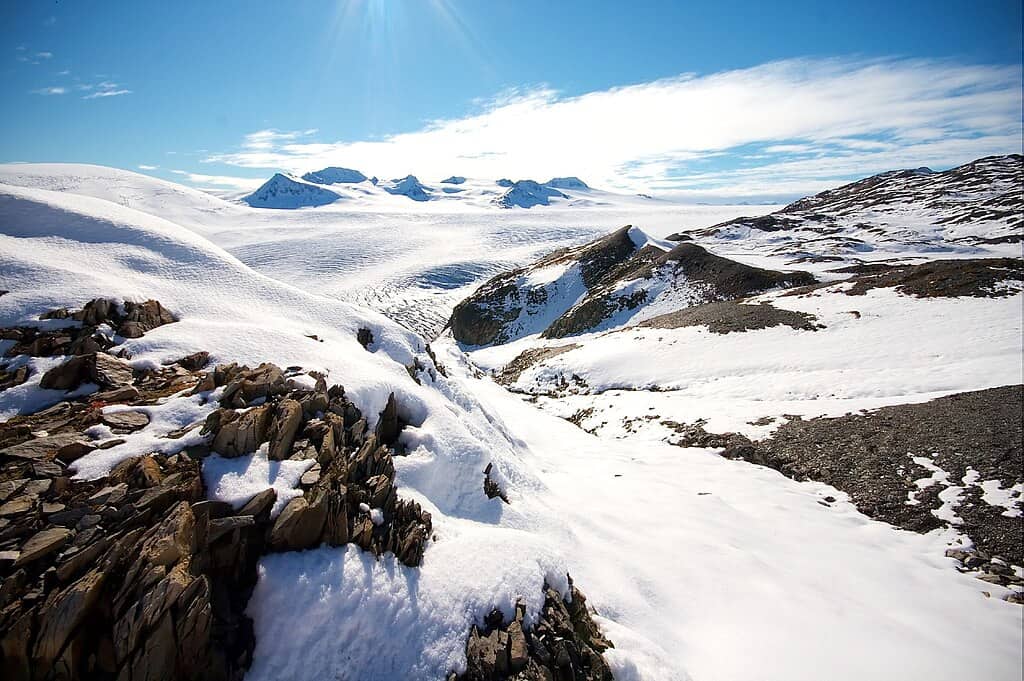
Rising from sea level to nearly 1,200 meters, the Harding Icefield Trail in Kenai Fjords National Park leads hikers straight toward a frozen expanse covering over 1,800 square kilometers. The 14.5 km round-trip climb passes through rainforest before breaking into alpine tundra where snowfields persist even in July. At the upper viewpoints, temperatures can drop below 0°C year-round, and winds regularly exceed 40 km/h. The icefield feeds more than 30 named glaciers, ensuring visible snow and ice in every season. Wildlife sightings average 5–7 species per hike, including mountain goats and marmots.
2. Hooker Valley Track : Aoraki / Mount Cook, New Zealand
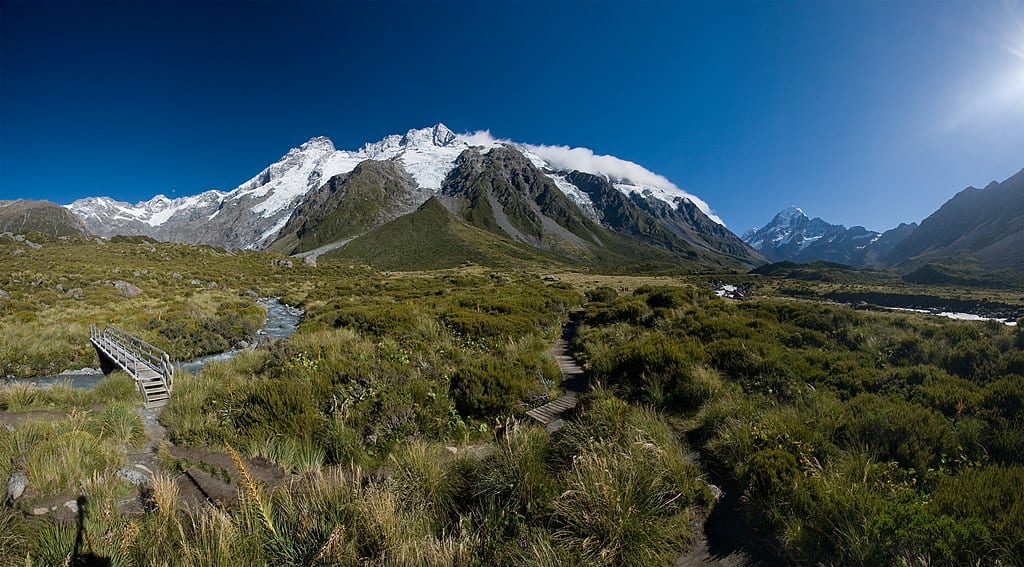
This 10 km out-and-back trail sits beneath New Zealand’s tallest peak at 3,724 meters, keeping snow within view throughout the year. While the path itself stays relatively low at around 760 meters, it ends at Hooker Lake, where icebergs calved from Hooker Glacier float even in summer. Average summer temperatures hover near 12°C, yet snow blankets surrounding peaks permanently. The trail crosses three swing bridges and gains only 100 meters in elevation, making it accessible while still dramatic. Annual snowfall at higher elevations exceeds 7 meters, sustaining glaciers year-round.
3. Franz Josef Glacier Valley Walk : New Zealand
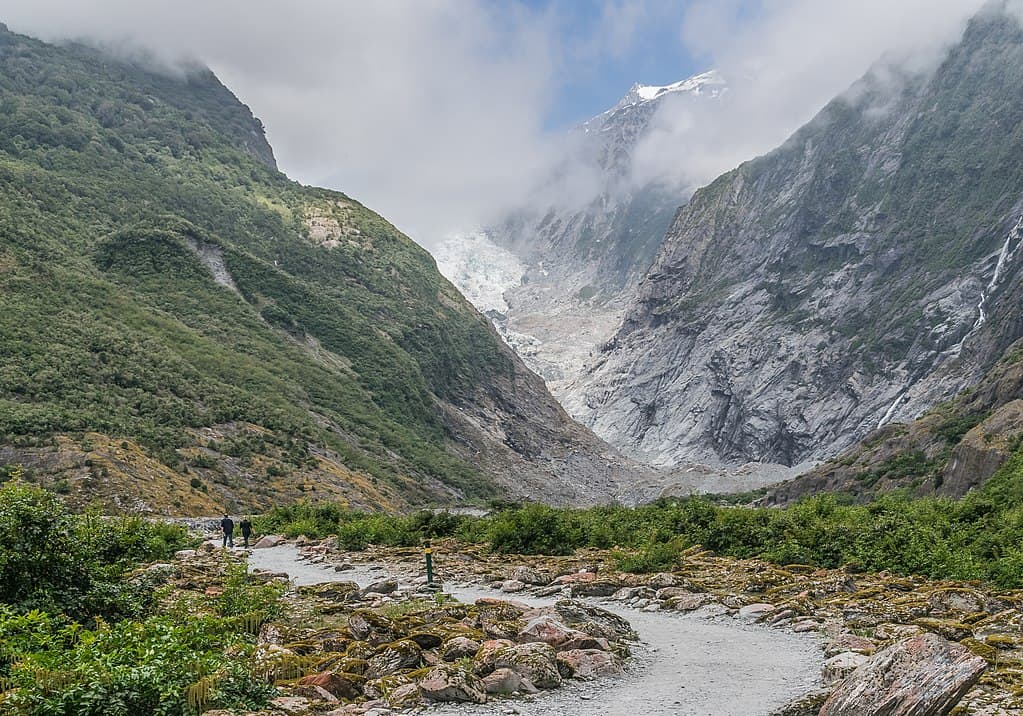
The Franz Josef Glacier descends from over 3,000 meters to just 300 meters above sea level, one of the lowest glacier termini on Earth. This 3 km valley walk brings hikers within viewing distance of ice that survives year-round due to high snowfall averaging 5–8 meters annually. Even during summer months, compacted snow and ice dominate the upper valley. Rainfall exceeds 6,000 mm per year, feeding rapid ice movement of up to 70 cm per day. Temperatures rarely exceed 18°C, preserving the glacier’s frozen character in all seasons.
4. Grinnell Glacier Trail : Montana, USA
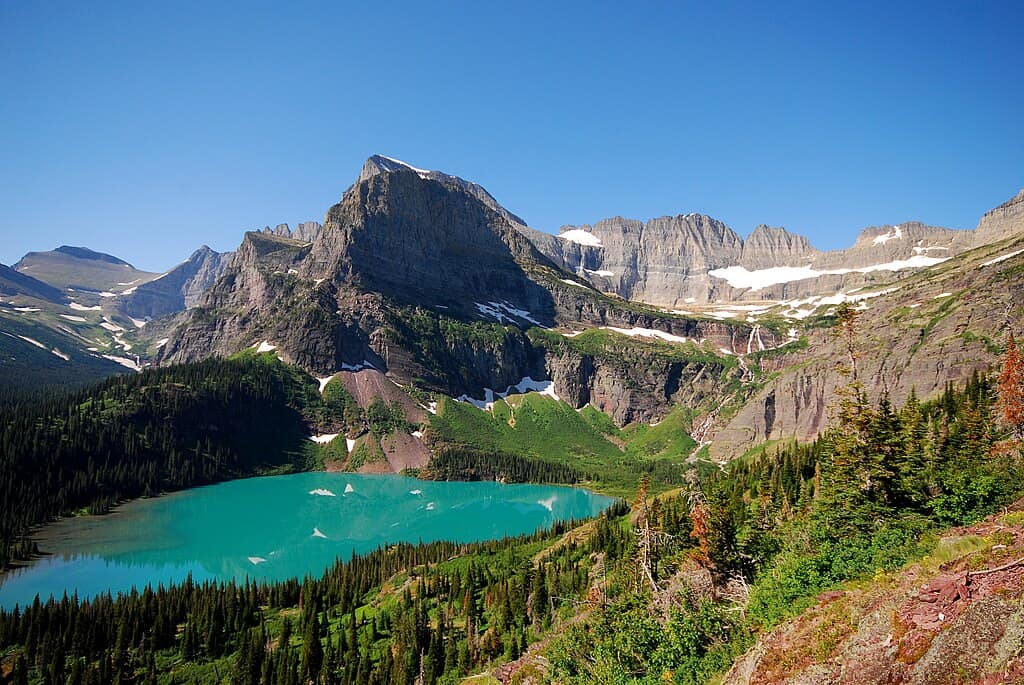
Located in Glacier National Park, this 18 km round-trip trail climbs to 2,000 meters, ending beside the shrinking but still snow-covered Grinnell Glacier. Snow often lingers on shaded sections until early July, and the glacier itself retains ice year-round despite regional warming. Elevation gain reaches 550 meters, with average summer temperatures around 15°C. The glacier once covered 2 km²; today it spans roughly 0.3 km² but remains visibly icy. Hikers frequently encounter snow patches even in August, especially after late storms.
5. Kungsleden (Northern Sections) : Sweden
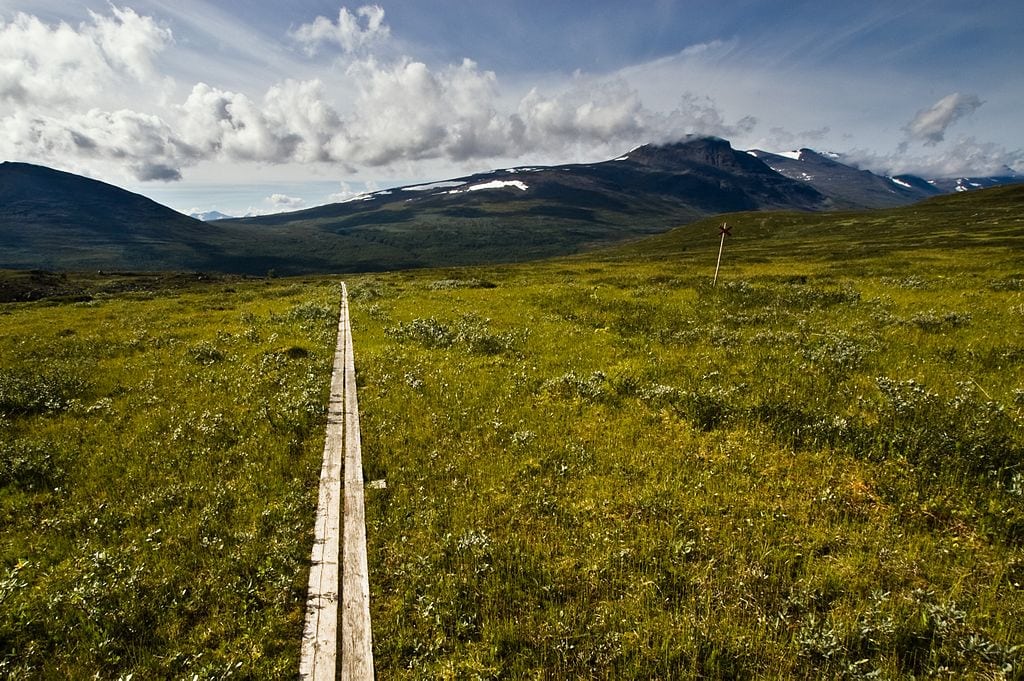
Above the Arctic Circle, the northern stretches of Kungsleden run for over 440 km through terrain where snow can fall in any month. Even in July, average temperatures stay near 10°C, and lingering snowfields remain above 900 meters. The trail crosses wide plateaus, frozen rivers, and mountain passes where winter conditions return quickly. Annual snowfall exceeds 3 meters in higher sections, and daylight lasts 24 hours in summer. Snow persists longest near Tjäktja Pass at 1,150 meters, making this a true all-season snow-line experience.
6. O Circuit (Glacier Sections) : Torres del Paine, Chile
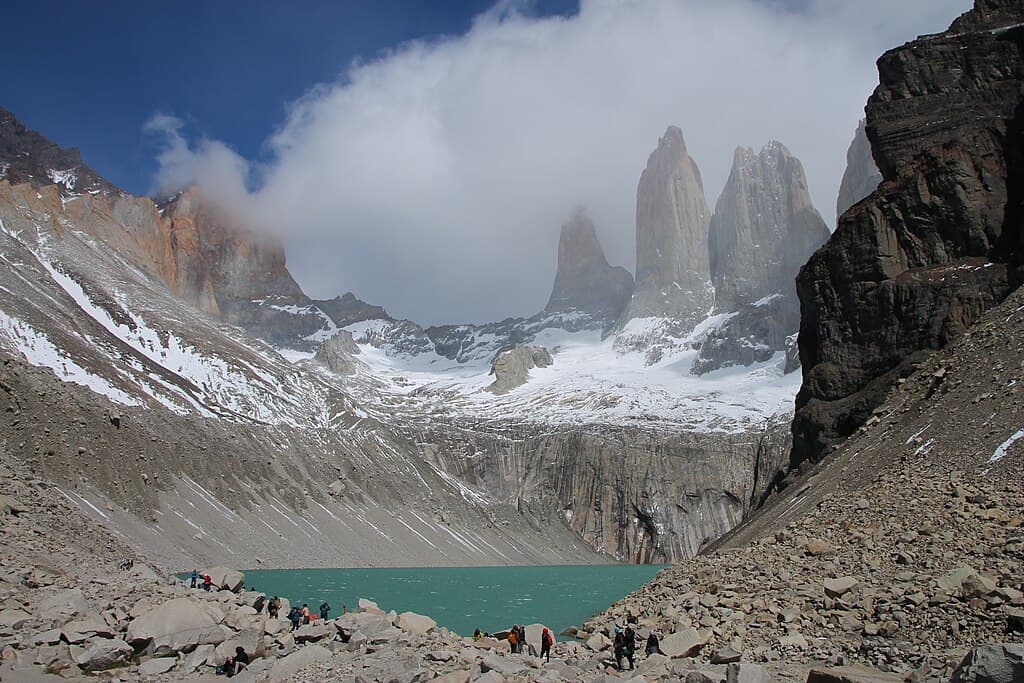
Patagonia’s O Circuit spans roughly 130 km, with its highest passes reaching 1,200 meters near the Southern Patagonian Ice Field. This ice mass covers about 12,000 km², feeding glaciers visible from multiple trail sections. Even in summer, daytime temperatures average just 11°C, while snowstorms can strike unexpectedly. The John Gardner Pass frequently holds snow year-round due to strong winds and constant ice accumulation. Annual precipitation surpasses 4,000 mm, reinforcing permanent snowfields that define the trail’s dramatic, frozen skyline.
7. Rob Roy Glacier Track : Mount Aspiring, New Zealand
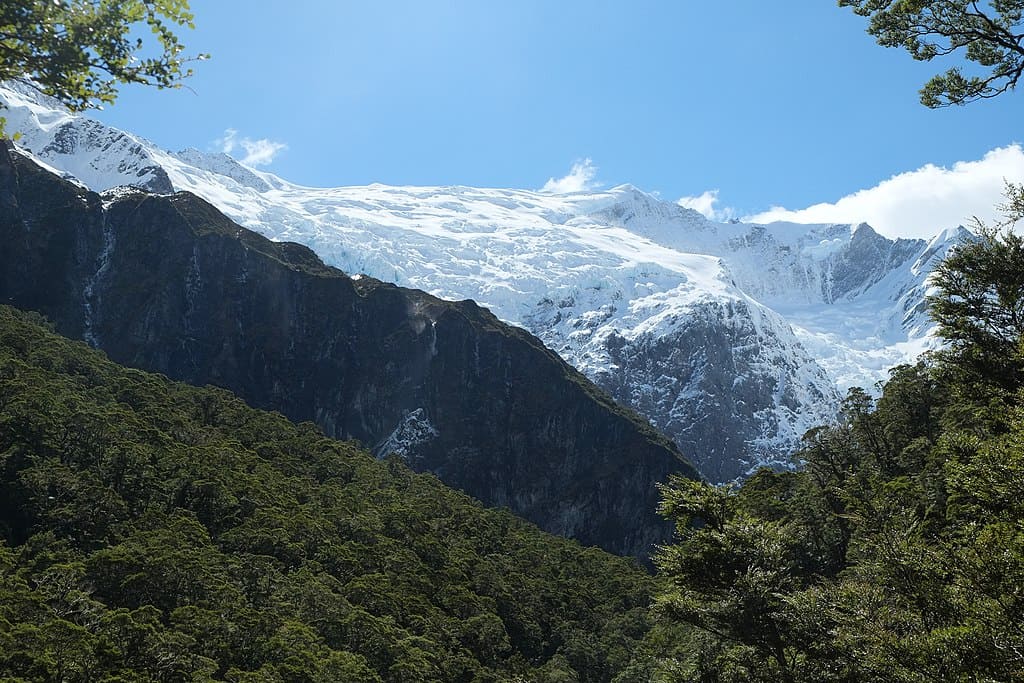
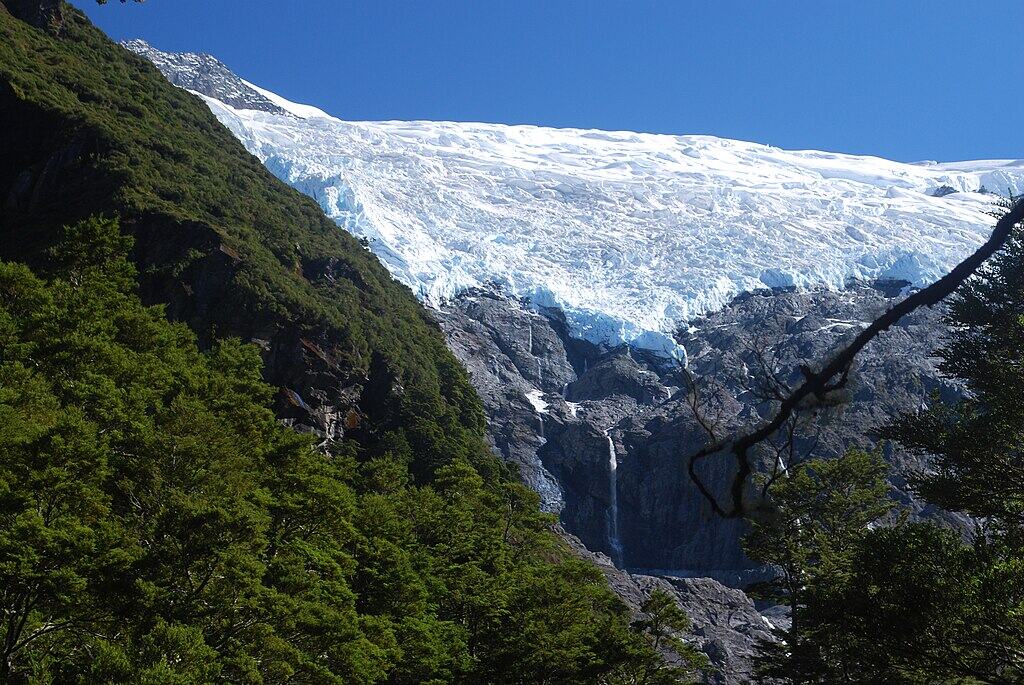
This 10 km return hike climbs to around 1,050 meters, ending beneath the hanging Rob Roy Glacier. Fed by peaks over 2,600 meters high, the glacier retains snow and ice in every season. Average summer temperatures range from 10–14°C, yet avalanches of snow are common year-round from the surrounding walls. The valley receives over 3 meters of snowfall annually at higher elevations. Despite moderate elevation gain of 400 meters, hikers consistently encounter snow-covered slopes, glacial ice, and frozen waterfalls even outside winter.