Yellowstone in October Costs Half What August Does and Has One-Third the People. Here’s the Real Tradeoff
We may earn money or products from the companies mentioned in this post. This means if you click on the link and purchase the item, I will receive a small commission at no extra cost to you ... you're just helping re-supply our family's travel fund.
Yellowstone National Park receives over 4 million visitors a year, most of them between June and August. The experience those visitors have — bumper-to-bumper on the Grand Loop, 40-minute waits at Old Faithful, parking lots full before 9 AM — is real, but it’s not the only Yellowstone. October Yellowstone is another park entirely: cold, quieter, and extraordinary in specific ways that summer crowds make impossible to experience.
What October Yellowstone Actually Offers
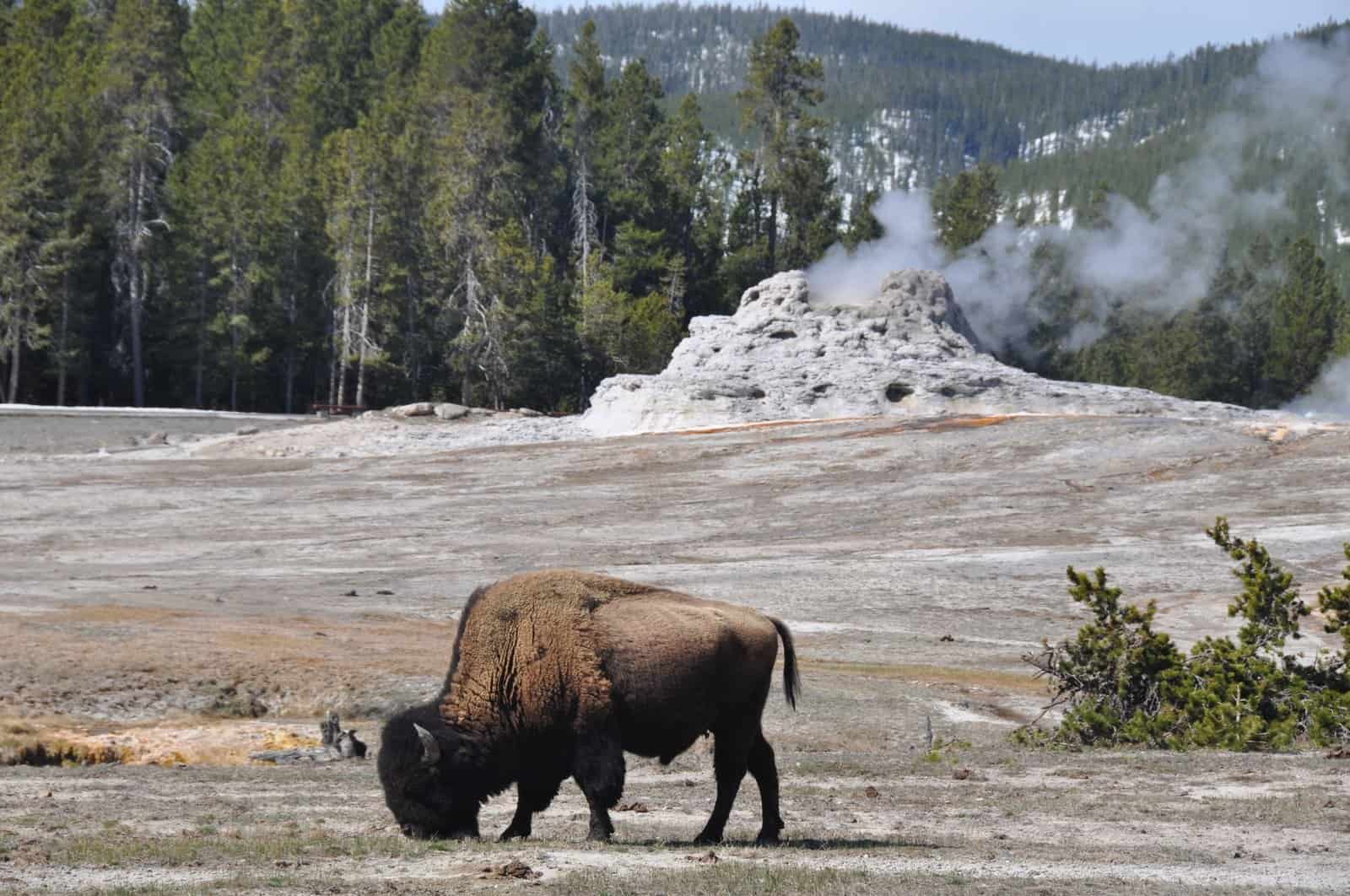
The bull elk rut peaks in late September through mid-October. Bull elk bugling in the predawn and at dusk is one of the most dramatic wildlife sounds in North America, and the territorial behavior — bulls herding their harems, mock charges, occasionally real combat — is on full display in Mammoth Hot Springs and the Gardiner basin areas of the park. Watching a 700-pound bull elk move through a thermal basin in October morning fog is not something that happens in August tourist season in the same way.
Wolf sightings increase in fall as prey behavior changes and the packs move more actively across the Lamar Valley. The Lamar Valley is accessible in October and the combination of reduced traffic, autumn aspen color on the valley hillsides, and active wildlife movement makes early morning October drives through the Lamar among the most rewarding wildlife experiences available to any American visitor anywhere.
The Accommodation and Cost Difference
Inside the park (where available):
- Most park lodges close mid-October — the Mammoth Hot Springs Hotel and Cabins stays open through mid-November
- Mammoth Hotel October rate: $140–$210/night versus $250–$350 in peak summer
- Campgrounds: most close by late September, Lewis Lake Campground often the last open
Gateway towns (better value base):
- Gardiner, Montana (north entrance): $100–$160/night in October, versus $180–$280 in summer
- West Yellowstone: similar fall discounts; some restaurants and services close mid-October
- Cody, Wyoming (east entrance): $90–$150/night, less convenient but significant savings
What You’re Giving Up in October
The honest tradeoffs:
- Some roads close as early as mid-October — the Dunraven Pass road (Tower to Canyon) closes seasonally; check the park website for current closure status before planning routes
- Snow is possible (and likely above 7,000 feet) at any point in October — bring real cold-weather layers
- Several Yellowstone facilities (restaurants, visitor centers, ranger programs) reduce hours or close
- The geysers and hot springs look more spectacular in cold weather (steam more visible), but the boardwalks can be icy
The argument for October Yellowstone is simple: you trade mild weather and full services for dramatic wildlife behavior, lower costs, and a park experience where you can stand at the edge of the Grand Prismatic Spring overlook without 200 other people beside you. For anyone who’s visited Yellowstone in July and felt like they were seeing it through a crowd, October is the version that answers the question of what the park is actually like when it’s just you and the geysers and the elk and the predawn cold.
Yellowstone in October — What the Fall Visit Offers
October in Yellowstone provides wildlife viewing that the peak-summer experience doesn’t. The bison rut is ending, but elk rut is at full intensity — bull elk bugling in the Lamar Valley and Madison Valley at dawn in late September and October produces one of the most aurally dramatic wildlife experiences in North America. The Lamar Valley in early morning is the best single wildlife viewing corridor in the United States accessible by road — bison herds, wolf packs, grizzly bears preparing for hibernation, and the bugling elk create a density of large mammal activity that no safari guide in the American West can guarantee but that Lamar Valley in October delivers consistently.
The thermal features — Old Faithful, Grand Prismatic Spring, Norris Geyser Basin — are more dramatically photographed in cold weather, when the steam and heat are more visually distinctive against the October sky than in warm summer air. Old Faithful erupts approximately every 90 minutes and the October crowd around the viewing boards is 70% smaller than July’s. The Firehole River section of the park, where geothermal warming creates a natural swimming hole open July through early September, is closed by October — but the drive along the Firehole through the geyser basins in October fog is one of the most atmospheric experiences in the park.