White Sands Is the World’s Largest Gypsum Dunefield. 8 Things to Know Before a Winter Visit
We may earn money or products from the companies mentioned in this post. This means if you click on the link and purchase the item, I will receive a small commission at no extra cost to you ... you're just helping re-supply our family's travel fund.
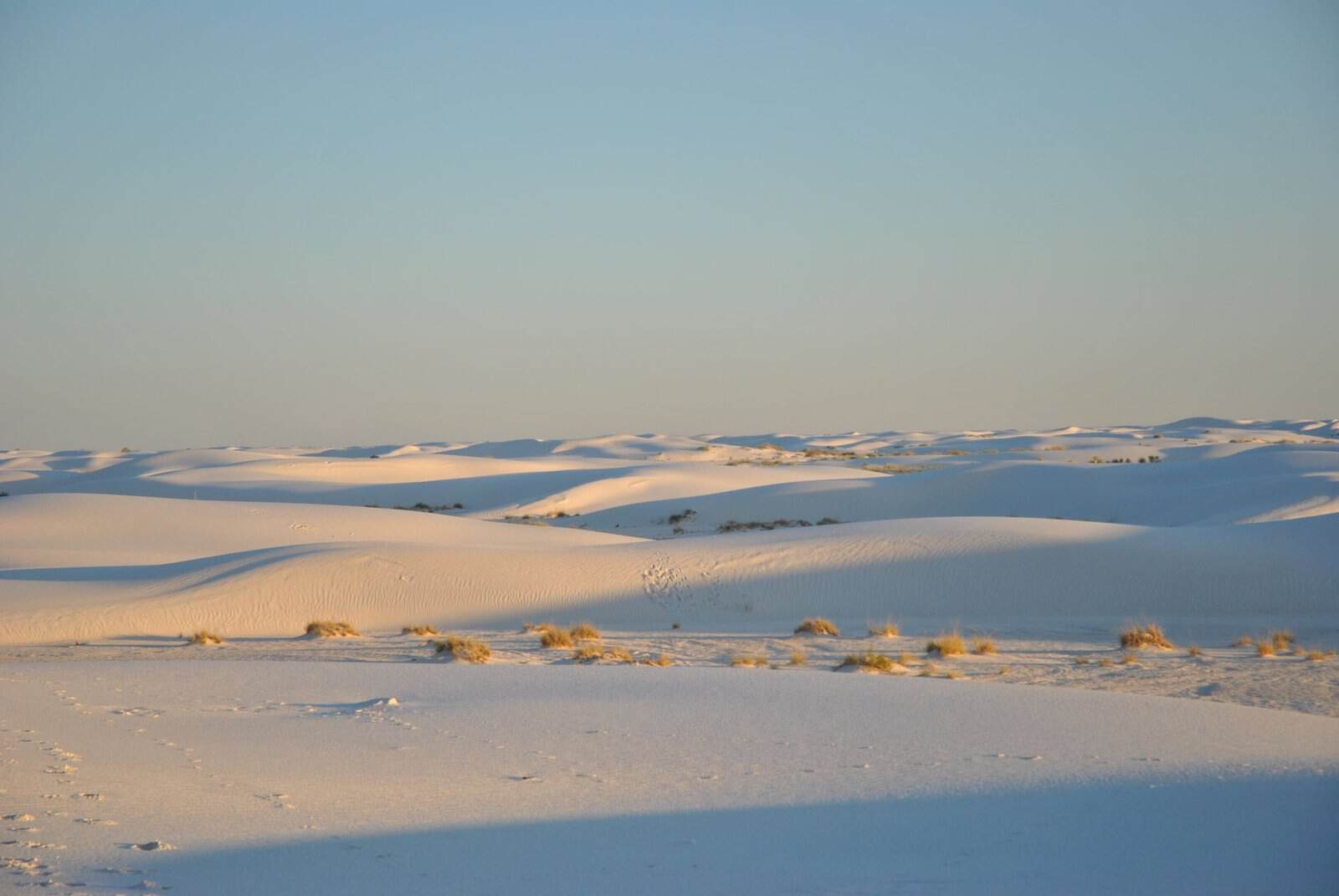
White Sands National Park in winter is one of the most striking places in the Southwest to spend a cold, clear day. The dunes in New Mexico’s Tularosa Basin are made of gypsum, not quartz, and according to the National Park Service, they cover 275 square miles of desert. That makes this the world’s largest gypsum dunefield.
President Herbert Hoover first protected the area as White Sands National Monument in 1933, and it became a national park in December 2019. The park preserves a major portion of the dunefield, along with plants and animals adapted to life on shifting white sand. The NPS notes that the dunefield is large enough for astronauts to use as a geographic reference from space.
Winter brings a different version of the park: cold mornings, short days, crisp light, and far fewer visitors than in spring. Here are eight things to know before you go.
Planning a trip to White Sands National Park in winter
White Sands sits between Alamogordo and Las Cruces in southern New Mexico, at an elevation of about 4,000 feet. The visitor center is just off U.S. 70, about 15 miles southwest of Alamogordo and roughly an hour northeast of Las Cruces. The closest major airport is El Paso International, about a 90-minute drive.
Winter here usually means sunny days with highs in the 50s or 60s Fahrenheit and nights that fall below freezing. Storms are less frequent than in other seasons, but wind and occasional snow can occur.
1. Missile tests can close the park and the highway
White Sands National Park is surrounded by White Sands Missile Range, an active military testing area. During some tests, Dunes Drive and U.S. 70 between Las Cruces and Alamogordo can close temporarily, typically for up to a few hours, for safety. Visitors already in the park may be asked to wait or leave the area.
The park posts scheduled closures on its website and social media. Check them before you plan your day, especially if you are driving in from Las Cruces on U.S. 70. Build some flexibility into your schedule in case of a closure.
2. Nights get cold, and mornings start below freezing
Winter nights in the Tularosa Basin often fall into the 20s Fahrenheit, and sometimes lower. If you arrive at sunrise, expect frost and cold wind on the dunes. By midday, temperatures usually warm up to comfortable hiking weather.
Dress in layers. A warm jacket, hat, and gloves are essential for sunrise or sunset visits. Many visitors start the day bundled up and end it in a light fleece.
3. The sand stays cool, even in the sun
Unlike quartz sand, which can get scorching hot, gypsum sand reflects much of the sun’s energy and stays relatively cool. In winter, the sand can feel cold to the touch, especially in the morning and in shaded dune troughs.
Some visitors like to walk barefoot on the dunes in warmer months. In winter, you will want shoes or boots with socks. Waterproof footwear helps if there has been rain or snow, since damp gypsum can stick to everything.
4. Days are short, and the park has set hours
In December and January, sunset in southern New Mexico comes before 5:30 p.m. Mountain Time. The park’s entrance gate and Dunes Drive have set hours that change seasonally, and visitors must leave by closing time unless they have a backcountry camping permit.
Plan your hikes so you return to your car well before the park closes. Sunset on the dunes is spectacular, but you need to time it carefully with the closing hour. Check the NPS operating hours page for current times.
5. Sledding is allowed, with a few rules
One of the most popular things to do at White Sands is sledding down the dunes on plastic snow saucers. You can buy saucers and wax at the gift shop near the visitor center, or bring your own. Waxing the bottom of the sled helps it slide on gypsum.
The NPS asks sledders to choose dunes without vegetation at the bottom and away from roads and parking areas. Avoid steep dune faces with objects at the bottom. Sledding works best on the steeper slip faces of dunes in the heart of the dunefield along Dunes Drive.
6. Dunes Drive is the main way to see the park
Dunes Drive is an 8-mile scenic road from the visitor center into the heart of the dunefield, making a 16-mile round trip. The first few miles are paved. Deeper into the dunes, the road is made of packed gypsum, which is generally fine for regular cars but can be slick after rain or snow.
Along the drive, you will find pullouts, picnic areas with shaded shelters, and trailheads. The road ends in a loop deep in the dunes where you can park and explore on foot.
7. Backcountry camping requires a permit
White Sands has no developed campground, but it offers primitive backcountry campsites along a marked trail in the dunes. You need a permit, which you can reserve ahead of time. Winter camping on the dunes means very cold nights, so bring a sleeping bag rated well below freezing.
Backcountry campsites can close during missile tests, and permits are limited. If you want to camp, check availability early and be prepared for changes.
8. It is easy to get disoriented in the dunes
The dunefield looks the same in every direction once you leave the road. Footprints can blow away quickly in the wind, and dunes block the view of landmarks. Many visitors underestimate how easy it is to lose their way.
Stay on marked trails, follow the trail markers carefully, and carry a map or GPS. Bring plenty of water, even in winter, because the dry air and reflected sunlight can dehydrate you. Tell someone your plans if you are going on a longer hike.
The best trails for a winter visit
White Sands has several trails that work well in cool weather:
- Interdune Boardwalk: A short, accessible boardwalk through the dunes with interpretive signs. Good for families and anyone with limited mobility.
- Dune Life Nature Trail: A one-mile loop with signs about the animals and plants that live in the dunes.
- Playa Trail: A short, flat walk to a seasonal lake bed, or playa, that sometimes holds water after rain.
- Backcountry Camping Trail: A two-mile loop through tall dunes that is also the route to backcountry campsites.
- Alkali Flat Trail: A strenuous five-mile loop over dunes to the edge of the dry lakebed that was once part of ancient Lake Otero.
Winter is a good time to tackle the Alkali Flat Trail because the heat that makes it dangerous in summer is gone. Start early and give yourself plenty of time.
Sunrise, sunset, and moonlight
White Sands is known for its light. At sunrise and sunset, the dunes take on pink, orange, and lavender tones, and shadows stretch across the ripples. Winter’s clear skies often make for especially vivid colors.
The park sometimes offers special evening programs, including full moon events, depending on staffing and season. Check the NPS events page to see if anything is scheduled during your visit.
Where the gypsum comes from
The white sand comes from gypsum dissolved in water flowing from the mountains around the Tularosa Basin. Because the basin has no outlet to the sea, water collects in low areas and evaporates, leaving behind gypsum crystals called selenite. Wind breaks those crystals into smaller grains and blows them into dunes.
This process is still happening, which is why the dunefield is considered active. Some dunes move up to 30 feet a year, and the shape of the park’s landscape is constantly changing.
Pairing White Sands with nearby stops
White Sands works well as part of a larger southern New Mexico trip. Nearby options include:
- Alamogordo: Home of the New Mexico Museum of Space History, with exhibits on the region’s role in rocketry and space exploration.
- Cloudcroft: A small mountain village about 20 miles east of Alamogordo at nearly 9,000 feet. In winter, it can have snow when the dunes below are sunny.
- Las Cruces: New Mexico’s second-largest city, with the historic plaza of Mesilla next door and plenty of restaurants serving New Mexican food.
- Organ Mountains-Desert Peaks National Monument: Jagged peaks east of Las Cruces with hiking trails that are pleasant in winter.
Driving from the dunes up to Cloudcroft in a single afternoon shows how dramatically elevation changes the landscape in this part of the state.
Practical tips for winter visitors
A few final notes:
- Wear sunglasses. The white sand reflects intense sunlight and can cause eye strain.
- Use sunscreen. You can sunburn even in winter, especially with reflected light.
- Bring water and snacks. There is no food service in the dunes.
- Pack a warm layer, even on sunny days.
- Fill up on gas in Alamogordo or Las Cruces before you go.
- Plan around potential missile-test closures.
The bottom line
White Sands is the world’s largest gypsum dunefield, and winter is one of the best times to see it. The key is planning: check for missile-test closures, dress for cold mornings, time your visit with the park’s hours, and stick to marked trails. Do that, and you get bright white dunes under a winter sky, with far fewer people than you would find in spring.