We may earn money or products from the companies mentioned in this post. This means if you click on the link and purchase the item, I will receive a small commission at no extra cost to you ... you're just helping re-supply our family's travel fund.

Bali often feels gentle at first glance. Narrow roads wind past temples, offerings sit quietly at doorsteps, and daily life moves with a calm rhythm that invites wandering. That ease can be misleading. Beneath it sits a clear structure of customs and expectations that locals follow closely. In one recent case, a US tourist stepped into that structure without fully recognizing it. What began as a casual walk slowly turned into a serious situation shaped by small misjudgments, cultural friction, and the steady weight of local law.
A Walk That Crossed Into Sacred Ground

The tourist moved along what looked like a normal path, without clear signs marking a boundary or any visible warning that the space held deeper meaning. In Bali, sacred and public areas often sit side by side, blending into each other in ways that are not obvious to outsiders. What seemed like an open walkway was actually close to a place used for rituals and offerings. Entering or lingering there without awareness can be taken as disrespect, especially if preparations are underway. The setting itself remained quiet, but the meaning behind it carried far more weight than it first appeared.
Clothing That Didn’t Fit The Setting

Dress became part of the problem, even though it likely felt completely normal at the time. The tourist wore light, beach-appropriate clothing that works in many parts of Bali, especially near coastal areas. Near temples or ceremonial spaces, though, expectations shift quickly and quietly. Covered shoulders and a sarong are often expected as a sign of respect. When those signals are missing, it can create tension, not because of strict enforcement alone, but because of what the clothing communicates to people nearby. In that moment, appearance spoke before any words were exchanged.
A Conversation That Lost Its Balance
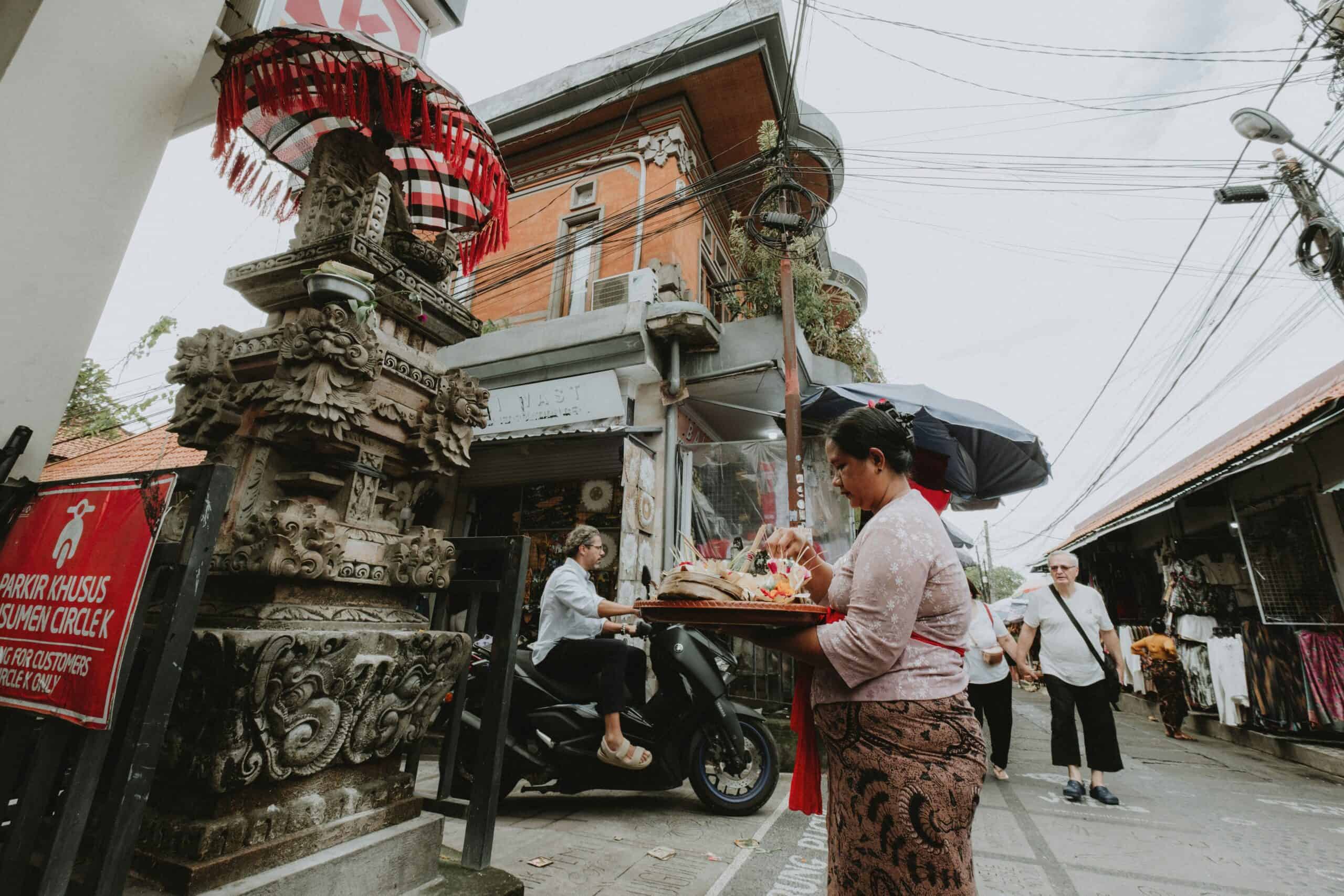
A local resident stepped in to explain the situation, but the exchange did not land the way either side likely expected. Language differences made it harder to understand tone, intent, and subtle cues that usually guide conversations. What might have been meant as a calm explanation began to feel like resistance or pushback. In Bali, conversations tied to respect are usually steady and measured, with an emphasis on keeping harmony. When that rhythm breaks, even slightly, it can change how both sides interpret what is happening, turning a simple correction into something more strained.
Local Laws Around Public Behavior

Indonesia has clear expectations around conduct in public, particularly in areas connected to religion and community life. Disturbances do not need to be loud or aggressive to cross a line under these standards. Once authorities viewed the situation as disruptive, they were required to respond accordingly. The arrest was not tied to a single action alone, but to how the entire situation was interpreted within local law. Context played a major role, turning what seemed minor into something legally significant.
Language Gaps Made It Harder

Communication remained a central challenge from beginning to end, shaping how each moment unfolded. Without a shared language, nuance was lost, and meaning became harder to carry across clearly. What the tourist may have intended as confusion or explanation could easily be read as refusal or indifference. In Bali, communication often relies on subtle cues beyond words, including tone and timing. When those cues do not align, misunderstandings can build quickly. That gap made it harder to resolve the situation calmly.
Attention Changed The Atmosphere

As more people gathered around the scene, the atmosphere shifted in a way that added pressure on everyone involved. Public attention can quickly turn a manageable situation into a tense one, especially in a close-knit setting. Authorities often act more decisively when a crowd forms, focusing on restoring order before things escalate further. For the tourist, the growing presence of onlookers likely added stress and confusion. That change in environment made it harder for the situation to settle down.
When A Simple Walk Turns Serious

What began as an easy, unplanned walk became a moment with lasting consequences that extended far beyond the initial setting. Bali remains a place known for warmth and openness, but it also carries clear expectations, especially in spaces tied to culture and belief. The incident shows how quickly things can change when those expectations are not fully understood. It is not about fear, but about recognizing that even relaxed places hold boundaries that matter in everyday life.