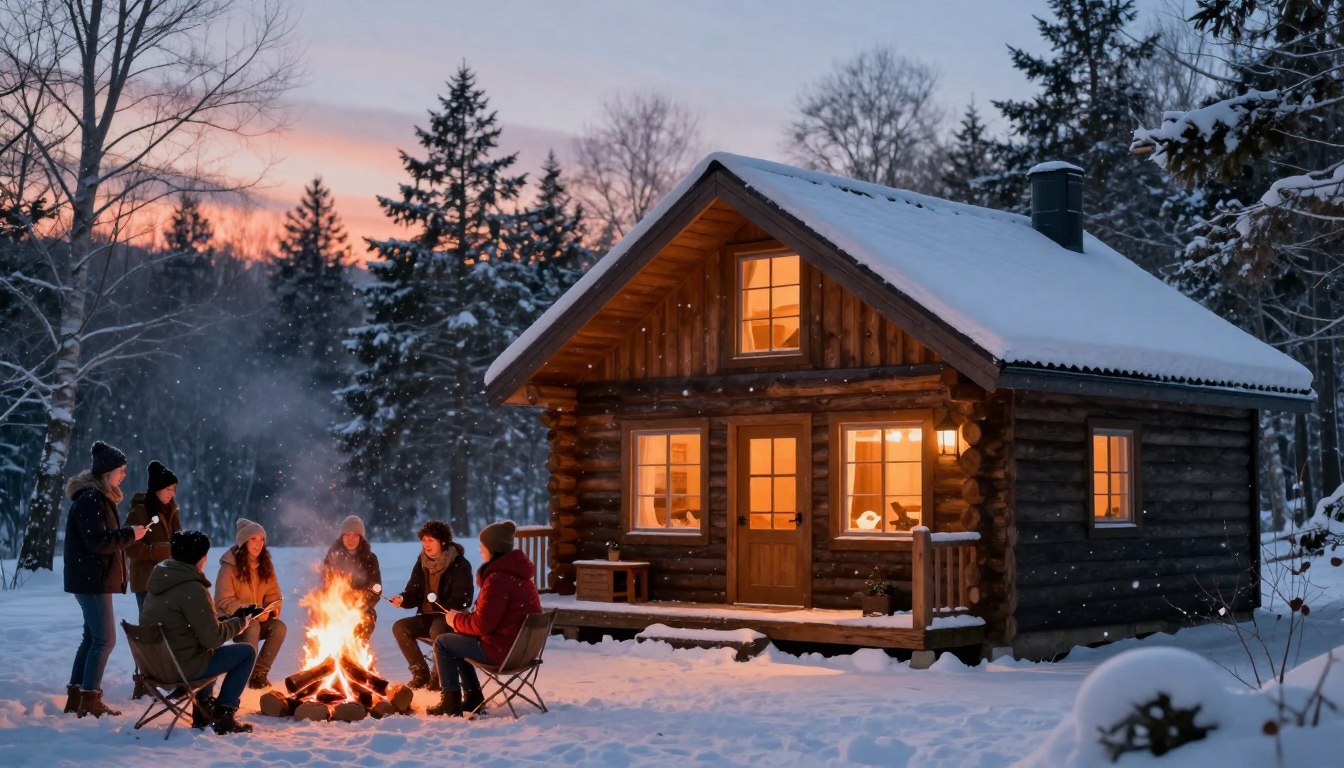
This Alaska Town Goes 65 Days Without Seeing the Sun. Here’s What Life Actually Looks Like in the Dark
We may earn money or products from the companies mentioned in this post. This means if you click on the link and purchase the item, I will receive a small commission at no extra cost to you ... you're just helping re-supply our family's travel fund.
Utqiagvik, Alaska, formerly known as Barrow and the northernmost city in the United States, experiences a polar night period lasting roughly 65 consecutive days each winter during which the sun never rises above the horizon at all, a stretch of continuous darkness from mid-November through late January that shapes essentially every aspect of daily life for the roughly 5,000 residents, most of them Alaska Native Iñupiat people, who call the city home year-round.
Utqiagvik’s remote location on Alaska’s North Slope, accessible only by air or sea with no road connection to the rest of Alaska’s highway system, combined with its role as the administrative and economic hub for the North Slope Borough’s oil-revenue-funded government, has created a genuinely unique small American city that operates according to a set of environmental and economic logic almost entirely unfamiliar to residents of the contiguous United States.
What Life Actually Looks Like During Polar Night
Utqiagvik’s polar night period requires residents to adapt their daily schedules and mental health strategies considerably differently than communities experiencing normal day-night cycles, with many residents using specialized light therapy lamps and maintaining strict daily routines specifically to manage the psychological effects of extended darkness, a challenge local health providers address through dedicated seasonal affective disorder treatment programs unusual in their necessity and scale even compared to other far-northern communities.
The return of sunlight in late January, marking the end of polar night, has become a genuine community celebration in Utqiagvik, with residents gathering to mark the sun’s reappearance above the horizon after over two months of continuous darkness, an event with deep cultural significance layered onto the practical relief of returning daylight.
How the City Functions Without Road Access
Utqiagvik has no road connection to the rest of Alaska’s highway system, meaning all supplies, from groceries to construction materials to fuel, arrive either by air year-round or by barge during the brief summer window when Arctic Ocean sea ice retreats enough to allow shipping access, a logistics reality that makes the cost of living in Utqiagvik substantially higher than almost anywhere else in the United States.
- Utqiagvik serves as the seat of the North Slope Borough, a local government funded substantially by oil revenue from North Slope petroleum production
- The city’s Iñupiat population maintains subsistence whaling and hunting traditions that remain central to the local economy and culture
- Grocery prices in Utqiagvik run considerably higher than the national average due to the logistics costs of shipping goods to such a remote location
- The North Slope Borough government funds substantial local infrastructure and services using oil tax revenue, providing a notably higher public service level than many comparably remote rural communities elsewhere in the country
The Oil Revenue That Funds Nearly Everything
The North Slope Borough’s tax revenue from oil production infrastructure on Alaska’s North Slope, including the massive Prudhoe Bay oil field, has funded substantial public infrastructure investment in Utqiagvik and other North Slope communities, including modern schools, healthcare facilities, and utilities that would be difficult to sustain in such a remote location without that dedicated revenue source.
This oil-funded public infrastructure has given Utqiagvik residents access to services and facilities considerably more developed than comparably remote communities elsewhere in rural Alaska or the broader circumpolar Arctic, even as the community continues to grapple with the environmental and cultural tensions inherent in an Iñupiat community whose modern public services depend substantially on the petroleum industry.
Why Few Outsiders Ever Visit
Utqiagvik receives relatively few tourists compared to more accessible Alaska destinations, given the cost and logistics of the additional flight required beyond even a typical Alaska trip, along with the area’s lack of conventional tourist infrastructure, though a small dedicated tourism niche exists around visitors specifically interested in experiencing the Arctic Ocean coastline, the polar night and midnight sun phenomena, and Iñupiat culture firsthand.
For most Americans, Utqiagvik remains an abstract fact rather than a place with any concrete association, despite being home to a genuinely distinctive American community that has adapted to environmental conditions almost entirely unfamiliar to the rest of the country’s population, a gap between the city’s genuine significance and its outside recognition common to many remote Arctic and sub-Arctic communities.
What This Means Looking Ahead
The trends described here are likely to continue evolving over the coming years, and the specific dynamics at play, economic, demographic, or environmental, will keep shaping how life in Utqiagvik during polar night develops going forward, making it worth continued attention from anyone with a genuine interest in the place or subject rather than a one-time curiosity.
For now, understanding the fuller context behind life in Utqiagvik during polar night gives a more accurate picture than the surface-level version most casual observers encounter, and that accuracy matters increasingly as more people make real decisions, about where to live, where to visit, or how to spend their money, based on incomplete or outdated impressions.
What Locals Say Compared to What Visitors Assume
Longtime residents familiar with life in Utqiagvik during polar night often describe a considerably more nuanced picture than outside visitors or casual observers typically assume, with the day-to-day reality involving tradeoffs and complications that don’t fit neatly into either an overly romanticized or overly dismissive narrative about the place.
That gap between local knowledge and outside perception shows up repeatedly across similar cases nationally, and it’s a useful reminder that life in Utqiagvik during polar night rewards a closer, more careful look rather than the quick surface judgment that most passing visitors or online commentary tend to settle for.
The Practical Takeaway for Anyone Paying Attention
Anyone planning to engage more seriously with life in Utqiagvik during polar night, whether as a visitor, a potential resident, or simply someone trying to understand the underlying dynamics accurately, benefits from looking past the most commonly repeated version of the story and toward the specific data and history that actually explain how things got this way.
That extra bit of research rarely takes long, and it consistently produces a more useful and more accurate understanding than relying on secondhand impressions, making it worth the modest additional effort for anyone whose decisions actually depend on getting life in Utqiagvik during polar night right.