The Texas Hill Country Has 50 Wineries, 3 State Parks, and Some of the Best Swimming Holes in the Country. Here’s How to See It Properly
We may earn money or products from the companies mentioned in this post. This means if you click on the link and purchase the item, I will receive a small commission at no extra cost to you ... you're just helping re-supply our family's travel fund.
The Texas Hill Country is the region that Texans drive to on weekends and don’t talk about nationally because they’d rather it not get crowded. The combination of limestone spring-fed rivers that run clear even in August, a wine industry that’s grown into legitimate quality, live oak and cypress landscapes that look nothing like the Texas of national imagination, and small towns with distinct German and Czech immigrant histories makes this one of the most underrated road trip destinations in the American South.
The Road Trip Logic: How to Structure a Hill Country Trip
The Hill Country core — Fredericksburg, Kerrville, Comfort, Boerne, New Braunfels, Wimberley, and Marble Falls — forms a rough triangle accessible from both Austin (1 hour northwest to Fredericksburg) and San Antonio (1 hour north to New Braunfels). A three-day trip can cover the central corridor: arrive via San Antonio, anchor in Fredericksburg or Kerrville, and loop back through Wimberley. A five-day trip allows proper time at the state parks and swimming holes that require more than an hour’s visit.
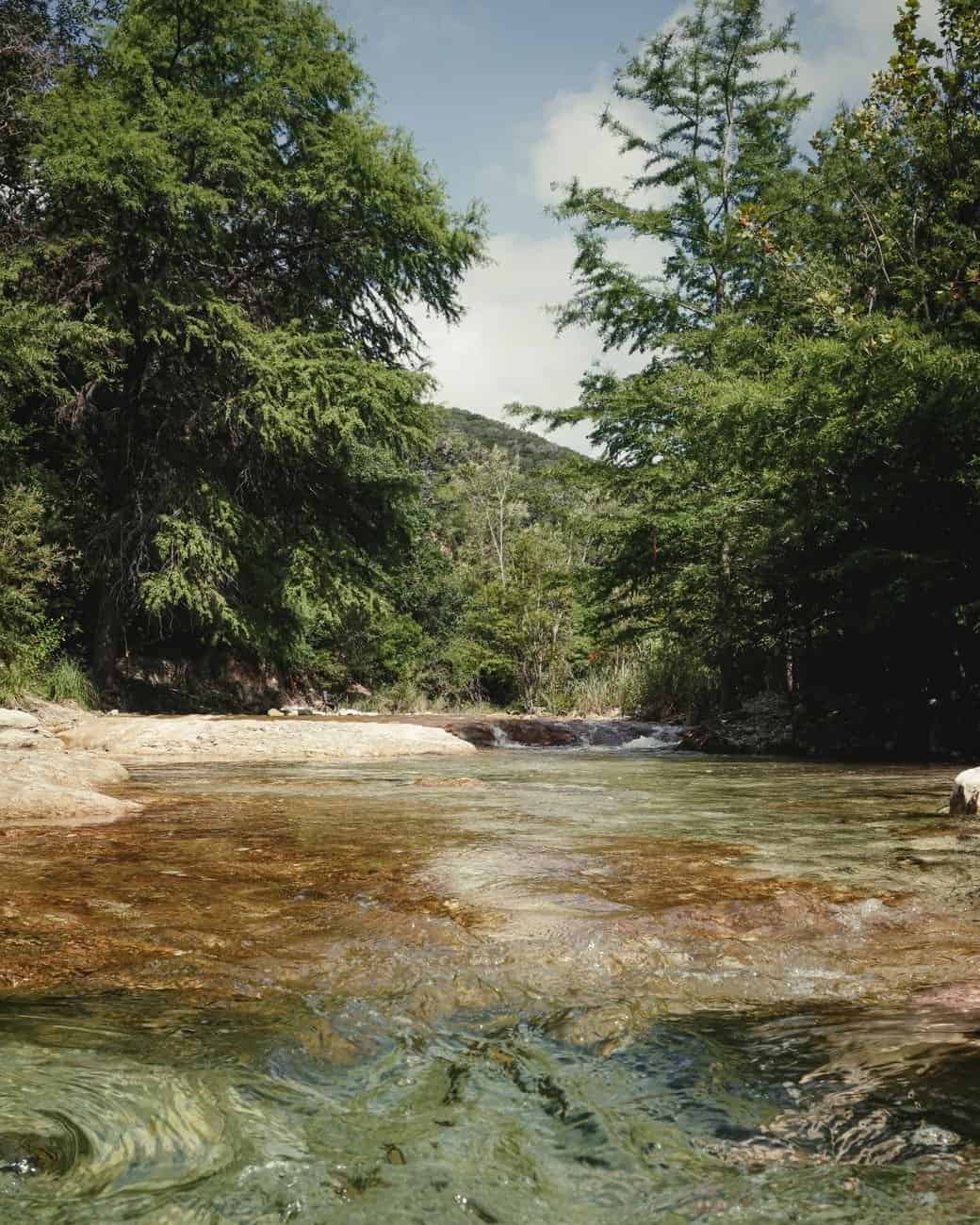
The Swimming Holes That Define the Hill Country
The essential water experiences:
- Jacob’s Well Natural Area (Wimberley): A spring-fed artesian well that drops 12 feet straight into a deep pool — requires advance reservation, fills fast. The clearest water in the Hill Country.
- Barton Springs Pool (Austin, technically): Spring-fed pool maintained at 68°F year-round, outdoor swimming in the city — $5 admission, extraordinary for a metropolitan park.
- Blue Hole Regional Park (Wimberley): The Cypress-lined swimming hole of every Hill Country photo, reservation required in summer.
- Guadalupe River State Park: Flat-water swimming in the Guadalupe River, accessible without reservations during weekdays, crystal clear limestone water.
The Wine Trail: What 50+ Wineries Actually Means
The Texas Hill Country has the second-largest wine-growing region in the United States by winery count. The quality ranges from genuinely excellent to tourist-facing mediocrity, which is not different from Napa or the Willamette Valley in terms of the ratio. The varieties that work in the Hill Country climate are different from California — Tempranillo and Mourvèdre thrive in the heat and limestone soils. The best producers have been consistently recognized in national blind tastings.
Fredericksburg-area wineries worth prioritizing:
- Becker Vineyards: Consistent, large operation, good across multiple varieties
- William Chris Vineyards: The most-cited premium producer in the Hill Country, Mourvèdre and Blanc du Bois
- Pedernales Cellars: Strong Tempranillo, vineyard views worth the tasting fee
- Tasting fees run $15–$25 per person; arrive early on weekends as the most popular wineries fill fast by noon
The Small Towns That Reward a Slow Drive
Fredericksburg is the anchor town — German heritage, excellent restaurants, the National Museum of the Pacific War (Admiral Nimitz’s birthplace, one of the better WWII museums in the country), and a Main Street that’s been fully developed for visitors without losing all character. Comfort is what Fredericksburg was twenty years ago — slower, quieter, antique stores and a few excellent restaurants without the tour bus density. Gruene, a historic district within New Braunfels, has Gruene Hall — the oldest dance hall in Texas, operating since 1878 — which hosts live music on weekends that belongs on any Texas music itinerary.
The Hill Country timing that matters most: spring (March–April) for wildflowers, including the famous bluebonnet season that runs along FM 1323 near Willow City and elsewhere throughout the region. Fall (October–November) for comfortable temperatures and uncrowded state parks. Summer for swimming holes — the spring-fed water stays cold regardless of air temperature, which is the whole point in Texas July.
Texas Hill Country in Peak Bluebonnet Season
The Texas bluebonnet bloom — typically late March through mid-April — draws 2 million visitors to the Hill Country corridor and represents the state’s most-photographed natural event. LBJ State Park and Historic Site near Stonewall, Willow City Loop (a 13-mile scenic drive through private land with dense bluebonnet populations), and the Wildflower Center north of Austin are the three most reliable bloom locations. The bloom’s peak is 7–10 days — early visitors see green fields turning blue; late visitors see the fields transitioning to the next bloom cycle. Texas Parks and Wildlife’s wildflower hotline and the Lady Bird Johnson Wildflower Center’s bloom tracker are the practical tools for hitting peak.
The Hill Country’s year-round economy — the Fredericksburg wine corridor, the Bandera cowboy culture, the Kerrville Folk Festival (the longest-running acoustic music festival in the United States), Gruene Hall in New Braunfels (the oldest continuously operating dance hall in Texas), and the river tubing culture on the Guadalupe and Comal Rivers — makes it a destination outside bluebonnet season for visitors willing to explore past the spring flower event. October in the Hill Country has the fall foliage that most people don’t expect from South Texas, cooler temperatures for hiking, and the wine country harvest activity at Fredericksburg’s 50+ wineries.