The South Carolina Lowcountry Isn’t Charleston. It’s the Sea Islands Charleston’s Tourism Board Doesn’t Talk About
We may earn money or products from the companies mentioned in this post. This means if you click on the link and purchase the item, I will receive a small commission at no extra cost to you ... you're just helping re-supply our family's travel fund.
Most visitors who say they’ve “done” the South Carolina Lowcountry mean they’ve spent a few days in Charleston’s historic district, eaten shrimp and grits, and toured a plantation house. The actual Lowcountry is a much larger and more complicated geography — a network of sea islands, marshes, and small towns stretching from Georgetown down through Beaufort to Hilton Head and the Georgia border, defined by tidal ecology and a Gullah Geechee culture whose roots predate any of the tourism infrastructure built around it by more than a century.
Beaufort and the Sea Islands: The Lowcountry Charleston Skips
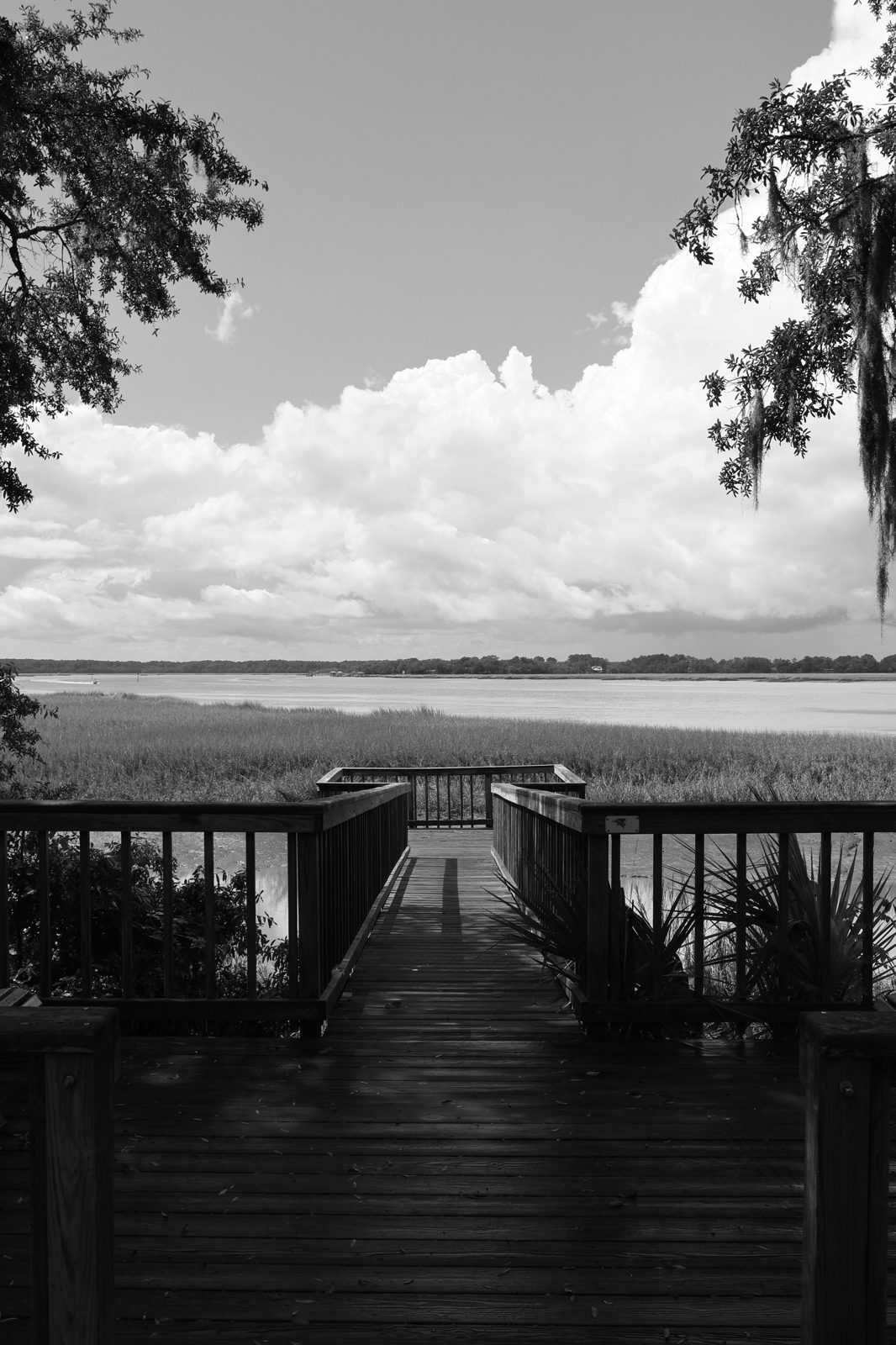
Beaufort, South Carolina’s second-oldest city, retains a level of historic preservation and small-town scale that Charleston’s tourism volume has largely erased from its own downtown. Antebellum homes line streets that see a fraction of Charleston’s foot traffic, and the surrounding sea islands — St. Helena, Lady’s Island, Dataw — hold some of the most intact Gullah communities remaining on the entire Southeastern coast. St. Helena Island’s Penn Center, a National Historic Landmark District, was founded in 1862 as one of the first schools for freed slaves in the country and remains a functioning cultural institution rather than a museum piece.
The Development Pressure That’s Reshaping the Whole Region
- Hilton Head’s gated resort development pattern has extended northward, with similar golf-and-marina projects proposed and built on formerly rural sea islands
- Rising land values on Gullah-held heirs’ property continue to create pressure toward partition sales across the region, not just on Hilton Head specifically
- Beaufort County’s population has grown steadily as retirees and remote workers discover the area’s slower pace relative to Charleston or Hilton Head proper
- Environmental groups have flagged concerns about marsh and tidal creek health as development density increases across the barrier and sea islands
What Actually Distinguishes Lowcountry Culture and Food
Lowcountry cuisine — shrimp and grits, red rice, she-crab soup, Frogmore stew (a one-pot boil named for a Gullah community on St. Helena Island) — draws directly from Gullah culinary tradition, itself a blend of West African cooking techniques adapted to Carolina rice country ingredients. Charleston’s high-end restaurant scene has absorbed and elevated much of this cuisine over the past two decades, sometimes without clear acknowledgment of its origins, a pattern that Gullah cultural advocates and food writers have increasingly pushed back against in recent years, arguing for direct crediting and support of Gullah-owned restaurants and food businesses rather than borrowed technique served without context.
How to Actually Experience the Region Beyond Charleston
Beaufort makes a reasonable base for exploring the wider Lowcountry, roughly equidistant between Charleston and Savannah and close enough to Hilton Head for a day trip without needing to stay inside its resort economy. The Gullah Geechee Cultural Heritage Corridor, a National Park Service-affiliated designation spanning coastal areas from North Carolina to Florida, provides an official framework for visiting historically significant Gullah sites, and several Gullah-led heritage tours operate specifically to guide visitors through this history with context that generic plantation tours often omit.
What Development Is Actually Doing to the Culture on the Ground
The same heirs’ property vulnerability documented on Hilton Head is playing out, at varying speeds, across the broader sea islands region, according to advocacy organizations tracking Gullah land loss. Rising property taxes tied to escalating land values — driven by buyers with no connection to the land’s history — put pressure on families holding property collectively without clear individual titles, sometimes forcing sales that further shrink the geographic footprint of intact Gullah communities. The region’s tourism marketing has begun, slowly, to acknowledge this history more directly than it did a decade ago, but the underlying economic pressure driving land loss hasn’t meaningfully slowed.
Why Charleston’s Tourism Board Doesn’t Push This
Charleston’s tourism marketing apparatus has built an enormously successful brand around its historic downtown, plantation tours, and culinary scene, and there’s limited institutional incentive to redirect visitor attention — and visitor spending — toward Beaufort and the sea islands, which fall under different county tourism authorities with smaller marketing budgets. That fragmentation means the broader Lowcountry region markets itself unevenly, with Charleston absorbing a disproportionate share of visibility relative to its share of the region’s actual cultural and historical substance, leaving Beaufort and the sea islands to rely much more heavily on word-of-mouth and specialized heritage tourism to draw visitors.
Getting Around the Region
- Beaufort sits roughly 70 miles southwest of Charleston and 45 miles northeast of Savannah, making it a natural stop between the two better-known cities
- A car is essentially required to explore the sea islands properly; public transit options are minimal across Beaufort County
- St. Helena Island’s Penn Center is open to visitors most days but operates with modest hours reflecting its status as a working cultural institution rather than a full-time museum
The Bottom Line for Anyone Planning a Trip
Charleston earns its reputation, but treating it as the whole of the Lowcountry skips over the sea islands and small towns where the region’s deepest cultural roots actually live. A trip that includes Beaufort and St. Helena Island alongside Charleston tells a far more complete story than Charleston alone ever could.