Texas Has Exactly One UNESCO World Heritage Site. Here’s How to See All 5 Missions in a Day
We may earn money or products from the companies mentioned in this post. This means if you click on the link and purchase the item, I will receive a small commission at no extra cost to you ... you're just helping re-supply our family's travel fund.
Texas has exactly one UNESCO World Heritage Site. The San Antonio Missions, a group of five Spanish colonial missions along the San Antonio River, were inscribed on the World Heritage List on July 5, 2015. The listing includes the Alamo downtown and four missions to the south, Concepcion, San Jose, San Juan, and Espada, along with Rancho de las Cabras, a ranch site farther south.
Here is how to see all five in a day. Start at the Alamo when it opens in the morning. Then head south along the Mission Trail by car or bike, stopping at Mission Concepcion, Mission San Jose, where the main National Park Service visitor center sits, Mission San Juan, and Mission Espada. The four southern missions are part of San Antonio Missions National Historical Park and are free to visit. Plan about an hour at each, more at San Jose, and finish before the park missions close in the late afternoon.
The missions were founded in the 1700s by Spanish Franciscan missionaries working with Coahuiltecan and other Indigenous people, and they remain the largest concentration of Spanish colonial missions in North America. Four of them are still active Catholic parishes.
Here’s How to See All 5 Missions in a Day
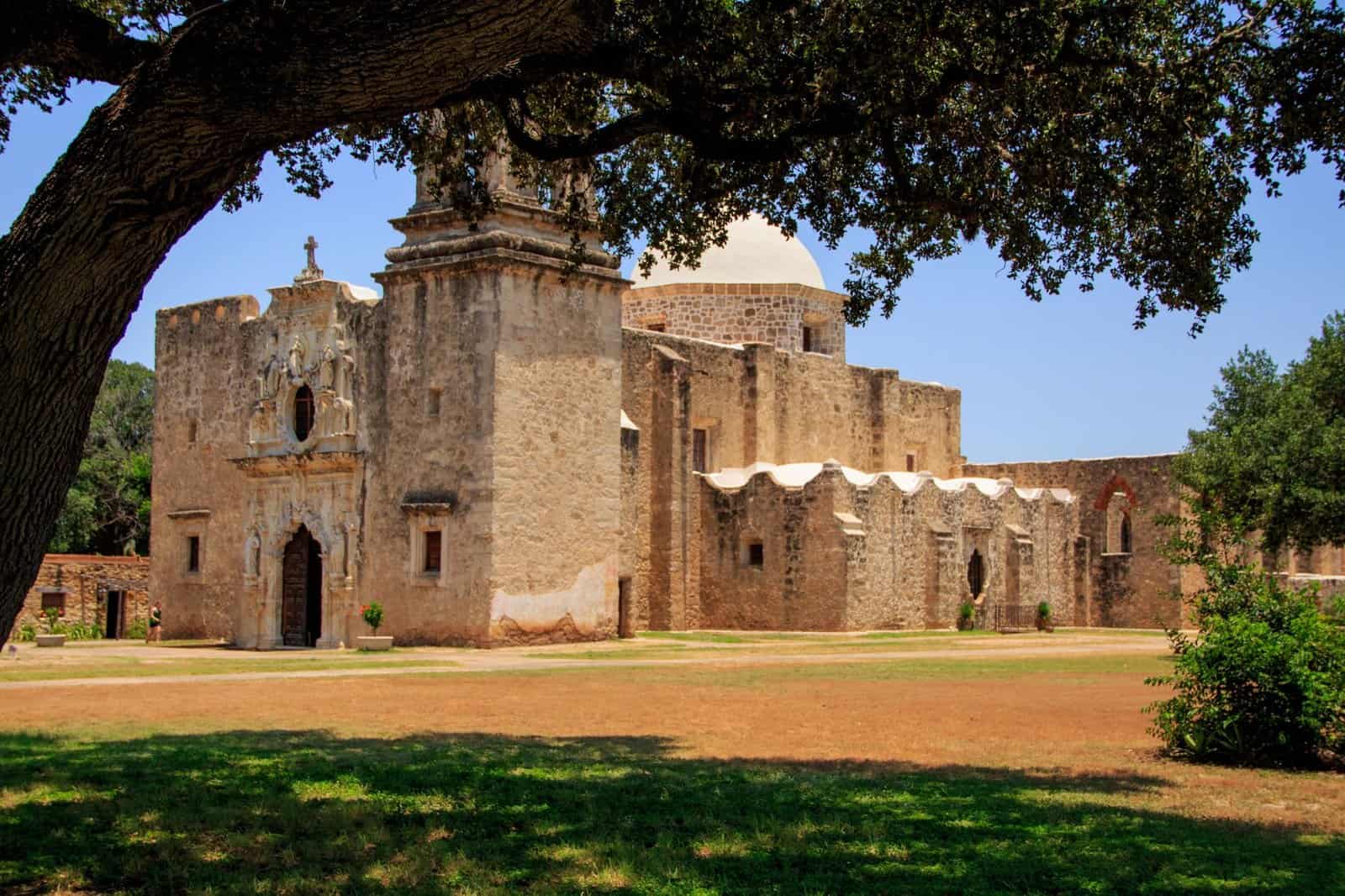
The missions stretch about 10 miles along the San Antonio River, from the Alamo in downtown San Antonio to Mission Espada near the city’s southern edge. The Mission Trail and the Mission Reach hike-and-bike trail connect them.
Here is a practical schedule:
- 9 a.m.: the Alamo, downtown. Reserve a free timed entry to the church or a paid guided tour.
- 10:30 a.m.: drive or bike south to Mission Concepcion, about 3 miles away.
- 11:30 a.m.: Mission San Jose, about 2.5 miles farther. Visit the NPS visitor center, watch the park film, and explore the grounds.
- 1 p.m.: lunch near San Jose or bring a picnic.
- 2 p.m.: Mission San Juan, about 2.5 miles south.
- 3 p.m.: Mission Espada, about 2 miles farther, plus the Espada Aqueduct nearby.
The four park missions are generally open daily from 9 a.m. to 5 p.m., though hours can vary, especially around holidays. Check the National Park Service website before you go.
The Alamo
The Alamo, founded in 1718 as Mission San Antonio de Valero, is the oldest of the five and the most famous, because of the 1836 battle during the Texas Revolution. It is managed by the State of Texas through the Texas General Land Office and the Alamo Trust, not by the National Park Service.
Entry to the church is free, but timed reservations are recommended. Paid tours and exhibits are available. Downtown parking is in public garages and lots nearby, which charge fees. Allow about an hour to 90 minutes.
Mission Concepcion
Mission Nuestra Senora de la Purisima Concepcion de Acuna moved to its current site in 1731. Its stone church, completed in 1755, is one of the oldest unrestored stone churches in the United States. Inside, traces of original painted frescoes remain on the walls and ceilings.
It is about 3 miles south of the Alamo. Allow 45 minutes to an hour.
Mission San Jose
Mission San Jose y San Miguel de Aguayo, founded in 1720, is the largest of the missions and is often called the “Queen of the Missions.” Its restored walls, Indian quarters, granary, and church show what a mission compound looked like. The church’s ornate carved stone window, known as the Rose Window, is one of the finest examples of Spanish colonial decoration in the country.
The main National Park Service visitor center is here, with exhibits, a film, and ranger programs. Allow 90 minutes to two hours. On Sundays, the church holds a mariachi Mass that draws visitors.
Mission San Juan
Mission San Juan Capistrano moved to San Antonio in 1731. It was an agricultural center, with farmland and orchards. Today, a demonstration farm and nature trails show how the missions supported themselves.
Allow about 45 minutes to an hour.
Mission Espada
Mission San Francisco de la Espada also moved to its current site in 1731. It has a small, distinctive church with an unusual doorway. Nearby, the Espada Aqueduct, built in the 1730s, still carries water over Piedras Creek, making it one of the oldest functioning Spanish colonial aqueducts in the United States.
Allow about 45 minutes to an hour, plus time for the aqueduct.
Biking the Mission Reach
The Mission Reach, part of the San Antonio River Walk, has a paved hike-and-bike trail that connects the four southern missions along the river. It is about 8 miles long. San Antonio’s bike-share program has stations along the route.
Biking is a great way to see the missions on a mild day. Late fall and winter weather in San Antonio is often comfortable, with highs in the 60s and 70s.
Rancho de las Cabras
Rancho de las Cabras, a ranch site associated with Mission Espada, is about 30 miles south of San Antonio near Floresville. It is part of the World Heritage listing, but public access is limited. Check the NPS website for tour opportunities.
The People of the Missions
The missions were not just churches. Each was a community where Coahuiltecan and other Indigenous people lived, worked, and worshiped, under a Spanish system meant to convert them to Catholicism and make them subjects of the Spanish crown. Mission residents built the churches, dug irrigation ditches called acequias, farmed fields, raised livestock, and learned trades like weaving, blacksmithing, and stonework. Many also kept their own traditions and languages.
Life in the missions was hard. Disease, conflict, and forced labor took a heavy toll. Over time, the missions were secularized, and their lands were distributed. Descendants of mission residents still live in San Antonio and remain connected to the parishes. The NPS visitor center at San Jose and exhibits at each mission explain this history.
The Acequias
The missions depended on a system of acequias, irrigation canals that diverted water from the San Antonio River to fields. The Espada Acequia and its aqueduct still carry water today. Walking along an acequia at Mission San Juan or Espada gives you a sense of how the missions turned a dry landscape into productive farmland. UNESCO cited the water management system as one of the reasons for the World Heritage listing.
Getting Around Without a Car
San Antonio’s B-cycle bike-share stations line the Mission Reach, and you can ride from downtown to Mission Espada on paved paths along the river. VIA Metropolitan Transit buses also serve the Mission Trail. A rideshare or taxi works too. If you drive, each park mission has free parking.
Visiting in Late Fall and the Holidays
Late fall is one of the best seasons to visit, with mild temperatures and fewer crowds than spring. In December, the missions host holiday events, and the parishes celebrate Advent and Christmas. Downtown, the River Walk lights up with holiday decorations, and the Alamo area hosts events.
Check the park calendar for special programs, such as ranger-led walks and cultural events.
Why UNESCO Listed the San Antonio Missions
UNESCO recognized the San Antonio Missions in 2015 as an example of the interweaving of Spanish and Coahuiltecan cultures, visible in the churches’ decoration, the layout of the mission compounds, and the farm fields and water systems that supported them. The listing made the missions the first World Heritage Site in Texas, and they remain the only one. The United States has about two dozen World Heritage Sites in total, so the designation puts the missions in company with places like the Grand Canyon, Yellowstone, and Independence Hall.
Where to Eat Along the Mission Trail
The neighborhoods around the southern missions are some of the oldest in San Antonio, and local restaurants serve Tex-Mex staples such as puffy tacos, enchiladas, and breakfast tacos. Small taquerias and panaderias near Mission San Jose and along Roosevelt Avenue make a good lunch stop. If you prefer to picnic, Mission Espada and Mission San Juan have shaded grounds, and the river trail has benches and picnic spots. Downtown, near the Alamo, the River Walk and Market Square offer more choices for breakfast or dinner.
If You Have Two Days Instead of One
Seeing all five missions in a day is doable, but a two-day plan lets you slow down. Spend day one at the Alamo and downtown, including the River Walk and La Villita. On day two, bike the Mission Reach from Concepcion to Espada with time for ranger talks, the demonstration farm at San Juan, and the Espada Aqueduct. You will see more detail, like the remnants of frescoes at Concepcion and the carved stonework at San Jose, without rushing.
Tips for a Mission Day
- Start early, especially on weekends.
- Bring water and sunscreen, even in winter.
- Wear comfortable shoes.
- Respect active parishes, especially during services.
- Check NPS hours before you go.
The Bottom Line
Texas has only one UNESCO World Heritage Site, and you can see all five missions in a single day. Start at the Alamo, head south along the Mission Trail, and take your time at each stop.