Some Cities Feel Walkable in the First Ten Minutes. Others Never Do, No Matter How Long You Live There
We may earn money or products from the companies mentioned in this post. This means if you click on the link and purchase the item, I will receive a small commission at no extra cost to you ... you're just helping re-supply our family's travel fund.
Walk out of a hotel in Savannah or Charleston and the city organizes itself around you almost immediately: shade, short blocks, something to look at every thirty feet. Walk out of a hotel near an Atlanta highway interchange and the same instinct to just start walking somewhere collapses within a block. The difference is not simply how dense a city is. It’s a set of specific street-level design decisions, many made decades before anyone living there today had any say in them, that either invite a pedestrian in or actively push them back toward a car.
Block Size Matters More Than People Realize
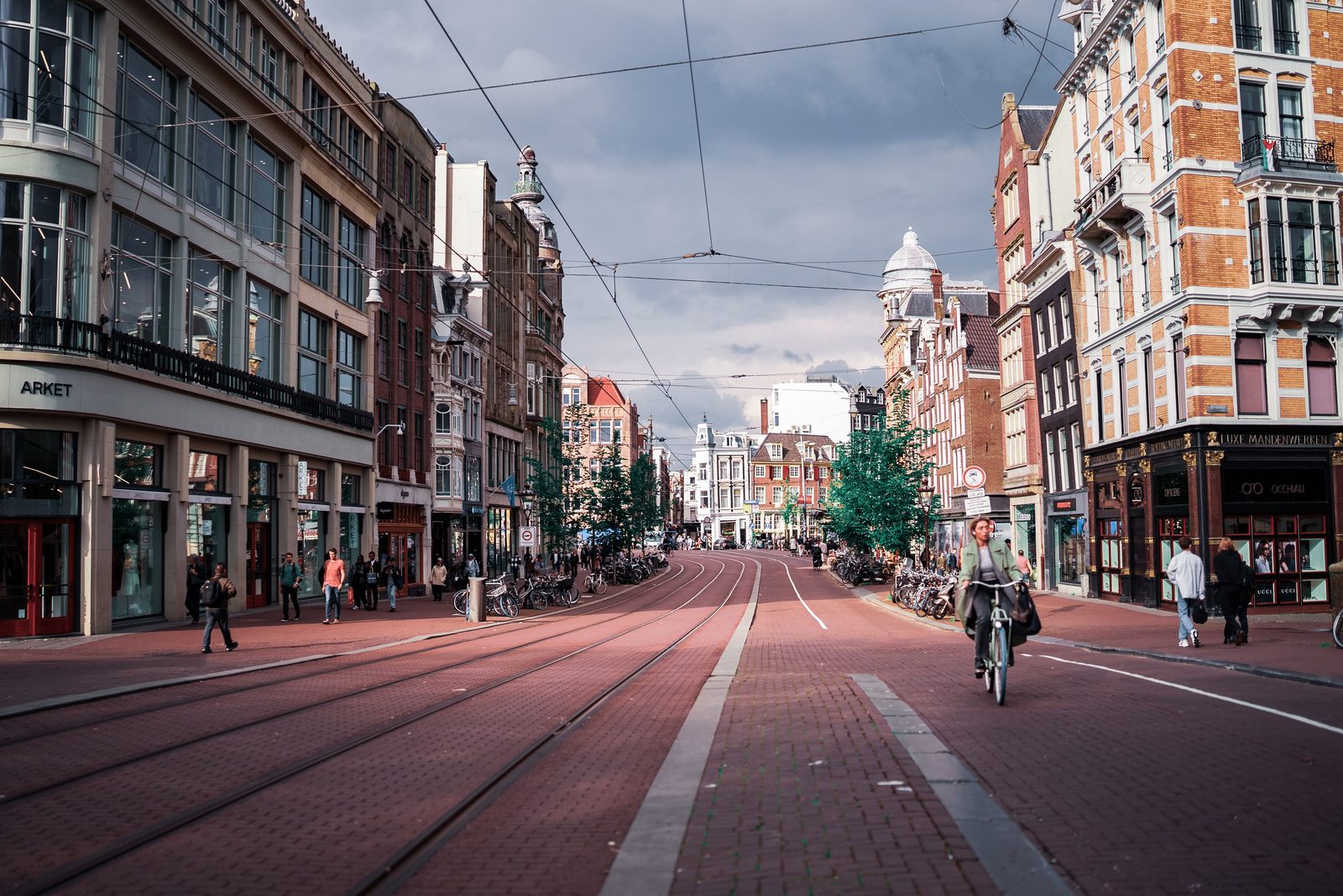
Cities platted before roughly 1920 — Savannah, Charleston, most of the older parts of Boston and Philadelphia — tend to have short blocks, often 200 to 300 feet, because they were designed for pedestrians and horse-drawn traffic, where frequent cross streets mattered for navigation and commerce. Cities and suburbs built after widespread car ownership, especially from the 1950s onward, frequently have blocks stretching 600 feet or more, because the design assumption shifted entirely to vehicle throughput. A longer block might seem like a minor inconvenience, but compounded over a mile of walking, it means dramatically fewer opportunities to cross streets, turn a corner, or encounter a storefront, and pedestrians instinctively register that as friction even if they can’t name why.
What’s at Eye Level Determines Everything
Urban designers use the term “active frontage” to describe what a pedestrian actually sees at street level: storefronts, windows, doors, versus blank walls, parking garage facades, or a landscaped setback with nothing happening behind it. A downtown block lined with parking garage entrances and loading docks can be objectively dense — plenty of office space stacked above — while feeling completely dead to someone walking past it, because there is nothing to look at and no reason to feel like the space is being used by anyone. This is why some downtown business districts empty out entirely after 6pm despite being full of buildings; the ground floor was never designed to hold anyone’s attention.
Setbacks Slowly Killed a Lot of Walkability
Zoning codes across most of postwar America required buildings to sit back from the street with mandatory parking in front, a rule intended to make driving and parking convenient but one that pushed buildings physically further from the sidewalk and inserted a parking lot as the first thing a pedestrian encounters. Compare a strip mall in suburban Phoenix, where the actual stores sit fifty feet behind a parking lot, to a Main Street storefront in a town like Galena, Illinois, where the door opens directly onto the sidewalk. The second version simply requires less deliberate effort to walk between destinations, because there’s no dead space to cross first.
- Short blocks with frequent cross streets create more decision points and destinations per minute of walking
- Active ground-floor frontage (shops, windows, doors) makes walking feel purposeful rather than empty
- Buildings set close to the sidewalk, without a parking lot buffer, reduce the psychological distance between destinations
- Tree canopy and shade affect walkability nearly as much as any structural design choice, especially in hot climates
Why Some Cities Can’t Easily Fix It
Retrofitting a car-oriented street grid into a walkable one is enormously expensive and slow, because it requires changing not just sidewalks but the underlying block structure, parking requirements, and building setbacks that were baked into a city’s infrastructure decades ago. Cities that get cited as walkability success stories in recent years — parts of downtown Tempe, Arizona, or sections of Nashville’s Gulch neighborhood — usually achieved it through large, deliberate infill redevelopment projects rather than incremental fixes, because incremental fixes can’t undo a 600-foot block or a mandatory front parking lot. That’s the frustrating part for cities that want to become more walkable after the fact: the decisions that make a place feel good to walk through were mostly made once, a long time ago, by people optimizing for something else entirely.
Tempe and the Gulch Show What Deliberate Redesign Looks Like
Downtown Tempe, Arizona, built around Arizona State University and Tempe Town Lake, transformed over roughly two decades from a fairly ordinary car-oriented downtown into one of the more genuinely walkable districts in the Phoenix metro area, largely through a series of deliberate mixed-use redevelopment projects that shortened effective block distances by inserting new pedestrian-oriented pathways and required active ground-floor retail in new construction. Nashville’s Gulch neighborhood followed a similar model, converting a former rail yard into a dense, walkable district by essentially building a new, finer-grained street grid from scratch rather than trying to retrofit the wide rail-adjacent blocks that existed before. Both examples share a key feature: the walkability wasn’t a byproduct of organic growth, it was a specific design goal that developers and city planners pursued deliberately, often over the objections of stakeholders who wanted more parking or wider roads.
Why Tourists Notice This Faster Than Residents Do
Visitors often register a city’s walkability more acutely than longtime residents, precisely because tourists are experiencing the city entirely on foot for the first time, without the mental shortcuts and learned workarounds that residents develop over years of living somewhere. A tourist walking three consecutive dead blocks in a downtown business district notices the discomfort immediately; a resident who’s lived there for a decade has probably already mentally rerouted around it without consciously registering why. This is part of why online travel forums and social media are unusually reliable sources for identifying which cities are genuinely pleasant to walk through versus which ones just look walkable in photos: the people reporting have no accumulated tolerance for a city’s specific dead zones.
Climate matters in this equation too, in ways that are easy to underestimate. Cities with hot summers, like Phoenix or Houston, face a structural walkability challenge that no amount of clever block design can fully overcome, since even a beautifully designed street becomes unpleasant to walk at 3pm in August regardless of how short the blocks are. Cities that have invested heavily in tree canopy and shade structures, rather than relying purely on architectural density, tend to perform better on lived walkability than their raw urban design metrics alone would predict, which is part of why some Sun Belt cities have begun requiring shade coverage standards for new sidewalk construction specifically to address this gap.