We may earn money or products from the companies mentioned in this post. This means if you click on the link and purchase the item, I will receive a small commission at no extra cost to you ... you're just helping re-supply our family's travel fund.
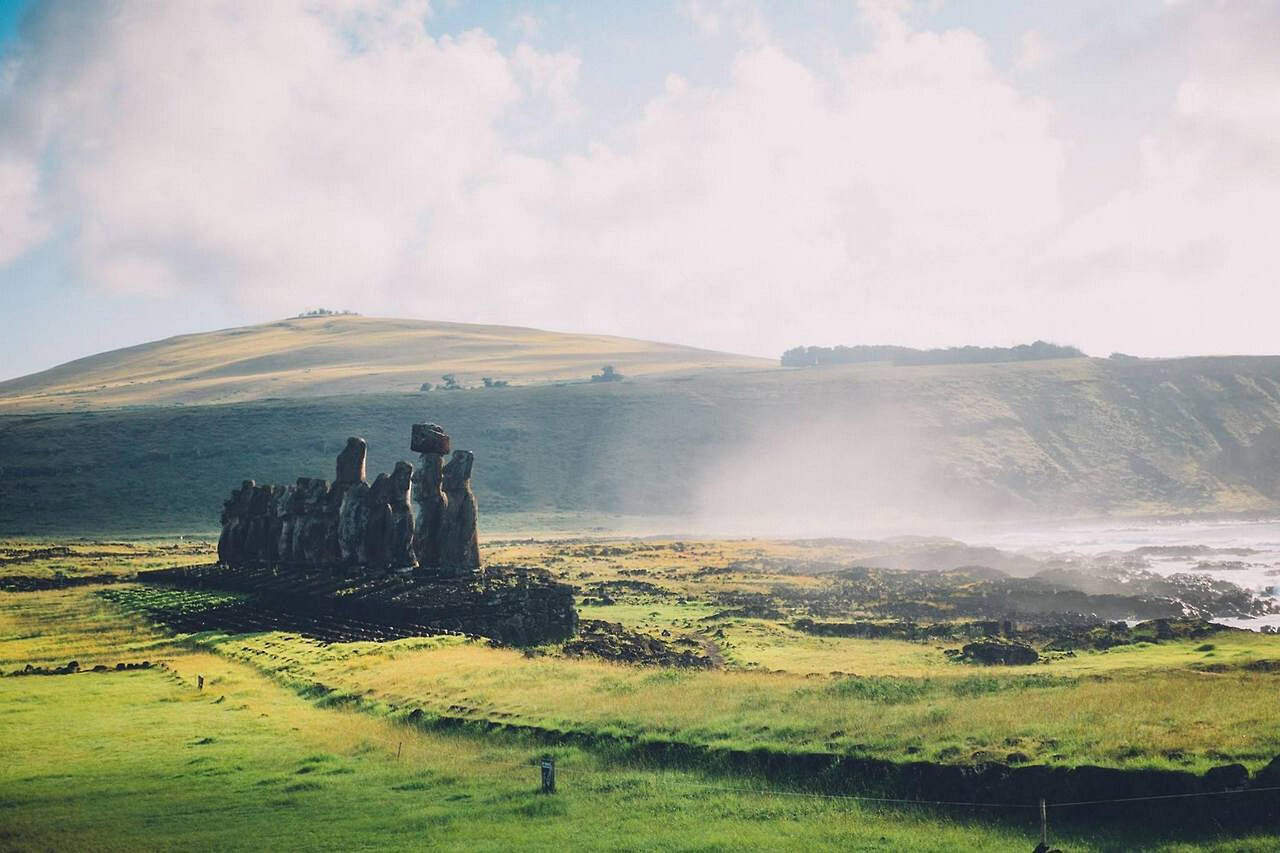
For nearly a millennium, the massive stone statues of Easter Island, known as moai, have sparked awe and confusion. Carved between roughly 1100 and 1500 CE, these towering figures, some weighing more than modern freight trucks, were moved across rugged volcanic terrain without metal tools, wheels, or draft animals. Recent scientific work combining archaeology, physics, and Indigenous oral history now offers a clearer explanation. Rather than brute force or lost technologies, the solution points to clever engineering, deep environmental knowledge, and coordinated human effort. What once seemed impossible now appears surprisingly practical when viewed through the lens of careful experimentation and cultural context.
1. The Scale of the Moai Challenge
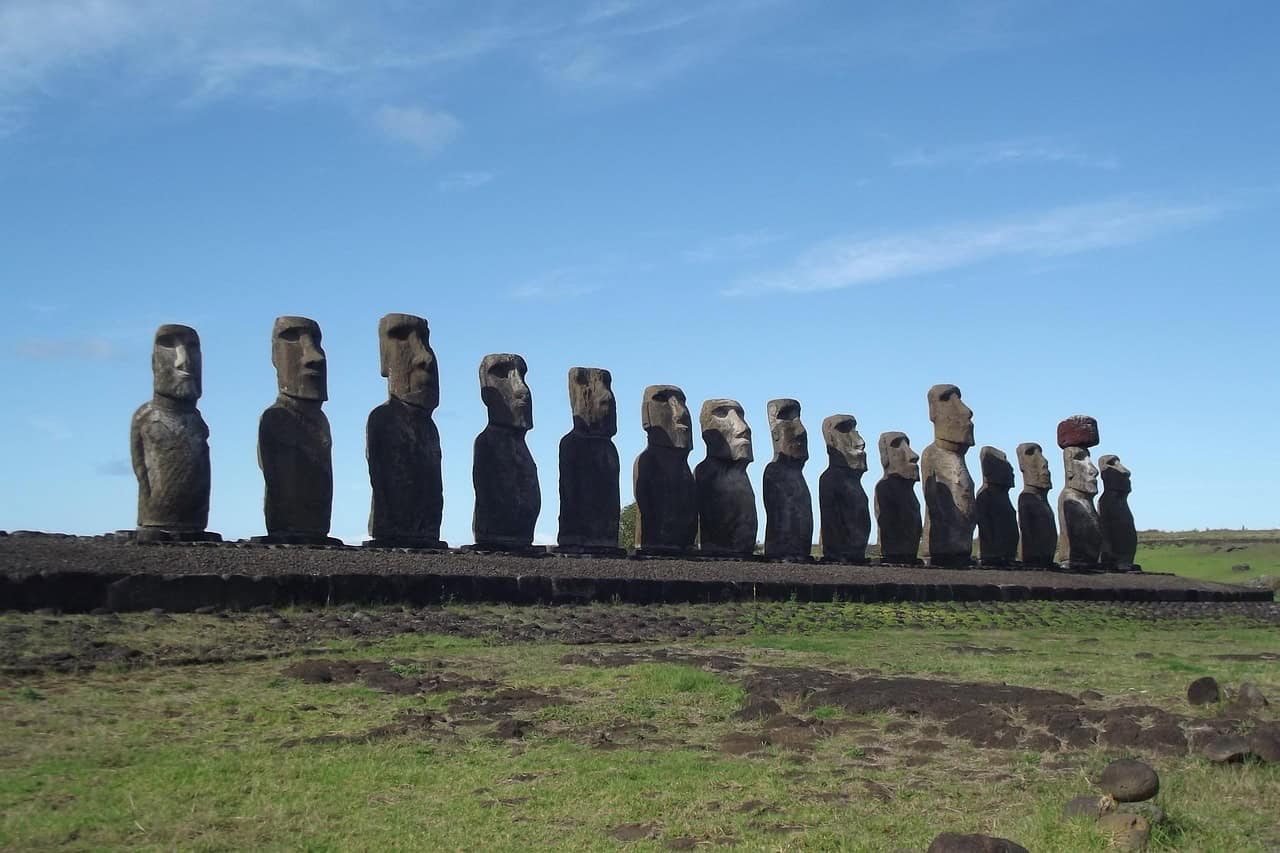
Each moai statue presents a logistical puzzle due to its sheer size and weight. On average, a finished statue stands about 4 meters tall and weighs roughly 12–14 metric tons, while the largest completed moai measures nearly 10 meters and exceeds 80 tons. More than 950 statues exist on Rapa Nui, with around 400 carved from the Rano Raraku quarry alone. Transport distances ranged from 1 to 18 kilometers over uneven ground. Without wheels or animals, even moving a 5-ton object would strain dozens of people. These numbers long fueled theories involving wooden sleds, massive deforestation, or external help, none of which fully aligned with archaeological evidence or island ecology.
2. Clues Hidden in Shape and Design
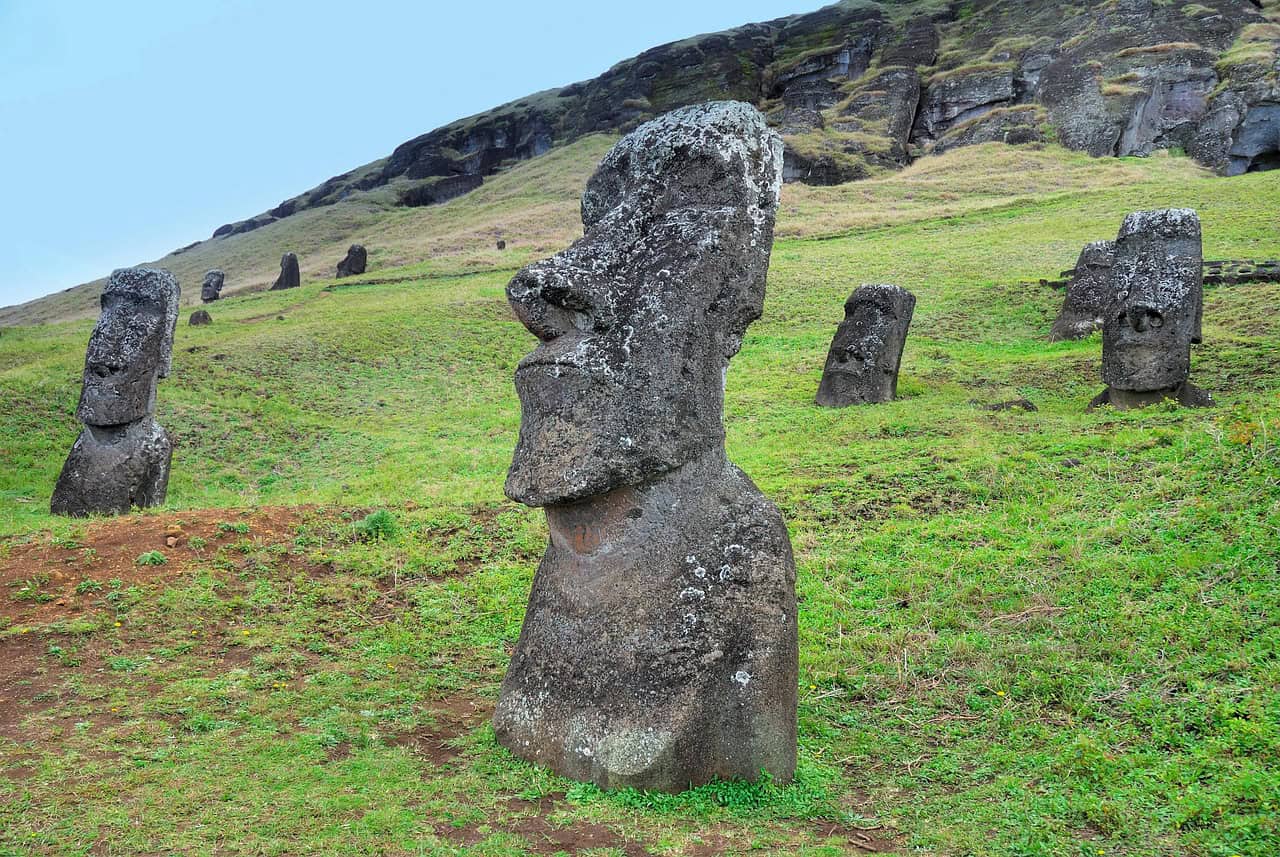
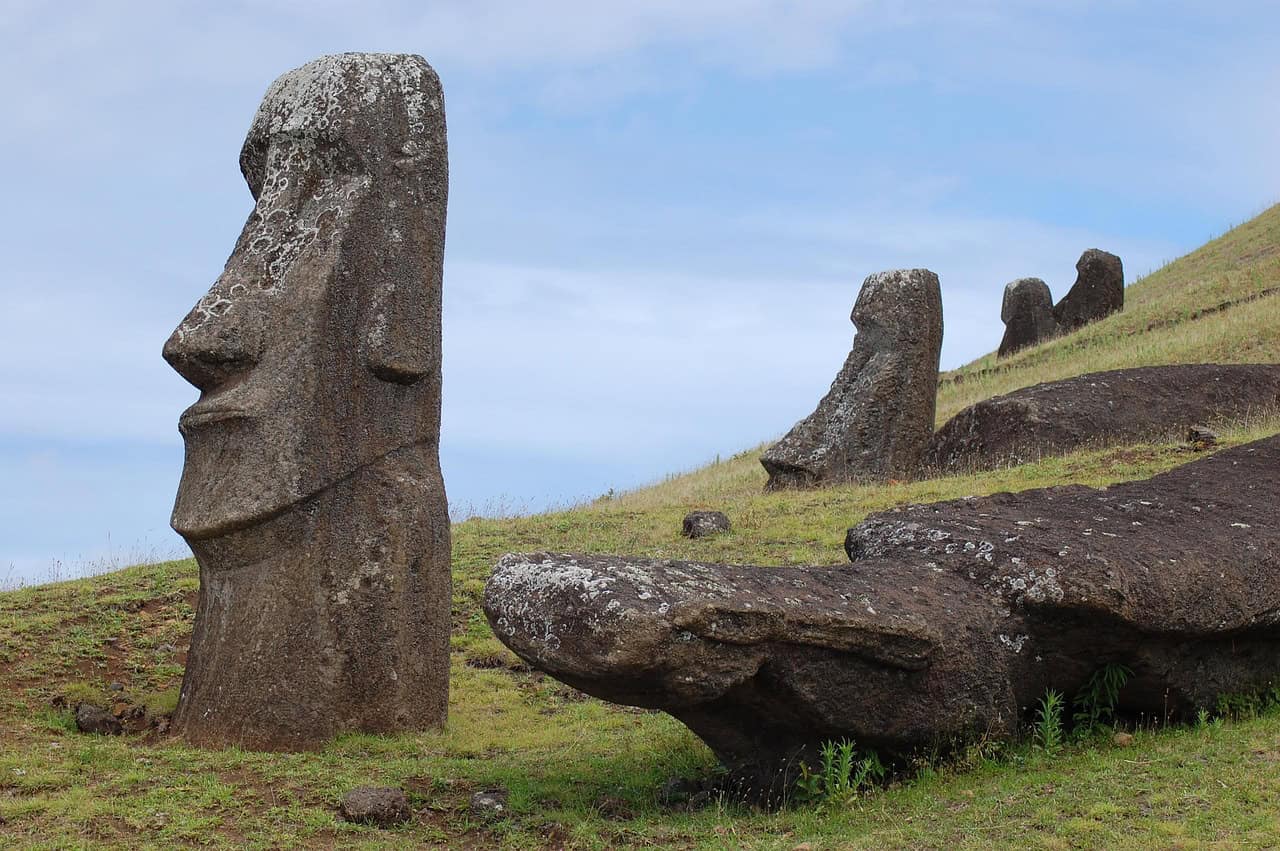
Close measurement of moai geometry revealed subtle but critical features. Most statues lean forward by about 5 degrees, and their bases are curved rather than flat. The center of mass sits low and slightly ahead of the midpoint, an unusual choice if statues were meant to lie horizontally. Researchers measured base radii averaging 1.1 meters and found consistent asymmetry across dozens of samples. These design traits reduce tipping risk while upright and allow controlled rocking motion. Such precision suggests intentional planning, not coincidence. When combined with rope placement points carved into the stone, the statues themselves appear engineered for movement, not just display.
3. Experimental Proof: Making Stone “Walk”
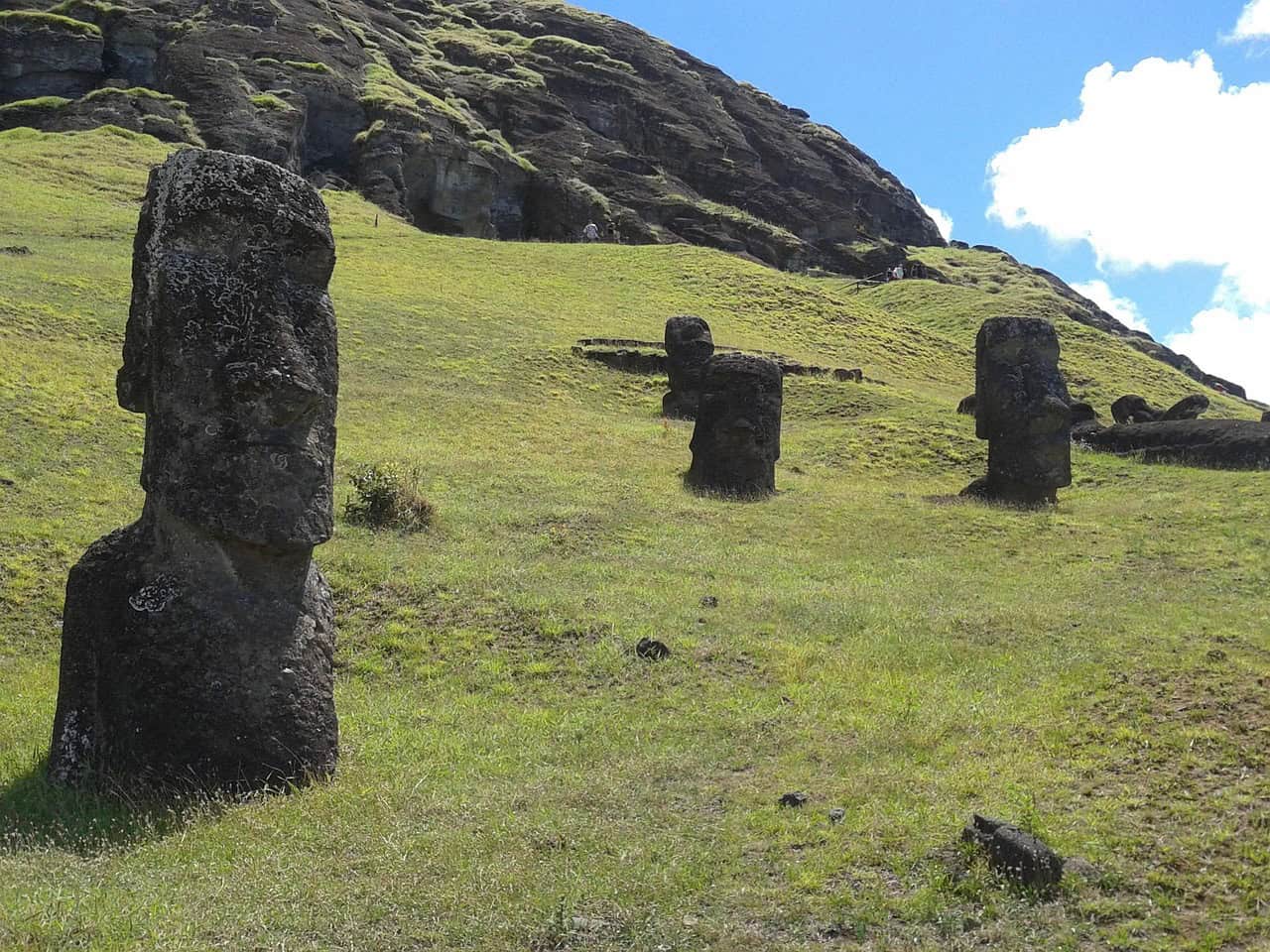
In controlled field tests, scientists built a replica moai weighing 4.3 metric tons and standing 3 meters tall. Using three rope teams, two pulling alternately from the sides and one stabilizing from behind 18 people moved the statue forward at a speed of about 0.1 meters per second. Over 100 meters, the method caused minimal base damage and required no wooden rollers. Force sensors showed each team exerted under 400 newtons, well within human capacity. The statue advanced upright in a rhythmic, side-to-side motion that observers described as “walking,” matching Rapa Nui oral traditions recorded in the 19th century.
4. Roads, Terrain, and Archaeological Matches
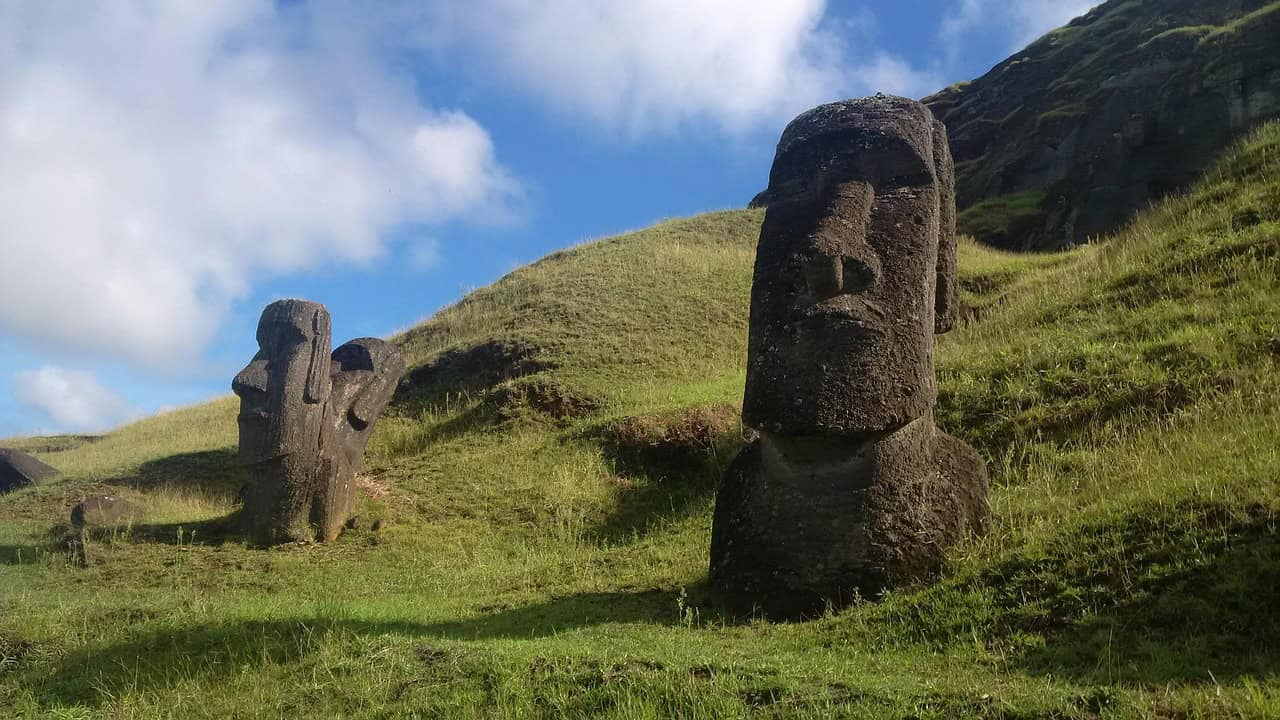
Stone pathways on Easter Island average 4.5 meters wide and follow gentle curves rather than straight lines. Laser mapping shows these roads align closely with quarry-to-platform routes, with slopes rarely exceeding 7 degrees. Dragging sleds uphill would demand exponential force increases, but upright rocking maintains relatively constant effort. Soil compression tests indicate limited ground scarring, consistent with vertical movement. Fallen moai found along roads often rest face-down, suggesting loss of balance rather than sled failure. Over 70 roadside statues support this pattern. The landscape itself appears adapted to walking transport rather than hauling or rolling techniques.
5. Labor, Resources, and Sustainability
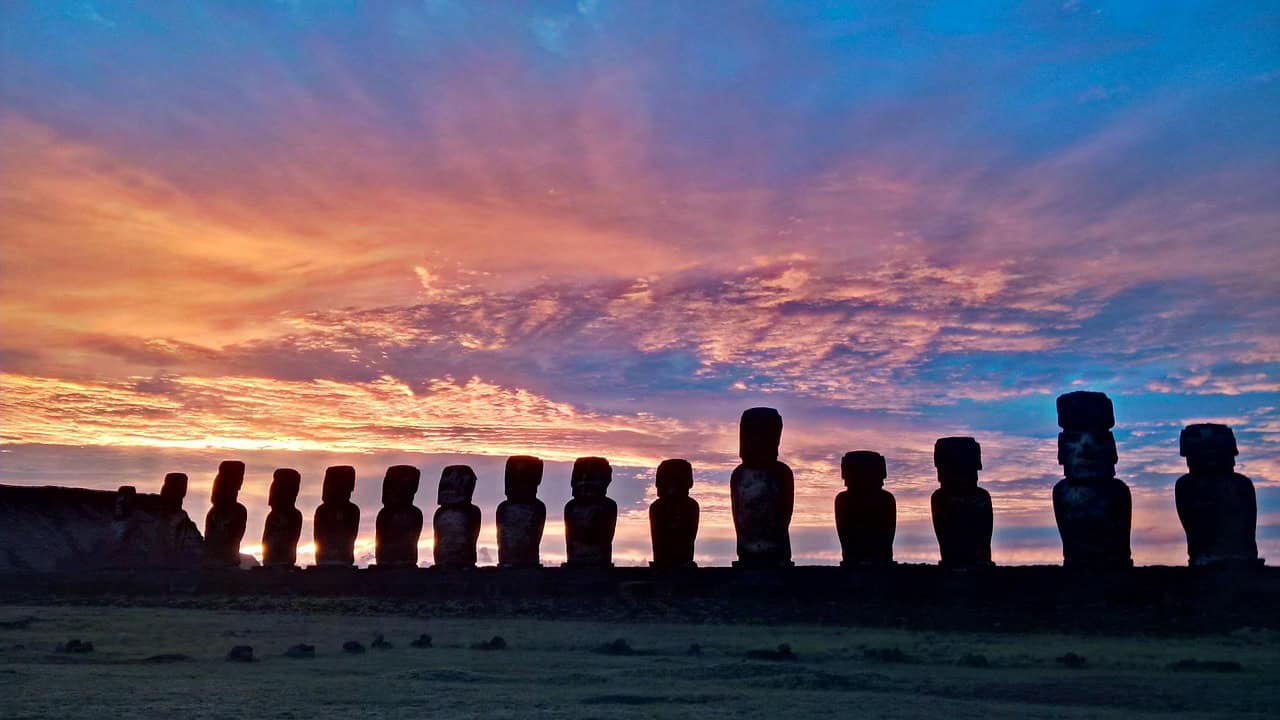
Calculations show that moving a 12-ton statue upright would require roughly 15–25 people, compared to 60 or more for sled dragging. This reduced labor demand aligns with estimated island populations of 6,000–10,000 at their peak. Rope production likely used hauhau or similar plant fibers, with tensile strengths exceeding 20 kilonewtons. Crucially, the walking method avoids large-scale tree cutting, challenging older collapse theories tied to deforestation. Resource modeling suggests fewer than 200 meters of rope per transport event, reusable multiple times. This approach fits a sustainable society managing limited land, timber, and manpower over centuries.
6. Cultural Meaning Behind the Motion
Beyond physics, the walking theory resonates deeply with Rapa Nui belief systems. Oral histories describe moai as having mana, or spiritual power, enabling them to move with guidance rather than force. Statues were positioned facing inland villages, symbolizing protection over roughly 300 known ceremonial platforms. Moving them upright preserved ritual dignity, unlike dragging them prone. Radiocarbon dates show peak statue transport between 1200 and 1450 CE, coinciding with population growth and social organization. Rather than mystery or myth, the solution highlights innovation rooted in culture. The moai didn’t defy logic—they embodied it.