Oklahoma City Spent $1 Billion Rebuilding Its Downtown Over 20 Years. Here’s What That Actually Looks Like Now
We may earn money or products from the companies mentioned in this post. This means if you click on the link and purchase the item, I will receive a small commission at no extra cost to you ... you're just helping re-supply our family's travel fund.
In 1993, Oklahoma City was a city with a dying downtown, aging infrastructure, and a corporate-relocation reputation that was suffering. A temporary sales tax called MAPS — Metropolitan Area Projects — passed with 54 percent of the vote and began funding specific capital projects in the urban core. That first MAPS program funded a baseball park, a canal, an arena, a convention center expansion, and a river development. It worked. So they did it again. And again. Four MAPS cycles later, Oklahoma City has invested over $1 billion in its own infrastructure and become one of the more notable urban turnaround stories in the American interior.
What $1 Billion of Civic Investment Actually Built in Oklahoma City
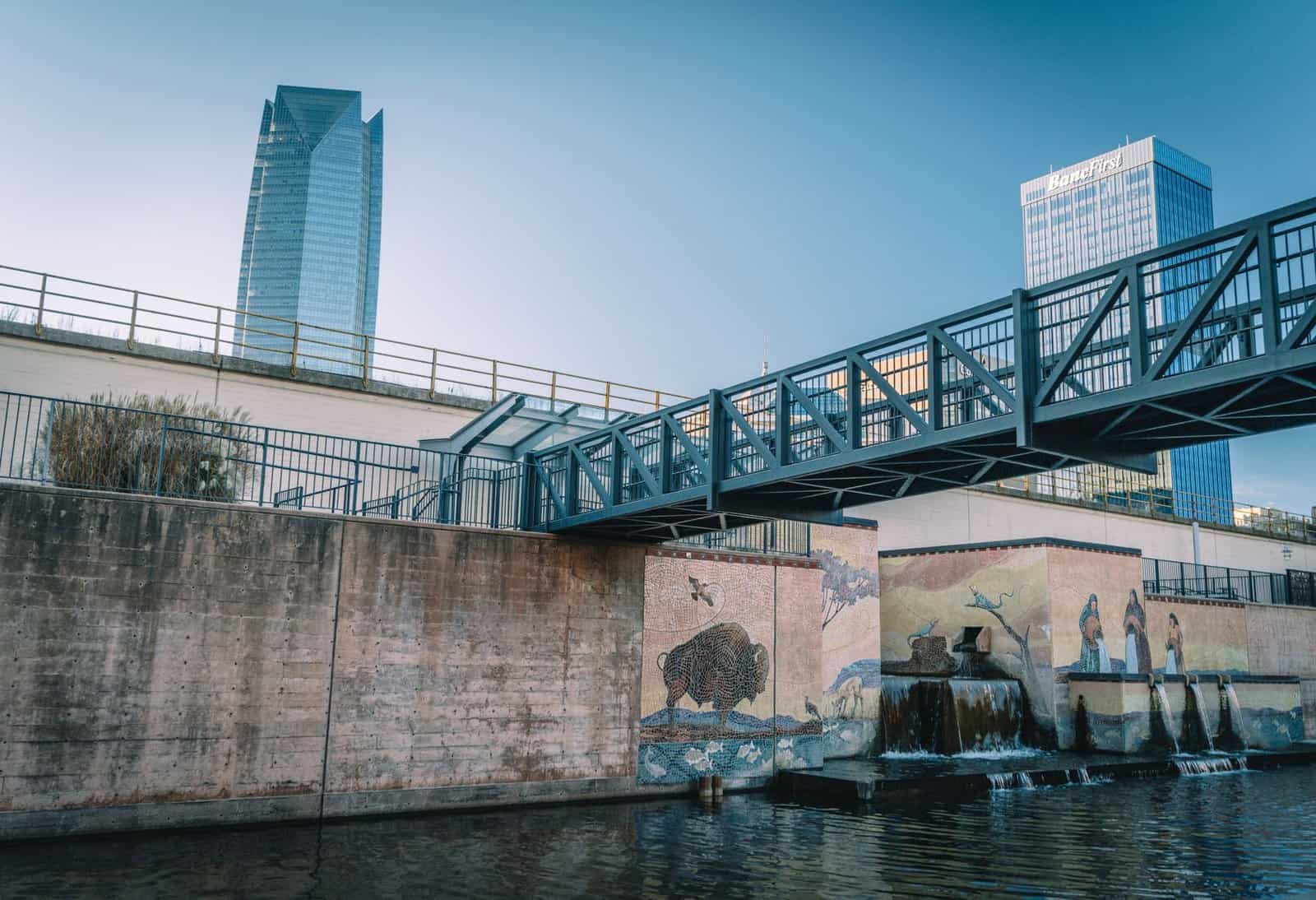
Bricktown — the warehouse district east of downtown — was largely abandoned in the early 1990s and is now a functioning entertainment and residential district built around the original MAPS canal. The Paycom Center arena brought NBA basketball (the Thunder), creating the kind of sports-driven downtown activity that many cities have attempted and few have successfully executed. The Chesapeake Energy Arena renovation, the convention center expansion, and the Oklahoma City streetcar system are all products of successive MAPS cycles.
What Oklahoma City Has Become
- The Oklahoma City National Memorial: The memorial and museum on the site of the 1995 Alfred P. Murrah Federal Building bombing is one of the most moving memorial sites in the United States — 168 chairs in a reflecting pool field, each representing a victim
- The National Cowboy and Western Heritage Museum: A genuine world-class collection of Western American art in a Brutalist building that’s worth visiting on its own architectural terms
- The Paseo Arts District: Oklahoma City’s arts neighborhood — established decades ago, the oldest arts district in Oklahoma, with working studios and galleries in a 1920s commercial district
- The Oklahoma River: Rowing facilities, trails, and development along the North Canadian River that the MAPS investment made possible
The Thing Oklahoma City Still Grapples With
The downtown investment has transformed specific corridors while leaving large areas of the city with significant poverty, limited services, and the kind of infrastructure neglect that MAPS funding doesn’t address. The urban investment story and the social equity story in OKC run in parallel without always intersecting. This is true of most urban turnaround stories, and Oklahoma City’s version is more honest about this tension than many cities that have undergone similar investment cycles.
For visitors, Oklahoma City in 2026 is a genuinely interesting city that still surprises most people who arrive expecting the Oklahoma of cultural stereotype. The food scene around the Midtown district and the Western Heritage Museum alone justify a 2-day visit. And the Memorial is one of those places that every American should see at least once — not as a tourist experience, but as an encounter with something real about what the country has been through.