North America’s Tallest Dunes Are in Colorado. 7 Reasons Late Fall Is a Smart Time to Go
We may earn money or products from the companies mentioned in this post. This means if you click on the link and purchase the item, I will receive a small commission at no extra cost to you ... you're just helping re-supply our family's travel fund.
The tallest sand dunes in North America are not in a desert along the Mexican border. They are in Colorado’s San Luis Valley, piled up against the Sangre de Cristo Mountains at Great Sand Dunes National Park and Preserve. Visiting Great Sand Dunes in late fall gives you those dunes without summer’s heat or crowds.
The National Park Service says the park’s dunefield covers about 30 square miles and contains the tallest dunes on the continent. Its tallest dunes rise roughly 740 to 750 feet from base to crest, depending on which measurement and which dune you are looking at; the NPS currently lists Hidden Dune and Star Dune as the two tallest. The area became a national monument in 1932 and a national park and preserve in 2004.
Most people visit in late spring and summer, when Medano Creek flows at the base of the dunes. By late October and November, the creek is usually dry, but the trade-offs work in your favor. Here are seven reasons late fall is a smart time to go.
Why Great Sand Dunes in late fall works
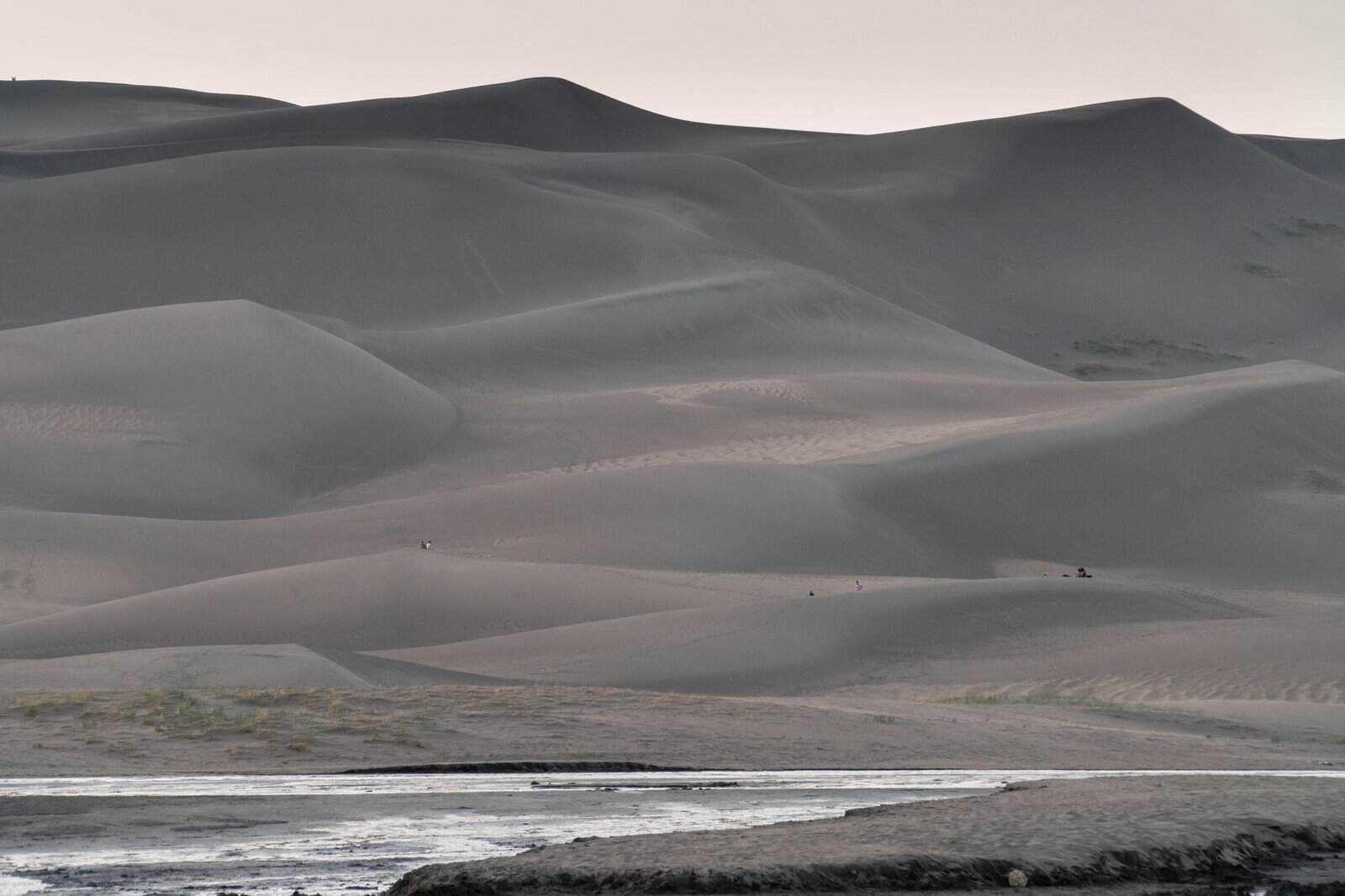
Great Sand Dunes sits at about 8,200 feet at the main Dunes Parking Area, which means fall arrives early and weather can change fast. Days are often sunny and mild, nights are cold, and an early storm can dust the mountains with snow. Plan for that range and you will have the dunes almost to yourself.
1. The sand is not scorching
In summer, the NPS warns that the sand surface can reach 150 degrees Fahrenheit on sunny afternoons, which makes midday dune hiking painful and potentially dangerous for feet and paws. The park advises planning summer dune time for early morning or evening.
In spring and fall, the NPS says, sand temperatures are usually moderate throughout the day. That means you can hike, sled, or simply wander the dunes at any hour without racing the sun. In late fall, the sand may even feel cool in the morning.
2. The crowds thin out dramatically
Summer weekends bring packed parking lots, especially when Medano Creek is running and families come to splash in it. Once the creek dries up and school is back in session, visitor numbers drop sharply. By November, you may walk for long stretches without seeing anyone else on the dunes.
That quiet makes the dunefield feel bigger and wilder. Footprints from the day before are often erased by wind overnight, so the ridges look untouched in the morning.
3. Snow on the Sangre de Cristos makes a dramatic backdrop
The Sangre de Cristo Mountains rise directly behind the dunes, with several peaks above 13,000 feet. In late fall, the first snows often coat the summits, creating a striking contrast between white peaks, golden sand, and blue sky. It is one of the most photographed scenes in Colorado.
Occasionally, snow falls on the dunes themselves. A light dusting on the sand ridges is rare and beautiful, and it usually melts quickly in the sun.
4. Clear, dark skies
Great Sand Dunes is a certified International Dark Sky Park. The San Luis Valley is remote and lightly populated, and the high elevation and dry air make for exceptional stargazing. Late fall brings longer nights and often very clear skies.
Walk out onto the dunes after dark with a red flashlight, wait for your eyes to adjust, and you can see the Milky Way stretching over the mountains. Dress for temperatures that can drop well below freezing.
5. Wildlife is active
The park and preserve span a range of habitats, from grasslands and wetlands to forests and alpine tundra. In fall, elk, mule deer, and pronghorn are often seen in the grasslands and along the park road, especially near dawn and dusk. Elk herds move between the valley and the mountains, and their bugling season runs into early fall.
Watch for wildlife on the road as you drive in and out, especially in low light.
6. Good conditions for hiking the high dunes
Hiking to the top of High Dune on First Ridge, about 690 feet above the base, takes many visitors one to two hours round trip, and Star Dune is a longer, tougher trek. In summer, heat makes these climbs exhausting. In late fall, cooler temperatures make the effort more manageable.
There are no trails on the dunes. You pick your own route, usually following ridgelines, which are firmer than the soft slopes. Bring water, sunscreen, and sunglasses, since the high-elevation sun is strong even in cold weather.
7. Easy pairing with Zapata Falls and hot springs pools
A few miles south of the park entrance, Zapata Falls Recreation Area, managed by the Bureau of Land Management, has a short hike to a waterfall tucked into a narrow rock crevice. In late fall, the falls may begin to freeze, creating ice formations. Check road and trail conditions before you go.
The San Luis Valley also has geothermal pools. A soak in warm water after a cold day on the dunes is a classic way to end a late-fall visit. Look up current hours and policies for pools in the area before driving there.
Sledding and sandboarding in fall
Sledding down the dunes is one of the most popular activities at Great Sand Dunes. According to the NPS, sandboards and sand sleds specifically designed for sand, with a slick base and special wax, work best in most conditions. Regular snow sleds, snowboards, and skis only slide on very wet sand after rain or snow, since the sand surface is usually dry.
Sand sleds and boards are rented outside the park, at businesses near the entrance and in nearby towns. In late fall, some rental shops may have reduced hours or close for the season, so call ahead.
The NPS recommends sledding on the first high ridge of dunes near the main Dunes Parking Area, where softer sand at the base gives a gentler runout. Injuries are more common when sand is firm.
What changes in late fall
Late fall is not perfect for every visitor. Keep these trade-offs in mind:
- Medano Creek is usually dry. The creek typically flows in late spring and early summer. If wading is your goal, late fall will disappoint you.
- Some services close. The Piñon Flats Campground and some nearby businesses operate seasonally. Check what is open before you go.
- Weather is variable. Days can be warm and sunny or cold and windy. Snowstorms can arrive with little warning.
- Days are short. Plan your dune hikes so you are not descending in the dark unless you intend to stargaze.
- Medano Pass Primitive Road may close. The four-wheel-drive road through the preserve can close because of snow.
Getting there
Great Sand Dunes is in south-central Colorado, about 35 miles northeast of Alamosa. From Denver, it is roughly a four-hour drive. From Colorado Springs, it is about three hours. The nearest major airports are in Denver and Colorado Springs, while Alamosa has a small regional airport.
Roads to the park are generally well maintained, but mountain passes along the way, such as La Veta Pass and Poncha Pass, can be snowy in late fall. Check road conditions with the Colorado Department of Transportation.
Where to stay
Lodging options near the park are limited, especially in late fall. Choices include:
- A small number of lodging options and campsites just outside the park entrance, some seasonal.
- Hotels and motels in Alamosa, the largest town in the San Luis Valley.
- Small inns and rentals in nearby communities.
If you plan to camp, check whether the park’s campground or nearby private campgrounds are open on your dates.
What to bring
Pack for a wide range of conditions:
- Warm layers, including a hat and gloves for mornings and evenings.
- Sunglasses and sunscreen, since sun reflects off sand.
- Plenty of water, as dry air dehydrates you quickly.
- Sturdy shoes or boots for hiking the dunes.
- A headlamp or flashlight with a red light setting for stargazing.
- Snacks, since food options are limited near the park.
A sample late-fall day
Arrive mid-morning after the night chill has eased. Stop at the visitor center for maps and conditions, then head to the Dunes Parking Area. Hike toward High Dune on First Ridge and enjoy views of the dunefield and mountains. Have lunch at a picnic area, then try sandboarding on the first ridge if you rented gear. In late afternoon, drive to Zapata Falls for a short hike. After dark, return to the dunes or a quiet pullout for stargazing.
Safety on the dunes in cold weather
Late fall brings its own risks. Wind can pick up quickly in the afternoon, blowing sand hard enough to sting skin and eyes, so sunglasses or goggles help. Temperatures can fall fast once the sun drops behind the mountains, and the dunes offer no shelter. Turn around early if clouds build, since lightning and snow squalls can move over the valley quickly. Tell someone your plans if you hike toward Star Dune or deeper into the dunefield, where it is easy to lose track of distance.
The bottom line
North America’s tallest dunes are in Colorado, and late fall is one of the smartest times to see them. Moderate sand temperatures, small crowds, snowy peaks, dark skies, active wildlife, comfortable hiking, and easy side trips make up for the dry creek and shorter days. Check conditions, pack for cold nights, and you will understand why this unusual landscape is worth the drive.