Moscow, Idaho and the Palouse Region Grow More Lentils Than Almost Anywhere Else in America. Most Visitors Never Notice the Fields.
We may earn money or products from the companies mentioned in this post. This means if you click on the link and purchase the item, I will receive a small commission at no extra cost to you ... you're just helping re-supply our family's travel fund.
Moscow, Idaho, home to the University of Idaho and roughly 25,000 residents, sits at the center of the Palouse, a rolling hills agricultural region spanning eastern Washington and northern Idaho that produces a substantial share of the country’s lentils, dry peas, and garbanzo beans, an agricultural specialty most visitors driving through for the university or the area’s scenic wheat-field hills never notice despite the fields being directly visible from nearly every road in the region.
The University of Idaho, the state’s land-grant flagship institution, and the Palouse’s distinctive dryland farming economy coexist in a way that gives Moscow a genuinely dual identity, part college town, part agricultural research hub, that shapes the city’s economy and character considerably more than its modest population would suggest.
Why the Palouse Became a Legume Powerhouse
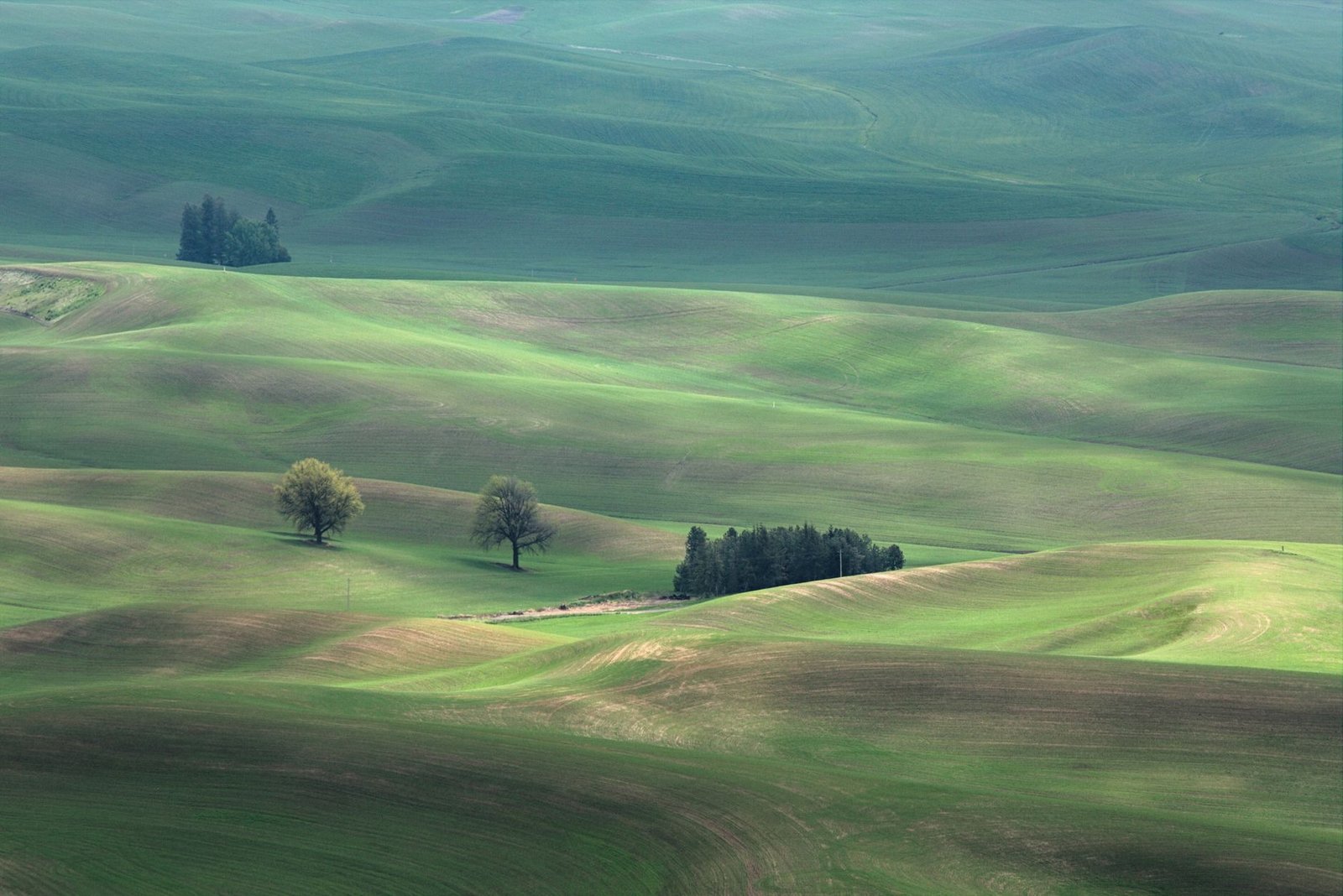
The Palouse’s unique loess soil, wind-deposited silt that accumulated over thousands of years into deep, fertile hills, combined with the region’s semi-arid climate, created ideal growing conditions for lentils and other pulse crops that require less water than many alternative crops while thriving in exactly the well-drained, nutrient-rich soil the region’s geology provided.
The United States, and specifically the Palouse region spanning from Moscow into eastern Washington around Pullman and Colfax, produces a substantial share of the nation’s lentil and dry pea crop, a concentration significant enough that the region has been described in agricultural trade publications as America’s lentil capital, a title with essentially zero public recognition outside farming and food industry circles.
University of Idaho’s agricultural research programs, closely tied to the region’s pulse crop industry, have contributed to breeding improvements and farming technique research that has helped the Palouse maintain its competitive position in the national and international pulse crop market even as global lentil production has expanded significantly in countries like Canada and India over recent decades.
What the University Actually Does for Moscow
The University of Idaho functions as Moscow’s dominant employer and economic anchor, similar to how many land-grant universities shape their host towns, but its specific research focus on agriculture, natural resources, and the region’s forestry and farming industries gives it a more directly integrated relationship with the surrounding rural economy than a typical liberal arts-focused university town would have.
- The University of Idaho was founded in 1889 and remains the state’s land-grant institution with a strong agricultural and natural resources research focus
- Moscow’s population roughly doubles in effective size during the academic year when the university’s full student population is present
- The Palouse region’s rolling hills, shaped by wind-deposited loess soil, have become a photography destination in their own right, particularly during the green wheat season in early summer
- Moscow and neighboring Pullman, Washington, home to Washington State University, form a close cross-state university town relationship unusual in American higher education geography
The Scenic Wheat Fields Most Visitors Actually Photograph
The Palouse’s rolling hills, planted predominantly in wheat with lentils and other pulse crops in rotation, have become a legitimate landscape photography destination, particularly at Steptoe Butte State Park across the border in Washington, which offers a panoramic overlook of the patchwork hill farming pattern that draws photographers from across the country during the most vivid green growing season in late spring and early summer.
Most of these visitors come specifically for the wheat field photography rather than any awareness of the region’s specific lentil and pulse crop specialization, meaning the area draws a genuine, if narrow, tourism niche built around agricultural scenery without much corresponding public understanding of what’s actually growing in the fields they’re photographing.
Moscow and Pullman’s Unusual Cross-State Relationship
Moscow, Idaho and Pullman, Washington sit less than ten miles apart across the state border, each home to a major state university, the University of Idaho and Washington State University respectively, creating an unusually close cross-state twin college town relationship that supports shared cultural and recreational infrastructure despite the two cities technically belonging to different state university systems and state tax structures.
Students and faculty regularly cross the state line for shopping, entertainment, and social activities, and the two universities maintain some degree of friendly athletic rivalry alongside genuine academic collaboration, particularly in agricultural research given both institutions’ land-grant missions and shared interest in the Palouse region’s farming economy.
What Life in Moscow Actually Costs
Moscow’s cost of living remains considerably below national averages, benefiting from Idaho’s generally lower housing costs and the university town’s more modest, family-oriented rental and home-buying market compared to Idaho’s faster-growing cities like Boise, giving Moscow a distinct affordability advantage for anyone specifically drawn to the combination of a university town atmosphere and genuine rural agricultural surroundings.
That affordability, combined with the university’s steady employment base and the broader Palouse agricultural economy’s relative insulation from the boom-and-bust cycles affecting more tourism or technology-dependent regional economies, has kept Moscow’s population and economy notably stable compared to more volatile growth patterns seen elsewhere in Idaho over the past decade.
Why This Region Rarely Gets Any National Attention
Agricultural commodity regions rarely draw the kind of media attention given to tourism-driven or technology-driven local economies, and the Palouse’s specific specialization in lentils and pulse crops, while nationally significant within the narrow context of American agriculture, simply doesn’t generate the kind of visible, easily narrated story that drives broader public awareness the way a ski resort boom or tech company relocation might.
This obscurity persists even as global demand for plant-based protein sources, including lentils, has grown substantially in recent years, a trend that has strengthened the Palouse’s economic position steadily without generating much corresponding public recognition of the region’s importance to that broader dietary and agricultural shift.
For a visitor driving through on Highway 95 toward Coeur d’Alene or Spokane, the Palouse’s rolling green and gold hills remain simply a scenic backdrop rather than a recognizable agricultural landmark, a gap between visual impression and economic reality that mirrors similar disconnects in other productive but under-recognized American farming regions.