Montpelier Is the Only State Capital Without a McDonald’s. Here’s What a Day There Looks Like Instead
We may earn money or products from the companies mentioned in this post. This means if you click on the link and purchase the item, I will receive a small commission at no extra cost to you ... you're just helping re-supply our family's travel fund.
There are no golden arches in Vermont’s capital, and residents like it that way. A day in Montpelier means a gold dome instead: a free State House tour, a stone lookout tower in the woods above downtown, a working maple farm a few minutes away, and a main street run almost entirely by independent businesses.
The lack of a McDonald’s is a point of local pride. A Montpelier resident quoted in a Homes.com city guide put it plainly: “We are the only capital city without a McDonald’s,” adding that “we like it that way—it’s intentional.” The town is also tiny. Montpelier had 8,074 residents in the 2020 census, which makes it the least populous state capital in the United States, according to Wikipedia. Its daytime population roughly triples to about 21,000 because so many people commute in for state government jobs.
That combination, small and deliberately local, defines what you will actually do there. Here is what the day looks like.
What a Day in Montpelier Looks Like Instead
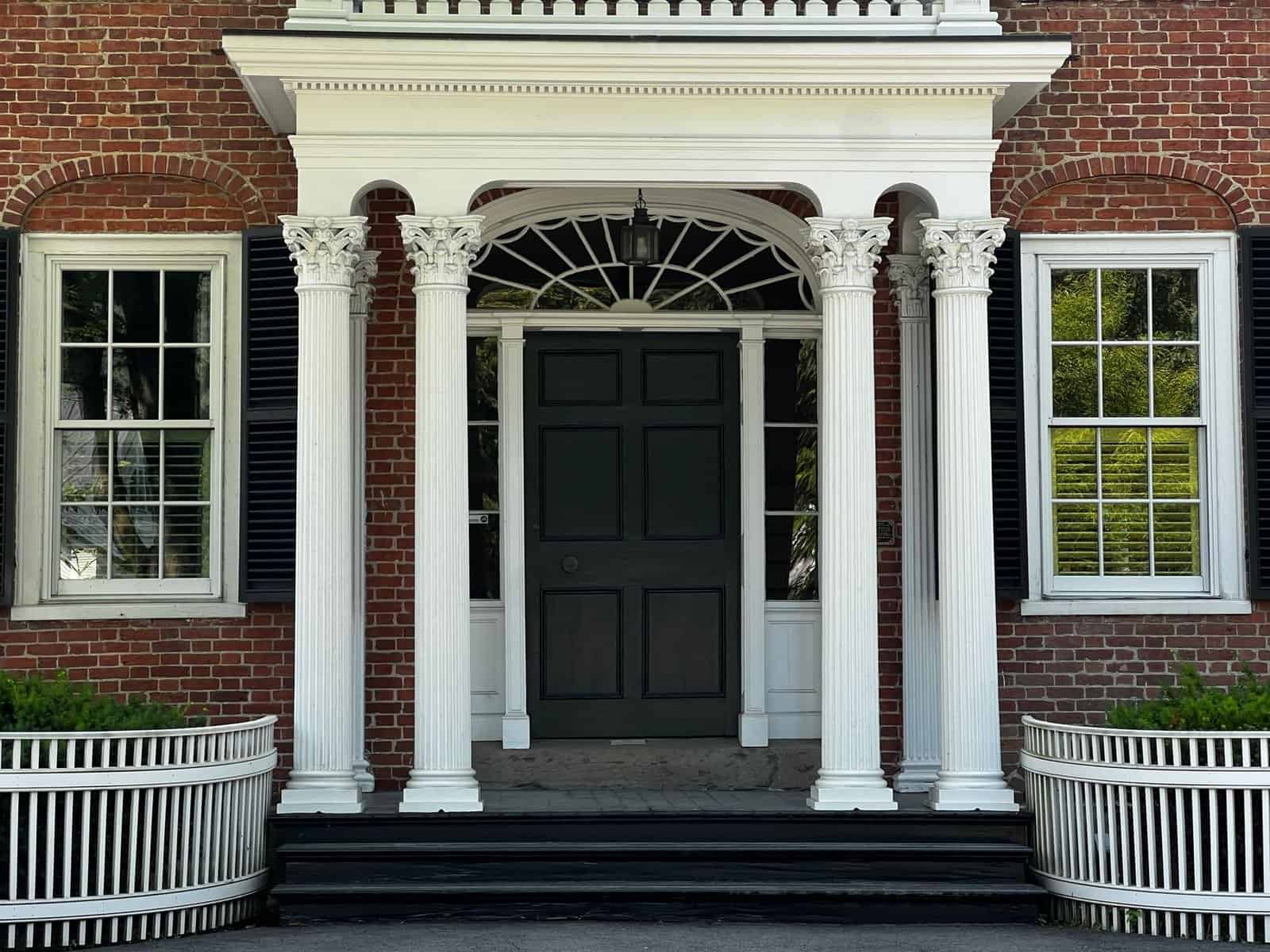
A full day in Montpelier fits easily on foot. The downtown is about six blocks across, centered on State Street and Main Street where they meet near the Winooski River.
- 8:30 a.m.: Coffee and a pastry at a local café. Capitol Grounds, near the State House, has been roasting its own coffee since 1998, according to New England Today.
- 9:30 a.m.: A free tour or self-guided walk of the Vermont State House.
- 11 a.m.: The Vermont History Museum, next door in the Pavilion Building.
- 12:30 p.m.: Lunch from an independent café or the deli at Hunger Mountain Coop.
- 2 p.m.: A walk up to the Hubbard Park observation tower.
- 4 p.m.: A short drive to Morse Farm Maple Sugarworks for maple creemees, syrup, and sugar-on-snow when available.
- 6 p.m.: Dinner at a downtown restaurant, then a stop at a bookstore or the Kellogg-Hubbard Library if it is open late.
The Vermont State House
The State House is the reason most visitors come, and it is one of the most beautiful capitols in the country. New England Today describes it as “the People’s House,” designed by Thomas Silloway in 1857, with a dome sheathed in copper covered with gold leaf and topped by a statue of Ceres, the Roman goddess of agriculture. The portico is built of Barre granite, quarried a few miles away.
The building is unusually open. It is both a working legislature and a museum. When the legislature is in session, usually from January into spring, you can watch debates from the galleries. Outside of session, you can walk the halls, see the House and Senate chambers, and look at the art and Civil War-era portraits. Free guided tours are offered on a seasonal schedule, and self-guided tour materials are usually available.
The lawn in front, with the forest rising directly behind the dome, is the classic photo. Late fall works well because the bare trees let the gold dome stand out against the hill.
The Vermont History Museum
Next to the State House, the Pavilion Building houses the Vermont History Museum, run by the Vermont Historical Society. Its exhibits move through Vermont’s history from the Abenaki people through the state’s period as an independent republic from 1777 to 1791, the Civil War, and modern times. It is a good one-to-two-hour stop, especially on a cold or rainy day. Check hours, since the museum keeps a schedule that changes by season.
Lunch Without Chains
Downtown Montpelier is dominated by independent restaurants, cafés, and shops. You will find bakeries, a few pubs, sandwich shops, and restaurants with farm-to-table menus. The Homes.com guide notes that other than a Shaw’s for groceries, most big-box options are miles outside the city or in Burlington.
- Hunger Mountain Coop: A large community-owned grocery store with a deli and hot bar. A good choice for a quick, local lunch. New England Today notes that its bulletin boards, like others around town, are packed with local announcements.
- Main Street and State Street cafés: Most serve soups, sandwiches, and baked goods made in-house.
- Price range: Expect about $12 to $20 per person for a casual lunch.
Hubbard Park and Its Stone Tower
Walk a few blocks uphill from the State House and you reach Hubbard Park, a wooded 194-acre city park. Its best-known feature is a stone observation tower about 54 feet tall, listed on the National Register of Historic Places. Climb the stairs inside for a view over the State House dome, the town, and the surrounding hills.
Miles of trails wind through the park, and they are popular with runners and dog walkers year-round. In late fall, the trails are covered in leaves and can be muddy. In winter, they are packed snow, and some locals use them for snowshoeing.
Morse Farm Maple Sugarworks
About three miles north of downtown, Morse Farm Maple Sugarworks is a family-run maple farm and shop that is open year-round. You can watch a short video on how maple syrup is made, walk out to the sugar woods, taste different grades of syrup, and buy maple products. The farm’s maple creemee, Vermont’s word for soft-serve ice cream, is a local favorite.
Sugaring season itself happens in late winter and early spring, when sap runs. In late fall, you will not see the boiling, but the shop and tastings are open and the drive up through the hills is pretty.
Bookstores and the Library
Montpelier has an outsized literary culture for its size. The Kellogg-Hubbard Library, in a granite building on Main Street, is a community anchor with a strong events calendar. Downtown also has independent bookstores, and the town hosts readings and writers’ events throughout the year. The Vermont College of Fine Arts is based in Montpelier, which feeds the arts scene.
Why There Is No McDonald’s
There is no single law banning McDonald’s from Montpelier. The reason is a mix of geography, economics, and local preference.
- Small market: A town of about 8,000 people is a small customer base for a national chain.
- Limited space: Downtown is compact and hemmed in by the river and hills, with few large lots suitable for a drive-through restaurant.
- Highway access: Chain restaurants serving the area cluster near I-89 exits and in Berlin and Barre, a few miles away.
- Local preference: Residents strongly support independent businesses, and many see the absence of chains as part of the town’s identity.
The result is a capital where nearly every meal and shop is local. That is the experience you are signing up for.
Montpelier After the 2023 Flood
In July 2023, heavy rains caused major flooding in downtown Montpelier. The Winooski River and its tributaries overflowed, and water filled many street-level businesses. The town worked through months of cleanup, and many shops and restaurants reopened over the following year. Some businesses moved or closed for good. When you visit, you will see a downtown that has rebuilt, and many locals are happy to talk about the recovery.
Getting There
Montpelier sits just off I-89, about 40 miles southeast of Burlington.
- From Burlington: About 45 minutes by car.
- From Boston: About 180 miles, roughly three hours via I-93 and I-89.
- By train: Amtrak’s Vermonter stops at Montpelier-Berlin station, a short drive from downtown.
- Parking: Downtown has metered spaces and lots. It is easy to park once and walk.
Where to Stay
Montpelier has a small number of hotels and inns, and rooms fill when the legislature is in session or during foliage season. In November, rooms typically run about $140 to $250 a night. Nearby Barre and Berlin have additional chain hotels, and Stowe is about 30 minutes away if you want a resort town base.
Side Trips Within 20 Minutes
If you have extra time, a few nearby places pair well with a Montpelier visit without turning it into a different trip.
- Barre: About 15 minutes southeast, Barre is known for its granite quarries and the granite carvings in Hope Cemetery. The stone in the State House portico came from this area.
- The Winooski River paths: Walking and biking paths follow the river near downtown and are easy for a short stroll.
- Country roads north of town: The roads around Morse Farm climb into open hills with long views, especially pretty with the first snow.
When to Go
Montpelier works year-round, but each season feels different.
- Late fall: Quiet, inexpensive, and good for walking. Some businesses keep shorter hours.
- Winter: Snowy and cozy, with the legislature in session from January. Downtown is busier on weekdays.
- Spring: Mud season can make trails messy, but sugaring season brings fresh maple syrup in March and April.
- Fall foliage: The busiest time, with higher hotel rates and crowded roads.
The Bottom Line
A state capital with no McDonald’s sounds like trivia, but it tells you exactly what Montpelier is: small, local, and proud of it. Spend the day at the gold-domed State House, the history museum, Hubbard Park’s stone tower, and a maple farm in the hills. You will eat well, walk everywhere, and never see a drive-through.