Marquette, Michigan Sits on Lake Superior’s Coldest Water and Somehow Still Draws Year-Round Residents
We may earn money or products from the companies mentioned in this post. This means if you click on the link and purchase the item, I will receive a small commission at no extra cost to you ... you're just helping re-supply our family's travel fund.
Marquette, Michigan, the largest city in the Upper Peninsula with roughly 20,000 residents, sits directly on Lake Superior’s frigid southern shore, enduring some of the harshest, snowiest winters of any mid-size American city, and yet it has maintained a stable, even slowly growing population anchored by Northern Michigan University and a healthcare sector serving the entire western Upper Peninsula.
What Makes Winter There Genuinely Extreme
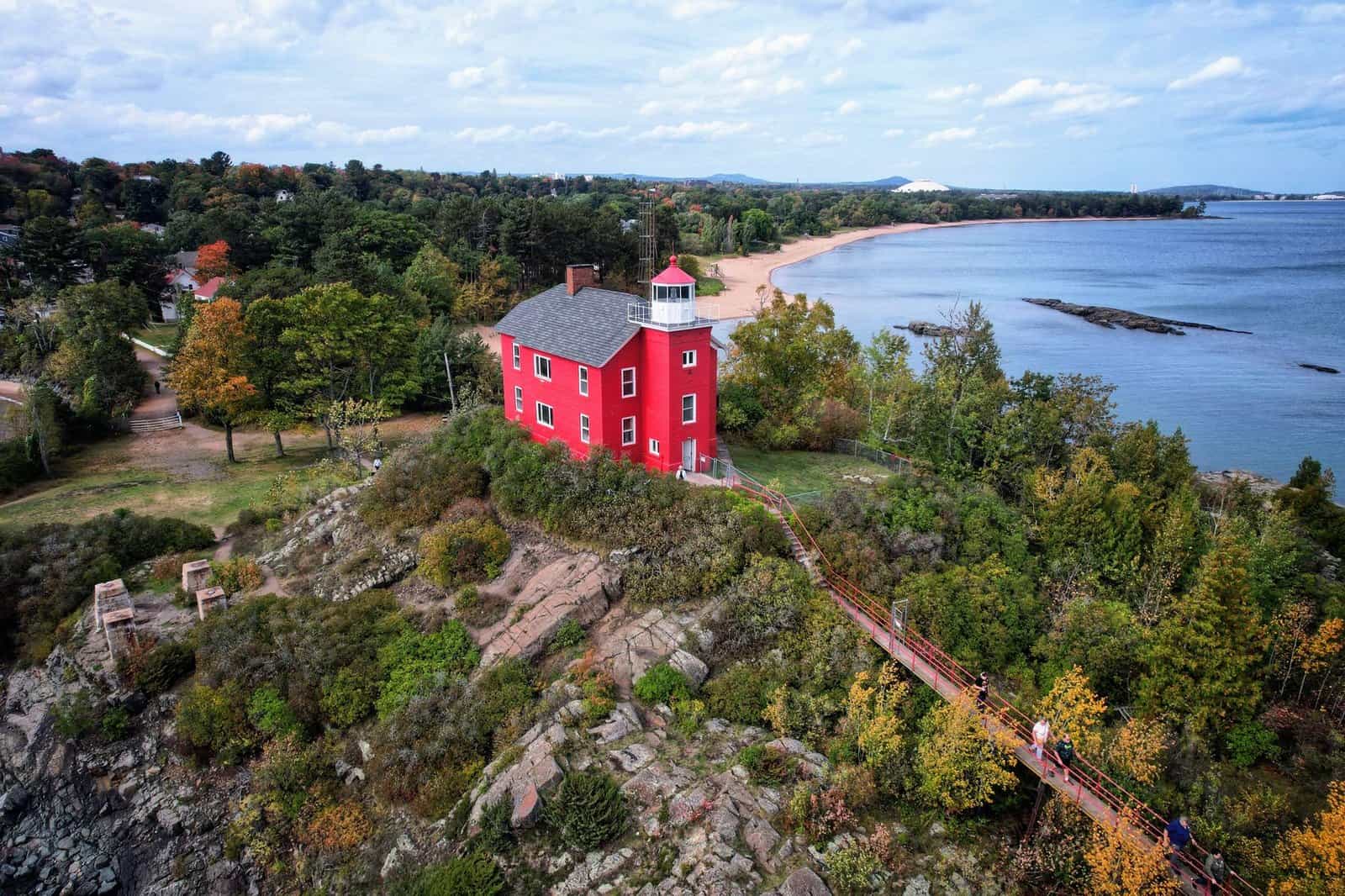
Marquette regularly receives well over 150 inches of snow annually, driven by lake-effect snow bands off Lake Superior that can dump feet of snow in a single multi-day event, conditions that have made the city and surrounding region a genuine destination for winter sports enthusiasts, including a dedicated fat-biking and cross-country skiing community that has grown substantially over the past decade.
Northern Michigan University provides the city’s institutional backbone, drawing students and faculty who often stay in the region after graduation, a retention pattern uncommon in many small college towns where graduates typically leave immediately for larger job markets elsewhere.
Why People Actually Stay Despite the Climate
The Practical Draws
- Lake Superior’s summer months offer a genuinely temperate, mosquito-manageable outdoor season
- Marquette’s healthcare sector, anchored by UP Health System, serves a region far larger than the city itself
- Mountain biking trails around the city have earned Marquette a growing reputation in that specific sport
- Housing costs remain far below national urban averages despite growing outside interest
Remote workers have started discovering Marquette over the past several years specifically because of this combination: genuine four-season outdoor recreation, a functioning small city with a university and hospital system, and housing costs that remain a fraction of comparable lake towns in Wisconsin or Minnesota that get considerably more national attention.
What keeps Marquette from becoming the next boomtown is largely the climate itself, a genuine deterrent that filters out anyone not specifically drawn to winters this severe, leaving a population that has self-selected for exactly the conditions that would drive most Americans to look elsewhere entirely.
Why This Keeps Getting Overlooked
Part of the reason this dynamic receives less attention than it probably deserves is structural: the initial story, whether a viral moment, a policy change, or a shift in travel patterns, is simply more compelling to cover than the slower, less dramatic process of adjustment that follows it over subsequent years, which rarely fits into a single headline or a short video.
That mismatch between what gets covered and what actually matters most to the people living through the change is a recurring feature of how places, trends, and communities get discussed publicly, and it tends to leave a persistent gap between popular perception and the more complicated reality on the ground.
What This Means Going Forward
The broader pattern here reflects something researchers and local officials increasingly track closely: the gap between how a place or trend is perceived from the outside and how it actually functions day to day for the people living inside it or making decisions about it. That gap rarely closes on its own, and it tends to widen further whenever outside attention, whether from tourism, media coverage, or social platforms, arrives faster than the underlying infrastructure or community capacity can absorb it.
What tends to happen next depends heavily on decisions made by the people closest to the situation, whether that means local governments, longtime residents, or the businesses that have to adapt fastest, and those decisions rarely get the same national attention as the initial trend or story that put the place on the map in the first place, even though they matter considerably more to how things actually turn out over the following decade.
The Longer-Term Trajectory
Longtime observers of this pattern note that the early years after a place or trend gains attention are rarely the ones that determine its lasting character. The more decisive period tends to arrive several years later, once the initial wave of interest either sustains itself through genuine infrastructure investment or fades as attention moves elsewhere, leaving behind whatever changes already took root during the busier years.
That delayed reckoning is precisely why comparisons across a full decade, rather than a single before-and-after snapshot, tend to produce a more accurate picture of what actually changed and what merely appeared to change while the cameras and headlines were still pointed in that direction.
Why This Keeps Getting Overlooked
Part of the reason this dynamic receives less attention than it probably deserves is structural: the initial story, whether a viral moment, a policy change, or a shift in travel patterns, is simply more compelling to cover than the slower, less dramatic process of adjustment that follows it over subsequent years, which rarely fits into a single headline or a short video.
That mismatch between what gets covered and what actually matters most to the people living through the change is a recurring feature of how places, trends, and communities get discussed publicly, and it tends to leave a persistent gap between popular perception and the more complicated reality on the ground.
What This Means Going Forward
The broader pattern here reflects something researchers and local officials increasingly track closely: the gap between how a place or trend is perceived from the outside and how it actually functions day to day for the people living inside it or making decisions about it. That gap rarely closes on its own, and it tends to widen further whenever outside attention, whether from tourism, media coverage, or social platforms, arrives faster than the underlying infrastructure or community capacity can absorb it.
What tends to happen next depends heavily on decisions made by the people closest to the situation, whether that means local governments, longtime residents, or the businesses that have to adapt fastest, and those decisions rarely get the same national attention as the initial trend or story that put the place on the map in the first place, even though they matter considerably more to how things actually turn out over the following decade.
The Longer-Term Trajectory
Longtime observers of this pattern note that the early years after a place or trend gains attention are rarely the ones that determine its lasting character. The more decisive period tends to arrive several years later, once the initial wave of interest either sustains itself through genuine infrastructure investment or fades as attention moves elsewhere, leaving behind whatever changes already took root during the busier years.
That delayed reckoning is precisely why comparisons across a full decade, rather than a single before-and-after snapshot, tend to produce a more accurate picture of what actually changed and what merely appeared to change while the cameras and headlines were still pointed in that direction.